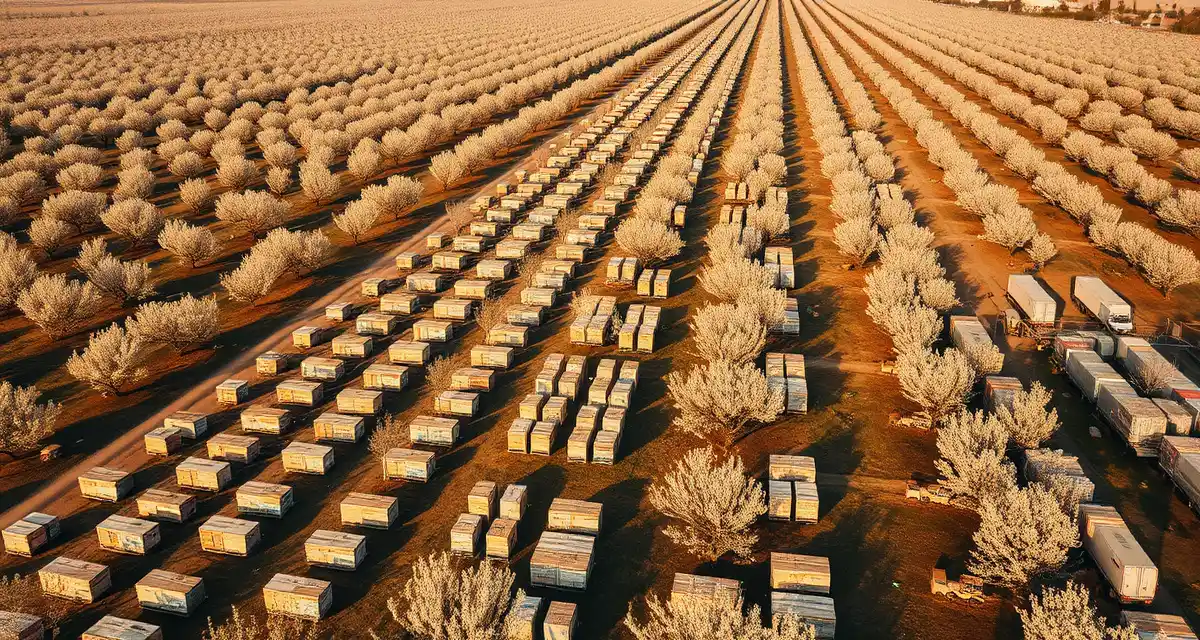
Almond Pollination in California: Timing Logistics and Contracts
Every February, 80% of the commercial hive supply in the United States converges on California's Central Valley. 1.3 million colonies move in for almonds, more than any other single crop demands anywhere in the world. If you're running a migratory operation, this is the event that shapes your entire year.
The economics are clear: at $200/hive for 1,000 colonies, almond season alone can generate $200,000 in 6 weeks. But the complexity is real. Multiple grower contracts, county-by-county permit requirements, CDFA health certificates, tight delivery windows, and a crop that won't wait for logistics problems. It all hits at once.
Here's what commercial operators need to know before the first truck rolls.
TL;DR
- California almond pollination consumes roughly 80% of the US commercial hive population every February, making it the most supply-constrained pollination market in the country.
- Per-hive rates have held between $185 and $220 for 6-8 frame colonies over recent seasons.
- Contracts are typically signed October through November for the following February season; operators without agreements by December are working from a weak position.
- Hive strength minimums range from 6 to 8 frames of bees depending on the grower, with premium-strength colonies commanding $200-215/hive.
- varroa management, documentation, and logistics coordination in the 6-8 weeks before delivery determine whether almond season is profitable or a breakeven event.
The Scale of California Almonds
California produces about 80% of the world's almond supply. The bearing acreage as of 2024 was approximately 1.35 million acres. Most almond varieties require cross-pollination from a different variety planted in the same orchard. Bees are not optional. Without adequate bee density, growers see dramatically reduced set rates.
The Almond Board of California recommends 2 hives per acre as the standard placement density. At 1.35 million acres, that's a theoretical demand of 2.7 million colonies, more than the entire US commercial hive population. In practice, not every acre gets two hives, but demand consistently exceeds supply in most years, which is why almond pollination rates have stayed firm.
Fresno, Tulare, Kern, Merced, and Madera counties account for the majority of almond acreage. Stanislaus, San Joaquin, and Butte counties also have significant plantings. Most migratory operators target the high-density areas in the central San Joaquin Valley, where driving distance between yards is shortest and broker relationships are most established.
Timing: When to Be There
Almond bloom timing varies by variety and weather. The general window runs from late January through mid-March, with peak bloom typically hitting in the first three weeks of February.
Key varieties and their approximate bloom sequence:
- Nonpareil: The primary commercial variety, blooms in early February
- Monterey, Butte, Padre: Pollinizer varieties, bloom slightly later
- Fritz, Carmel: Mid-season varieties
Because Nonpareil needs pollen from a different variety (and vice versa), orchards are typically planted in interleaved rows, with one row Nonpareil and one row pollinizer. Your hives service the whole orchard during the shared bloom window.
Target delivery: 3–5 days before expected Nonpareil bloom in the specific micro-climate zone where your yards are located. Too early, and your hives are burning through stores with no forage. Too late, and you miss the critical first days of bloom when forager activity drives the most effective cross-pollination.
Most growers want hives on the ground by February 12–15, though in warm years bloom can push earlier. Watch GDD (growing degree days) tracking from November onward. The Almond Board and UC Cooperative Extension publish bloom prediction models.
Removal timing: After petal fall, usually late February to mid-March depending on variety. Operators with downstream contracts (Pacific Northwest cherries in late April, Michigan blueberries in May) have to move quickly. Don't agree to a removal clause that pins you in California past March 15 unless your next placement is also in California.
County-Level Entry Requirements
CDFA (California Department of Food and Agriculture) regulates all bee movement into California. For out-of-state operators:
Certificate of Health: Required for all colonies entering California. Must be issued by your home state's apiary inspection program within 30 days of entry. The certificate must certify freedom from American foulbrood, European foulbrood, and Varroa at non-treatment-requiring levels (or document treatment).
Small Hive Beetle: California is a regulated area for small hive beetle (SHB). Colonies from southeastern states (Florida, Georgia, Louisiana, etc.) are subject to additional inspection requirements. CDFA inspectors may stop trucks at the Nevada or Arizona border. Have your certificates in hand; don't count on being waved through.
County Ag Commissioner permits: Some counties require a permit to establish a new apiary site. This is separate from CDFA requirements and handled at the county level. Check with the county agricultural commissioner in Fresno, Kern, or Tulare counties before siting new yards.
For California-based operators moving hives between counties, the requirements are lighter but you should verify current rules with CDFA, as regulations change.
Grower Expectations and the New Normal
The almond industry has gotten more sophisticated about pollination quality over the past decade. Large corporate growers (and there are a lot of them now, with major almond companies farming tens of thousands of acres) have quality programs that include:
Hive strength verification: Expect growers or their hired consultants to check incoming hives. A 6-frame minimum used to be standard; many contracts now specify 8. Some large growers use third-party verification services. Know what your contract specifies before you load a truck.
GPS placement tracking: Some large growers now track hive GPS locations throughout the season. This is becoming more common with the adoption of hive monitoring technology.
Pesticide communication protocols: Responsible almond growers provide advance notice before any pesticide application near placed hives. This is required under California law (Emergency Exemption notification requirements) and most commercial contracts include it as a specific term.
Post-season strength checks: Some contracts include a clause allowing the grower to inspect hives before release to verify colonies weren't stripped of stores or significantly weakened during the rental period.
Securing Contracts at Scale
If you're trying to place 500+ hives in almonds, you have three main channels:
Direct grower relationships: The most stable long-term channel. Build relationships at industry events like the Almond Conference in Sacramento each December, regional grower co-op meetings, and California Farm Bureau events. Once you have a track record with a grower, renewals are often automatic.
Pollination brokers: Brokers aggregate hive supply from multiple operators and match it with grower demand. Broker commissions typically run $10–15/hive. The tradeoff is you lose some margin but gain access to a large grower network. Some brokers operate at significant scale, placing 50,000+ hives annually. Getting on a broker's preferred list takes time and a track record of delivering strong colonies on time.
Cooperative networks: Organizations like the California State Beekeepers Association facilitate some direct connections between operators and growers. Worth joining if you're building a California presence.
Don't show up to almond season without contracts. Spot market pricing in January and February, when desperate operators try to place uncommitted hives, is worse than contract pricing. Growers know this and some will lowball last-minute placements.
Logistics: Running Multiple Yards
A 2,000-hive California almond placement might involve:
- 15–20 separate yard locations
- 8–10 grower accounts with individual contracts
- 4–6 truck loads (each truck moves 400–500 hives)
- 2–3 days of continuous delivery operations
- Crew assignments for unloading at each site
The coordination burden is significant. Which grower gets which load? Which yards need early delivery (earlier-blooming variety areas)? Which crew is at which yard at what time? Who has the gate code for each farm?
Operators who manage this on spreadsheets and group texts spend enormous amounts of time during the most critical weeks of the year doing administrative work that should be automated. contract management software that ties each yard to a specific grower contract, with crew assignments and truck routing, cuts that burden substantially.
PollenOps tracks contracts, yard assignments, and crew scheduling in one platform. During almond season, you're making operational decisions, not hunting for information. See how it works: Pollination Contract Management Software
What Can Go Wrong
Late delivery: If you're 2 days late on a 3-week bloom window, you've cost the grower pollination coverage for the first 10% of bloom. Some contracts have penalties for late delivery. Know your terms and build margin into your logistics schedule.
Low hive count on arrival: Colonies that die in transit or arrive below strength compromise your contract. Do a final strength assessment before loading. Have 5–10% buffer hives available if possible to substitute for any colonies that don't make the trip.
Access problems: A grower changes his access road, or a gate code changes, and your truck is sitting on a county road at 2am. Confirm access details 72 hours before delivery and have the grower's direct cell number.
Weather delays: Late frost can push bloom timing or damage open flowers. An unexpected February rain can strand trucks on dirt access roads. Build contingency into your delivery schedule and have alternate yard locations scouted.
Varroa crash mid-season: Hives that were marginal going in can collapse during the almond rental period. Pre-season treatment is not negotiable. And know what your contract says about colony mortality. Are you responsible for maintaining count throughout the rental period?
After Almonds: Your Next Move
California almonds exit in late February/early March. What you do next determines whether you monetize the fleet investment you've already made moving to California.
Pacific Northwest cherries: Washington sweet cherries start late April. Moving from the Central Valley north to Yakima or Wenatchee is a major logistic push, but cherry rates ($80–100/hive) make it worthwhile if your hives are strong and your contracts are in place.
Spring honey in California: Some operators keep hives in California through spring, working eucalyptus and wildflower in coastal counties or orange blossom in Ventura.
Pacific Northwest honey: Moving hives to Oregon or Washington for spring build-up before summer honey runs is a common circuit.
The key is planning the exit move while you're still managing the placement. Operators who don't have the next stop planned before almonds finish are scrambling when everyone else is already moving.
FAQ
How early should I deliver hives for almond pollination?
Deliver 3–5 days before expected first bloom in your specific yard location. Almonds bloom in a sequence, with earlier varieties first and later pollinizer varieties a few days behind. Your goal is to have active foragers working from day one of peak bloom. Delivering more than a week early means burning stores with little forage return. Delivering late means missing the critical early bloom period. Watch bloom prediction models from UC Cooperative Extension starting in November, and build flexibility into your truck schedule so you can respond to early or late bloom years.
What density of hives per acre do almond growers require?
The Almond Board of California recommends a minimum of 2 hives per acre. Many commercial growers now specify 2.5 hives per acre in their contracts, especially on newer high-density plantings. hive placement density matters for effective cross-pollination, as bees need to move between Nonpareil and pollinizer rows efficiently, which means adequate bee populations throughout the orchard. Some large growers run internal analysis on set rates by yard and will correlate low yields to insufficient bee coverage. Don't assume placement density is just paperwork.
Which counties have the highest almond pollination demand?
Fresno County is the center of California almond production, followed closely by Tulare, Kern, Merced, and Madera counties. The total San Joaquin Valley concentration in these five counties accounts for the majority of state acreage. From a logistics standpoint, Fresno is the hub. Most broker operations are headquartered there, staging yards are available throughout the county, and access to the main orchard blocks is well-established. Kern County (Bakersfield area) has significant newer plantings and is increasingly important. Stanislaus and San Joaquin counties have smaller but meaningful acreage, with somewhat shorter hauls from Northern California and Nevada.
How early should almond pollination contracts be negotiated?
Large almond growers and broker networks begin securing hive commitments in July and August for the following February season. Written contracts are typically signed October through November. Operators who do not have signed agreements by December are working from a weak position since most quality hive inventory is already committed. Start grower outreach in mid-summer and target signed agreements before Thanksgiving.
What documentation is required for hive delivery to California almonds?
California requires a Certificate of Health for out-of-state colonies, issued by the origin state's apiary inspection program within 30 days of entry. The certificate must certify freedom from American foulbrood, European foulbrood, and Varroa destructor below treatment threshold. Some states require small hive beetle freedom for California entry. In addition, many growers now expect documentation of pre-delivery mite counts confirming colonies are below threshold.
What happens to hives after almond season ends in late March?
Post-almond options include moving north for Pacific Northwest cherry or apple pollination in April-May, routing to Michigan or Maine blueberries in May-July, transitioning to summer honey yards in North Dakota or Montana, or staying in California for splits and rebuilding. The right choice depends on hive strength coming out of almonds and downstream contract commitments. Operators who plan their full-year circuit in advance can optimize both pollination revenue and honey production.
Try These Free Tools
Sources
- USDA Agricultural Research Service
- Bee Informed Partnership
- American Beekeeping Federation (ABF)
- Almond Board of California
- University of California Cooperative Extension
Get Started with PollenOps
Almond season is the revenue event that defines the commercial beekeeping year, and the details -- contract terms, delivery timing, hive strength documentation, and invoicing -- determine whether the season is profitable. PollenOps manages the full almond contract lifecycle from quote to final payment, with yard tracking, crew scheduling, and grower communication built in. See how it works for operations from 200 to 5,000 hives.