Almond Pollination in the San Joaquin Valley: Logistics and Contract Guide
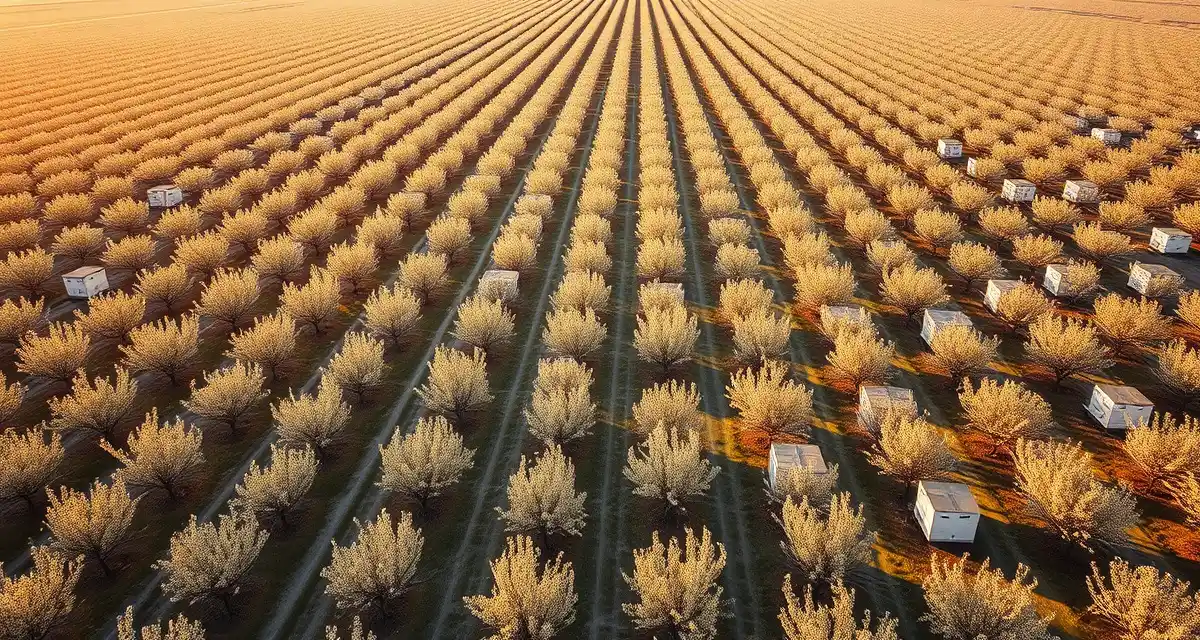
Over 900,000 hives are placed in San Joaquin Valley almonds alone each February. To put that in perspective: that's more managed honey bee colonies than exist in the entire United Kingdom, placed in a single valley over a 2 to 3 week window. Traffic and placement logistics in the San Joaquin Valley require military-level coordination.
The San Joaquin Valley produces 80% or more of US almonds, and almond pollination is the world's largest managed pollination event. If you're a commercial beekeeper and you're not in almonds, you're leaving a large share of your potential revenue on the table. And if you are in almonds but you're not operating with the precision that the San Joaquin demands, you're probably losing money or grower relationships.
This guide covers how to access San Joaquin Valley almond pollination contracts, how to secure yard locations, and how to manage the logistics reality of operating in the world's most intense pollination market.
TL;DR
- California almond pollination consumes roughly 80% of the US commercial hive population every February, making it the most supply-constrained pollination market in the country.
- Per-hive rates have held between $185 and $220 for 6-8 frame colonies over recent seasons.
- Contracts are typically signed October through November for the following February season; operators without agreements by December are working from a weak position.
- Hive strength minimums range from 6 to 8 frames of bees depending on the grower, with premium-strength colonies commanding $200-215/hive.
- varroa management, documentation, and logistics coordination in the 6-8 weeks before delivery determine whether almond season is profitable or a breakeven event.
The San Joaquin Valley Almond Market
California almonds cover roughly 1.3 million bearing acres, with the San Joaquin Valley (stretching from Stockton in the north to Bakersfield in the south) containing the majority of production. The key almond counties are Kern, Fresno, Madera, Merced, Stanislaus, San Joaquin, Tulare, and Kings.
Growers pay $170 to $230 per hive for almond pollination, rates that have risen steadily over the past decade as bee supply has become increasingly uncertain. At $200 per hive with 500 hives placed, that's $100,000 earned in six to eight weeks.
The math is obvious. The execution is the hard part.
How Do You Secure Yard Locations in the San Joaquin Valley?
Yard locations are the foundation of San Joaquin Valley operations. You can have contracts and colonies, but without places to put the hives, you can't fulfill them.
Why Yard Location Matters
In the San Joaquin Valley, yard placement location affects:
- Travel time between your storage yard and the orchard (fuel costs, driver hours)
- Proximity to other beekeepers' equipment (disease transmission risk, robbing pressure)
- Access road quality (can your loaded trucks reach the site?)
- Relationship with the landowner (long-term security vs. year-to-year uncertainty)
Finding and Securing Yard Locations
Most established operators have winter yard locations they've used for years, built through referrals, neighbors of growers they work with, or direct outreach to landowners with suitable property.
For new operators entering the San Joaquin Valley market, approaches that work:
Grower referrals: Ask almond growers you're contracting with if they know landowners near their orchards who might host bees. Many growers have adjacent properties or know neighbors who might.
Direct landowner outreach: Identify properties near your contract orchards that have suitable space (flat, accessible, not immediately adjacent to residential areas). Approach landowners directly.
Apiarist networks: Commercial beekeepers who've been in California for years often know of available yard locations. Building relationships with other beekeepers (even competitors) can open doors.
Land lease agreements: Some operators secure formal land lease agreements for their yard locations, providing year-to-year security in exchange for a lease payment or honey compensation.
What Makes a Good San Joaquin Winter Yard
- Flat, firm ground accessible to loaded flatbed trucks
- Water access nearby (not always available, but helpful)
- Not adjacent to residential areas (community relations)
- Within 20 to 30 miles of your contract orchards (to minimize empty truck miles during delivery)
- Landowner who's reliable and won't suddenly revoke access mid-season
Accessing Almond Pollination Contracts in the San Joaquin Valley
Where Contracts Come From
Direct grower relationships: The most reliable contract source. Large growers (those farming hundreds or thousands of almond acres) often contract directly with beekeepers. These relationships develop over years and start with smaller placements before scaling.
Broker networks: Pollination brokers intermediate between growers and beekeepers, matching supply with demand. Brokers typically take a fee from the beekeeper's rate. For new operators without established grower relationships, brokers provide market access. Established operators often move away from brokers as direct relationships develop.
Grower cooperatives and processors: Some almond grower cooperatives and processors (Blue Diamond among them) have established beekeeper relationships or can provide referrals.
Digital platforms: An emerging channel where growers post their pollination needs and beekeepers can submit bids or connect directly.
What Growers Require
To secure direct contracts with San Joaquin Valley almond growers, you need to demonstrate:
- Reliable supply: Committed hive count with documented history of delivering
- Hive strength: Most California almond contracts specify 6 to 8 frames of bees minimum
- Professional documentation: Inspection certificates, insurance certificates, compliance documentation
- Communication and responsiveness: Growers on delivery schedules need reliable communication
Don't cold-call a large almond grower in January and expect a first-year contract for 500 hives. Relationships develop through demonstrated reliability over multiple seasons.
What Are the Best Counties in the San Joaquin Valley for Almond Pollination Contracts?
All San Joaquin Valley almond counties have strong pollination demand, but they have different characteristics.
Kern County (Bakersfield area): Southern San Joaquin. Large-scale operations, some of the largest individual growers. Bloom typically runs slightly later than the north. Strong demand for pollinators.
Fresno County: Central San Joaquin. High concentration of almond acreage. Large grower operations mix with mid-size family operations. Well-developed pollination market.
Madera and Merced Counties: Central valley. Mix of traditional almond country and newer plantings. Competitive but accessible market for well-established operators.
Stanislaus County (Modesto area): Northern San Joaquin. Historically important almond production. Well-established beekeeper and grower networks.
For new operators, working through brokers initially in whichever county your yard locations are in is the most practical starting strategy.
How Do You Coordinate Delivery Logistics in the San Joaquin Valley?
This is where San Joaquin Valley operations separate from everywhere else. The sheer volume of hive movement in February (900,000+ hives arriving over a 2 to 3 week window) creates traffic, access, and coordination challenges that don't exist in any other pollination market.
Timing Your Deliveries
California almond bloom begins in mid-February. Target arrival of 2 to 7 days before your grower's expected bloom date. Your growers will tell you when they want bees. Take that guidance seriously. Early arrival generally captures better placement.
But "early" needs to be balanced against your colony preparation timeline. Colonies arriving before they're at target strength don't serve anyone.
Truck Routing and Traffic
February in the San Joaquin Valley means agricultural trucks everywhere. Plan your delivery routes to avoid peak traffic hours where possible. Some counties experience heavy congestion on main agricultural roads during peak placement weeks.
Coordinate with your growers on specific yard access. Is it off a county road or off a main highway? Is the access road paved? Can your loaded flatbed handle the last mile?
Multiple Simultaneous Deliveries
If you're delivering to multiple growers simultaneously (which most large operations are) driver coordination is needed. Know which truck is going to which yard. Confirm delivery windows with each grower independently.
Using fleet logistics tracking that shows where each truck is and which delivery it's executing prevents the coordination failures that cause late deliveries or wrong-yard arrivals.
Communication During Delivery Week
Stay responsive during delivery week. Growers may adjust their requested timing based on weather forecasts or bloom observations. A grower who calls to say "bring the bees tomorrow instead of Thursday" needs to hear back from you within the hour, not the next day.
California Entry Requirements
Colonies entering California from other states must meet California Department of Food and Agriculture (CDFA) entry requirements:
- Current inspection certificate from the state of origin
- CDFA entry permit (the inspection certificate serves as the permit for most states)
- Certificate must show freedom from American foulbrood, European foulbrood, and small hive beetle
Contact CDFA's Plant Health and Pest Prevention Branch for current requirements. Requirements and document formats are updated periodically.
FAQ
How do you secure yard locations in the San Joaquin Valley for almond pollination?
Start with referrals from your contract growers. Many can introduce you to neighbors or adjacent landowners. Direct outreach to landowners near your contract orchards is a second approach. Building relationships with other beekeepers in California can open up knowledge of available yard locations. Plan to establish relationships 6 to 12 months before you need the yards. Good locations are secured early.
What are the best counties in the San Joaquin Valley for almond pollination contracts?
All San Joaquin Valley almond counties offer strong pollination contract volume. Fresno, Kern, and Stanislaus counties are the largest in terms of almond acreage and typically the highest-demand counties for pollinators. The best county for your operation is usually the one where you've developed grower relationships and can secure good yard locations near your contract orchards, minimizing haul distance during delivery.
How do you coordinate delivery logistics in the San Joaquin Valley?
Start with direct communication with each grower about their specific delivery window and access. Plan truck routes in advance, accounting for access road quality and traffic patterns during peak delivery week. Coordinate driver schedules so multiple deliveries can happen simultaneously without confusion about which truck goes to which yard. Stay responsive during delivery week. Grower timing adjustments based on bloom observation are common and require quick logistical response.
How early should almond pollination contracts be negotiated?
Large almond growers and broker networks begin securing hive commitments in July and August for the following February season. Written contracts are typically signed October through November. Operators who do not have signed agreements by December are working from a weak position since most quality hive inventory is already committed. Start grower outreach in mid-summer and target signed agreements before Thanksgiving.
What documentation is required for hive delivery to California almonds?
California requires a Certificate of Health for out-of-state colonies, issued by the origin state's apiary inspection program within 30 days of entry. The certificate must certify freedom from American foulbrood, European foulbrood, and Varroa destructor below treatment threshold. Some states require small hive beetle freedom for California entry. In addition, many growers now expect documentation of pre-delivery mite counts confirming colonies are below threshold.
What happens to hives after almond season ends in late March?
Post-almond options include moving north for Pacific Northwest cherry or apple pollination in April-May, routing to Michigan or Maine blueberries in May-July, transitioning to summer honey yards in North Dakota or Montana, or staying in California for splits and rebuilding. The right choice depends on hive strength coming out of almonds and downstream contract commitments. Operators who plan their full-year circuit in advance can optimize both pollination revenue and honey production.
Try These Free Tools
Sources
- USDA Agricultural Research Service
- Bee Informed Partnership
- American Beekeeping Federation (ABF)
- Almond Board of California
- University of California Cooperative Extension
Get Started with PollenOps
Almond season is the revenue event that defines the commercial beekeeping year, and the details -- contract terms, delivery timing, hive strength documentation, and invoicing -- determine whether the season is profitable. PollenOps manages the full almond contract lifecycle from quote to final payment, with yard tracking, crew scheduling, and grower communication built in. See how it works for operations from 200 to 5,000 hives.