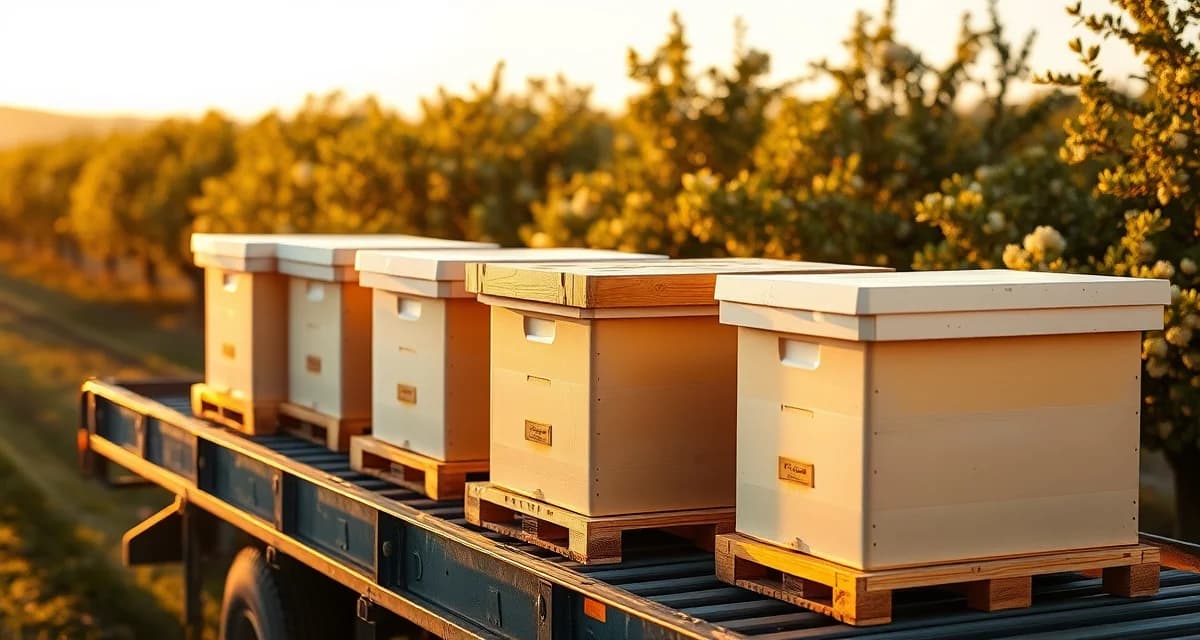
Almond Pollination Delivery Timing: When to Move Hives to Orchards
California almond bloom begins in mid-February. Hive delivery targets 2 to 7 days before bloom. Early arrival captures better yard placement; late arrival risks contract breach penalties. That 5-day window is when the entire California almond industry's pollination logistics happen simultaneously.
No competitor manages delivery timing alerts integrated with contract commitments. That's a real operational gap. Most commercial beekeepers are watching bloom reports manually and making delivery calls based on experience and gut feel. There's a better way.
TL;DR
- California almond pollination consumes roughly 80% of the US commercial hive population every February, making it the most supply-constrained pollination market in the country.
- Per-hive rates have held between $185 and $220 for 6-8 frame colonies over recent seasons.
- Contracts are typically signed October through November for the following February season; operators without agreements by December are working from a weak position.
- Hive strength minimums range from 6 to 8 frames of bees depending on the grower, with premium-strength colonies commanding $200-215/hive.
- varroa management, documentation, and logistics coordination in the 6-8 weeks before delivery determine whether almond season is profitable or a breakeven event.
Why Delivery Timing Matters in Almonds
Almond pollination timing is more precise than most crops. Almonds bloom for roughly 3 to 4 weeks, but peak receptivity (when the flowers are most open and most accepting of pollen) lasts only a portion of that window.
Hives that arrive before bloom opens have time to acclimate and begin foraging as soon as flowers open. Hives that arrive during bloom are immediately useful but may take 1 to 2 days to orient and begin covering the orchard effectively.
Hives that arrive late (after peak bloom is past) miss the highest-value pollination window. Many grower contracts include penalties for late delivery or allow growers to reject hives that arrive after bloom has peaked.
The difference between arriving 3 days before bloom and arriving 3 days after peak bloom can be tens of thousands of dollars in contract payment.
When Should Hives Arrive for Almond Pollination?
The standard recommendation from University of California Cooperative Extension and the Almond Board of California is hive delivery 2 to 7 days before bloom opening.
In practice, most experienced operators target 3 to 5 days before bloom. This gives:
- Time to acclimate hives to the new yard environment
- Time for bees to begin orientation flights
- First foraging activity at or very near bloom opening
- A buffer against weather delays or logistics problems
Arriving 7 or more days before bloom isn't a problem for the bees, but it means your hives are sitting in the orchard without contributing to pollination, and you're occupying yard space your grower may need for other purposes.
Almond Bloom Timing Variation
Almond bloom timing varies by:
Geographic location: Kern County in southern San Joaquin Valley typically blooms earlier than Stanislaus County in the north. Within a county, microclimatic variation can shift bloom by 5 to 10 days.
Variety: Nonpareil (the most common almond variety) blooms in a specific window. Other varieties (Monterey, Carmel, Butte, Padre) bloom in overlapping windows, often used for cross-pollination. The variety mix in a specific orchard affects when peak bloom actually occurs.
Annual weather: Cold wet springs delay bloom. Warm dry springs accelerate it. Year-to-year variation in Nonpareil bloom start ranges from late January in warm years to early March in cold years.
Bud stage observation: Experienced California almond growers monitor bud stage closely in January and early February. The standard bud stages (dormant, swollen, bud burst, pink bud, popcorn, bloom, petal fall) give increasingly precise timing information as bloom approaches.
What Happens If Hives Arrive Late for Almond Pollination?
Late delivery is the scenario that keeps commercial beekeepers awake at night during almond season. The consequences range from notable to severe.
Reduced payment: Most almond contracts have provisions for reduced payment if hives arrive after bloom has opened or if delivery misses the window by a meaningful margin. Specific terms vary by contract.
Contract breach: Some contracts specify delivery windows explicitly ("hives must be delivered no later than 3 days before full bloom"). Arriving after this window can constitute breach, potentially allowing the grower to reduce payment or terminate the contract.
Lost grower relationship: A grower who has to scramble for alternative hive placement because you arrived late will not re-engage for next season. The long-term cost of losing a commercial grower relationship ($15,000 to $40,000 per year at 100 to 200 hives) is far greater than any single season payment issue.
Operational cascade: Late delivery to one grower forces delayed delivery to the next. In a busy season with multiple simultaneous commitments, one logistics problem creates a chain reaction.
How Do You Coordinate Delivery Timing Across Multiple Almond Growers?
This is the hardest logistics problem in commercial beekeeping, and it's where integrated contract and fleet management makes the biggest difference.
The Multi-Grower Timing Challenge
If you have contracts with 10 almond growers across three counties, each with slightly different bloom timing, you need to deliver all of them within their respective windows simultaneously. Your trucks are limited. Your loading nights are limited. And bloom won't wait.
The naive approach: track each grower's requested delivery window in a spreadsheet, try to sequence deliveries logically, and hope nothing conflicts.
The systematic approach: track bloom observations for each yard location, set alerts when bloom stage hits the delivery trigger point for each contract, and build your truck schedule around the actual delivery sequence required.
Building the Delivery Sequence
Work backward from bloom timing:
- Identify which yards are blooming earliest (typically southern San Joaquin)
- Schedule those deliveries first
- Move north as bloom progresses
- Fill loading nights based on delivery sequence
Most experienced operators run 2 to 4 simultaneous trucks during peak delivery week, coordinating to get everyone delivered within their windows. This requires precise scheduling and constant communication, both with drivers and with growers.
Communication During Delivery
Stay in close contact with growers during the 10 to 14 days before delivery. Growers watching bloom progression may need to adjust your delivery window by 1 to 3 days based on what they're seeing in their specific orchard.
A grower who calls to say "bloom opened two days early, can you come Friday instead of Sunday?" needs a yes or a workable alternative, not a voicemail return call the next morning.
Connecting Delivery Timing to Contract Records
Your almond pollination contracts guide should include specific delivery window terms for each grower. Those terms should connect directly to your delivery tracking, not live in a separate document you consult occasionally.
When your contract management system knows each grower's required delivery timing and your fleet management system knows your truck schedule, you can identify conflicts and opportunities weeks in advance rather than managing them in real time.
What Growers Require at Delivery
Delivery isn't just getting the hives to the right location. Growers increasingly expect a professional delivery process with documentation.
Colony Count Verification
The hive count you deliver needs to match your contract. Growers (particularly large commercial operations) may physically count colonies at delivery. Your count and their count need to match, or you need documentation that explains any discrepancy.
GPS-verified arrival records with timestamped photography create an objective delivery record that protects both parties.
Strength Assessment
Most California almond contracts specify minimum colony strength at delivery, typically 6, 7, or 8 frames of bees. Growers may inspect colonies on arrival or shortly after. Colonies that don't meet minimum strength may be refused or trigger contract adjustments.
Bring colonies that actually meet your contracted strength. If you're not sure, assess all colonies earmarked for almond delivery one to two weeks before your delivery date. That's enough time to address colonies that are borderline.
Interstate Movement Documentation
California entry requires a current inspection certificate from your state of origin, confirming freedom from American foulbrood and other regulated diseases. Have this documentation accessible. CDFA inspectors may check documents at check stations or yards.
Common Delivery Timing Mistakes
Relying on last year's bloom date. Bloom varies by 2 to 3 weeks year to year. Delivery planning based on last year's timing without monitoring current year bud stage is a real risk.
Ignoring weather forecasts. A cold spell in early February can delay bloom. A warm week can accelerate it. Watch forecasts as you approach your delivery window.
Accepting fixed calendar delivery dates. Bloom-based contracts should have bloom-based delivery triggers, not fixed calendar dates. If your contract specifies a fixed date and bloom is early, you should be able to deliver early without penalty.
Underestimating loading logistics. Loading 500 hives on multiple trucks at night takes more time than most new operators expect. Build buffer into your delivery timeline. Plan to be at the first yard 4 days before bloom, not 2, so a loading delay doesn't cause a delivery failure.
FAQ
When should hives arrive for almond pollination?
Hive delivery for California almond pollination should target 2 to 7 days before bloom opening, with 3 to 5 days being the practical sweet spot for most operators. This timing gives bees time to acclimate and orient before first bloom while ensuring colonies are actively foraging during peak receptivity. Most experienced operators monitor almond bud stage in their specific delivery counties and adjust timing based on current-year progression rather than relying on average calendar dates.
What happens if hives arrive late for almond pollination?
Late delivery can trigger contract penalties ranging from reduced payment to breach of contract, depending on the specific contract terms. More importantly, it damages grower relationships. A grower who has to manage around a late delivery will not re-sign for the following year. In a market where grower relationships drive long-term revenue, losing a grower account to a late delivery costs $15,000 to $40,000 per year or more. Late delivery in a multi-contract season can also cascade, causing late delivery to subsequent growers as logistics get disrupted.
How do you coordinate delivery timing across multiple almond growers?
Build a delivery sequence based on bloom progression from south to north in the San Joaquin Valley, where southern counties typically bloom earlier. Set monitoring alerts for bloom bud stage in each delivery county. Maintain close communication with growers in the 14 days before delivery so you can adjust timing as bloom progresses. Run multiple trucks simultaneously during peak delivery week and coordinate driver schedules precisely around the delivery sequence. Use contract management tools that connect your delivery commitments to your fleet schedule so conflicts are visible weeks in advance.
How early should almond pollination contracts be negotiated?
Large almond growers and broker networks begin securing hive commitments in July and August for the following February season. Written contracts are typically signed October through November. Operators who do not have signed agreements by December are working from a weak position since most quality hive inventory is already committed. Start grower outreach in mid-summer and target signed agreements before Thanksgiving.
What documentation is required for hive delivery to California almonds?
California requires a Certificate of Health for out-of-state colonies, issued by the origin state's apiary inspection program within 30 days of entry. The certificate must certify freedom from American foulbrood, European foulbrood, and Varroa destructor below treatment threshold. Some states require small hive beetle freedom for California entry. In addition, many growers now expect documentation of pre-delivery mite counts confirming colonies are below threshold.
What happens to hives after almond season ends in late March?
Post-almond options include moving north for Pacific Northwest cherry or apple pollination in April-May, routing to Michigan or Maine blueberries in May-July, transitioning to summer honey yards in North Dakota or Montana, or staying in California for splits and rebuilding. The right choice depends on hive strength coming out of almonds and downstream contract commitments. Operators who plan their full-year circuit in advance can optimize both pollination revenue and honey production.
Try These Free Tools
Sources
- USDA Agricultural Research Service
- Bee Informed Partnership
- American Beekeeping Federation (ABF)
- Almond Board of California
- University of California Cooperative Extension
Get Started with PollenOps
Almond season is the revenue event that defines the commercial beekeeping year, and the details -- contract terms, delivery timing, hive strength documentation, and invoicing -- determine whether the season is profitable. PollenOps manages the full almond contract lifecycle from quote to final payment, with yard tracking, crew scheduling, and grower communication built in. See how it works for operations from 200 to 5,000 hives.