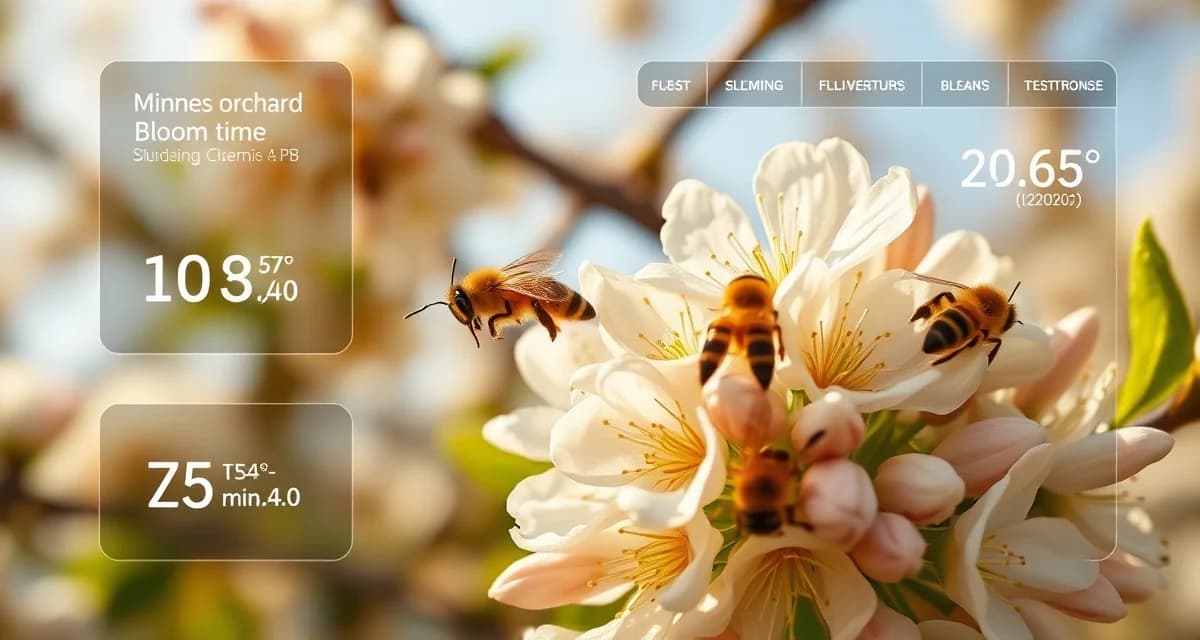
Almond Pollination Timing Software and Bloom Alerts
Almond bloom doesn't wait. It opens on its own schedule, driven by accumulated chilling hours and growing degree days, and the window when your bees can do meaningful work is narrower than most people outside the industry realize. Industry guidance calls for hive placement at 10-25% bloom, but most beekeepers miss the ideal window by a few days in at least one or two yards every season.
Early bloom in warm years has cost California beekeepers over $50M from misaligned hive placements. That's the scale of what's at stake when your timing is off.
Almond pollination timing software exists to solve this specific problem, and it's one of the most direct return-on-investment tools a commercial beekeeper working California or Arizona can use.
TL;DR
- California almond pollination consumes roughly 80% of the US commercial hive population every February, making it the most supply-constrained pollination market in the country.
- Per-hive rates have held between $185 and $220 for 6-8 frame colonies over recent seasons.
- Contracts are typically signed October through November for the following February season; operators without agreements by December are working from a weak position.
- Hive strength minimums range from 6 to 8 frames of bees depending on the grower, with premium-strength colonies commanding $200-215/hive.
- varroa management, documentation, and logistics coordination in the 6-8 weeks before delivery determine whether almond season is profitable or a breakeven event.
Why Almond Timing Is So Difficult to Predict Manually
The Central Valley spans hundreds of miles from Bakersfield to Red Bluff. Orchards in the southern valley often bloom a week or two ahead of orchards in the northern valley. Within a single almond district, bloom timing can vary significantly between varieties, orchard elevation, and microclimate.
Beekeepers who try to predict timing manually are usually working from:
- Last year's bloom date at that location
- A grower's estimate, which is often optimistic
- General regional forecasts from farm publications
All of these are rough guides. They're better than nothing. But they're not specific enough to coordinate a multi-yard, multi-contract operation across a region where timing can vary by weeks.
How Almond Bloom Timing Works
Almond bloom timing is driven by two factors working together: chilling hours accumulated during the winter, and growing degree days accumulated as temperatures rise in late January and February.
Chilling hours determine whether the tree is fully dormant-broken. Growing degree days after dormancy break determine how quickly flowers develop and open. When temperatures rise faster than typical after an adequate chilling period, bloom can advance by 7-14 days with limited warning.
In practice, this means a "normal" bloom year in the southern San Joaquin Valley starts around February 10-15, while an unusually warm year might see significant bloom by February 1-3. If you're planning your truck schedule around a February 12 delivery, a warm year can leave your bees missing the window or scrambling to get there early.
What Almond Pollination Timing Software Does
PollenOps bloom timing alerts monitor regional bloom conditions across California's major almond districts, including the southern San Joaquin Valley, the northern San Joaquin Valley, and the Sacramento Valley.
The system sends alerts 5-7 days before 10% bloom at each monitored location. This gives you enough time to make final logistics decisions, confirm truck schedules, and ensure hives are in place before peak receptivity. That's the window that matters.
The alerts integrate with your contract calendar automatically. When a bloom alert fires for a district where you have active contracts, the system ties the alert to the specific contracts and yards affected. You go from "bloom is coming" to "these three yards need to move" in one step.
Almond Contract Calendar Integration
One of the most valuable features isn't just the alert itself, it's what happens next. When a bloom alert fires, it should trigger action across multiple systems: truck scheduling, driver notification, contract deadline review, and final hive count confirmation.
With PollenOps, the bloom alert connects to your contract calendar so you can see immediately which contracts have delivery deadlines tied to the approaching bloom window. If any contract requires delivery by a specific date relative to bloom start, you'll see that flag in the same alert that tells you bloom is approaching.
For operations with 15 or 20 simultaneous almond contracts, this coordination capability is the difference between organized and chaotic.
How Early Should I Move Bees Before Almond Bloom Begins?
The standard recommendation is to have bees in place 5-7 days before 10% bloom. This allows colonies to:
- Acclimate to the new environment and establish orientation flights
- Begin foraging in the orchard before peak flower opening
- Reach maximum foraging activity by the time receptive flowers are most abundant
Moving too early (more than 10 days before bloom) isn't harmful, but it's inefficient from a logistics standpoint. You're committing yards and truck capacity before you need to.
Moving too late, even by 2-3 days past peak bloom, can meaningfully reduce your pollination effectiveness. Late-arriving colonies miss the highest-receptivity flowers, which were the first to open and the first to be fertilized by other pollinators.
What Weather Conditions Trigger Early Almond Bloom?
Almond bloom accelerates when:
- Daytime temperatures exceed 55-60°F consistently after dormancy break
- Nighttime temperatures stay above 32°F (avoiding hard freezes that damage open flowers)
- A prolonged warm spell follows adequate chilling hours
The most dangerous scenario is a warm January following a sufficient chilling period. When temperatures rise fast in late January, orchards that look dormant can go from bud swell to 20% bloom in under a week. This is when beekeepers who rely on last year's dates get caught flat-footed.
PollenOps uses local weather station data combined with accumulated chilling hour and growing degree day calculations to estimate bloom timing in real time. When the model shows bloom acceleration, the alert threshold adjusts accordingly, and you get earlier warning when conditions point to a fast bloom.
Managing Multiple Districts Simultaneously
If you're working almond contracts across multiple districts, you're essentially managing several bloom timing scenarios simultaneously. Southern valley orchards might be at 10% bloom while northern valley orchards are still at bud break. Your truck schedule has to account for both.
A dashboard that shows bloom status by district, tied to the specific contracts in each district, lets you see the whole picture at once. Prioritize southern deliveries, confirm northern timing is still tracking to forecast, and move resources accordingly.
This is the kind of multi-district coordination that simply isn't possible with last year's dates and a phone call to your growers.
Frequently Asked Questions
How do I know when almond bloom is starting in my area?
PollenOps monitors regional bloom conditions using accumulated chilling hour and growing degree day data, combined with local weather station feeds, to estimate bloom timing in each major almond district. You receive an alert 5-7 days before projected 10% bloom at your contracted locations. The alert connects directly to your contract calendar so you know immediately which placements need to move.
How early should I move bees before almond bloom begins?
Industry best practice is to have hives in place 5-7 days before 10% bloom. This allows colonies to acclimate and begin foraging before peak receptivity. Moving much earlier is logistically inefficient. Moving late, even by 2-3 days past peak bloom, reduces pollination effectiveness and can trigger contract compliance questions from growers.
What weather conditions trigger early almond bloom?
Early bloom is most common when daytime temperatures consistently exceed 55-60°F after dormancy break, nighttime temperatures remain above freezing, and adequate chilling hours have already been accumulated. A warm spell in late January following a sufficient winter chilling period can accelerate bloom by 7-14 days. PollenOps adjusts alert timing when weather data indicates accelerated bloom conditions.
How early should almond pollination contracts be negotiated?
Large almond growers and broker networks begin securing hive commitments in July and August for the following February season. Written contracts are typically signed October through November. Operators who do not have signed agreements by December are working from a weak position since most quality hive inventory is already committed. Start grower outreach in mid-summer and target signed agreements before Thanksgiving.
What documentation is required for hive delivery to California almonds?
California requires a Certificate of Health for out-of-state colonies, issued by the origin state's apiary inspection program within 30 days of entry. The certificate must certify freedom from American foulbrood, European foulbrood, and Varroa destructor below treatment threshold. Some states require small hive beetle freedom for California entry. In addition, many growers now expect documentation of pre-delivery mite counts confirming colonies are below threshold.
What happens to hives after almond season ends in late March?
Post-almond options include moving north for Pacific Northwest cherry or apple pollination in April-May, routing to Michigan or Maine blueberries in May-July, transitioning to summer honey yards in North Dakota or Montana, or staying in California for splits and rebuilding. The right choice depends on hive strength coming out of almonds and downstream contract commitments. Operators who plan their full-year circuit in advance can optimize both pollination revenue and honey production.
Try These Free Tools
Sources
- USDA Agricultural Research Service
- Bee Informed Partnership
- American Beekeeping Federation (ABF)
- Almond Board of California
- University of California Cooperative Extension
Get Started with PollenOps
Almond season is the revenue event that defines the commercial beekeeping year, and the details -- contract terms, delivery timing, hive strength documentation, and invoicing -- determine whether the season is profitable. PollenOps manages the full almond contract lifecycle from quote to final payment, with yard tracking, crew scheduling, and grower communication built in. See how it works for operations from 200 to 5,000 hives.