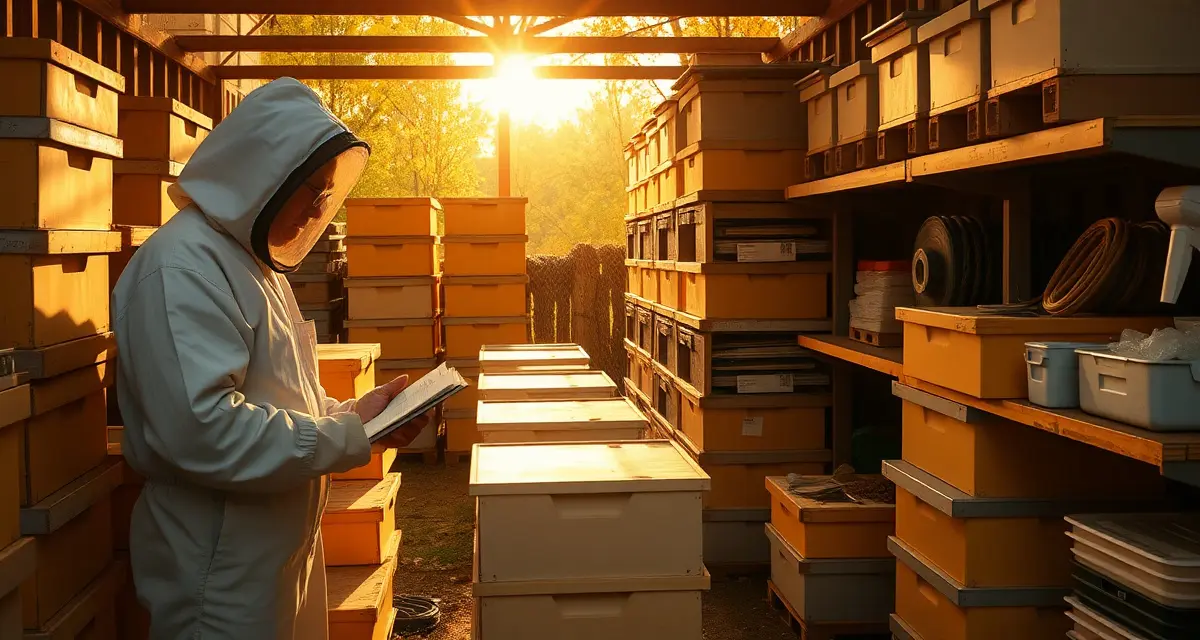
Almond Season Preparation for Commercial Beekeepers
Beekeepers who complete a formal pre-season audit are three times less likely to experience a contract failure than those who don't. The difference between a smooth February almond season and a chaotic one is almost entirely determined by what you do in October through January. The problems that become visible in February (understrength colonies, compliance documentation gaps, route conflicts, equipment failures) are all traceable to preparation decisions made months earlier.
Pre-season checklists in PollenOps link directly to contract review, strength assessment, and route planning tools so that your preparation isn't a loose to-do list but a managed workflow with documented completion. This guide covers the full preparation sequence from fall colony assessment through the morning of your first delivery.
TL;DR
- California almond pollination consumes roughly 80% of the US commercial hive population every February, making it the most supply-constrained pollination market in the country.
- Per-hive rates have held between $185 and $220 for 6-8 frame colonies over recent seasons.
- Contracts are typically signed October through November for the following February season; operators without agreements by December are working from a weak position.
- Hive strength minimums range from 6 to 8 frames of bees depending on the grower, with premium-strength colonies commanding $200-215/hive.
- varroa management, documentation, and logistics coordination in the 6-8 weeks before delivery determine whether almond season is profitable or a breakeven event.
October: Contract Review and Inventory Assessment
Review Your Active Contracts
Pull every almond contract you plan to fulfill and review the key terms: contracted hive count, strength specifications, delivery window, payment terms, and any penalty clauses. Look specifically for any terms that changed from the prior season's contract, as growers sometimes update specifications at renewal without clearly flagging the changes.
In PollenOps, open each contract record and confirm that the GPS yard location, grower portal access, and contracted specifications are current and accurate. If any contract was signed before your PollenOps setup, make sure all terms are entered correctly rather than relying on memory.
Colony Inventory Assessment
Count your actual available colony inventory with a conservative estimate of winter losses. If you have 650 colonies in October and typical winter mortality is 15 to 20 percent, your realistic February available count is 520 to 552. Contract your almond season at 85 to 90 percent of your expected available count, not 100 percent.
Document your October colony count in PollenOps inventory, noting which yards the colonies are in and their current strength assessment. This October baseline gives you a comparison point for monitoring winter development through January.
November and December: Colony Development and Equipment Preparation
Winter Feeding Program
Colonies that enter winter with 8 or more frames of bees have a 78 percent higher chance of meeting almond contract strength minimums come February. If your October assessment showed weaker colonies, a fall feeding program with protein supplement and syrup can improve your winter baseline.
Feed enough to have 60 to 80 pounds of stored food per colony going into winter. Colonies that starve in January are not going to be replaced in time for almond season. Check food stores in November and supplement as needed.
Varroa Treatment Timing
Colonies heading into winter with high mite loads produce winter bees that are physiologically compromised and die earlier in the season than low-mite-load bees. A fall oxalic acid treatment in November or early December, during the natural broodless or low-brood period in cooler climates, dramatically reduces winter mite load and improves colony survival and spring buildup speed.
For California-based operations that don't experience hard winter conditions, brood rearing continues year-round, which means a different treatment approach. Coordinate your fall treatment timing with your overwintering location's actual colony brood patterns rather than applying a Northern Plains winter timing to a subtropical winter environment.
Equipment Inspection and Repair
Inspect all equipment that will be used during almond season: trucks, forklifts, loading equipment, strapping systems, and protective equipment. A truck breakdown during the peak of February delivery scheduling is among the most expensive problems you can face, not just in repair costs but in the contract penalties and grower relationships at risk.
Check tire tread, brake pads, and lighting on every delivery vehicle. Almond deliveries happen at night and early morning; working lights aren't optional. Confirm your forklift certification is current if applicable.
January: Strength Assessment and Route Confirmation
Pre-Move Strength Assessment Protocol
By mid-January, your colonies should be building toward February strength targets. If your contracted threshold is 8 frames of bees, you need colonies that will hit 8 frames by your delivery date, not by the assessment date. Account for the typical growth rate from January assessment to February delivery.
Run a formal strength assessment on all colonies intended for almond delivery in mid-to-late January. Document results in PollenOps using the pre-move checklist that records frame count, queen status, brood pattern quality, and food stores for each colony. Colonies flagged below threshold have time for emergency intervention (feeding, requeening, or merging) before delivery.
If your January assessment shows more than 15 percent of your contracted colonies below threshold, contact your growers proactively. Proactive communication about a strength concern gives growers time to source supplemental hives from another provider if needed, which preserves the relationship even if you can't fully perform on the contract.
Route Planning and Confirmation
Confirm your delivery route with all contracted growers. Bloom timing varies year to year, and your January route plan needs to account for current-season temperature accumulation data rather than prior year averages. PollenOps bloom timing alerts pull current weather data for your contracted orchard locations and provide updated delivery window estimates.
Confirm GPS yard access for every delivery location. If a grower has changed orchard access roads, installed new gates, or modified the site since your prior season, you need to know before you arrive with a loaded truck at 3:00 AM.
Two Weeks Before First Delivery
Final Pre-Move Assessments
Run your final pre-move strength assessment no more than 5 days before each delivery. The 5-day window is important: assessment too far in advance misses strength changes in the final days before movement, and assessment too close to delivery doesn't leave time to address problems.
In PollenOps, the pre-move assessment generates a pass/fail result for each colony against the contracted threshold. Any colony flagged below threshold needs a disposition decision: replacement, emergency feeding and reassessment, or removal from the contracted delivery batch.
Document every assessment result. If a grower later questions delivered colony strength, your 5-day pre-move documentation is your primary defense.
Driver Briefing and App Confirmation
Confirm that every driver has the PollenOps mobile app installed and their login credentials working. Run a test check-in from a non-delivery yard to confirm the system is working before the season's first move. A driver who discovers their app isn't working at 2:00 AM on delivery day is a problem that's entirely preventable.
Brief all drivers on the specific delivery sequence, GPS yard locations, contracted hive counts per yard, and the check-in completion requirement for every delivery. Make clear that a delivery is not complete until the PollenOps check-in is submitted.
Day Before and Day of Delivery
Have your loading sequence planned. Know which colonies are going on which truck, in what order, and to which orchards. Load colonies onto trucks in delivery sequence: last stop on the truck is loaded first.
Confirm you have current copies of all compliance documentation: apiary registrations, health certificates, and import permits for every state you'll be moving through. Keep physical copies in every delivery truck and digital copies in PollenOps for instant access if an inspection occurs.
Frequently Asked Questions
What do I need to do before almond season starts?
The critical pre-season tasks are: contract review and terms confirmation in October, colony inventory assessment and winter feeding in November, varroa fall treatment, equipment inspection, a formal pre-move strength assessment in January, route confirmation with updated bloom timing data, and final pre-move assessments within 5 days of each delivery. Each step should be documented in PollenOps so the preparation record is available if any contract compliance question arises later. The pre-season checklist in PollenOps links directly to the tools needed for each step.
When should I start reviewing contracts for the upcoming almond season?
October is the right time for contract review, which gives you three to four months to address any issues before February delivery. Check each contract for strength specifications, delivery window, payment terms, and penalty clauses. Update PollenOps contract records to match signed terms. Reach out to growers about any changes from the prior season by November at the latest so both parties enter the winter period with aligned expectations.
How do I make sure my hives are strong enough for almond pollination?
Start with a comprehensive colony assessment in October and a winter feeding program if colonies are below target strength for the season. A mid-January strength assessment in PollenOps identifies colonies below contracted threshold with enough time for emergency intervention before delivery. A final pre-move assessment within 5 days of delivery confirms condition at movement. Colonies with 8 or more frames of bees going into winter have significantly better odds of meeting February contracts than those entering at 5 or 6 frames, so fall investment in colony condition is the highest-ROI pre-season activity.
How early should almond pollination contracts be negotiated?
Large almond growers and broker networks begin securing hive commitments in July and August for the following February season. Written contracts are typically signed October through November. Operators who do not have signed agreements by December are working from a weak position since most quality hive inventory is already committed. Start grower outreach in mid-summer and target signed agreements before Thanksgiving.
What documentation is required for hive delivery to California almonds?
California requires a Certificate of Health for out-of-state colonies, issued by the origin state's apiary inspection program within 30 days of entry. The certificate must certify freedom from American foulbrood, European foulbrood, and Varroa destructor below treatment threshold. Some states require small hive beetle freedom for California entry. In addition, many growers now expect documentation of pre-delivery mite counts confirming colonies are below threshold.
What happens to hives after almond season ends in late March?
Post-almond options include moving north for Pacific Northwest cherry or apple pollination in April-May, routing to Michigan or Maine blueberries in May-July, transitioning to summer honey yards in North Dakota or Montana, or staying in California for splits and rebuilding. The right choice depends on hive strength coming out of almonds and downstream contract commitments. Operators who plan their full-year circuit in advance can optimize both pollination revenue and honey production.
Try These Free Tools
Sources
- USDA Agricultural Research Service
- Bee Informed Partnership
- American Beekeeping Federation (ABF)
- Almond Board of California
- University of California Cooperative Extension
Get Started with PollenOps
Almond season is the revenue event that defines the commercial beekeeping year, and the details -- contract terms, delivery timing, hive strength documentation, and invoicing -- determine whether the season is profitable. PollenOps manages the full almond contract lifecycle from quote to final payment, with yard tracking, crew scheduling, and grower communication built in. See how it works for operations from 200 to 5,000 hives.