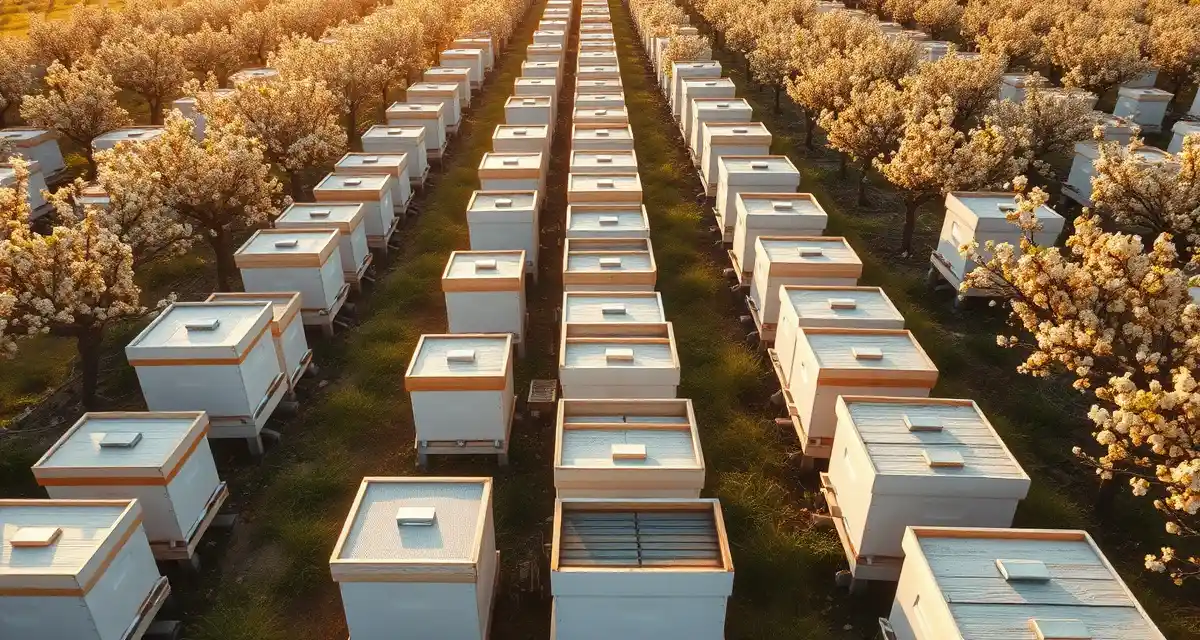
Almond Season Hive Demand: Understanding the Market
California almond growers require over 1.5 million hive rentals annually, representing 75% of US commercial pollination revenue. No other crop in America concentrates this much demand into a single 3-4 week window. For commercial beekeepers, almond season isn't just a contract. It's the financial backbone of the entire year.
Understanding the almond hive demand market means understanding why it works the way it does, who controls the pricing, and how to position your operation to capture the best contracts before the rush.
TL;DR
- California almond pollination consumes roughly 80% of the US commercial hive population every February, making it the most supply-constrained pollination market in the country.
- Per-hive rates have held between $185 and $220 for 6-8 frame colonies over recent seasons.
- Contracts are typically signed October through November for the following February season; operators without agreements by December are working from a weak position.
- Hive strength minimums range from 6 to 8 frames of bees depending on the grower, with premium-strength colonies commanding $200-215/hive.
- varroa management, documentation, and logistics coordination in the 6-8 weeks before delivery determine whether almond season is profitable or a breakeven event.
Why Almonds Drive the Market
California grows over 80% of the world's almonds. The state's entire commercial crop depends on cross-pollination by honeybees. Wind doesn't do it. Almonds are self-incompatible, meaning pollen from one variety must reach blossoms of a different variety. Without enough bees distributed evenly across the orchard, nut set is low and yield suffers dramatically.
The math on demand is simple. California has approximately 1.4 million bearing almond acres. The standard recommendation is 2 hives per acre for almonds. That's 2.8 million hives needed. The US colony count sits around 2.7-2.9 million total at any given time, and not all of those are available for California.
The result is a supply-constrained market every year. Demand exceeds available supply, prices rise, and beekeepers who have professional contracts locked in early capture the premium rates.
The Pricing Structure
California almond pollination rates have climbed from roughly $100-130 per hive in 2010 to $185-225 per hive for strong colonies in 2025. Premium placements with large growers in high-yield blocks command the top of that range.
What drives pricing:
Colony strength: Strong colonies (8-frame or better) command rates 15-25% above minimum-strength colonies. The market has learned to price quality.
Timing certainty: Beekeepers who can commit to specific delivery windows and demonstrate a track record of hitting them get higher rates than those who are vaguer about timing.
Documentation: As almond growers get more sophisticated about compliance verification, beekeepers with professional documentation systems can justify premium rates. A grower paying $220/hive wants to see strength records.
Contract type: Long-term relationships (same beekeeper, same grower, 3-5+ years) tend to settle at rates slightly below the spot market premium but with greater price stability.
The Demand Forecast for 2026 and Beyond
The PollenOps almond demand forecast tool pulls from USDA acreage data to estimate hive demand for the coming season. For 2026, the relevant inputs:
California almond acreage grew 8% from 2023 to 2025, adding an estimated 80,000 additional colonies of demand to the market. New plantings take 3-4 years to reach bearing age, so acreage planted in 2021-2022 is now beginning to flower.
On the supply side, colony counts have been under pressure from varroa, pesticide exposure, and habitat loss. The supply-demand gap is not closing. For beekeepers, that means pricing pressure remains favorable.
The PollenOps demand forecast helps you decide how many hive commitments to take before the season starts. Knowing what the market looks like in aggregate helps you avoid underselling or overcommitting.
When to Lock In Contracts
Almond contracts move on a specific calendar. The operations that wait until December or January are typically bidding for the contracts premium growers didn't pick up from their trusted beekeepers in October.
September-October: Large almond operations start conversations with beekeepers for the coming February. This is when premium contracts get offered to preferred suppliers.
November: Most large contracts are committed. Mid-size growers are negotiating. Beekeepers who are proactive at this stage are filling capacity with good contracts.
December-January: The spot market. Beekeepers picking up contracts now are typically accepting lower rates or working with growers who had a supplier fall through. Not necessarily bad, but you're no longer in the driver's seat on pricing.
Use PollenOps annual pollination contract planning tools to track your contracted capacity against your projected hive count throughout this planning window.
How Many Hives Do Growers Need?
The standard is 2 hives per acre for almonds. Some operations with older trees or well-managed bee attractants will accept 1.5/acre. Some premium blocks pushing maximum yield target 2.5/acre.
A 500-acre almond operation needs 750-1,000 hives. A 2,000-acre operation needs 3,000-4,000 hives. Operations this size typically work with multiple beekeepers or use a broker to coordinate supply.
For your operation, capacity planning works in the other direction: how many acres can you service?
500 hives at 2/acre covers 250 acres. That's a single mid-size almond ranch.
1,000 hives covers 500 acres or two mid-size operations.
2,000 hives covers a large almond operation or multiple medium operations.
Most beekeepers who hit this capacity threshold find that almond season alone covers their annual operating costs.
Diversification Beyond Almonds
The concentration of revenue in a single crop and a single 3-4 week window creates real risk. Disease years, weather events, or even a California water crisis reducing almond acreage can have outsized impacts.
Many top commercial operators use almonds as their financial anchor and build a circuit that adds pollination contracts in spring (cherries, apples, blueberries) and summer (cucurbits, clover seed) to diversify.
The almond pollination management tools in PollenOps are built specifically for the California season, but the platform supports the full annual circuit beyond almonds.
Frequently Asked Questions
How many hives do California almond growers need per season?
California almond growers typically require 2 hives per acre at minimum, with some premium operations targeting 2.5 per acre. Across California's approximately 1.4 million bearing almond acres, total demand exceeds 1.5 million hive rentals annually. Individual grower needs range from 100-200 hives for a small family operation to 5,000-8,000 hives for large corporate operations. The demand is consistent because almond yields drop significantly without adequate bee density during the 3-4 week bloom window. Hive availability is constrained nationally, which is why California almond pollination rates are the highest in US agriculture.
Why is almond season so important for commercial pollination beekeepers?
Almond season generates approximately 75% of US commercial pollination revenue in a 3-4 week window each February. No other crop concentrates this much demand at such high per-hive rates. A 500-hive operation fully contracted for almonds at $200/hive generates $100,000 in a single month, which for many operations covers their entire annual operating cost. The supply-constrained market means pricing has trended upward consistently since 2010. Beekeepers who can reliably deliver strong colonies to California almond growers have the most financially secure commercial operations in the industry.
How far in advance should I lock in almond pollination contracts?
The best almond contracts are negotiated in September and October for the following February season. Large growers start conversations with their preferred beekeepers in early fall, and premium placements commit before November. Waiting until December or January means working with growers who didn't secure supply from their regular contacts, which often means accepting lower rates. If you're new to California almonds, starting conversations at industry events (Western Apicultural Society, state beekeeping conferences) in summer and following up with written proposals in September gives you the best positioning.
How early should almond pollination contracts be negotiated?
Large almond growers and broker networks begin securing hive commitments in July and August for the following February season. Written contracts are typically signed October through November. Operators who do not have signed agreements by December are working from a weak position since most quality hive inventory is already committed. Start grower outreach in mid-summer and target signed agreements before Thanksgiving.
What documentation is required for hive delivery to California almonds?
California requires a Certificate of Health for out-of-state colonies, issued by the origin state's apiary inspection program within 30 days of entry. The certificate must certify freedom from American foulbrood, European foulbrood, and Varroa destructor below treatment threshold. Some states require small hive beetle freedom for California entry. In addition, many growers now expect documentation of pre-delivery mite counts confirming colonies are below threshold.
What happens to hives after almond season ends in late March?
Post-almond options include moving north for Pacific Northwest cherry or apple pollination in April-May, routing to Michigan or Maine blueberries in May-July, transitioning to summer honey yards in North Dakota or Montana, or staying in California for splits and rebuilding. The right choice depends on hive strength coming out of almonds and downstream contract commitments. Operators who plan their full-year circuit in advance can optimize both pollination revenue and honey production.
Try These Free Tools
Sources
- USDA Agricultural Research Service
- Bee Informed Partnership
- American Beekeeping Federation (ABF)
- Almond Board of California
- University of California Cooperative Extension
Get Started with PollenOps
Almond season is the revenue event that defines the commercial beekeeping year, and the details -- contract terms, delivery timing, hive strength documentation, and invoicing -- determine whether the season is profitable. PollenOps manages the full almond contract lifecycle from quote to final payment, with yard tracking, crew scheduling, and grower communication built in. See how it works for operations from 200 to 5,000 hives.