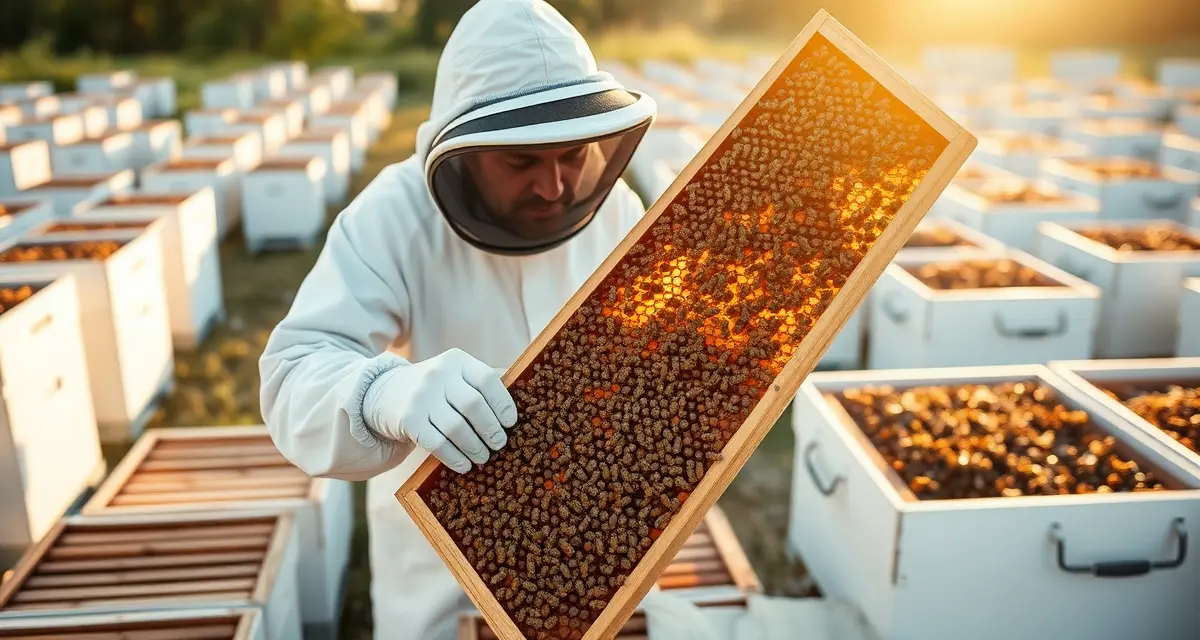
Beekeeper Gross Revenue Calculator for Pollination Operations
The average well-managed 500-hive pollination operation grosses $80,000 to $150,000 per season. The range is wide because revenue depends on which crops you're serving, your regional rates, your contract fill rate, and how many seasons of activity you pack into a single year.
The PollenOps gross revenue calculator closes that uncertainty by building your projection from real inputs: your hive count, your target crops, and market rate data from the PollenOps network. This isn't a back-of-envelope estimate. It's a season revenue plan you can use to negotiate contracts, secure financing, and set performance targets.
TL;DR
- Commercial beekeeping operations face two primary management challenges: operational logistics (hive health, transport, placement) and administrative coordination (contracts, payments, documentation).
- Most disputes and revenue losses in commercial beekeeping are preventable with better documentation and clearer contract terms.
- The operations that run most profitably are those with disciplined systems for tracking hive health, contract status, and fleet logistics in one place.
- PollenOps is built specifically for the operational complexity of commercial-scale pollination services, not adapted from a hobbyist tool.
- The most important management decisions (treatment timing, contract renewal, hive allocation) require accurate current data to make well.
How the Calculator Works
The PollenOps revenue calculator uses three inputs:
- Your hive count: How many colonies you expect to have in contract-ready condition for each crop and timing window.
- Your target crops and regions: Almond, blueberry, cherry, apple, clover seed, cucurbit, and others. Each crop has regional rate ranges pulled from the PollenOps operator network.
- Your projected contract fill rate: What percentage of your available hive capacity do you expect to fill with contracts? A full-season estimate of 80% is realistic for an established operation; 60-70% is common for newer operations still building grower relationships.
The calculator outputs a gross revenue estimate by crop, by season leg, and as an annual total. You can model multiple scenarios: almond-only, multi-crop circuit, or a full-season plan with both pollination and honey production revenue.
Revenue Benchmarks by Hive Count
These benchmarks use a multi-crop circuit model at mid-market rates, not a single-crop scenario.
200 hives:
- Almond only: $37,000-$45,000 (200 hives × $185-225)
- Multi-crop circuit (almonds + spring blueberry + summer cucurbit): $52,000-$68,000
500 hives:
- Almond only: $92,500-$112,500
- Multi-crop circuit: $130,000-$170,000
1,000 hives:
- Almond only: $185,000-$225,000
- Multi-crop circuit: $260,000-$340,000
2,000 hives:
- Almond only: $370,000-$450,000
- Multi-crop circuit: $520,000-$680,000
These figures are gross revenue, not profit. Operating costs for a commercial pollination operation typically run 40-60% of gross revenue, depending on your cost structure.
Regional Rate Inputs
The calculator pulls current regional rates from the PollenOps network. Here are the approximate ranges by crop (2025 data):
| Crop | Rate Range (per hive) |
|------|----------------------|
| California Almonds | $185-$225 |
| Pacific Northwest Cherry | $90-$130 |
| Washington Apple | $85-$120 |
| Michigan Blueberry | $80-$115 |
| Maine Wild Blueberry | $75-$110 |
| Georgia/NC Blueberry | $75-$100 |
| Wisconsin Cranberry | $70-$100 |
| Idaho Clover Seed | $50-$80 |
| Cucurbit (regional) | $60-$90 |
The top of each range reflects strong colonies with professional documentation, established grower relationships, and early contract commitments. The bottom of the range is typically spot market or first-year relationship pricing.
Use per-hive rate calculation tools in PollenOps to benchmark your own pricing against these ranges.
Building Your Season Plan
The revenue calculator is most useful when you use it to build a full season plan, not just calculate a single-crop number.
Step 1: Enter your hive count for each seasonal leg (February almond, April-May spring fruit, June-July seed crop, etc.).
Step 2: Select your target crops and regions for each leg.
Step 3: Set your expected contract fill rate for each leg (higher for crops where you have established relationships, lower for new crops).
Step 4: Review the gross revenue projection by leg and total.
Step 5: Compare your total to your projected operating costs to see net margin.
This planning process in PollenOps is connected to pollination contract software, so as you actually sign contracts, the projected revenue in the calculator updates to reflect confirmed rather than estimated income.
What the Calculator Doesn't Include
Honey production revenue: The PollenOps calculator has a separate honey production module if you're running honey operations alongside pollination. The gross revenue calculator covers pollination contract income only.
Colony loss: The model assumes your contracted hive count is available and deployable. If you're projecting for a new season, build in a 10-15% loss buffer when setting your available hive count.
Payment timing: Gross revenue is the amount you'll invoice, not necessarily the amount you'll receive in cash within the season. Some growers pay at delivery; others pay net 30-60. Your cash flow may differ from your revenue projection.
Frequently Asked Questions
How much can I earn from pollination contracts with 200 hives?
A 200-hive operation focused on California almonds can gross $37,000-$45,000 in a single February season at $185-225 per hive. If you add a spring fruit crop (blueberry or cherry) and a summer cucurbit placement, a 200-hive multi-crop circuit can gross $52,000-$68,000 per year. At 200 hives, you're at the lower end of commercial scale, so your per-hive costs are higher than a 1,000-hive operation. Net margins are tighter, but a well-managed 200-hive operation can generate full-time income for one person. The PollenOps revenue calculator lets you model different crop and circuit scenarios to find your best revenue path.
What is the average gross revenue for a 500-hive commercial pollination operation?
A well-managed 500-hive pollination operation grosses $80,000-$150,000 per season. The lower end reflects an almond-focused operation with limited diversification; the upper end reflects a multi-crop circuit that includes almond, spring fruit, and summer crops. Operations in the $130,000-$150,000 range at 500 hives are typically running 2-3 pollination contracts per colony per year across an almond-to-circuit model. Revenue per hive across the full season ranges from $160 to $300 depending on the crop mix. The PollenOps gross revenue calculator models this full-season view using current market rate data from the operator network.
How does PollenOps calculate my projected season revenue?
PollenOps takes your input hive count, target crops, regions, and expected contract fill rate, then applies current regional market rate ranges from the PollenOps network. The calculator outputs a range (low, mid, and high estimate) based on where your pricing falls within the market rate band. As you sign actual contracts, the projected revenue updates to reflect your confirmed rates and hive counts. The projection also connects to your PollenOps contract timeline so you can see which weeks your hives are contracted, which weeks they're between placements, and how total contracted time affects your annual gross. The calculator is available in the financial planning section of your PollenOps dashboard.
What is the difference between commercial and hobby beekeeping?
Commercial beekeeping is distinguished by scale (typically 100+ hives, often 500-5,000+), revenue source (pollination contracts and bulk honey sales rather than local honey retail), and management approach (systematic protocols applied across yards rather than individual colony attention). Commercial operators manage bees as an agricultural enterprise, with the administrative, regulatory, and logistical complexity that entails. Most commercial operators derive the majority of their income from pollination services; honey production is a supplementary revenue stream.
How many hives are needed to make commercial beekeeping a full-time income?
Most beekeeping economists put the full-time commercial threshold at 500-800 hives, assuming efficient operations management and a combination of pollination and honey revenue. At 500 hives and $200/hive for almond pollination, almond season alone generates $100,000 in gross revenue before expenses. Net margins depend on operational efficiency, but well-run operations can achieve 30-50% net margins on pollination revenue. Additional crops and honey production improve per-hive economics but require additional management capacity.
What is the annual revenue potential for a 1,000-hive commercial operation?
A 1,000-hive operation running an almond season ($200/hive) plus blueberry or apple contracts ($80-100/hive) plus summer honey production ($25-40/hive after extraction costs) can generate $300,000-360,000 in annual gross revenue. Net margins after transport, crew, equipment, and hive replacement costs typically run 25-40% for well-managed operations, putting net income at $75,000-145,000 annually. The specific number depends heavily on circuit efficiency, loss rates, and contract quality.
Try These Free Tools
Sources
- USDA Agricultural Research Service
- Bee Informed Partnership
- American Beekeeping Federation (ABF)
- American Honey Producers Association
- Project Apis m.
Get Started with PollenOps
Managing a commercial beekeeping operation involves more data, more deadlines, and more moving parts than any general-purpose tool was designed to handle. PollenOps brings contracts, yard records, health documentation, and fleet logistics together in one platform built for the realities of commercial-scale beekeeping.