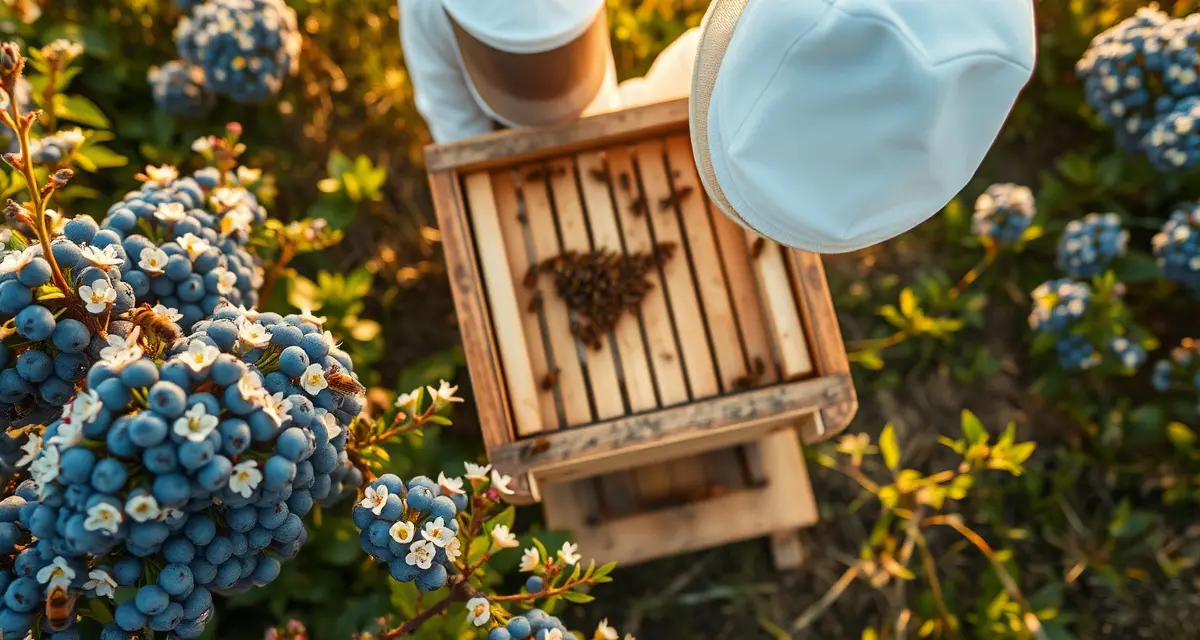
Blueberry Pollination Schedule and Contract Management
Blueberry pollination is one of the more demanding crop placements you'll do, and not just because the bloom windows are short. It's demanding because blueberry growers tend to be very specific about timing, hive density requirements are high, and the logistics of getting in and out of berry fields can be genuinely challenging.
Michigan highbush blueberry growers require 2-4 hives per acre for effective pollination. When you're filling a 200-acre contract, that's 400-800 hives in a single yard, which means multiple trucks, careful setup coordination, and a tight turnaround when bloom ends.
Getting blueberry pollination management right requires crop-specific bloom tracking, organized contract documentation, and logistics planning that accounts for the speed of berry season.
TL;DR
- Commercial blueberry pollination requires 2-4 hives per acre depending on variety and field density.
- Blueberry bloom windows are narrow (7-14 days) and vary by region from late February in Alabama to July in Maine.
- Lowbush blueberry in Maine operates under a different management model than highbush operations in Michigan, New Jersey, and the Pacific Northwest.
- Hive strength requirements for blueberry contracts typically range from 5-7 frames of bees depending on the grower.
- Coordinating delivery timing across multiple growers within a compressed bloom window is the primary logistics challenge in blueberry season.
Highbush vs Lowbush Blueberry: Why They Need Separate Tracking
Most commercial beekeepers work highbush blueberries in Michigan, New Jersey, Oregon, and Washington. A smaller number work lowbush (wild) blueberries in Maine, Quebec, and other northeastern regions.
These are different crops with different bloom timing, different hive density requirements, and different logistics. Highbush blueberries are planted in rows on cultivated land, making access relatively straightforward. Lowbush wild blueberries grow across rocky barrens that may be accessible only on dry days with specific equipment.
PollenOps tracks highbush and lowbush blueberry bloom on separate schedules by region, because applying a single "blueberry bloom" forecast to both crops would generate inaccurate alerts. In Maine, wild blueberry bloom can run 2-3 weeks later than highbush bloom in the same state.
When Does Blueberry Bloom Start in Michigan?
Michigan's highbush blueberry season is the largest commercial blueberry pollination market in the contiguous US, accounting for approximately 25% of national highbush production.
In Van Buren and Allegan counties, the heart of Michigan's blueberry belt:
- Early varieties (Duke, Patriot): typically late April to early May
- Main season varieties (Bluecrop, Elliott): mid to late May
- Late varieties: into June
Timing shifts by a week or more depending on winter temperatures and spring weather. In a warm year, Duke bloom may start in the last week of April. In a late spring, the same orchards might not open until the second week of May.
Michigan weather during blueberry bloom can be cold and wet. Bees don't fly well below 55°F, and May temperatures in southwest Michigan regularly dip below that threshold. This makes placement timing critical, because you need colonies in place and oriented before bloom rather than arriving at peak bloom when flight conditions are already marginal.
How Many Hives Do I Need Per Acre for Blueberry Pollination?
Industry standards by crop type:
- Highbush blueberry: 2-4 hives per acre is the standard range, with many Michigan growers requesting 3 hives per acre as a default
- Lowbush (wild) blueberry: 2-3 hives per acre, though some growers place more given the patchy bloom patterns across barrens
- Rabbiteye blueberry (Southeast): 1-2 hives per acre, with native bumblebees doing significant additional work
Highbush rates are higher than most fruit tree crops because blueberry flowers are bell-shaped (urceolate), which means honeybees have to work harder to access nectar and pollen. Native bees, especially bumblebees, are more effective per individual visit, but rarely available in the density commercial production requires. Honeybees make up for efficiency with volume.
When you're quoting a blueberry contract, clarify whether the grower's acreage figure refers to planted acres or harvested acres. Large operations often plant in blocks with headlands and windbreaks that reduce the effective planted area. Your contract should specify the basis for the hive count calculation.
How Do I Handle Early Spring Cold Snaps That Affect Blueberry Bloom?
Late frosts after bloom opens are a real risk in Michigan, New Jersey, and other northern blueberry states. When temperatures drop below 28°F with open flowers, the fruit set from those flowers is gone. Growers sometimes respond by requesting that beekeepers stay in place longer, hoping the remaining open flowers can still be fertilized.
This creates a contract management challenge: your bees are locked in a location past your planned departure date, which may conflict with your next contract commitment.
Handling this well requires clear contract language around what happens when weather extends the requested placement period. Your contract should specify your service period in terms of a date range, not just "during bloom," and should define what compensation applies if the grower requests you remain beyond the contracted end date.
PollenOps pollination contract management keeps your contract terms and your bloom timing data in the same place, so if a grower calls asking you to stay an extra week, you can pull up the contract terms and your existing commitments simultaneously before you answer.
Oregon and Washington Blueberry Pollination
Oregon and Washington have growing commercial highbush blueberry industries, particularly in the Willamette Valley and the Puget Sound area.
Oregon Willamette Valley highbush bloom typically runs late April through May, with coastal microclimates blooming somewhat later than inland valley locations. Oregon's blueberry season comes after cherry season in many regions, making it a natural cascade destination for beekeepers coming off cherry contracts.
Washington's blueberry operations are concentrated in the Skagit Valley and other western Washington lowlands. Bloom timing there is similar to Oregon's, though Washington's western coastal influence can create more variable weather during bloom.
New Jersey Blueberry
New Jersey ranks among the top blueberry-producing states. The southern NJ pine barrens region is particularly suited to blueberries, and the state's highbush industry relies heavily on commercial pollination services.
New Jersey highbush bloom typically starts in late April in the south and extends into late May in the north. The geographic concentration of New Jersey's blueberry industry makes it possible to service multiple large contracts from a relatively compact yard network, which is an operational advantage compared to Michigan's more spread-out geography.
Berry Season Planning with PollenOps
The berry pollination contract management tools in PollenOps track bloom timing for all major berry crops, including blueberry varieties by state and production region.
Your blueberry contracts are tied to the relevant bloom timing model for the specific variety and location. When bloom alerts fire, they're connected to your contract deadlines and your yard move schedule, so you can see immediately whether your planned delivery timing is aligned with the approaching bloom window.
For operations working multiple blueberry contracts across different regions and varieties, the contract calendar view shows all approaching bloom events together, so you can spot scheduling conflicts well before they become operational problems.
Frequently Asked Questions
When does blueberry bloom start in Michigan?
In Michigan's core blueberry belt (Van Buren and Allegan counties), early varieties like Duke typically start in late April to early May. Main season varieties like Bluecrop bloom in mid-to-late May. All dates shift by a week or more based on spring weather. In a warm year, early variety bloom may begin in the last week of April. PollenOps provides county-level bloom timing estimates updated as spring weather data accumulates.
How many hives do I need per acre for blueberry pollination?
Highbush blueberry growers typically require 2-4 hives per acre, with 3 hives per acre being the most common request in Michigan. Wild (lowbush) blueberry operations typically use 2-3 hives per acre. Rabbiteye blueberry growers in the Southeast generally require 1-2 hives per acre with native pollinators providing supplemental service.
How do I handle early spring cold snaps that affect blueberry bloom?
Build clear date-range service periods into your blueberry contracts, rather than open-ended "during bloom" terms. Specify in the contract what compensation applies if the grower requests placement beyond the contracted end date. Keep your bloom timing data and contract terms in the same platform so you can assess a grower's extension request against your existing commitments before committing to an answer.
What is the difference between lowbush and highbush blueberry pollination requirements?
Lowbush blueberry (Vaccinium angustifolium), grown primarily in Maine and eastern Canada, is managed as a wild crop in natural fields and requires 2-4 hives per acre. Highbush blueberry, grown commercially in Michigan, New Jersey, Oregon, and Washington, is a cultivated crop with different density requirements (typically 2-3 hives per acre). Lowbush bloom happens in late June to early July in Maine, while highbush bloom varies from May in the Mid-Atlantic to July in northern Michigan.
How long is the blueberry pollination placement period?
Blueberry pollination placements typically run 2-4 weeks, covering the full bloom window plus a few days before and after. Hives should be in position 1-2 days before peak bloom to allow forager orientation. Removal timing is typically negotiated in the contract and often coincides with petal fall or a set number of days after delivery. Most blueberry contracts specify 3-4 weeks of placement.
Can blueberry pollination contracts be combined with other crops in the same region?
Yes, and this is how experienced operators build efficient circuits. In the Pacific Northwest, blueberry season in June-July follows apple and cherry pollination in April-May. In New England, blueberry contracts in Maine (July) can follow apple pollination in Massachusetts and New York (May). Michigan blueberry in May-June can precede summer honey flows in the northern Midwest. Sequencing crops within a region reduces transport costs and maximizes revenue per hive per season.
Try These Free Tools
Sources
- USDA Agricultural Research Service
- Bee Informed Partnership
- American Beekeeping Federation (ABF)
- University of Maine Cooperative Extension
- Michigan State University Extension Apiculture Program
Get Started with PollenOps
Blueberry pollination across multiple growers and states requires tight coordination between delivery timing, hive inventory, and contract documentation. PollenOps tracks each grower's contract terms alongside your hive assignments and yard locations so your team executes on the schedule you planned, not the schedule you remember.