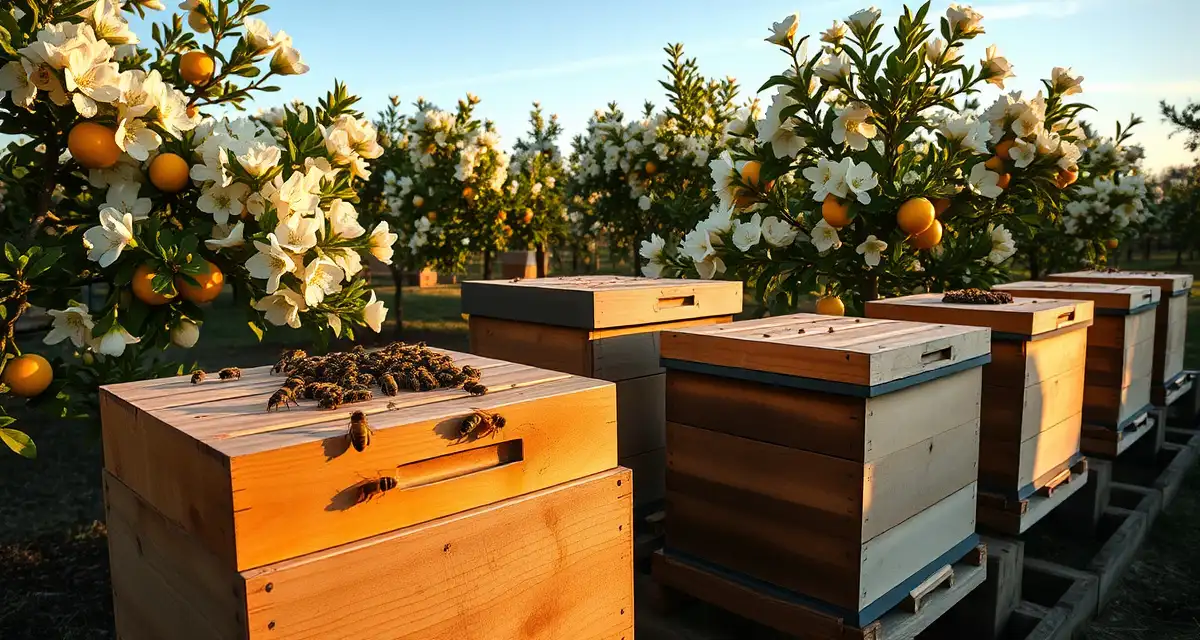
Citrus Pollination in Florida: Beekeeping Contract Opportunities
Florida's citrus acreage has declined 70% from its peak due to citrus greening disease, but the remaining production still represents significant pollination demand. Florida citrus yards serve a dual purpose that makes them uniquely valuable for northern migratory operations. Colonies wintering in a citrus grove produce pollination income on what would otherwise be a maintenance stop.
The Florida citrus circuit has contracted significantly, but for operations that are already wintering in Florida, citrus pollination contracts are the logical extension of those yard relationships. You're already there. The grower needs bees. The math works.
TL;DR
- Florida citrus pollination is primarily relevant for varieties that benefit from bee activity; many commercial citrus varieties are largely self-pollinating.
- The Florida citrus belt runs from the Lake Wales Ridge through the Indian River region; bee placement in citrus must comply with pesticide notification requirements.
- Citrus bloom produces significant nectar flows that can build colonies during the rental period.
- California citrus growers occasionally contract hives for navel orange and specialty citrus varieties that benefit from cross-pollination.
- hive placement in citrus requires careful coordination with the grower's spray program to avoid pesticide losses.
Florida Citrus Production: Current State
Citrus greening (Huanglongbing, HLB) has devastated Florida's citrus industry since it was first detected in 2005. Production has fallen from approximately 100 million boxes annually in the early 2000s to 15-25 million boxes in recent years. Acreage has declined from 900,000 bearing acres to under 300,000 acres.
The primary citrus regions that remain commercially significant:
- Central Florida (Polk, Highlands, Hardee, DeSoto, Hendry counties): The core of Florida's citrus industry, with a mix of orange, grapefruit, and specialty varieties
- Indian River region (St. Lucie, Indian River, Martin counties): Premium Indian River grapefruit production, a protected geographic designation
- North Florida and panhandle: Limited production; more susceptible to frost damage than central Florida
Despite the decline, Florida citrus still requires pollination for some varieties. Valencia orange, navel orange, and several tangerine/mandarin varieties benefit measurably from bee pollination for yield and fruit set.
Which Citrus Varieties Need Bees
Not all Florida citrus requires bee pollination. Understanding which varieties benefit helps you target contract opportunities:
Varieties that benefit significantly from bee pollination:
- Valencia orange: The most significant Florida citrus variety. Valencia is partially self-incompatible and shows 15-25% yield increases with adequate bee pollination.
- Tangerines and mandarins (Honey, Murcott, Sunburst, Hamlin): Most mandarin-type citrus varieties are improved by cross-pollination.
- Specialty citrus (Cara Cara, Moro blood orange, tangelos): Many specialty varieties benefit from bee pollination.
Varieties less dependent on bee pollination:
- Navel orange: Generally self-compatible and produces acceptable yields without dedicated pollination. Some growers still use bees for insurance.
- Persian lime: Wind-pollinated, does not benefit from bee placement.
- Standard grapefruit: Self-compatible; bee pollination benefit is minimal.
Timing and Contract Terms
Florida citrus bloom occurs in late February through April, with the precise timing depending on variety, location, and winter temperatures. The main bloom window:
- February-early March: Early varieties and southern locations (Miami-Dade, Hendry)
- March: Peak bloom for most central Florida citrus
- March-April: Later varieties and northern locations
The bloom timing for most Florida citrus overlaps with or immediately follows the California almond season (February), which is logistically convenient for operations moving from almonds to Florida for spring commitments. You're heading east anyway; a Florida citrus stop before moving to Georgia or the Carolinas fits naturally.
Contract rates: Florida citrus pollination pays $60-85/hive, lower than almonds or berries but useful for colonies already in the state on maintenance. Some growers offer simple verbal agreements for wintering beekeepers; more organized operations use written contracts that specify colony count, strength minimums (typically 4-6 frames for citrus), placement date, and payment terms.
Duration: Citrus contracts typically run 3-6 weeks: the active bloom period plus a buffer on each side. Some growers prefer a one-time placement and removal; others want colonies on-site longer for extended bloom periods on mixed-variety properties.
The Dual-Purpose Florida Yard
The strategic value of Florida citrus yards is the dual-income from a single placement:
An operation wintering 400 hives in central Florida has already committed to the yard relationship. You're paying for access, managing the yard through winter, and handling the logistics of being in Florida from October through January. Adding a citrus pollination contract for February-March generates $24,000-34,000 (400 hives × $60-85) from the same yard relationship.
That income doesn't require an additional truck move, an additional driver, or an additional interstate permit. The colonies are already there. The grower is already using your yard. The citrus contract is incremental revenue on fixed costs you're already incurring.
For an operation doing the California-Florida-California circuit (fall move south, February move west), the Florida citrus window either conflicts with almond delivery timing or serves as a transition period. Operators who can sequence their almond delivery completion by early February and return east for late February-March citrus bloom sometimes run both. The logistics are tight but feasible.
Africanized Bee Considerations
Florida's AHB presence is concentrated in South Florida but extends into central Florida in some areas. Most of the central Florida citrus production area (Polk, Highlands counties) is in a zone of lower AHB density than South Florida, but it's not AHB-free.
For operations bringing colonies from AHB-free states (most northern states) and wintering them in central Florida, the primary risk is feral AHB drone flight contaminating your queens. Requeening with known non-AHB genetics before or after a Florida winter reduces this risk. Monitoring colony defensive behavior is important, as a change toward unusually defensive colonies may indicate AHB genetic introduction.
Operations placing colonies in South Florida for citrus or winter have higher AHB exposure. Consider the implications for colonies that will subsequently move to California. CDFA may provide additional inspection scrutiny for colonies from AHB-positive zones.
Florida Honey Production During Winter
Florida's winter flora provides limited but real honey production for colonies on winter management. The primary sources:
Brazilian pepper (Schinus terebinthifolia): Invasive but a major Florida honey crop. Blooms fall through early winter (October-January). Strong flow in South Florida. Brazilian pepper honey is amber, distinctly flavored, and sought by some specialty honey buyers. Production from this flow varies by location and year.
Cabbage palm (Sabal palmetto): Spring-blooming, February-April. Light-colored honey, mild flavor.
Wildflower mixes: Central Florida roadsides and natural areas produce varied wildflower flows through winter.
Most commercial operators wintering in Florida don't prioritize honey production. The goal is colony maintenance and spring buildup, not honey yield. But honey supers added during active flows can capture 10-25 lbs/colony from the Brazilian pepper or palm bloom, which at current market prices ($1.80-2.50/lb) generates a modest but real income supplement.
Finding Florida Citrus Contracts
The Florida citrus industry's contraction has also reduced the number of active pollination service buyers. Established grower relationships are the primary pathway to contracts.
How to find citrus pollination clients:
- Florida State Beekeepers Association member directories and meetings
- Florida Citrus Mutual grower network referrals
- Direct approach to citrus growers in the target counties (Polk, Highlands)
- Contact agricultural extension agents in target counties, who often know which growers are actively seeking pollination services
The professional credentials that help: a signed contract template, a track record of California almond delivery (which validates your colony strength capability), and grower communication tools that show growers you'll manage the contract professionally rather than informally.
FAQ
Is Florida citrus worth pursuing for pollination contracts?
For operations already wintering colonies in Florida, yes: citrus pollination contracts at $60-85/hive on colonies already in the state are incremental revenue on fixed costs. For operations that would need to make a dedicated Florida citrus move that doesn't fit their existing circuit, the per-hive return is lower than almonds, blueberries, or cherries and may not justify the move economics. The best case for Florida citrus is as part of an integrated Florida winter strategy where colony maintenance and pollination income overlap.
When does citrus bloom in Florida?
The main Florida citrus bloom runs February through April, with significant variation by variety and latitude. Southern locations and early varieties (Hamlin orange, some early tangerines) bloom in late February. Most central Florida production peaks in March. Later varieties and more northern locations extend into April. The southern bloom timing creates potential overlap with late California almond operations for operations moving east after the almond season.
How do you combine wintering in Florida with citrus pollination contracts?
Position your wintering yards in or adjacent to active citrus production areas, primarily Polk, Highlands, Hardee, and DeSoto counties. Develop relationships with growers in these counties during the fall move-in, not at last minute in February. Include citrus pollination as part of your yard access discussion with landowners who farm citrus. Negotiate placement dates and payment terms in writing before the season. The combination typically involves the same yard location serving double duty: you maintain and build colonies through winter, then add supers or maintain placement through the bloom period as a pollination service.
What is the difference between commercial and hobby beekeeping?
Commercial beekeeping is distinguished by scale (typically 100+ hives, often 500-5,000+), revenue source (pollination contracts and bulk honey sales rather than local honey retail), and management approach (systematic protocols applied across yards rather than individual colony attention). Commercial operators manage bees as an agricultural enterprise, with the administrative, regulatory, and logistical complexity that entails. Most commercial operators derive the majority of their income from pollination services; honey production is a supplementary revenue stream.
How many hives are needed to make commercial beekeeping a full-time income?
Most beekeeping economists put the full-time commercial threshold at 500-800 hives, assuming efficient operations management and a combination of pollination and honey revenue. At 500 hives and $200/hive for almond pollination, almond season alone generates $100,000 in gross revenue before expenses. Net margins depend on operational efficiency, but well-run operations can achieve 30-50% net margins on pollination revenue. Additional crops and honey production improve per-hive economics but require additional management capacity.
What is the annual revenue potential for a 1,000-hive commercial operation?
A 1,000-hive operation running an almond season ($200/hive) plus blueberry or apple contracts ($80-100/hive) plus summer honey production ($25-40/hive after extraction costs) can generate $300,000-360,000 in annual gross revenue. Net margins after transport, crew, equipment, and hive replacement costs typically run 25-40% for well-managed operations, putting net income at $75,000-145,000 annually. The specific number depends heavily on circuit efficiency, loss rates, and contract quality.
Try These Free Tools
Sources
- USDA Agricultural Research Service
- Bee Informed Partnership
- American Beekeeping Federation (ABF)
- University of Florida Institute of Food and Agricultural Sciences
- Florida Citrus Mutual
Get Started with PollenOps
Citrus pollination requires careful coordination with grower spray programs to protect placed hives from pesticide exposure. PollenOps tracks communication records alongside your contract and yard data so you have the documentation you need if spray timing questions arise.