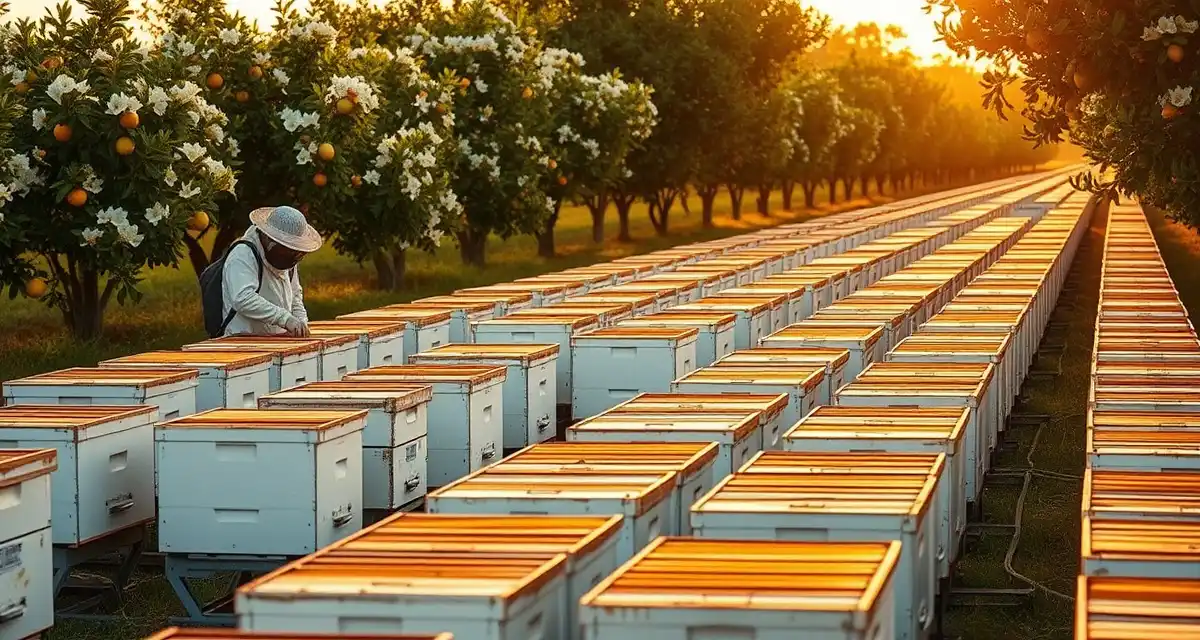
Pollination Service Management Software in Florida
Florida is the primary source of early-season hive supply for spring pollination across the southeastern US. The state's subtropical climate keeps bees active and building through the winter, which is why Florida operators and out-of-state beekeepers who winter in Florida are critical to the supply chain for spring pollination markets.
Florida's own pollination market covers citrus, blueberries, cucurbits, and specialty crops across a growing calendar that runs year-round.
TL;DR
- Commercial beekeeping operations face two primary management challenges: operational logistics (hive health, transport, placement) and administrative coordination (contracts, payments, documentation).
- Most disputes and revenue losses in commercial beekeeping are preventable with better documentation and clearer contract terms.
- The operations that run most profitably are those with disciplined systems for tracking hive health, contract status, and fleet logistics in one place.
- PollenOps is built specifically for the operational complexity of commercial-scale pollination services, not adapted from a hobbyist tool.
- The most important management decisions (treatment timing, contract renewal, hive allocation) require accurate current data to make well.
Florida's Commercial Pollination Crops
Blueberries: Florida is the earliest commercial blueberry market in the contiguous US. Highbush blueberry bloom in north and north-central Florida (Alachua, Bradford, Columbia counties) typically starts in late February to mid-March. This is weeks ahead of Michigan and the Midwest.
Citrus: Florida citrus is primarily self-fertile, but many commercial growers use bees for improved fruit set and size, particularly on navel orange varieties. Bloom runs March through April in most years.
Cucurbits (watermelon, cantaloupe, squash): Florida's winter and spring vegetable season includes significant cucurbit production. Watermelon and cantaloupe require active pollination; squash benefits from it. These crops are planted on multiple schedules across the season, so cucurbit pollination contracts can run nearly year-round in Florida.
Strawberries: Florida strawberry production (primarily Plant City and surrounding areas) is one of the largest in the US. Strawberry is technically self-fertile but benefits from bee pollination for improved fruit size and uniformity. Bloom runs November through March in Florida.
Blueberries (Southern Highbush and Rabbiteye): Southern highbush varieties are the early Florida blueberry. Rabbiteye varieties, grown in the northern tier of the state, bloom slightly later and extend the season. This distinction matters for contract management because they need separate bloom timing tracking.
Florida Bloom Calendar
Florida's early-season advantage comes from its subtropical climate. Key bloom windows:
- Florida blueberry (southern highbush, north-central Florida): Late February to mid-March
- Florida citrus: March through April
- Watermelon and cucurbits (early plantings): January through March in South Florida; February through April in Central Florida
- Strawberry: Peak bloom November through February, tapering into spring
For beekeepers wintering in Florida, these early-season contracts provide income from January through April before the main spring migration north.
Florida as a Staging Point for Spring Migration
Many migratory beekeepers winter colonies in Florida to take advantage of the mild climate for colony buildup. Florida's flowering plants, including Brazilian pepper, cabbage palm, and eucalyptus, provide late-fall and winter forage that supports colony development.
Colonies that winter in Florida and build up through January-February are typically stronger by the time California almond contracts need to be filled than colonies that winter in colder climates. Some California almond operators specifically contract Florida-wintered bees because of the expected strength advantage.
The migration timeline from Florida to California typically means:
- Florida blueberry contracts: February-March
- Transition move west: March
- California almond delivery: February-March (for operations not wintering in Florida; Florida-based ops often miss almond season entirely or participate only in late almond)
When Does Florida Blueberry Bloom Start for Pollination?
Southern highbush blueberry bloom in north-central Florida typically starts in late February. Key production areas:
- Alachua and Bradford counties: Late February to early March in typical years
- Marion County: Early to mid-March
- Columbia and Hamilton counties: Mid-March
In warm El Niño years, bloom can start in mid-February. In unusually cool years, it may not begin until the first week of March.
PollenOps bloom timing alerts are calibrated for Florida's subtropical conditions, which differ significantly from the chilling hour models used for northern blueberry crops. Florida blueberry bloom is driven more by heat accumulation than by chilling requirements.
How Do I Manage Citrus and Blueberry Contracts Simultaneously in Florida?
The two crops overlap in bloom timing from late February through March. Managing them simultaneously requires:
- Clear contract calendar showing both bloom windows and delivery deadlines
- Enough hive inventory to cover both contracts without double-booking the same hives
- Logistics planning that accounts for the geographic separation between blueberry areas (north-central Florida) and citrus areas (central Florida Ridge, Indian River)
In practice, many Florida operators focus on one crop or the other. Blueberry and citrus growing areas are concentrated enough that serving both simultaneously requires a meaningful fleet deployment across different parts of the state.
What Are the Bee Health Inspection Requirements for Florida Beekeepers?
Florida requires annual registration of all colonies with the Florida Department of Agriculture and Consumer Services (FDACS). Commercial operators must renew registration each year.
Florida also has active africanized honey bee (AHB) monitoring and response protocols. Hives brought into Florida from AHB-established zones in Texas or the Southwest face additional scrutiny. Hives moved within Florida from AHB-risk counties may trigger inspection requirements.
Out-of-state beekeepers wintering in Florida must register their colonies with FDACS and maintain a valid health certificate from their home state.
Frequently Asked Questions
When does Florida blueberry bloom start for pollination?
Southern highbush blueberry bloom in north-central Florida typically starts in late February, with the core production areas in Alachua and Bradford counties blooming late February to early March. In warm years, bloom can start in mid-February. PollenOps provides Florida-specific bloom timing alerts calibrated for subtropical conditions rather than standard chilling hour models.
How do I manage citrus and blueberry contracts simultaneously in Florida?
Both crops bloom from late February through March, creating some overlap. Effective management requires a contract calendar showing both crops' bloom windows together, hive inventory tracking to ensure you're not double-booking the same colonies, and a logistics plan that accounts for the geographic separation between blueberry production in north-central Florida and citrus in central Florida. PollenOps manages both contract types in a single calendar view with separate bloom timing alerts for each crop.
What are the bee health inspection requirements for Florida beekeepers?
All beekeepers with colonies in Florida must register annually with the Florida Department of Agriculture and Consumer Services. Commercial operators must maintain current registration. Out-of-state beekeepers wintering in Florida need both FDACS registration and a valid home-state health certificate. Florida's AHB monitoring protocols may trigger additional inspection requirements for hives brought in from AHB-established zones.
What is the difference between commercial and hobby beekeeping?
Commercial beekeeping is distinguished by scale (typically 100+ hives, often 500-5,000+), revenue source (pollination contracts and bulk honey sales rather than local honey retail), and management approach (systematic protocols applied across yards rather than individual colony attention). Commercial operators manage bees as an agricultural enterprise, with the administrative, regulatory, and logistical complexity that entails. Most commercial operators derive the majority of their income from pollination services; honey production is a supplementary revenue stream.
How many hives are needed to make commercial beekeeping a full-time income?
Most beekeeping economists put the full-time commercial threshold at 500-800 hives, assuming efficient operations management and a combination of pollination and honey revenue. At 500 hives and $200/hive for almond pollination, almond season alone generates $100,000 in gross revenue before expenses. Net margins depend on operational efficiency, but well-run operations can achieve 30-50% net margins on pollination revenue. Additional crops and honey production improve per-hive economics but require additional management capacity.
What is the annual revenue potential for a 1,000-hive commercial operation?
A 1,000-hive operation running an almond season ($200/hive) plus blueberry or apple contracts ($80-100/hive) plus summer honey production ($25-40/hive after extraction costs) can generate $300,000-360,000 in annual gross revenue. Net margins after transport, crew, equipment, and hive replacement costs typically run 25-40% for well-managed operations, putting net income at $75,000-145,000 annually. The specific number depends heavily on circuit efficiency, loss rates, and contract quality.
Try These Free Tools
Sources
- USDA Agricultural Research Service
- Bee Informed Partnership
- American Beekeeping Federation (ABF)
- American Honey Producers Association
- Project Apis m.
Get Started with PollenOps
Managing a commercial beekeeping operation involves more data, more deadlines, and more moving parts than any general-purpose tool was designed to handle. PollenOps brings contracts, yard records, health documentation, and fleet logistics together in one platform built for the realities of commercial-scale beekeeping.