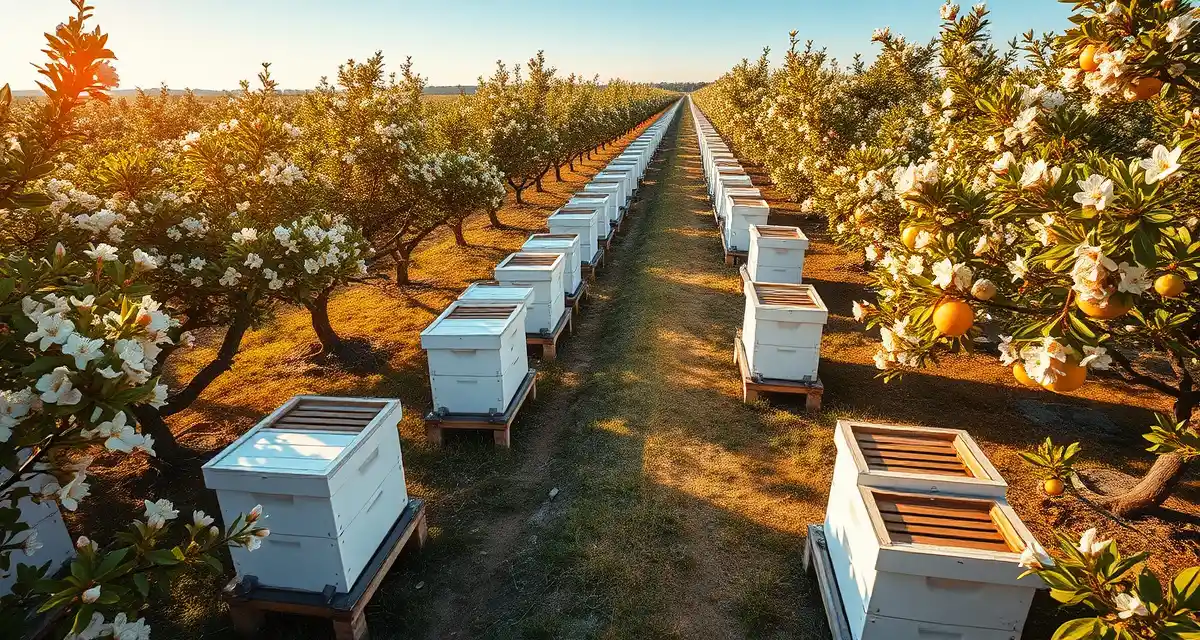
Citrus Pollination in Florida: Polk and Indian River County Guide
Polk County is Florida's largest citrus county with significant navel and Valencia orange acreage, and it anchors the state's commercial pollination demand for managed honey bees. Florida citrus bloom runs December through February, offering peak winter income for migratory beekeepers who position in the state during months when most of the country's commercial operations are in a holding pattern.
Florida's citrus belt, stretching from Polk and Hillsborough counties on the west to Indian River and St. Lucie counties on the east coast, represents a substantial winter pollination market. The Indian River district, known for its premium grapefruit, represents a different market segment from the high-volume Polk County orange production, with different grower economics and willingness-to-pay for pollination services.
TL;DR
- Florida's primary commercial beekeeping role is shaped by its crop mix, climate, and position on the national pollination circuit.
- Pollination rates in Florida range $65-220/hive depending on crop depending on crop and colony strength requirements.
- Out-of-state operators entering Florida for pollination contracts must register with the state agricultural authority and obtain a Certificate of Health.
- Florida functions as either a primary pollination destination, a seasonal honey production location, or a transitional stop depending on the circuit.
- Tracking permit status, registration documents, and yard records for Florida operations requires organized record-keeping before the season opens.
Florida Citrus and the Pollination Case
Not all citrus requires managed pollination equally. Valencia oranges are partially self-fertile but benefit from bee pollination for improved fruit set and size uniformity. Navel oranges and most grapefruit varieties are self-fertile but respond to managed pollination similarly to navels. Tangelos and some specialty varieties genuinely require cross-pollination and are the clearest agronomic case for managed hive placement.
Florida citrus greening disease (Huanglongbing) has affected grower economics significantly since its Florida emergence in 2005. Many growers are managing diseased trees while trying to maintain production, and the economics of paid pollination services have been pressured in some operations that are managing survival costs. This context matters for understanding which growers will pay for pollination services versus which are cutting input costs wherever possible.
Target your outreach toward growers who are maintaining tree health proactively and whose operations suggest investment orientation rather than contraction mode. Growers who are replanting, adopting new disease management practices, and expanding premium variety production are your best clients for formal pollination contracts.
Polk County Market
Polk County's citrus production is concentrated around Lakeland, Bartow, Winter Haven, and Haines City. The Florida Department of Citrus and the Polk County Farm Bureau are your primary industry contacts. The county's large-scale commercial operations have established beekeeper relationships in many cases, so breaking into new Polk County accounts requires either referrals or a clear demonstration of superior service documentation over whoever currently supplies them.
Use the Florida citrus pollination overview as background context when approaching Polk County growers. For direct outreach, target operations managing 500 acres or more in the county's main production areas. November outreach for December placements gives growers adequate time to evaluate new suppliers.
Indian River County Market
The Indian River Citrus League and the Indian River County Extension office are key contacts for the east coast grapefruit market. Indian River district grapefruit commands premium prices based on its recognized quality designation, which means growers in this district have stronger financial incentive to maintain fruit quality through professional pollination services.
Indian River growers are generally more organized around quality management than bulk-volume inland growers, which translates to a more receptive audience for professional pollination contract proposals with strength documentation. Your hive quality certification and delivery record matter more here than in the commodity orange market.
County-Specific Logistics
Polk County's inland location makes it accessible from I-4 and US-27, two major routes that commercial beekeeping operators frequently use. Yard access in the citrus groves is generally good due to the established agricultural infrastructure. Indian River County's coastal location adds some logistics complexity but the distance from Polk County is manageable for staging operations across both markets.
The Florida commercial beekeeping state-level guide covers the apiary registration and interstate permit requirements for Florida operations. Make sure your Florida Department of Agriculture registration is current and your health certificates are in order before making grower contact, since Florida's citrus industry is closely monitored for pest and disease movement.
Colony Management and Timing
Florida's subtropical climate is favorable for winter colony maintenance. Colonies that would be in tight winter cluster in northern states are often actively foraging during Florida's December and January warm days, which helps maintain population and health through the winter positioning period.
Citrus bloom itself provides strong forage that helps colonies maintain condition during the placement period. Florida citrus honey is a recognized specialty product, and some contracts allow honey production alongside pollination. Confirm with your specific grower whether supers are permitted, as some prefer colonies to focus on pollination rather than honey.
Colony strength requirements are typically 6 to 8 frames at delivery. Winter populations run lower than spring peaks, so plan your contracted hive count accordingly. Run pre-move inspections 3 to 5 days before delivery.
Rates and Contract Terms
Florida citrus pollination rates run $100 to $140 per hive for standard navel and Valencia placements, with premium variety and specialty citrus contracts potentially running higher. Indian River grapefruit growers who value quality-driven service may pay at the top of the range or above for certified high-strength delivery.
Sign contracts in October or November for December placements. Include a bloom timing clause tied to actual bloom stage rather than calendar date, since Florida citrus bloom can vary by two to three weeks depending on fall and winter temperature patterns. Payment of 25 percent deposit at signing with balance due net-30 after bloom placement is a workable standard structure.
Frequently Asked Questions
How do you get citrus pollination contracts in Polk County Florida?
Contact the Florida Department of Citrus, Polk County Farm Bureau, and the Florida State Beekeepers Association for grower referrals and industry connections. For direct outreach, target commercial operations managing 500 or more acres in Polk County's main production areas around Lakeland, Bartow, and Winter Haven. November outreach for December placements gives growers adequate time to evaluate new suppliers. Lead with your strength documentation and a professional contract proposal. Polk County's large-scale operations often have existing relationships, so referrals and demonstrating superior documentation over current suppliers is the path to new accounts.
What varieties of citrus pay for bee pollination?
The strongest agronomic case exists for tangelos and specialty varieties that genuinely require cross-pollination. Valencia and navel oranges benefit from managed pollination through improved fruit set and size uniformity even though they're partially self-fertile. Indian River district grapefruit growers seeking to maintain premium quality standards also pay for managed pollination. Growers who are most motivated to contract for bees are those with premium variety production, active orchard investment programs, and quality-differentiated market channels rather than commodity volume sellers.
What colony strength do Florida citrus growers require?
Most Florida citrus growers require 6 to 8 frames of bees at delivery with an active queen. Florida's subtropical climate means colonies maintain more active winter populations than northern operations, but winter population levels still run lower than spring or summer peaks. Contract your hive count based on realistic December and January colony strength rather than peak-season assessments. Run pre-move inspections 3 to 5 days before delivery. Florida's warm winters support year-round foraging, which helps colonies maintain condition through the placement period and reduces your supplemental feeding requirements.
What is the process for registering an out-of-state apiary in a new state?
Most states require out-of-state operators to register with the state department of agriculture apiary program before placing colonies. The process typically involves submitting a registration application (online or paper), paying a fee (usually $10-50 per location), and providing contact information for the operation. Some states also require the registration to be renewed annually. Contact the destination state's department of agriculture apiary program at least 60 days before your planned arrival to confirm current requirements.
What documentation do state apiary inspectors typically review?
State apiary inspectors review health certificates for out-of-state colonies, registration documentation, and colony inspection records during apiary visits. Inspectors check for signs of American foulbrood, European foulbrood, and other regulated pests and diseases. Operations with organized digital records that include treatment history and mite counts typically have faster, less complicated inspections than operations without documentation. Some state inspectors also verify that varroa mite loads are below state entry thresholds.
What triggers a state apiary inspection?
State apiary inspections can be triggered by routine inspection schedules (most states inspect a percentage of registered apiaries annually), neighbor or landowner complaints, disease reports from nearby operations, or inspection requirements tied to state entry permits. California, in particular, has the right to inspect incoming loads at port of entry for commercial beekeeping operations. Maintaining current registration and organized records makes required inspections faster and less disruptive.
Try These Free Tools
Sources
- USDA Agricultural Research Service
- Bee Informed Partnership
- American Beekeeping Federation (ABF)
- Florida Department of Agriculture
- Project Apis m.
Get Started with PollenOps
Commercial operations working in Florida face the same registration, permit, and documentation requirements as any state on the national circuit -- plus Florida's specific regulatory requirements. PollenOps tracks your Florida yard records, contract assignments, and permit documentation alongside your full operation, so entering a new state doesn't add a separate administrative burden. See how the platform fits operations working across multiple states.