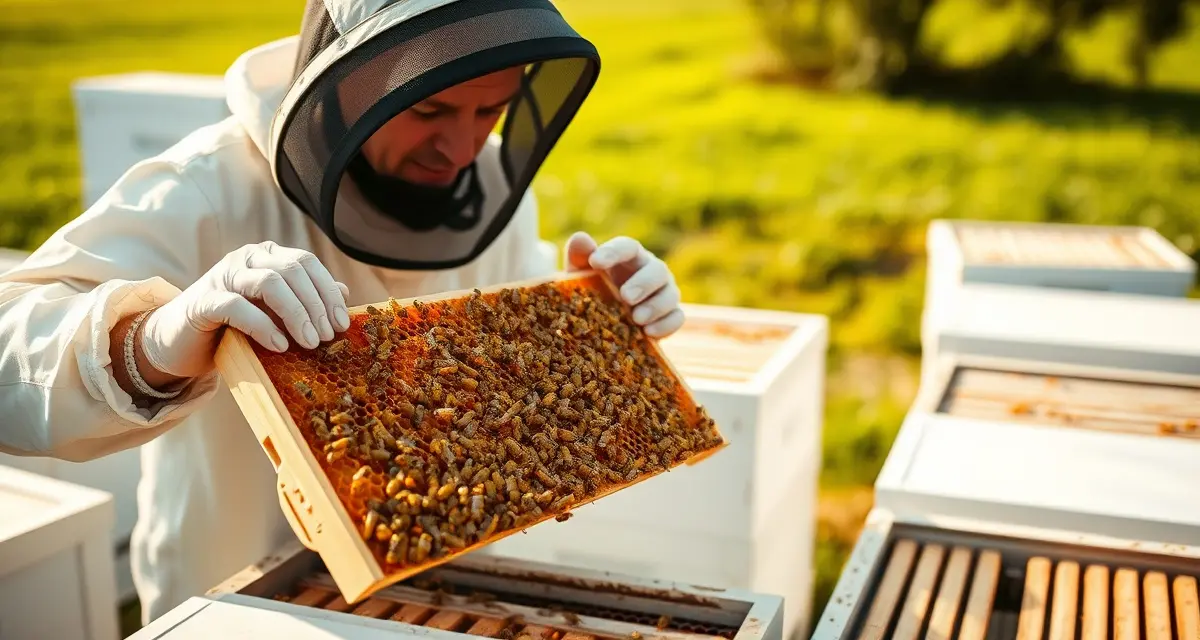
Commercial Beekeeping and Carbon: Environmental Credentials for Premium Markets
Bees pollinate $15 billion or more in US crop value annually, a quantifiable ecosystem service with marketing value, and premium honey buyers increasingly require environmental documentation from suppliers. Commercial beekeepers who document and communicate their environmental contributions are accessing market segments that commodity producers can't reach.
TL;DR
- Commercial beekeeping operations face two primary management challenges: operational logistics (hive health, transport, placement) and administrative coordination (contracts, payments, documentation).
- Most disputes and revenue losses in commercial beekeeping are preventable with better documentation and clearer contract terms.
- The operations that run most profitably are those with disciplined systems for tracking hive health, contract status, and fleet logistics in one place.
- PollenOps is built specifically for the operational complexity of commercial-scale pollination services, not adapted from a hobbyist tool.
- The most important management decisions (treatment timing, contract renewal, hive allocation) require accurate current data to make well.
The Environmental Value of Commercial Beekeeping
Commercial beekeeping contributes measurable environmental value in ways that most agricultural businesses can't match:
Pollination ecosystem services: Honeybee pollination supports $15+ billion in annual US crop value. The environmental contribution of maintaining healthy, productive colonies is direct and quantifiable. You're not adding inputs to produce this value. You're providing a biological service that has no synthetic substitute.
Biodiversity support: Colonies placed in agricultural landscapes provide pollination to non-crop plants (wildflowers, native species, and cover crops) in addition to the contracted crop. This is a genuine ecological benefit that extends beyond the contracted field.
Forage-area landscape value: Operations that maintain colonies in natural areas (prairie, forest, wildflower corridors) have a story that connects their product to specific ecosystems. This forage-to-jar provenance is increasingly valued in premium markets.
Honey production without land conversion: Honey production doesn't require land clearing, tillage, or input-intensive land management. The land footprint per pound of honey produced is among the smallest of any agricultural product.
What Premium Buyers Actually Ask For
The documentation that premium honey buyers increasingly request includes:
Third-party certifications: Organic certification (USDA National Organic Program) is the most established credential. It requires documentation of treatment history, forage source management, and compliance with NOP standards. The organic honey certification guide covers the certification process.
Provenance documentation: Where was the honey produced? What forage sources? What season? Provenance documentation supports "single-origin" honey positioning that commands premium prices. Pollen analysis from accredited labs provides scientific confirmation of floral sources.
Treatment records: Buyers of "raw" or "clean" honey want documentation of what treatments were or were not used. PollenOps health records document treatment events with dates, products, and colonies treated, providing the treatment history documentation buyers require.
Lab testing: Pesticide residue testing, moisture analysis, and antibiotic screening are increasingly requested by premium buyers, particularly in export markets and institutional channels.
Sustainability Certifications Available to Commercial Beekeepers
USDA Organic Certification: The most recognized and market-validated certification. Organic honey requires NOP-compliant forage sources (organic land or remote foraging areas), no synthetic pesticide treatments for colony health, and documentation of compliance. Certification costs $500-2,000/year plus recordkeeping overhead.
Certified Naturally Grown (CNG): A peer-review alternative to USDA Organic with lower cost. Respected by direct-market and natural food buyers. Less recognized than USDA Organic in institutional channels.
American Honey Producers Association verification: AHPA programs provide documentation of US origin and production practices. Less standardized than organic certification but useful for buyers focused on US-origin verification.
Regenerative Agriculture certifications: Emerging certification frameworks (Regenerative Organic Certified, Savory Institute Land-to-Market) are beginning to include bee products. These are cutting-edge for specialty market positioning but not yet widely recognized.
Carbon credit markets: Commercial beekeeping operations may have opportunities in voluntary carbon markets through pollination ecosystem services and land stewardship. This is an emerging and uneven space. Carbon credit programs for beekeeping are still developing. Consult with a carbon market specialist before investing significant effort here.
Using Environmental Credentials in Marketing
Environmental credentials work best when they're specific and verifiable, not general claims:
Weak: "Our honey is produced sustainably."
Strong: "USDA Certified Organic honey from a 500-acre wildflower preserve in Cass County, Minnesota. Certified since 2019. Pollen analysis confirms basswood and wildflower components."
Specific claims with documentation are harder to dismiss and more compelling to specialty buyers than general language. Your PollenOps records (treatment histories, yard locations, production documentation) are the raw material for this specificity.
Target channels for environmental claims:
- Restaurant buyers at chef-driven restaurants value local, traceable, documented-origin food products
- Natural and specialty grocery chains (Whole Foods, regional co-ops) have supplier documentation requirements that your records can satisfy
- Corporate food service buyers increasingly require sustainability documentation for supplier approval
- Premium online direct-to-consumer buyers specifically seek certified and documented honey
Commercial honey market trends provides context on how sustainability credentials affect pricing in different market channels.
Frequently Asked Questions
How do you document and market the environmental value of commercial beekeeping?
Documentation starts with records: your PollenOps treatment logs, yard location records, and production data create a baseline of verifiable information. Layer certifications on top of that foundation: USDA Organic or Certified Naturally Grown for buyers who require certification. Add third-party testing (pollen analysis, pesticide residue testing) for buyers in channels that require it. Marketing translates documentation into story: "Organic certified basswood honey from Minnesota's hardwood forests, produced without synthetic treatments, traceable to specific yards with pollen analysis documentation." That specificity commands premium pricing in specialty markets because most competitors can't match it.
What sustainability certifications are available for commercial beekeepers?
USDA National Organic Program (NOP) certification is the most recognized and market-validated option. It requires NOP-compliant forage, no synthetic treatments, and documentation, with annual inspection and fees. Certified Naturally Grown is a lower-cost peer-review alternative respected in direct-market channels. State-level "certified local" or "certified naturally grown" programs vary by state. For honey with specific environmental provenance claims (prairie honey, wildflower preserve honey), regional food trust certifications may be relevant. The right certification depends on your target market: specialty retail and online buyers respond to USDA Organic; farmers market customers often accept Certified Naturally Grown; institutional buyers typically require USDA Organic.
How do you use environmental credentials to access premium honey buyers?
Lead with your best credential in initial buyer outreach: "USDA Certified Organic honey from specific origin" opens doors that generic honey pitches don't. For restaurant buyers, offer samples with your documentation: chefs want to taste the product and have the story for their menu. For specialty retail, have your certification documentation ready before the buyer meeting. For online direct-to-consumer, make your certification and provenance story central to your website and packaging. Environmental credentials don't sell honey automatically. You still need quality, consistency, and relationship-building. But they establish a differentiated position that allows premium pricing in channels where undocumented honey competes solely on price.
What is the difference between commercial and hobby beekeeping?
Commercial beekeeping is distinguished by scale (typically 100+ hives, often 500-5,000+), revenue source (pollination contracts and bulk honey sales rather than local honey retail), and management approach (systematic protocols applied across yards rather than individual colony attention). Commercial operators manage bees as an agricultural enterprise, with the administrative, regulatory, and logistical complexity that entails. Most commercial operators derive the majority of their income from pollination services; honey production is a supplementary revenue stream.
How many hives are needed to make commercial beekeeping a full-time income?
Most beekeeping economists put the full-time commercial threshold at 500-800 hives, assuming efficient operations management and a combination of pollination and honey revenue. At 500 hives and $200/hive for almond pollination, almond season alone generates $100,000 in gross revenue before expenses. Net margins depend on operational efficiency, but well-run operations can achieve 30-50% net margins on pollination revenue. Additional crops and honey production improve per-hive economics but require additional management capacity.
What is the annual revenue potential for a 1,000-hive commercial operation?
A 1,000-hive operation running an almond season ($200/hive) plus blueberry or apple contracts ($80-100/hive) plus summer honey production ($25-40/hive after extraction costs) can generate $300,000-360,000 in annual gross revenue. Net margins after transport, crew, equipment, and hive replacement costs typically run 25-40% for well-managed operations, putting net income at $75,000-145,000 annually. The specific number depends heavily on circuit efficiency, loss rates, and contract quality.
Try These Free Tools
Sources
- USDA Agricultural Research Service
- Bee Informed Partnership
- American Beekeeping Federation (ABF)
- American Honey Producers Association
- Project Apis m.
Get Started with PollenOps
Managing a commercial beekeeping operation involves more data, more deadlines, and more moving parts than any general-purpose tool was designed to handle. PollenOps brings contracts, yard records, health documentation, and fleet logistics together in one platform built for the realities of commercial-scale beekeeping.