Hive Theft Prevention for Commercial Beekeeping Operations
Hive theft is a real and recurring problem for commercial beekeepers. Commercial hive theft losses average $500 to $1,500 per stolen hive when you account for the colony value, the equipment, and the replacement cost during a season when your inventory needs are highest. California almond season concentrates millions of dollars of hive value in remote yard locations, often on rural land with limited visibility and no reliable security infrastructure.
If you haven't had hives stolen, you either haven't been doing this long enough or you've been lucky. Most commercial operators who've run migratory routes for more than five years have a theft story. The good news is that theft prevention has improved substantially with GPS technology, better marking systems, and improved coordination with law enforcement.
TL;DR
- Commercial beekeeping operations face two primary management challenges: operational logistics (hive health, transport, placement) and administrative coordination (contracts, payments, documentation).
- Most disputes and revenue losses in commercial beekeeping are preventable with better documentation and clearer contract terms.
- The operations that run most profitably are those with disciplined systems for tracking hive health, contract status, and fleet logistics in one place.
- PollenOps is built specifically for the operational complexity of commercial-scale pollination services, not adapted from a hobbyist tool.
- The most important management decisions (treatment timing, contract renewal, hive allocation) require accurate current data to make well.
GPS Tracking for Individual Hives
GPS trackers designed for beehive monitoring have come down in price significantly and now offer a practical solution for high-value yard locations. Units that attach to hive bodies or pallet frames can detect movement and send alerts when hives are moved without authorization.
For individual hive tracking, you're looking at units that cost $30 to $80 each and require a cellular subscription. On a 1,000-hive operation, putting trackers on every hive isn't practical, but deploying them strategically on the most accessible or highest-risk yards is cost-effective. One detected theft event that allows recovery justifies the cost across dozens of units.
Integrating GPS tracking data with your fleet and logistics management means you have a single view of where your trucks and your hives are at any point. When something moves that shouldn't be moving, you find out immediately rather than on your next yard visit.
Hive Marking Systems
Permanent, identifiable marking is one of the most important theft deterrents and recovery tools available. Stolen hives that can be definitively identified as belonging to your operation are recoverable. Unmarked hives are essentially untraceable once they've moved.
Effective marking approaches include:
Paint branding with your operation's name and registration number on every hive body. Use a color or pattern that's visible and distinctive. Some operators use multiple colors in a specific pattern that would be extremely difficult to replicate.
Hot-branding wood components with your USDA registration number is a legally recognized form of livestock and apiary property identification in many states. A branded hive body is hard to resell and easy to identify in a law enforcement recovery situation.
Frame marking with embossed or stamped frames is harder to fake and survives colony transfers. This level of marking is more labor-intensive but provides strong documentation for insurance claims.
Document your marking system thoroughly with photos and written descriptions, and store that documentation in your insurance records and in your hive inventory tracking system.
Yard Selection and Security
Remote yards that are off main roads and invisible from public view have lower baseline theft risk than yards visible from highway shoulders. However, complete concealment isn't always possible when you're working agricultural land with road access requirements for trucks.
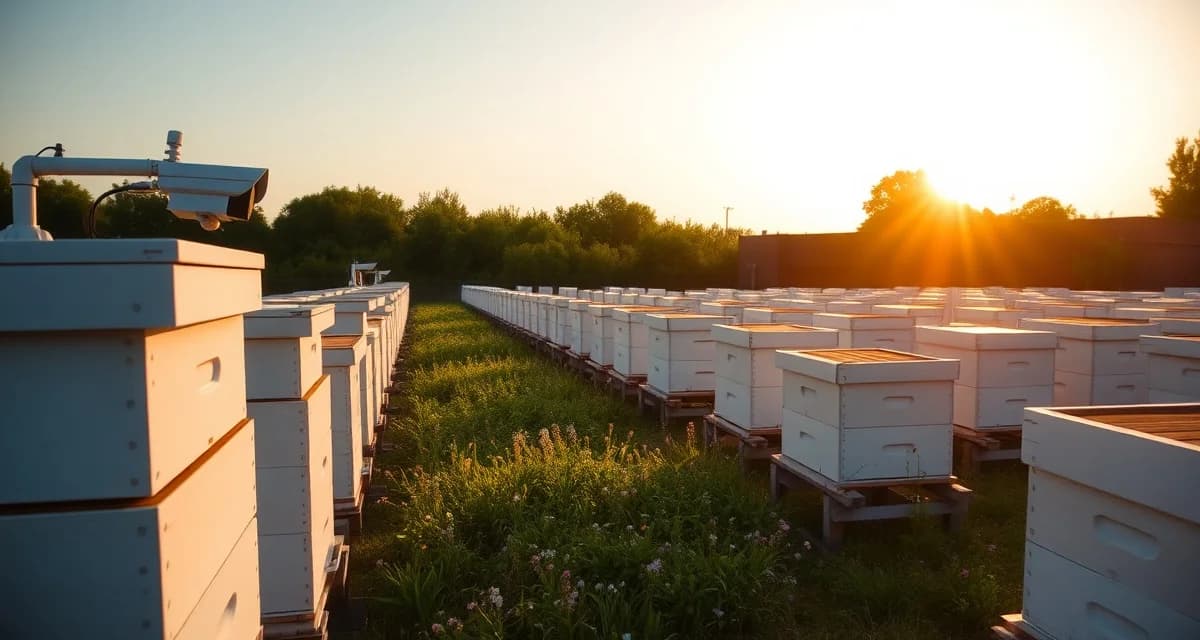
Low-cost deterrents that help include motion-activated lighting, visible no-trespassing signage, and security cameras at yard entry points. Trail cameras with cellular upload capability are cheap enough that many operators put one at each major yard entrance during high-risk periods like almond season.
Building a relationship with your landowner matters. A landowner who is familiar with your operation and checks on the yard occasionally is a better security asset than any single piece of technology.
Law Enforcement and Recovery
Commercial hive theft is investigated as agricultural theft, which is a felony in California and many other states. File a police report immediately when you discover theft, and provide your marking documentation, photos, and GPS data to law enforcement.
State departments of agriculture often maintain registries that can help identify recovered hives. California's mandatory apiary registration with hive counts on file makes it harder for stolen California-registered hives to be openly marketed.
Networking with other commercial beekeepers in your operating area creates an informal early warning system. Thieves often hit multiple yards, and getting word out quickly through beekeeper networks has resulted in recoveries.
Insurance Documentation
Theft coverage for beehives typically requires that you have documented your inventory, have an established marking system, and have filed a timely police report. Keep your hive inventory records current, take dated photographs of your yards and equipment, and know what your policy covers before you need to file a claim.
Frequently Asked Questions
How prevalent is hive theft in commercial beekeeping?
Hive theft is common enough that most commercial operators who have worked migratory routes for several years have experienced it at least once. California almond season, with its high hive values and remote yard locations, sees the most concentrated theft activity. Industry surveys suggest that theft affects a meaningful percentage of commercial operations each year, with losses ranging from a few hives to hundreds in extreme cases. Operators in high-value pollination markets, particularly California and Florida, face the highest theft risk and should treat prevention as an ongoing operational priority rather than a one-time fix.
What GPS tracking options exist for individual hive theft detection?
Several companies now offer GPS trackers designed specifically for beehive monitoring, including units from Solutionbee, ApisProtect, and general agricultural asset trackers that beekeepers have adapted. Units that trigger movement alerts can notify you within minutes of unauthorized hive movement. Battery life and cellular coverage in remote yard locations are the main practical constraints. For very remote yards with limited cellular service, consider satellite-capable trackers. Costs range from $30 to $120 per unit plus cellular service fees. Prioritize tracker placement at your most accessible and highest-value yard locations during peak theft risk periods.
How do you mark hives to aid recovery after theft?
The most effective approach combines multiple marking methods. Paint or spray your operation name and state registration number prominently on all hive bodies using a consistent color scheme. Consider hot-branding wood equipment with your USDA apiary registration number for durable identification. Mark frames with embossed stamps or ink that identifies your operation. Document your full marking system in photos and store records with your insurance files. Report the system to your state agriculture department. Marked hives that are recovered by law enforcement can be returned to you; unmarked hives often cannot be definitively attributed to your operation even if found.
What is the difference between commercial and hobby beekeeping?
Commercial beekeeping is distinguished by scale (typically 100+ hives, often 500-5,000+), revenue source (pollination contracts and bulk honey sales rather than local honey retail), and management approach (systematic protocols applied across yards rather than individual colony attention). Commercial operators manage bees as an agricultural enterprise, with the administrative, regulatory, and logistical complexity that entails. Most commercial operators derive the majority of their income from pollination services; honey production is a supplementary revenue stream.
How many hives are needed to make commercial beekeeping a full-time income?
Most beekeeping economists put the full-time commercial threshold at 500-800 hives, assuming efficient operations management and a combination of pollination and honey revenue. At 500 hives and $200/hive for almond pollination, almond season alone generates $100,000 in gross revenue before expenses. Net margins depend on operational efficiency, but well-run operations can achieve 30-50% net margins on pollination revenue. Additional crops and honey production improve per-hive economics but require additional management capacity.
What is the annual revenue potential for a 1,000-hive commercial operation?
A 1,000-hive operation running an almond season ($200/hive) plus blueberry or apple contracts ($80-100/hive) plus summer honey production ($25-40/hive after extraction costs) can generate $300,000-360,000 in annual gross revenue. Net margins after transport, crew, equipment, and hive replacement costs typically run 25-40% for well-managed operations, putting net income at $75,000-145,000 annually. The specific number depends heavily on circuit efficiency, loss rates, and contract quality.
Try These Free Tools
Sources
- USDA Agricultural Research Service
- Bee Informed Partnership
- American Beekeeping Federation (ABF)
- American Honey Producers Association
- Project Apis m.
Get Started with PollenOps
Managing a commercial beekeeping operation involves more data, more deadlines, and more moving parts than any general-purpose tool was designed to handle. PollenOps brings contracts, yard records, health documentation, and fleet logistics together in one platform built for the realities of commercial-scale beekeeping.