Commercial Beekeeping in California: Operations, Regulations, and Opportunities
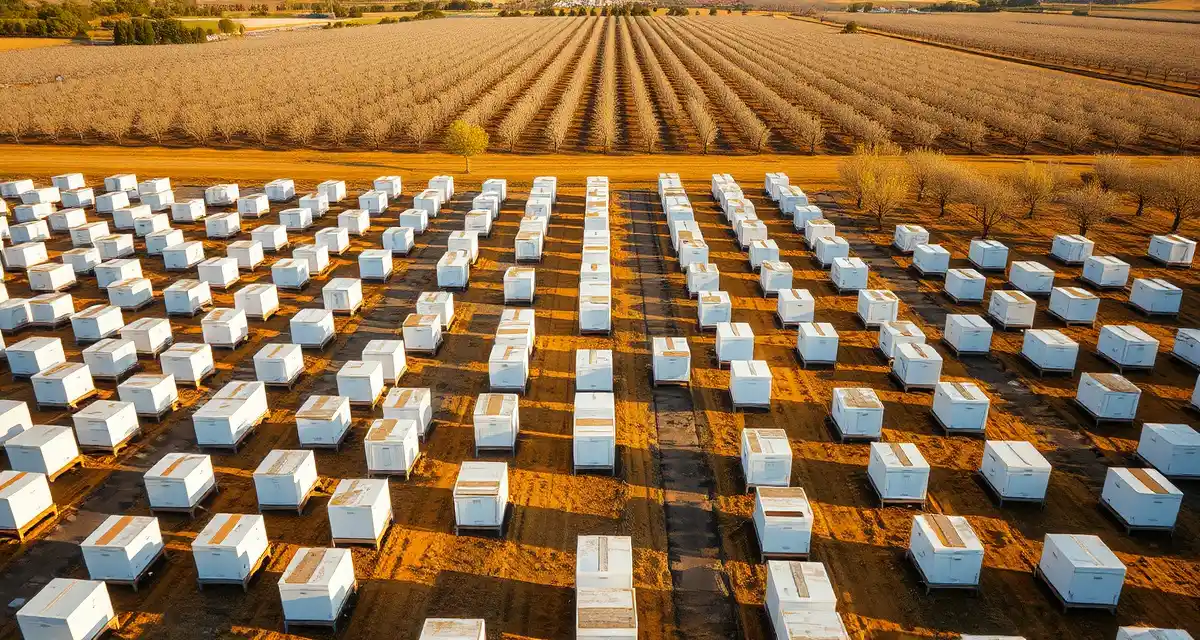
California doesn't just shape the commercial beekeeping calendar. It defines it. Eighty percent of US commercial hive supply moves into California every February for almond pollination. If you run a migratory operation and you're not already working the California circuit, you're leaving the biggest revenue window in the industry on the table.
California requires county-level apiary registration plus state registration for commercial operators, a dual-layer system that surprises operators coming from states with simpler requirements. Add the CDFA interstate entry permit, county yard permits in major agricultural areas, and the health certificate requirement, and a California season demands serious compliance prep before the first truck rolls.
TL;DR
- California's primary commercial beekeeping role is shaped by its crop mix, climate, and position on the national pollination circuit.
- Pollination rates in California range $100-140/hive depending on crop and colony strength requirements.
- Out-of-state operators entering California for pollination contracts must register with the state agricultural authority and obtain a Certificate of Health.
- California functions as either a primary pollination destination, a seasonal honey production location, or a transitional stop depending on the circuit.
- Tracking permit status, registration documents, and yard records for California operations requires organized record-keeping before the season opens.
Why California Sits at the Center of Commercial Beekeeping
The numbers are straightforward: California grows about 1.3 million acres of almonds, and each acre needs 2 colonies for adequate pollination. That's 2.6 million colony placements, but the industry talks about 1.3 million hives because each colony gets placed once per season. To fill that demand with US hives, essentially every mobile commercial operation in the country participates.
Almond acreage has grown roughly 50% over the past 20 years while US colony counts have stayed roughly flat. That supply-demand imbalance is what drives almond pollination contracts to $200-220 per hive in 2026. For an operation with 1,000 hives, a California almond season generates $200,000-220,000 in contract revenue in a 6-8 week window. No other single crop comes close.
Beyond almonds, California generates additional pollination income from: cherries in the Sacramento Valley (March-April), avocados in Ventura and San Diego counties (February-April), melons and squash in the Central Valley (May-June), and various tree fruits. Operators who time California moves well can chain multiple contracts across the season before pulling out for summer honey flows in the Northwest or Midwest.
CDFA Registration Requirements
The California Department of Food and Agriculture (CDFA) manages apiary regulation through its Plant Health and Pest Prevention Services division. Here's what you need:
State Apiary Registration: Any beekeeper maintaining colonies in California must register with CDFA. Commercial operators (defined as those maintaining 50+ colonies) pay a fee based on colony count and are subject to state apiary inspections. Registration renews annually. Applications are submitted online through the CDFA portal.
County Agricultural Commissioner Registration: Separate from state registration, you must register your apiaries with the county agricultural commissioner (CAC) in each county where you place hives. County registration is how California tracks disease exposure at a local level and notifies beekeepers of pesticide applications nearby. This is not optional. Operating without county registration exposes you to fines and complicates any pesticide kill claims.
CDFA Interstate Entry Permit: Colonies moving into California from out of state need an entry permit pulled through the CDFA online system before crossing the border. This is separate from the CVI. Both are required. The permit is tied to your specific load: truck, colony count, destination county, and arrival date.
Some counties in the San Joaquin Valley (Fresno, Tulare, Kern, Merced, Stanislaus, and San Joaquin) have additional bee placement requirements administered through the county CAC office. In some areas, you need a yard permit that's site-specific, not just county-level. Almond growers in these counties often handle yard permits as part of the contract arrangement, but confirm who's responsible before you sign.
Importing Colonies into California
California has some of the strictest colony entry requirements in the country. The CDFA enforces these actively. Agricultural inspection stations on every major interstate entry point into California see commercial bee trucks in January and February.
You need:
- A Certificate of Veterinary Inspection (CVI) issued by an accredited veterinarian in your home state, within 30 days of movement
- The CVI must certify colonies are free from American Foulbrood, European Foulbrood, and other regulated pests
- A CDFA online entry permit pulled before you cross the border
- Colony count and source location documented and matching your CVI
CDFA inspectors at agricultural stations check both documents. Discrepancies between the CVI colony count and what's on the truck create problems. If you added hives after the CVI was issued, you have a compliance issue. Count carefully, document accurately, and don't substitute loads after inspection.
For operations coming from high-AHB-pressure states (Arizona, Texas, New Mexico, Florida), CDFA inspectors may conduct additional inspections on arrival. This isn't discriminatory enforcement. Africanized bees are a regulatory concern for California agriculture and the state takes it seriously.
Almond Pollination Season: February Window
Almond bloom in California's Central Valley runs roughly from late January through early March, peaking in mid-February. The specific timing varies by variety: Nonpareil blooms earliest (typically February 10-20), while Butte and Padre bloom a week or more later. With over 90 varieties in commercial production and multi-variety orchards requiring cross-pollination, growers need colonies on site before bloom opens.
Most contracts specify delivery in the window of February 1-10, ahead of Nonpareil bloom. Some growers want colonies by late January for the earliest-blooming varieties. If you're late, you don't just miss pollination timing. You're in breach of contract.
The implication for operations coming from the Southeast or Midwest: you're moving in January with whatever colony strength you've built through winter. Spring buildup timing is the most consequential management variable for California almond performance. Colonies need to hit 6-frame minimum strength (the standard requirement in most almond contracts), and that strength has to be achieved before the truck loads.
Contracts specify a minimum frame count at delivery. Growers or their inspectors verify frame coverage on arrival. Colonies that don't meet strength minimums can result in partial payment or contract penalties depending on how your agreement is written.
Hive Placement and Yard Management in California
Almond orchards are planted in blocks, typically 20-40 acres per set. Beekeepers place colonies at the orchard perimeter or in interior access rows, usually 2 colonies per acre, grouped in pallets of 4. Placement logistics in a large almond operation might involve 50-100 different yard locations across a 3,000-acre property.
Forklift operations are standard in almond orchards. Colonies travel on 4-hive wooden pallets; the grower or a contracted forklift operator places them at the grower's designated spots. You're not unloading individual hives off a truck by hand. You're working in coordinated forklift pallet moves, often at night to minimize colony disruption.
Night moves are the standard in California almond country. Bees are up and foraging by 8 AM. You load at dusk, drive overnight, and arrive for early-morning unloading. A typical run from central Oregon to Fresno County is about 10-12 hours. From eastern Washington, figure 12-14 hours. From North Dakota, it's a 22-24 hour run.
Other California Pollination Crops
After almonds, the California pollination calendar offers additional revenue windows for operations that want to stay in state:
Cherries (March-April): Sacramento Valley, particularly Lodi, Stockton, and surrounding areas. Contract rates generally $100-140/hive, lower than almonds but within 2-3 hours of most Central Valley almond yards. Some operators stay in California and move directly from almonds to cherries.
Avocados (February-April): Coastal zones in Ventura, San Diego, and Santa Barbara counties. Avocado pollination logistics differ significantly from almonds: orchards are on hilly terrain, access is limited, and contract terms vary. Rates around $80-110/hive.
Almonds to Clover/Wildflower Honey: Some operations place supers on California colonies during late almond bloom, capturing honey before the pesticide window opens. California almond honey is light amber with a distinctive floral character and sells at a premium. The window is narrow and requires careful pesticide communication with growers.
Melons and Cucurbits (May-June): San Joaquin and Imperial Valleys. Lower-value contracts but good for operations maintaining California registration and looking to extend the season before summer moves north.
Regulatory Calendar for California Operations
Staying organized across the California compliance calendar matters. Here's what the annual cycle looks like:
- October-November: Renew CDFA state registration and any county registrations for the upcoming season
- December-January: Secure CDFA entry permits for January-February hive arrivals; schedule CVI inspections in home state
- January: Move colonies; present permits and CVI at border stations; complete county CAC registration within required timeframe after arrival
- February-March: Active almond season; hive strength verifications by growers
- March-April: Exit inspections or movement to subsequent California contracts; pull exit documentation if required
- Ongoing: Maintain accurate yard location records for any CDFA compliance audit
Operating Costs in California
California is not a cheap state to operate in. Fuel for an 18-wheeler hauling 400 hives runs $600-900 per leg depending on distance and diesel prices. If you're moving from the Southeast, round-trip fuel alone can exceed $2,500. At current almond contract rates of $200-220/hive, a 400-hive load generates $80,000-88,000 in contract revenue, and fuel represents 3-4% of that gross, manageable but not trivial.
Yard fees and access costs vary. Some almond growers charge a nominal yard fee; most don't. The pollination contract itself is the arrangement and the grower provides access. Forklift costs are typically the grower's responsibility, but clarify this in your contract before you arrive.
California also has strict regulations around driver hours and vehicle weight. Commercial bee trucks on California roads are subject to CHP enforcement. Overweight citations are expensive. Know your axle weights before you load, and get a permit if you're running over standard limits.
Managing California Operations with Software
A California almond season involves tracking dozens of yards, managing CDFA registration across multiple counties, coordinating contract deliveries with 5-20 different growers, and documenting hive strength verifications at each delivery. Running this on a whiteboard or a spreadsheet is how things fall through the cracks.
Get Started with PollenOps
Commercial operations working in California face the same registration, permit, and documentation requirements as any state on the national circuit -- plus California's specific regulatory requirements. PollenOps tracks your California yard records, contract assignments, and permit documentation alongside your full operation, so entering a new state doesn't add a separate administrative burden. See how the platform fits operations working across multiple states.
FAQ
What apiary registration is required to operate in California?
You need two separate registrations: a CDFA state apiary registration and a registration with each county agricultural commissioner where you place hives. Commercial operators with 50+ colonies register at the state level with fees based on colony count. County registration is location-specific and required before or immediately upon placing hives. Operating without county registration can result in fines and complicates pesticide kill claims.
When does almond pollination season start in California?
Almond bloom begins in the southern San Joaquin Valley as early as late January in warm years, with peak bloom typically mid-February. Most contracts require delivery between February 1-10. The specific dates vary by orchard location, variety mix, and annual weather conditions. Operators coming from northern states plan to depart by late January to ensure on-time delivery with time for any border inspection delays.
What are California's rules for importing colonies for pollination?
Colonies entering California require a CDFA online entry permit and a Certificate of Veterinary Inspection (CVI) issued by an accredited veterinarian in your home state within the past 30 days. The CVI must certify colonies are free from American Foulbrood, European Foulbrood, and other regulated pests. Both documents must be present when crossing into California at agricultural inspection stations. Colonies from Africanized bee-positive states may receive additional inspection on arrival.
What is the process for registering an out-of-state apiary in a new state?
Most states require out-of-state operators to register with the state department of agriculture apiary program before placing colonies. The process typically involves submitting a registration application (online or paper), paying a fee (usually $10-50 per location), and providing contact information for the operation. Some states also require the registration to be renewed annually. Contact the destination state's department of agriculture apiary program at least 60 days before your planned arrival to confirm current requirements.
What documentation do state apiary inspectors typically review?
State apiary inspectors review health certificates for out-of-state colonies, registration documentation, and colony inspection records during apiary visits. Inspectors check for signs of American foulbrood, European foulbrood, and other regulated pests and diseases. Operations with organized digital records that include treatment history and mite counts typically have faster, less complicated inspections than operations without documentation. Some state inspectors also verify that varroa mite loads are below state entry thresholds.
What triggers a state apiary inspection?
State apiary inspections can be triggered by routine inspection schedules (most states inspect a percentage of registered apiaries annually), neighbor or landowner complaints, disease reports from nearby operations, or inspection requirements tied to state entry permits. California, in particular, has the right to inspect incoming loads at port of entry for commercial beekeeping operations. Maintaining current registration and organized records makes required inspections faster and less disruptive.
Try These Free Tools
Sources
- USDA Agricultural Research Service
- Bee Informed Partnership
- American Beekeeping Federation (ABF)
- California Department of Agriculture
- Project Apis m.