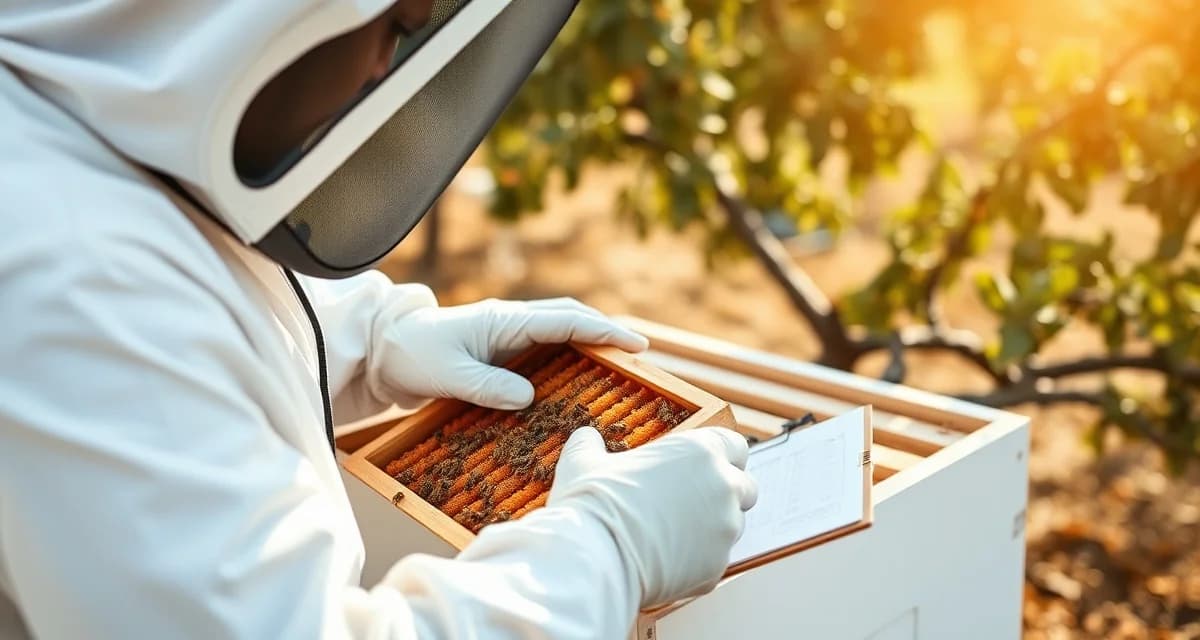
Third-Party Hive Inspection for Almond Pollination: What to Expect
Third-party inspectors are increasingly required by large almond growers for delivery verification, and professional inspection costs $3-8 per colony but can be built into contract terms. Understanding how third-party inspection works, and how to use it to your advantage, is increasingly important for operators in the California almond market.
TL;DR
- California's primary commercial beekeeping role is shaped by its crop mix, climate, and position on the national pollination circuit.
- Pollination rates in California range $65-220/hive depending on crop depending on crop and colony strength requirements.
- Out-of-state operators entering California for pollination contracts must register with the state agricultural authority and obtain a Certificate of Health.
- California functions as either a primary pollination destination, a seasonal honey production location, or a transitional stop depending on the circuit.
- Tracking permit status, registration documents, and yard records for California operations requires organized record-keeping before the season opens.
Why Third-Party Inspection Is Growing
Almond growers pay $185-225 per hive for pollination services. At that price, and with contracts specifying minimum strength requirements (typically 6-8 frames of bees), growers have financial motivation to verify what they're receiving.
Historically, most verification was informal: a walk through the yard, beekeeper-provided documentation, or simply trust built over years of business. As the market became more professionalized, with new operators entering, and as contract values increased, more growers shifted to independent verification.
Third-party inspection serves both parties:
For growers: Independent confirmation that contracted strength requirements were met. Reduces payment disputes by establishing objective delivery documentation at the time of delivery.
For operators: Documentation that you delivered what you contracted. If a grower later claims hives were below strength, your third-party inspection report is your defense.
Who Provides Third-Party Inspection Services
Several companies and organizations provide independent hive inspection for California almond pollination:
Agricultural inspection companies: Private agricultural inspection firms offer colony strength verification services. These companies are hired by growers or by operators proactively seeking documentation.
USDA Agricultural Marketing Service: USDA AMS provides honey bee inspection services through their specialty crops inspection program. USDA inspection carries regulatory credibility.
State of California CDFA inspectors: CDFA apiary inspectors may provide inspection services in some contexts, though primary field inspection is typically handled by private or USDA inspectors.
Beekeeper-affiliated inspection services: Some large beekeeper associations or commercial beekeeping industry organizations facilitate inspection programs.
The specific inspection services operating in a given season can change. Ask your California grower contacts which inspection services they use or accept.
What Third-Party Inspectors Check
Standard almond pollination inspection assesses:
Frames of bees (FOB): The primary strength metric. Inspectors count or estimate frames occupied by adult bees. The California standard for minimum pollination delivery is typically 6-8 frames of bees (FOB 6-8), though individual contracts specify the minimum.
Brood assessment: The presence of adequate brood (eggs, larvae, capped brood) indicates colony health and population trajectory. A colony with 6 FOB but good brood is more valuable than 6 FOB without brood.
Queen status: Queenright colonies are required. Inspectors note presence or absence of queen signs (brood pattern, eggs).
Food stores: Adequate honey and pollen stores confirm colony isn't in nutritional stress.
Disease and pest assessment: Inspectors note obvious disease signs or high mite loads. This affects grower acceptance decisions.
Colony identification: Inspectors record hive identifiers (if marked), yard location, and inspection date/time. This creates the delivery record.
The Inspection Process at Delivery
Scheduling: Third-party inspection is typically scheduled at delivery time. You deliver colonies, the inspector arrives at the yard, and inspection occurs before you leave (or within a defined window after delivery).
Your presence: You or your representative should be present during inspection. This allows you to clarify observations, address questions, and sign the inspection report.
Inspection report: The inspector produces a written report documenting colony count, strength assessments, and any noted issues. Both grower and operator receive copies. This report is the contractual documentation of delivery.
Disputed results: If inspection results don't match your assessment, the dispute resolution provisions of your contract govern what happens. Your contract should specify how disputes about inspection results are resolved, and who pays for re-inspection.
Who Pays for Inspection
Inspection costs $3-8 per colony depending on the service provider, location, and contract terms. Who bears this cost is a negotiated term:
Grower-paid: Many large growers require inspection and pay for it themselves as part of their quality assurance process.
Operator-paid: Some operators proactively commission inspection to provide growers documentation, building the cost into their overhead.
Shared cost: Some contracts split inspection costs.
Built into your rate: If you're competing on rate and inspection is required, build the inspection cost into your per-hive rate rather than treating it as a separate cost that erodes margin.
Hive strength requirements for almond pollination covers the strength standards that third-party inspectors verify against.
For the full contract management workflow including inspection documentation, see almond pollination contracts guide.
Frequently Asked Questions
Who provides third-party hive inspection for almond pollination?
Third-party almond pollination inspection is provided by private agricultural inspection companies, USDA Agricultural Marketing Service through their specialty crops inspection program, and some beekeeper industry organizations. The active inspection service providers in California almond change somewhat year to year. Ask your California grower contacts which inspection services they use or accept, as large growers often have established relationships with specific inspectors. For operators who want to proactively commission inspection, both USDA AMS and private services are options. Costs typically run $3-8 per colony.
What do third-party inspectors check in almond pollination deliveries?
Inspectors primarily assess frames of bees (FOB), the colony strength metric specified in most almond pollination contracts. Standard California almond contracts specify minimum FOB of 6-8. Inspectors also assess brood presence and pattern (indicating colony health and queen status), food stores, and note any obvious disease signs or pest issues. Queen status (queenright vs queenless) is noted. The inspection produces a written report documenting all colonies in the yard with their strength assessments. This report is the contractual delivery record that governs payment obligations.
How do you negotiate who pays for third-party inspection in contracts?
Inspection cost negotiation depends on your market position and the grower's requirements. If a grower requires inspection as a condition of the contract, they typically pay. It's their quality assurance requirement. If you're proactively offering inspection as a value-added service that differentiates you from competitors, you may absorb or split the cost. For operators bidding on large-volume contracts where inspection is standard, build inspection costs into your per-hive rate so they don't erode your margin. $5/colony inspection cost on a $200/hive contract is 2.5% of revenue, manageable overhead for the documentation value it provides.
What is the process for registering an out-of-state apiary in a new state?
Most states require out-of-state operators to register with the state department of agriculture apiary program before placing colonies. The process typically involves submitting a registration application (online or paper), paying a fee (usually $10-50 per location), and providing contact information for the operation. Some states also require the registration to be renewed annually. Contact the destination state's department of agriculture apiary program at least 60 days before your planned arrival to confirm current requirements.
What documentation do state apiary inspectors typically review?
State apiary inspectors review health certificates for out-of-state colonies, registration documentation, and colony inspection records during apiary visits. Inspectors check for signs of American foulbrood, European foulbrood, and other regulated pests and diseases. Operations with organized digital records that include treatment history and mite counts typically have faster, less complicated inspections than operations without documentation. Some state inspectors also verify that varroa mite loads are below state entry thresholds.
What triggers a state apiary inspection?
State apiary inspections can be triggered by routine inspection schedules (most states inspect a percentage of registered apiaries annually), neighbor or landowner complaints, disease reports from nearby operations, or inspection requirements tied to state entry permits. California, in particular, has the right to inspect incoming loads at port of entry for commercial beekeeping operations. Maintaining current registration and organized records makes required inspections faster and less disruptive.
Try These Free Tools
Sources
- USDA Agricultural Research Service
- Bee Informed Partnership
- American Beekeeping Federation (ABF)
- California Department of Agriculture
- Project Apis m.
Get Started with PollenOps
Commercial operations working in California face the same registration, permit, and documentation requirements as any state on the national circuit -- plus California's specific regulatory requirements. PollenOps tracks your California yard records, contract assignments, and permit documentation alongside your full operation, so entering a new state doesn't add a separate administrative burden. See how the platform fits operations working across multiple states.