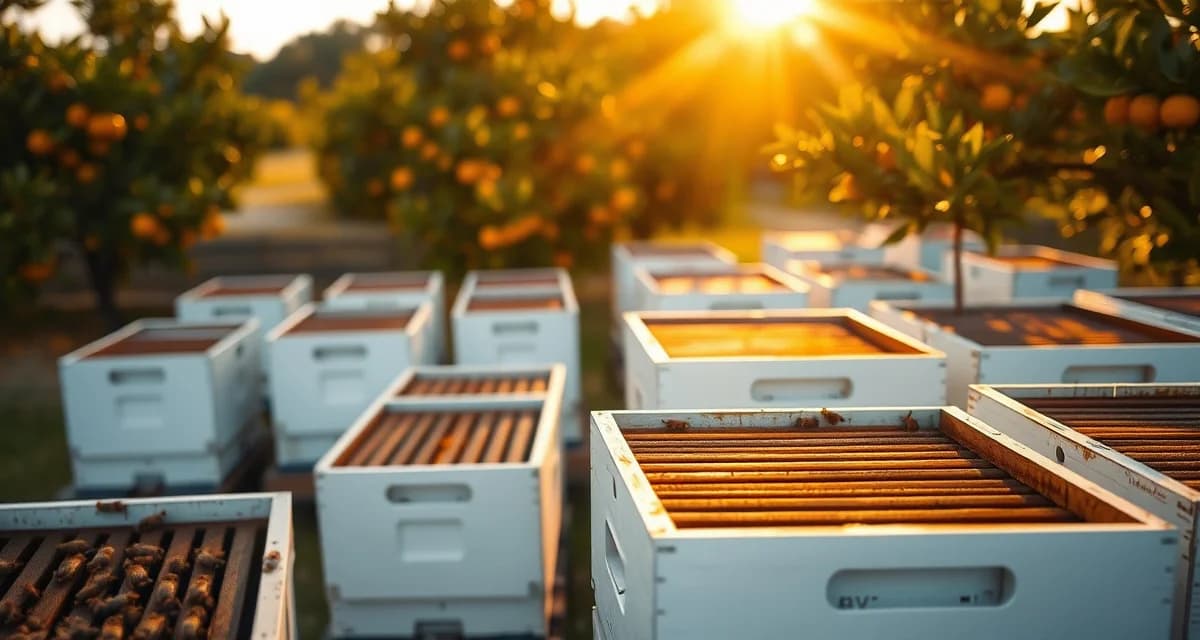
Commercial Beekeeping in Florida: Regulations, Seasons, and Opportunities
Florida's mild winters make it a primary wintering destination for Northern migratory operations. While North Dakota beekeepers are dealing with -20°F winters that require colonies to cluster tight for months, those same colonies wintering in central Florida are building population on cabbage palm pollen in January. That 45-day head start in spring buildup translates directly into February almond delivery strength.
Florida requires annual apiary registration and issues certificates of inspection for interstate movement. It's also an AHB-affected state, which adds a regulatory layer that operators coming from northern states sometimes underestimate.
TL;DR
- Florida's primary commercial beekeeping role is shaped by its crop mix, climate, and position on the national pollination circuit.
- Pollination rates in Florida range $60-90/hive depending on crop and colony strength requirements.
- Out-of-state operators entering Florida for pollination contracts must register with the state agricultural authority and obtain a Certificate of Health.
- Florida functions as either a primary pollination destination, a seasonal honey production location, or a transitional stop depending on the circuit.
- Tracking permit status, registration documents, and yard records for Florida operations requires organized record-keeping before the season opens.
Florida's Role in the Commercial Beekeeping Calendar
Florida functions as a year-round base for some operations and a seasonal stop for others. The seasonal circuit for northern operators:
October-November: Northern operations finish North Dakota honey extraction and move colonies south to Florida wintering yards. The move takes 20-24 hours from North Dakota; overnight runs are standard.
November-January: Colonies overwinter in Florida's mild climate. Natural pollen from Brazilian pepper, cabbage palm, and other species begins as early as November and continues through the winter. Colonies maintain population or grow modestly without artificial feeding in good years, versus significant population decline in northern winters.
Late January: Northern operations reload colonies for the California almond run. Florida colonies making the California move have 30-60 more days of buildup than colonies that wintered in cold-climate states, which shows up in frame count at delivery.
February-March: Some operations leave a portion of their fleet in Florida for early spring pollination (blueberries, watermelons, specialty vegetables). Others move the entire fleet to California.
April-June: Florida operations run oranges, blueberries in northern Florida and Georgia, and watermelon and specialty crop pollination. Colonies returning from California may stop in Florida for recovery before moving north.
Florida Apiary Registration Requirements
Administering agency: Florida Department of Agriculture and Consumer Services (FDACS), Bureau of Plant and Apiary Inspection
State registration: Required for all beekeepers maintaining colonies in Florida. Commercial operators (generally defined as 26+ colonies) register at the commercial scale with fees based on colony count. Registration is annual, with fees typically ranging from $10-50 depending on operation size.
Out-of-state operator registration: Operators wintering or working in Florida who are primarily registered in another state must register with FDACS if their colonies are in the state for 30+ days. This is actively enforced. FDACS inspectors visit commercial wintering yards.
Certificate of Inspection: FDACS issues Certificates of Inspection (equivalent to CVIs in many states) for colonies moving out of Florida to other states. Getting a Florida Certificate of Inspection from the state apiarist or an authorized inspector is the standard documentation for colonies leaving Florida for California.
County requirements: Some Florida counties have additional requirements. Work with your specific county agricultural extension office if you're placing in an unfamiliar county.
Africanized Honey Bee Considerations
Florida is an AHB-affected state. Africanized honey bees established populations in South Florida (Miami-Dade, Broward, and Palm Beach counties primarily) and have spread northward. As of 2026, AHB is confirmed in significant portions of central and southern Florida.
What this means for operations:
- FDACS inspectors may require colony testing or assessment for AHB genetics when issuing certificates of inspection
- Colonies that test positive for AHB genetics cannot be moved to many states (including California) without additional restrictions or may be refused
- Wintering yards in South Florida are at higher risk of AHB genetic contamination through drone flight with feral AHB populations
- Operations wintering in central Florida (north of Orlando) have lower but not zero AHB risk
Practical management: Most northern operations winter in central Florida north of the AHB pressure zone, the area around Lake City, Gainesville, Ocala, and similar latitudes. Colonies maintained in this area are at lower risk of AHB genetic introduction than colonies in South Florida.
If your colonies test positive for AHB genetics, the consequences are significant: California may refuse entry, and you may face FDACS management requirements. Have your colonies assessed by your FDACS inspector before you commit to wintering locations in AHB-affected areas.
Citrus Pollination in Florida
Florida's citrus industry has contracted significantly over the past 20 years due to citrus greening disease (HLB), but commercial citrus pollination is still active in Polk, Highlands, DeSoto, Hardee, and Hendry counties.
Crop timing: Citrus bloom in Florida runs late February through April, with peak bloom typically March. This creates an opportunity for colonies that have completed or are between pollination contracts, either after returning from California almonds or before spring movements north.
Contract rates: Florida citrus pollination runs $60-90/hive, significantly lower than almonds but a useful income stop for colonies that are already in Florida. Some operators book citrus contracts for their Florida-wintering colonies as a bridge income between the fall move-in and the California departure.
Blueberry pollination: Northern Florida and southern Georgia have active commercial blueberry production (primarily highbush and southern highbush varieties). Contract rates run $70-90/hive. Bloom timing is late February to March in southern Georgia and northern Florida, potentially stackable with late almond departures or early cherry contracts.
Florida Watermelon and Vegetable Pollination
Florida produces a large share of US winter and spring fresh vegetables and melons. Commercial beekeeping opportunities include:
- Watermelon: March-May, contract rates $60-80/hive. Alachua, Marion, Putnam, and northern Florida counties.
- Cucumbers and squash: Year-round in different regions, highest activity February-April and September-November.
- Specialty vegetables: Peppers, eggplant, and other cucurbit crops need pollination. Covered/tunnel production is increasing.
Florida vegetable pollination isn't the highest-value stop on most circuits, but for operations already in Florida for wintering, adding vegetable contracts during January-March generates income from colonies that would otherwise be on maintenance management.
Honey Production in Florida
Florida honey production has historically been driven by palmetto, citrus, and Brazilian pepper flows. Brazilian pepper (Schinus terebinthifolia) is an invasive species but produces a substantial honey flow in fall and early winter in South Florida.
Tupelo honey: The Florida Panhandle is the only place in the US where white tupelo (Ogeechee tupelo) grows in sufficient density to produce the prized single-varietal tupelo honey. Tupelo bloom in the Apalachicola River basin runs 3-4 weeks in late April-early May. Tupelo honey doesn't granulate and commands $8-15/lb at retail from specialist buyers and premium honey markets. Operations that position colonies in the Panhandle for the tupelo flow are capturing one of the highest-value varietal honey opportunities in US beekeeping.
General Florida honey: Florida wildflower honey quality varies significantly by region and season. Operations wintering in central Florida often produce limited but saleable honey from winter pollen flows. This is not the primary honey production opportunity. Most operations pull supers before the California move rather than leaving them in Florida where management is more difficult.
Regulatory Considerations for Moving Out of Florida
When you're ready to move colonies from Florida to California or other states, FDACS issues the Certificate of Inspection that serves as your interstate movement health certificate. The process:
- Contact your assigned FDACS inspector 2-3 weeks before your planned movement date
- Inspector visits the yard and conducts a colony health assessment
- If colonies pass inspection (free from AFB, EFB, and other regulated pests), FDACS issues the Certificate
- The Certificate is valid for 30 days (matches California's CVI requirement)
- Present the Certificate plus your CDFA entry permit at California border stations
One advantage of Florida's inspection program: FDACS inspectors who work with commercial operations are experienced with large-scale inspections and understand the commercial operator's timeline. Build a relationship with your assigned inspector, as it makes scheduling around your movement windows much smoother.
FAQ
What registration is required for commercial beekeeping in Florida?
All beekeepers in Florida must register with FDACS Bureau of Plant and Apiary Inspection. Commercial operators (26+ colonies) pay fees based on colony count with annual renewal. Out-of-state operators wintering or working in Florida for 30+ days must register as non-resident commercial operators. Counties may have additional local requirements. FDACS inspectors actively visit commercial wintering yards.
When is citrus pollination season in Florida?
Florida citrus bloom peaks in March, with a range from late February through April depending on variety and location. The primary production counties are in central and southern Florida: Polk, Highlands, DeSoto, Hardee, and Hendry counties. Contract rates run $60-90/hive, lower than almond rates but a practical bridge income for operations already in Florida between the California almond season and spring movements north.
Is Florida a good state to winter commercial hives?
Yes, for operations coming from northern states, Florida wintering offers significant advantages: colonies maintain population in mild weather, natural pollen availability starts earlier than in cold climates, and spring buildup begins 45-60 days earlier than equivalent colonies wintered in the North. The primary concerns are AHB risk (manageable with careful yard location selection north of the main AHB zone), higher year-round varroa pressure, and the cost of the interstate move south in fall and back to California or north in spring.
What is the process for registering an out-of-state apiary in a new state?
Most states require out-of-state operators to register with the state department of agriculture apiary program before placing colonies. The process typically involves submitting a registration application (online or paper), paying a fee (usually $10-50 per location), and providing contact information for the operation. Some states also require the registration to be renewed annually. Contact the destination state's department of agriculture apiary program at least 60 days before your planned arrival to confirm current requirements.
What documentation do state apiary inspectors typically review?
State apiary inspectors review health certificates for out-of-state colonies, registration documentation, and colony inspection records during apiary visits. Inspectors check for signs of American foulbrood, European foulbrood, and other regulated pests and diseases. Operations with organized digital records that include treatment history and mite counts typically have faster, less complicated inspections than operations without documentation. Some state inspectors also verify that varroa mite loads are below state entry thresholds.
What triggers a state apiary inspection?
State apiary inspections can be triggered by routine inspection schedules (most states inspect a percentage of registered apiaries annually), neighbor or landowner complaints, disease reports from nearby operations, or inspection requirements tied to state entry permits. California, in particular, has the right to inspect incoming loads at port of entry for commercial beekeeping operations. Maintaining current registration and organized records makes required inspections faster and less disruptive.
Try These Free Tools
Sources
- USDA Agricultural Research Service
- Bee Informed Partnership
- American Beekeeping Federation (ABF)
- Florida Department of Agriculture
- Project Apis m.
Get Started with PollenOps
Commercial operations working in Florida face the same registration, permit, and documentation requirements as any state on the national circuit -- plus Florida's specific regulatory requirements. PollenOps tracks your Florida yard records, contract assignments, and permit documentation alongside your full operation, so entering a new state doesn't add a separate administrative burden. See how the platform fits operations working across multiple states.