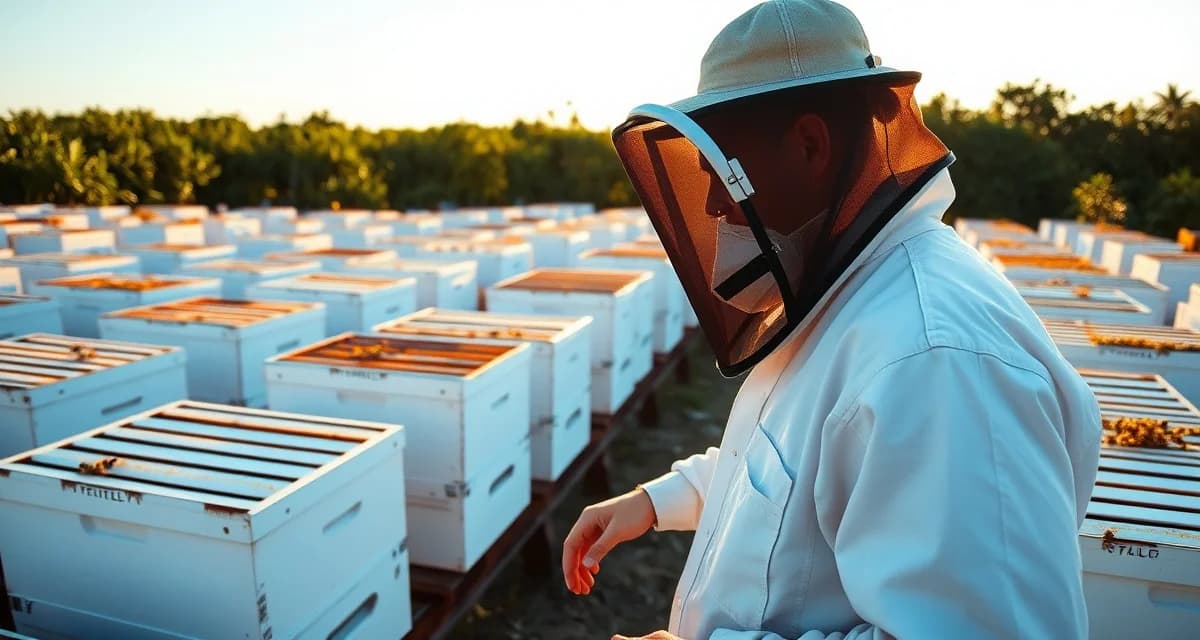
Florida State Apiary Regulations for Commercial Beekeepers
Florida's warm winters attract thousands of out-of-state hives every year. Some operators come to winter colonies before California almond delivery, others stay for citrus pollination in the central ridge counties, and some use Florida as a buildup location before heading north in spring. Whatever brings you here, Florida requires annual apiary registration and a valid health certificate for any colonies coming in from another state.
The Florida Department of Agriculture and Consumer Services (FDACS) Division of Plant Industry manages apiary registration and inspection. Florida is one of the more active inspection states, particularly because the combination of year-round warm weather and high hive density creates serious disease transmission risk.
TL;DR
- Florida's primary commercial beekeeping role is shaped by its crop mix, climate, and position on the national pollination circuit.
- Pollination rates in Florida range $65-220/hive depending on crop depending on crop and colony strength requirements.
- Out-of-state operators entering Florida for pollination contracts must register with the state agricultural authority and obtain a Certificate of Health.
- Florida functions as either a primary pollination destination, a seasonal honey production location, or a transitional stop depending on the circuit.
- Tracking permit status, registration documents, and yard records for Florida operations requires organized record-keeping before the season opens.
Annual Registration Requirements
All apiaries in Florida must be registered with FDACS annually. Registration runs on a calendar year basis. The fee is per-colony count, so at 1,000 hives you're paying a meaningful amount, but it's a required cost of doing business in the state.
Out-of-state operators who bring hives into Florida for any purpose, including wintering, pollination, or transit, must register every apiary site. If you're placing hives in citrus in Highlands County and simultaneously wintering splits in Glades County, both yards need registration records.
For the full picture of your multi-state registration obligations, state apiary registration requirements walks through the compliance framework across the major migratory circuits.
Health Certificate for Incoming Colonies
Florida requires a certificate of inspection issued by a certified inspector in your home state for any colonies entering Florida. The certificate must be current, typically within 30 days, and must accompany the load. FDACS inspectors at the state line or in the field will request this documentation.
The certificate needs to document that colonies are free of American foulbrood, European foulbrood, and small hive beetle infestation. Florida is particularly focused on small hive beetle because warm conditions make infestations rapidly fatal to colonies.
Florida does not accept self-certification. The certificate must be issued by a state-authorized inspector, a USDA-accredited veterinarian, or the apiary inspector in your home state. Get your paperwork in order before loading trucks.
Florida Inspection Program
Florida inspectors are among the most active in the country. The state has a network of district apiary inspectors who conduct both routine and complaint-based inspections. You should expect your Florida yards to be inspected at least once during a wintering or pollination season.
Inspectors check for the full list of reportable diseases: American foulbrood, European foulbrood, sacbrood, chalkbrood, and varroa. Florida also tracks small hive beetle populations and may issue management notices if beetle trap counts indicate inadequate management.
If an AFB positive is found, Florida requires immediate destruction of infected equipment according to state protocol. This is not negotiable, and the cost is yours to bear.
For operators managing citrus or other Florida pollination work alongside wintering, commercial beekeeping in Florida covers the full seasonal and regulatory picture.
Africanized Honey Bee Monitoring
Florida has an established Africanized honey bee (AHB) presence in several southern counties. Commercial operators wintering in South Florida should be aware that AHB monitoring programs may require colony genetic testing in high-risk counties. Consult with FDACS before placing hives in Miami-Dade, Broward, or Collier counties.
Frequently Asked Questions
What registration is required for commercial beekeeping in Florida?
All apiaries in Florida must be registered annually with the Florida Department of Agriculture and Consumer Services, Division of Plant Industry. Registration is per-location and per-colony count. Out-of-state operators bringing hives into Florida for wintering, citrus pollination, or any other purpose must register every yard site where hives are placed. Registration must be renewed each calendar year and completed before hives are installed. Operators running multiple yards across different Florida counties need a separate registration for each yard location.
How do you get a health certificate for moving hives into Florida?
A health certificate for Florida movement must be issued by a certified inspector in your home state, a USDA-accredited veterinarian, or your home state's apiary inspector. Florida does not accept self-signed documents. The certificate must document that colonies are free of American foulbrood, European foulbrood, and small hive beetle. Most Florida inspectors require certificates dated within 30 days of movement. Contact your home state's department of agriculture apiary division to find an authorized inspector. Budget 2 to 3 weeks lead time in peak season when inspectors are in high demand.
What inspection is required for colonies wintering in Florida?
Florida conducts routine inspections of registered apiaries. Colonies wintering in Florida should expect at least one inspection visit from a district apiary inspector during a typical 4 to 5 month winter stay. Inspectors check for American foulbrood, European foulbrood, sacbrood, varroa, and small hive beetle. If a reportable disease is detected, FDACS may issue a quarantine order that prevents movement until the issue is resolved. This can directly conflict with California almond delivery deadlines, so monitoring your own hive health throughout the winter and treating proactively is essential.
What is the process for registering an out-of-state apiary in a new state?
Most states require out-of-state operators to register with the state department of agriculture apiary program before placing colonies. The process typically involves submitting a registration application (online or paper), paying a fee (usually $10-50 per location), and providing contact information for the operation. Some states also require the registration to be renewed annually. Contact the destination state's department of agriculture apiary program at least 60 days before your planned arrival to confirm current requirements.
What documentation do state apiary inspectors typically review?
State apiary inspectors review health certificates for out-of-state colonies, registration documentation, and colony inspection records during apiary visits. Inspectors check for signs of American foulbrood, European foulbrood, and other regulated pests and diseases. Operations with organized digital records that include treatment history and mite counts typically have faster, less complicated inspections than operations without documentation. Some state inspectors also verify that varroa mite loads are below state entry thresholds.
What triggers a state apiary inspection?
State apiary inspections can be triggered by routine inspection schedules (most states inspect a percentage of registered apiaries annually), neighbor or landowner complaints, disease reports from nearby operations, or inspection requirements tied to state entry permits. California, in particular, has the right to inspect incoming loads at port of entry for commercial beekeeping operations. Maintaining current registration and organized records makes required inspections faster and less disruptive.
Try These Free Tools
Sources
- USDA Agricultural Research Service
- Bee Informed Partnership
- American Beekeeping Federation (ABF)
- Florida Department of Agriculture
- Project Apis m.
Get Started with PollenOps
Commercial operations working in Florida face the same registration, permit, and documentation requirements as any state on the national circuit -- plus Florida's specific regulatory requirements. PollenOps tracks your Florida yard records, contract assignments, and permit documentation alongside your full operation, so entering a new state doesn't add a separate administrative burden. See how the platform fits operations working across multiple states.