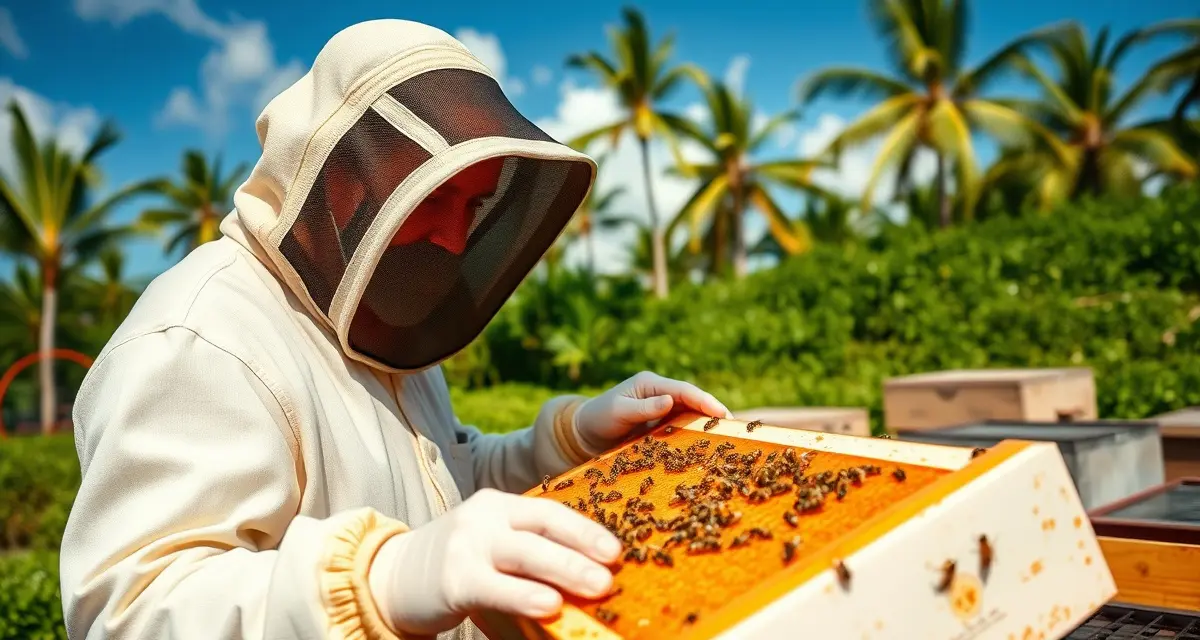
Commercial Beekeeping in Hawaii: Year-Round Opportunities and Regulations
Hawaii strictly regulates bee imports to protect its unique varroa-free status on some islands. Hawaii's year-round warm climate allows continuous honey production without winter management, the most fundamental difference between Hawaiian commercial beekeeping and any continental US operation.
TL;DR
- Hawaii's primary commercial beekeeping role is shaped by its crop mix, climate, and position on the national pollination circuit.
- Pollination rates in Hawaii range $65-220/hive depending on crop depending on crop and colony strength requirements.
- Out-of-state operators entering Hawaii for pollination contracts must register with the state agricultural authority and obtain a Certificate of Health.
- Hawaii functions as either a primary pollination destination, a seasonal honey production location, or a transitional stop depending on the circuit.
- Tracking permit status, registration documents, and yard records for Hawaii operations requires organized record-keeping before the season opens.
Hawaii's Unique Commercial Beekeeping Profile
Hawaii is in a class by itself for US commercial beekeeping:
Year-round production: No winter cluster, no winter management, no spring buildup required. Colonies can be productive in every month of the year. This substantially changes the economics: a colony in Hawaii produces honey for 12 months versus 4-6 months in a northern state.
Varroa-free status (some islands): Oahu is the only main Hawaiian island with established Varroa destructor populations. As of 2026, the neighboring islands including Maui, Kauai, Molokai, Lanai, and the Big Island are varroa-free. This extraordinary status is protected by strict import regulations. Varroa's absence on these islands allows colonies to thrive without the management overhead that defines continental US beekeeping.
Distinctive honey varieties: Hawaii produces several commercially sought varietal honeys that don't exist elsewhere in the US: macadamia nut honey, Christmas berry (Christmasberry, Schinus terebinthifolia) honey, lehua honey (from native ohia trees), and white honey from several native sources.
Hawaii Honey Production
Macadamia honey: The Big Island's macadamia orchards produce a distinctive honey that has commercial identity in the premium market. Light amber, mild, slightly nutty: it's sought by specialty buyers and commands premium retail prices.
Lehua honey: From the ohia lehua tree (Metrosideros polymorpha), Hawaii's iconic native tree. Lehua honey is light, crystallizes very fine, and is considered one of Hawaii's signature foods. Big Island and Kauai production.
Christmas berry/wilelaiki honey: From the invasive Christmasberry bush. Amber, distinctive flavor. Major contributor to Big Island honey production.
Tropical wildflower: The diversity of tropical and subtropical plants in Hawaii creates complex honey character from mixed sources year-round.
Commercial Scale in Hawaii
Hawaii does have commercial-scale beekeeping operations, primarily on Maui, the Big Island, and Kauai, the varroa-free islands where colony management is simpler. The commercial operations tend to be smaller than typical mainland commercial operations but more profitable per colony due to year-round production and premium honey prices.
For mainland commercial beekeeping operations at 500-5,000 hives on the California-Northwest-Dakota circuit, Hawaii is not a viable component of the migratory operation. It's a distinct business model serving the premium specialty honey market.
Hawaii Apiary Regulations
Administering agency: Hawaii Department of Agriculture, Plant Industry Division
Import restrictions: Hawaii has the most restrictive bee import regulations in the US. The varroa-free status of most islands is protected by prohibiting the import of honey bee colonies, queens, and used bee equipment that could introduce Varroa or other pests and diseases not yet present in Hawaii.
- Importing live adult bees is generally prohibited without specific permits
- Importing queens requires compliance with strict testing and quarantine protocols
- Used bee equipment cannot be imported
- Package bees face extremely rigorous inspection and often cannot be imported
These restrictions are not bureaucratic formalities. They protect one of the most valuable bee management environments in the US.
Registration: Annual registration required for all Hawaiian beekeepers through the Hawaii Department of Agriculture.
State inspection: Active inspection program to monitor for Varroa and other regulated pests on the neighbor islands.
FAQ
Can you run a profitable commercial beekeeping operation in Hawaii?
Yes, for operations designed specifically for Hawaii's market and conditions. Commercial operations on Maui, the Big Island, and Kauai produce year-round honey from diverse tropical and subtropical sources. The absence of varroa on most islands significantly reduces management costs and colony loss rates. Per-colony profitability can be higher than mainland operations, but the colony count is necessarily smaller (Hawaii's total bee population is a small fraction of mainland commercial operations), and the premium specialty honey market is the primary revenue channel.
What makes Hawaii unique for commercial beekeeping?
Two things: year-round production without winter management (eliminating 30-40% colony loss from winter stress that mainland operations accept as normal) and varroa-free status on most islands (eliminating the single largest colony management cost and loss driver in mainland beekeeping). Hawaiian honey also commands significant premiums in the specialty market. Macadamia, lehua, and Christmas berry honey are genuinely distinctive products with premium brand identities.
What are Hawaii's apiary import regulations?
Hawaii prohibits most imports of live bees, queens, and used equipment to protect the neighbor islands' varroa-free status. Importing live colonies is essentially prohibited. Queen imports require specific permits, quarantine testing, and compliance with DOA quarantine protocols. Contact the Hawaii Department of Agriculture Plant Industry Division before any planned import. The restrictions are actively enforced, and violating them can result in immediate confiscation and destruction of imported material.
What is the process for registering an out-of-state apiary in a new state?
Most states require out-of-state operators to register with the state department of agriculture apiary program before placing colonies. The process typically involves submitting a registration application (online or paper), paying a fee (usually $10-50 per location), and providing contact information for the operation. Some states also require the registration to be renewed annually. Contact the destination state's department of agriculture apiary program at least 60 days before your planned arrival to confirm current requirements.
What documentation do state apiary inspectors typically review?
State apiary inspectors review health certificates for out-of-state colonies, registration documentation, and colony inspection records during apiary visits. Inspectors check for signs of American foulbrood, European foulbrood, and other regulated pests and diseases. Operations with organized digital records that include treatment history and mite counts typically have faster, less complicated inspections than operations without documentation. Some state inspectors also verify that varroa mite loads are below state entry thresholds.
What triggers a state apiary inspection?
State apiary inspections can be triggered by routine inspection schedules (most states inspect a percentage of registered apiaries annually), neighbor or landowner complaints, disease reports from nearby operations, or inspection requirements tied to state entry permits. California, in particular, has the right to inspect incoming loads at port of entry for commercial beekeeping operations. Maintaining current registration and organized records makes required inspections faster and less disruptive.
Try These Free Tools
Sources
- USDA Agricultural Research Service
- Bee Informed Partnership
- American Beekeeping Federation (ABF)
- Hawaii Department of Agriculture
- Project Apis m.
Get Started with PollenOps
Commercial operations working in Hawaii face the same registration, permit, and documentation requirements as any state on the national circuit -- plus Hawaii's specific regulatory requirements. PollenOps tracks your Hawaii yard records, contract assignments, and permit documentation alongside your full operation, so entering a new state doesn't add a separate administrative burden. See how the platform fits operations working across multiple states.