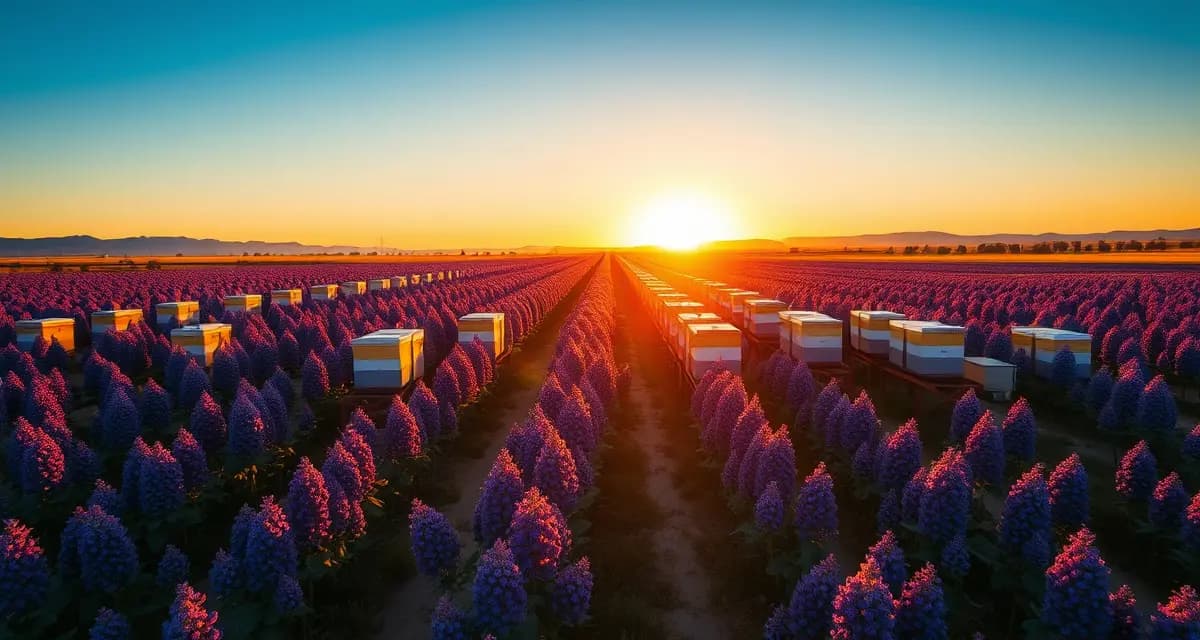
Alfalfa Seed Pollination in New Mexico: Contracts and Opportunities
New Mexico's high desert climate produces a unique alfalfa seed crop that requires commercial hive placements for adequate pollination. The state's alfalfa seed industry is concentrated in the southern Rio Grande Valley and the eastern plains, and the pollination season runs June through August, a window that falls neatly between California almond exit in late February and fall positions further east or north.
New Mexico alfalfa seed pollination is not the largest commercial beekeeping market, but it fills an important gap in the annual circuit for operators who are looking for summer income between spring pollination and fall moves. The high desert heat and irrigation-supported production create conditions for consistent nectar and pollen production.
TL;DR
- New Mexico's primary commercial beekeeping role is shaped by its crop mix, climate, and position on the national pollination circuit.
- Pollination rates in New Mexico range $65-220/hive depending on crop depending on crop and colony strength requirements.
- Out-of-state operators entering New Mexico for pollination contracts must register with the state agricultural authority and obtain a Certificate of Health.
- New Mexico functions as either a primary pollination destination, a seasonal honey production location, or a transitional stop depending on the circuit.
- Tracking permit status, registration documents, and yard records for New Mexico operations requires organized record-keeping before the season opens.
New Mexico Alfalfa Seed Season
Alfalfa seed bloom in New Mexico runs from late June through August, with peak pollination demand in July. The high desert altitude in the central New Mexico production areas moderates summer temperatures compared to the lower desert, but operators should expect daytime highs of 90 to 100 degrees Fahrenheit during peak season.
Operators timing the New Mexico stop as a bridge between California almonds and Northern summer positions need to plan around the 6 to 8 week recovery time colonies need after almond season. Hives arriving in New Mexico in late June after a March almond exit and 10 to 12 weeks of spring management should be in good condition if winter survival was strong and spring treatment was done well.
For clover and seed crop pollination contract planning, New Mexico alfalfa is one of several summer seed crop opportunities that can anchor mid-season income.
Alfalfa Seed Crop Pollination Requirements
Alfalfa seed production requires cross-pollination, meaning hive placement density and distribution across the field matter more than in some other crops. Standard placement for alfalfa seed runs 2 to 4 hives per acre, higher than hay alfalfa pollination. Growers who have been disappointed by poor seed set from inadequate pollination understand this and specify density clearly.
Colony strength requirements for alfalfa seed typically call for 6 frames of bees or better. The heat of New Mexico's summer affects colony behavior, and colonies need to be strong enough to sustain forager populations through the peak bloom period.
Growers of certified alfalfa seed may have additional requirements around the timing of any pesticide applications, since seed crops are highly dependent on pollinator activity throughout the flowering period.
Contract Opportunities in New Mexico
New Mexico alfalfa seed growers are concentrated in the Roswell, Deming, and southern Rio Grande Valley areas. Outreach to seed producers in these regions in the fall or early winter for the following summer season is the standard approach.
Seed producers often work through seed companies that contract with individual growers. Connecting with regional seed company representatives can lead to multiple grower contacts through a single relationship.
For commercial beekeeping in New Mexico broadly, understanding the state's regulatory requirements is the starting point before pursuing contracts.
Logistics in New Mexico
New Mexico's agricultural areas are spread across a large geographic area. Yard distances between sites can be substantial, which affects how efficiently a crew can manage multiple yards in a single day. Plan driving distances and road conditions carefully when mapping out a New Mexico summer operation.
Water access is a critical yard site consideration in the high desert. See the guidance on water management for commercial yard sites for specific approaches to water provision in arid summer conditions.
Frequently Asked Questions
How do you get alfalfa seed contracts in New Mexico?
Contact alfalfa seed growers and seed company representatives in the Roswell, Deming, and southern Rio Grande Valley areas in fall or early winter for the following summer season. The New Mexico alfalfa seed industry has established relationships with regular beekeepers, but new operators can break in with direct outreach, competitive pricing, and a clear pitch about their colony strength standards. The New Mexico Department of Agriculture extension service can provide introductions to producer associations. Attending regional agricultural events where seed producers and beekeepers interact is another effective networking approach.
When is alfalfa bloom in New Mexico?
New Mexico alfalfa seed bloom runs from late June through August, with peak pollination demand in July. The exact timing varies by field, variety, and elevation, with higher-altitude fields blooming slightly later than valley floor locations. Operators should plan to arrive in New Mexico by late June to be in place for the early bloom and to allow colonies to acclimate to the summer desert conditions before peak pollination demand. The season's end in late August or early September provides a clean transition to fall circuit positions.
What colony strength do New Mexico alfalfa seed growers require?
Most New Mexico alfalfa seed growers require colonies at 6 frames of bees at placement. Some premium seed operations specify 8 frames. The stocking density for alfalfa seed is higher than for hay alfalfa, typically 2 to 4 hives per acre, which means the total colony count commitment per contract is meaningful. Strong colonies also hold up better through New Mexico's summer heat, maintaining forager populations through the bloom period rather than declining from heat stress. Plan your colony buildup through spring with New Mexico's July delivery requirements in mind.
What is the process for registering an out-of-state apiary in a new state?
Most states require out-of-state operators to register with the state department of agriculture apiary program before placing colonies. The process typically involves submitting a registration application (online or paper), paying a fee (usually $10-50 per location), and providing contact information for the operation. Some states also require the registration to be renewed annually. Contact the destination state's department of agriculture apiary program at least 60 days before your planned arrival to confirm current requirements.
What documentation do state apiary inspectors typically review?
State apiary inspectors review health certificates for out-of-state colonies, registration documentation, and colony inspection records during apiary visits. Inspectors check for signs of American foulbrood, European foulbrood, and other regulated pests and diseases. Operations with organized digital records that include treatment history and mite counts typically have faster, less complicated inspections than operations without documentation. Some state inspectors also verify that varroa mite loads are below state entry thresholds.
What triggers a state apiary inspection?
State apiary inspections can be triggered by routine inspection schedules (most states inspect a percentage of registered apiaries annually), neighbor or landowner complaints, disease reports from nearby operations, or inspection requirements tied to state entry permits. California, in particular, has the right to inspect incoming loads at port of entry for commercial beekeeping operations. Maintaining current registration and organized records makes required inspections faster and less disruptive.
Try These Free Tools
Sources
- USDA Agricultural Research Service
- Bee Informed Partnership
- American Beekeeping Federation (ABF)
- New Mexico Department of Agriculture
- Project Apis m.
Get Started with PollenOps
Commercial operations working in New Mexico face the same registration, permit, and documentation requirements as any state on the national circuit -- plus New Mexico's specific regulatory requirements. PollenOps tracks your New Mexico yard records, contract assignments, and permit documentation alongside your full operation, so entering a new state doesn't add a separate administrative burden. See how the platform fits operations working across multiple states.