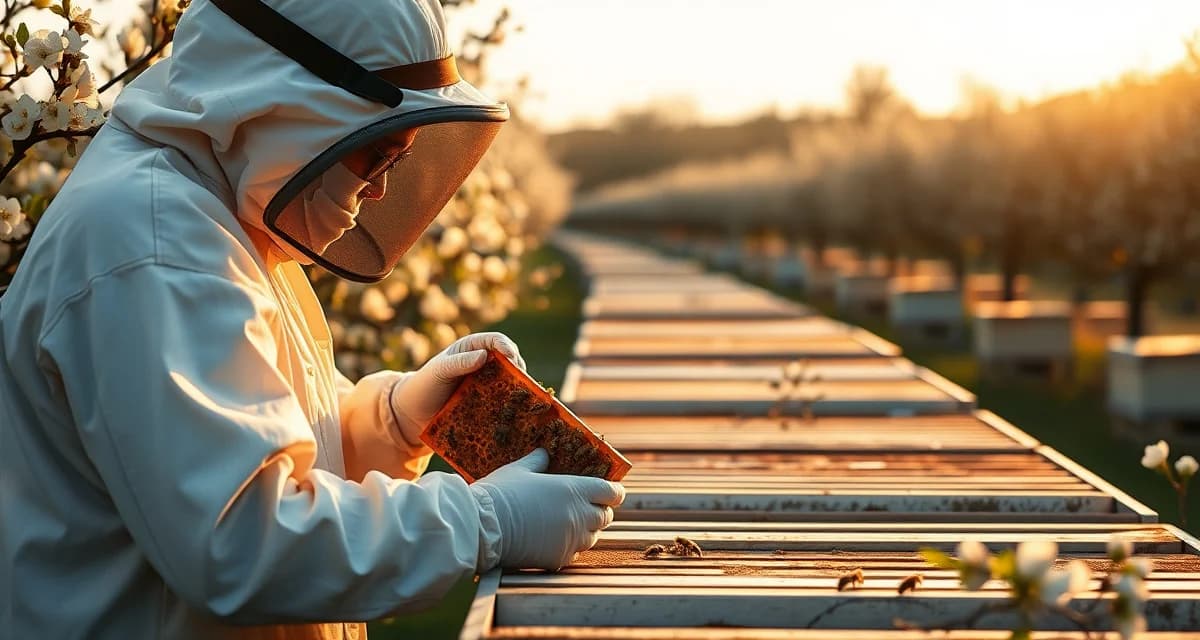
Commercial Beekeeping in New York: Apple Pollination and Regulations
New York produces 30 million or more pounds of apples annually across 50,000 or more bearing acres. That makes it the second-largest apple-producing state in the US, and it creates a genuine pollination market for commercial beekeepers with the capacity to service it.
New York requires apiary registration and a permit for colonies entering from other states, so whether you're based in New York or bringing hives in from out of state for apple season, you need to understand the regulatory requirements.
This guide covers the pollination opportunities, seasonal timing, and regulatory landscape for commercial beekeeping in New York.
TL;DR
- New York's primary commercial beekeeping role is shaped by its crop mix, climate, and position on the national pollination circuit.
- Pollination rates in New York range $65-220/hive depending on crop depending on crop and colony strength requirements.
- Out-of-state operators entering New York for pollination contracts must register with the state agricultural authority and obtain a Certificate of Health.
- New York functions as either a primary pollination destination, a seasonal honey production location, or a transitional stop depending on the circuit.
- Tracking permit status, registration documents, and yard records for New York operations requires organized record-keeping before the season opens.
New York's Apple Regions
New York's apple production is concentrated in several distinct regions, each with different timing and logistical characteristics.
Wayne County (Lake Ontario shore): One of the largest commercial apple production areas in the state. The moderating influence of Lake Ontario creates a favorable microclimate. Major commercial orchards, some farming hundreds of acres.
Hudson Valley (Ulster, Dutchess, Columbia counties): Traditional apple country with a mix of commercial operations and farm-direct orchards. Proximity to the New York City metro market creates strong retail and direct sales opportunities.
Champlain Valley (Clinton, Essex, Franklin counties): Northern New York near the Vermont border. Apple production with a distinct microclimate from Lake Champlain.
Western New York (Niagara, Orleans, Monroe counties): Lake Ontario influence similar to Wayne County. Mix of commercial scale and smaller operations.
When Is Apple Pollination Season in New York?
Apple bloom in New York varies by region and annual temperature patterns.
Wayne County and western Lake Ontario: Bloom typically runs late April to early May, often peaking April 25th to May 10th.
Hudson Valley: Bloom tends to run slightly earlier in the southern Hudson Valley, around late April. Northern Hudson Valley closer to May 1st to May 15th.
Champlain Valley: Later bloom due to northern latitude, typically May 1st to May 20th.
Varietal differences: Early varieties (like Lodi) bloom before later varieties (like Fuji or Honeycrisp). Orchards with multiple varieties may have extended bloom windows of 10 to 14 days.
Hive delivery to New York apple orchards targets 3 to 5 days before bloom opens in each specific orchard. Growers who watch their trees closely will give you timing guidance based on bud stage. Listen to them.
What Pollination Opportunities Exist in New York State?
Apple is the anchor pollination crop in New York, but it's not the only opportunity.
Apple Pollination
Commercial apple pollination rates in New York typically run $75 to $120 per hive. Strong operators with documented colony performance command the higher end of that range. New York apple pollination fits cleanly into the spring circuit after California almonds for operators running a full migratory route.
Cherry Pollination
New York has commercial sweet cherry production, particularly in the Lake Ontario shore counties and Hudson Valley. Cherry pollination rates are comparable to apple ($80 to $120 per hive) and bloom timing is 1 to 2 weeks before apple in most locations.
Blueberry and Other Small Fruits
New York has cultivated blueberry production and other small fruit crops that require pollination. Rates and volume are more limited than apple, but these contracts can fill schedule gaps effectively.
Honey Production
New York's varied landscape (from clover fields in the Finger Lakes to basswood forests in the Adirondacks to wildflower sources on Long Island) supports legitimate commercial honey production. Summer honey flows in New York can be strong, particularly in years with good rainfall.
New York honey has active retail markets in New York City and surrounding metro areas, where consumer interest in local honey supports premium pricing for direct-to-consumer operations.
For operators producing volume, New York co-ops and buyers can absorb commercial-scale honey production at competitive bulk rates.
New York's Apiary Registration Requirements
New York requires registration of all apiaries with the New York State Department of Agriculture and Markets, Division of Plant Industry.
For In-State Operators
New York beekeepers must register their apiary locations with the state. Registration is renewed annually. Contact the Division of Plant Industry for current registration forms, fees, and procedures.
State apiary inspectors conduct routine inspections of registered apiaries, focused on disease detection (particularly American foulbrood) and regulatory compliance.
For Out-of-State Operators
Colonies entering New York from other states require:
- A certificate of inspection from the state of origin, issued within 30 days of the movement date
- The certificate must confirm freedom from American foulbrood, European foulbrood, and other regulated diseases
- Out-of-state operators bringing colonies into New York for pollination must register their yard locations with the state
New York takes these requirements seriously. Have your documentation organized before crossing the state line.
New York State Inspection Process
New York state apiary inspectors are reasonably accessible and generally cooperative with commercial operators who are compliant. If you're bringing large numbers of hives into New York for the first time, contacting the Division of Plant Industry in advance to introduce your operation and confirm requirements is a good practice.
Commercial Beekeeping Operations in New York
Who's Operating in New York
New York has a mix of in-state commercial operators (some based in Wayne County and the Hudson Valley) and out-of-state migratory operators who come in for apple season.
Competition for apple pollination contracts in New York is less intense than in California but is growing as more beekeepers recognize the market opportunity. Building grower relationships before you need the contracts (visiting growers in fall or early winter) puts you ahead of operators who only call in March.
Honey Markets in New York
New York's proximity to major retail markets makes it one of the better states for commercial honey operations that want to sell direct.
New York City's farmers markets, specialty food stores, and restaurant supply markets are strong channels for premium honey sales. Honey positioned as "New York wildflower," "Catskills honey," or "Hudson Valley honey" commands premium pricing from consumers who prioritize local sourcing.
For operators producing volume, New York co-ops and buyers can absorb commercial-scale honey production at competitive bulk rates.
FAQ
What pollination opportunities exist in New York state?
New York's primary commercial pollination market is apple, with 50,000+ bearing acres concentrated in Wayne County, the Hudson Valley, and western New York. Cherry pollination adds additional spring contract volume in the Lake Ontario shore counties and Hudson Valley. Cultivated blueberry and small fruit pollination fills schedule gaps. Combined, New York offers a spring pollination circuit that can support a 300 to 500 hive operation running primarily in-state.
When is apple pollination season in New York?
Apple bloom in New York runs from late April through mid-May, with variation by region. Wayne County orchards near Lake Ontario typically bloom late April to early May. Hudson Valley orchards run similar timing, with northern sections running slightly later. Champlain Valley orchards bloom from early to mid-May. Varietal differences within orchards can extend the effective bloom window by 10 to 14 days. Hive delivery targets 3 to 5 days before bloom opens in each specific location.
What are New York's apiary registration requirements?
All apiaries in New York must be registered with the NY Department of Agriculture and Markets, Division of Plant Industry. Out-of-state operators bringing colonies into New York must have a current inspection certificate from the state of origin (issued within 30 days of movement) confirming freedom from American foulbrood, European foulbrood, and other regulated diseases, and must register their yard locations with the state. Contact the Division of Plant Industry for current forms, fees, and registration procedures before your first season.
What is the process for registering an out-of-state apiary in a new state?
Most states require out-of-state operators to register with the state department of agriculture apiary program before placing colonies. The process typically involves submitting a registration application (online or paper), paying a fee (usually $10-50 per location), and providing contact information for the operation. Some states also require the registration to be renewed annually. Contact the destination state's department of agriculture apiary program at least 60 days before your planned arrival to confirm current requirements.
What documentation do state apiary inspectors typically review?
State apiary inspectors review health certificates for out-of-state colonies, registration documentation, and colony inspection records during apiary visits. Inspectors check for signs of American foulbrood, European foulbrood, and other regulated pests and diseases. Operations with organized digital records that include treatment history and mite counts typically have faster, less complicated inspections than operations without documentation. Some state inspectors also verify that varroa mite loads are below state entry thresholds.
What triggers a state apiary inspection?
State apiary inspections can be triggered by routine inspection schedules (most states inspect a percentage of registered apiaries annually), neighbor or landowner complaints, disease reports from nearby operations, or inspection requirements tied to state entry permits. California, in particular, has the right to inspect incoming loads at port of entry for commercial beekeeping operations. Maintaining current registration and organized records makes required inspections faster and less disruptive.
Try These Free Tools
Sources
- USDA Agricultural Research Service
- Bee Informed Partnership
- American Beekeeping Federation (ABF)
- New York Department of Agriculture
- Project Apis m.
Get Started with PollenOps
Commercial operations working in New York face the same registration, permit, and documentation requirements as any state on the national circuit -- plus New York's specific regulatory requirements. PollenOps tracks your New York yard records, contract assignments, and permit documentation alongside your full operation, so entering a new state doesn't add a separate administrative burden. See how the platform fits operations working across multiple states.