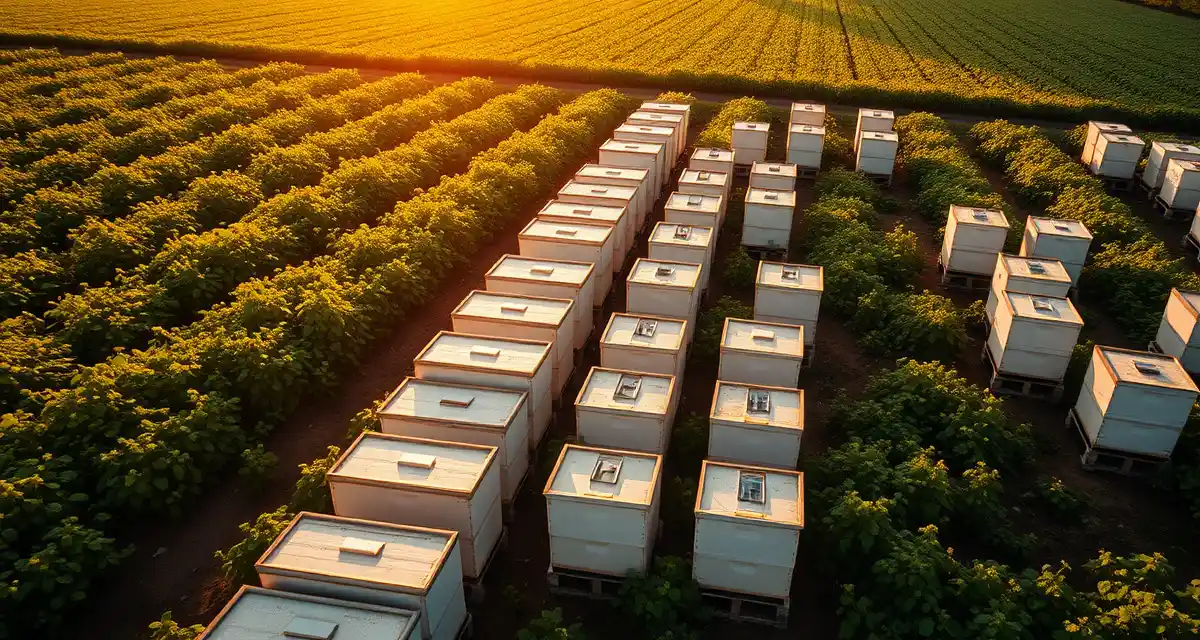
Commercial Beekeeping in Oregon: Clover Seed, Berries, and Regulations
Oregon's Willamette Valley grows 60%+ of US grass and clover seed. That's not a marketing claim. It's the reason commercial beekeeping in Oregon occupies a distinct and specialized niche in the migratory circuit. Clover seed pollination requires 3-5 hives per acre, among the highest placement densities of any crop, and the Willamette Valley's seed production acreage creates significant demand every June and July.
The seed crop circuit, combined with berry pollination in the spring and exceptional honey flows from the Pacific Coast ranges, makes Oregon one of the more complex and potentially lucrative states for a well-positioned commercial operation.
TL;DR
- Oregon's primary commercial beekeeping role is shaped by its crop mix, climate, and position on the national pollination circuit.
- Pollination rates in Oregon range $70-100/hive depending on crop and colony strength requirements.
- Out-of-state operators entering Oregon for pollination contracts must register with the state agricultural authority and obtain a Certificate of Health.
- Oregon functions as either a primary pollination destination, a seasonal honey production location, or a transitional stop depending on the circuit.
- Tracking permit status, registration documents, and yard records for Oregon operations requires organized record-keeping before the season opens.
Seed Crop Pollination in the Willamette Valley
The Willamette Valley runs roughly 150 miles from Portland south to Eugene, bounded by the Coast Range to the west and the Cascades to the east. The valley floor is an intensive agricultural zone that produces a remarkable diversity of seed crops:
Red clover seed: The flagship seed crop for Oregon beekeeping. Red clover (Trifolium pratense) requires cross-pollination. It's self-incompatible, and honey bees provide the primary pollination service. Placement density: 3-5 hives per acre. Bloom timing: mid-June to mid-July. Contract rates: $70-100/hive. Red clover honey is mild and light-colored, and Oregon red clover honey has a regional specialty market.
White clover seed: Less intensive acreage than red clover but similar management requirements. White clover is visited heavily by honey bees for nectar as well as pollen.
Grass seed: Oregon produces the majority of US perennial ryegrass, bentgrass, tall fescue, and orchard grass. Grass species are wind-pollinated and don't require bee pollination. This is a common misconception among new operators. Beekeepers in grass seed areas benefit from the forage that adjacent clover and wildflower provides, but grass fields themselves are not a pollination contract opportunity.
Radish seed, turnip seed, and other brassicas: Brassica seed crops are insect-pollinated and require commercial bee placement. Rates are similar to clover seed.
Hybrid seed corn: Some Willamette Valley hybrid seed corn production is grown under contract requiring bee pollination to transfer pollen between male and female rows. Uncommon but an emerging niche.
Berry and Specialty Crop Pollination in Oregon
Oregon's berry production creates a substantial spring pollination circuit in the Willamette Valley and surrounding areas:
Blueberries (highbush): The Portland metro area and Willamette Valley (Clackamas, Marion, Polk counties) have significant commercial blueberry production. Timing: late April-May. Contract rates: $75-95/hive.
Blackberries and marionberries: Oregon produces the majority of US blackberries and the Oregon-specific marionberry, primarily in Polk, Benton, Yamhill, and Washington counties. Bloom timing: May-June. Contract rates: $55-80/hive. Blackberry honey is also produced from colonies in blackberry areas. It's a distinctive, medium-amber honey with a mild berry-adjacent flavor and a regional premium market in the Pacific Northwest.
Strawberries: Willamette Valley strawberry production uses bee pollination. Contract rates: $50-70/hive. Timing: May-June.
Pears (Medford area): The Rogue Valley in southern Oregon (Jackson County, Medford area) is a major Bartlett and Anjou pear production area. Bloom timing: late March to mid-April. Contract rates: $85-110/hive for documented colony strength.
Cranberries: Oregon's Coos and Curry counties on the southern coast have small-scale commercial cranberry production. Not a major market but a specialty niche for operators on the coast.
Oregon Regulations for Commercial Beekeepers
Administering agency: Oregon Department of Agriculture (ODA), Nursery and Christmas Tree Program (which also oversees apiary regulation)
State registration: All Oregon beekeepers must register annually with ODA. Out-of-state operators keeping colonies in Oregon must register as non-residents. Registration fees scale by colony count. Renew by January 1 each year.
Entry requirements for out-of-state colonies: Oregon requires a CVI from the home state for incoming colonies. ODA may also require an Oregon import permit. Contact the ODA apiary program before your first Oregon move. Oregon has specific notification requirements as part of its Managed Pollinator Protection Plan, and registered apiary locations receive notifications of nearby pesticide applications.
ODA inspection program: Oregon conducts active apiary inspections. The state apiarist program is well-staffed and enforcement is consistent. AFB-positive colonies are destroyed; infected equipment must be treated or destroyed. Oregon's inspection program is among the more thorough in the Pacific Northwest.
varroa management requirements: Oregon recommends and in some cases requires varroa management plans for commercial non-resident operators. Keep treatment records available for inspector review.
Oregon Honey Production
Oregon's most notable honey is from the Willamette Valley clover and blackberry flows, but the state's geography creates diverse honey production opportunities:
Fireweed honey: Fireweed (Epilobium angustifolium) grows in recently burned or logged areas of the Coast Range and Cascades. In good years, fireweed provides a significant flow in July-August. Fireweed honey is prized (water-white, very mild, slightly herbal) and commands $4-6/lb bulk from specialty buyers. Finding good fireweed yards requires monitoring timber harvest and wildfire patterns in the relevant elevation ranges.
Wildflower and bigleaf maple: Western Oregon's wet climate supports diverse spring wildflower growth. Bigleaf maple is an early spring pollen and nectar source. Mixed Pacific Northwest wildflower honey has a Pacific Coast character valued in regional premium channels.
Clover honey from the Willamette: Red and white clover honey from Willamette Valley production areas is mild and locally prized. Some Willamette Valley honey operations specifically market valley-sourced clover honey to regional food businesses.
The Pacific Coast Commercial Circuit
For operators on the Pacific Coast circuit, Oregon sits between California almonds (February) and Washington tree fruits (April). A productive Oregon spring sequence:
- February: California almonds (San Joaquin Valley)
- Late March-April: Southern Oregon pears (Medford/Rogue Valley)
- Late April-May: Willamette Valley blueberries and strawberries
- Late May-June: Willamette Valley berry and early seed crops
- June-July: Red clover seed (peak demand)
- July-August: Washington tree fruit or move to North Dakota/Montana for honey
This circuit keeps 1,000 hives generating contract income from February through late July before the summer honey flow. Managing the logistics of moving between Southern Oregon, the Willamette Valley, and Eastern Washington over a 5-month period requires the kind of multi-yard coordination system that PollenOps was built for.
FAQ
What are the best pollination opportunities in Oregon?
Red clover seed pollination in the Willamette Valley (June-July, $70-100/hive at 3-5 hives/acre) is Oregon's signature commercial beekeeping opportunity, combining high placement density with direct-relationship contracts with seed growers. Rogue Valley pear (late March-April, $85-110/hive) is an excellent early-season cherry-equivalent. Willamette Valley blueberries and blackberries (April-June, $55-95/hive depending on crop) round out a full spring circuit. Operations that sequence all three can generate $250-300+ per hive from Oregon contracts before moving to summer honey.
When is clover seed pollination season in Oregon?
Red clover seed bloom in the Willamette Valley peaks from mid-June to mid-July, with specific timing depending on the variety and the year's spring temperature accumulation. Colonies should be on-site 5-7 days before full bloom opens to allow establishment and orientation. Contracts typically run 3-4 weeks with grower-negotiated entry and exit dates. Clover seed fields require 3-5 hives per acre, so even a 200-acre clover seed operation represents 600-1,000 colony placements, creating significant volume demand from individual growers.
What are Oregon's apiary registration requirements?
Oregon requires annual registration with the Oregon Department of Agriculture for all beekeepers, including out-of-state operators maintaining colonies in the state. A Certificate of Veterinary Inspection is required for colonies entering from out of state, and an ODA import permit may also be required. Confirm with the ODA apiary program before your first Oregon season. Oregon has some of the more thorough state apiary inspection practices in the Pacific Northwest, with active programs for disease detection and treatment compliance.
What is the process for registering an out-of-state apiary in a new state?
Most states require out-of-state operators to register with the state department of agriculture apiary program before placing colonies. The process typically involves submitting a registration application (online or paper), paying a fee (usually $10-50 per location), and providing contact information for the operation. Some states also require the registration to be renewed annually. Contact the destination state's department of agriculture apiary program at least 60 days before your planned arrival to confirm current requirements.
What documentation do state apiary inspectors typically review?
State apiary inspectors review health certificates for out-of-state colonies, registration documentation, and colony inspection records during apiary visits. Inspectors check for signs of American foulbrood, European foulbrood, and other regulated pests and diseases. Operations with organized digital records that include treatment history and mite counts typically have faster, less complicated inspections than operations without documentation. Some state inspectors also verify that varroa mite loads are below state entry thresholds.
What triggers a state apiary inspection?
State apiary inspections can be triggered by routine inspection schedules (most states inspect a percentage of registered apiaries annually), neighbor or landowner complaints, disease reports from nearby operations, or inspection requirements tied to state entry permits. California, in particular, has the right to inspect incoming loads at port of entry for commercial beekeeping operations. Maintaining current registration and organized records makes required inspections faster and less disruptive.
Try These Free Tools
Sources
- USDA Agricultural Research Service
- Bee Informed Partnership
- American Beekeeping Federation (ABF)
- Oregon Department of Agriculture
- Project Apis m.
Get Started with PollenOps
Commercial operations working in Oregon face the same registration, permit, and documentation requirements as any state on the national circuit -- plus Oregon's specific regulatory requirements. PollenOps tracks your Oregon yard records, contract assignments, and permit documentation alongside your full operation, so entering a new state doesn't add a separate administrative burden. See how the platform fits operations working across multiple states.