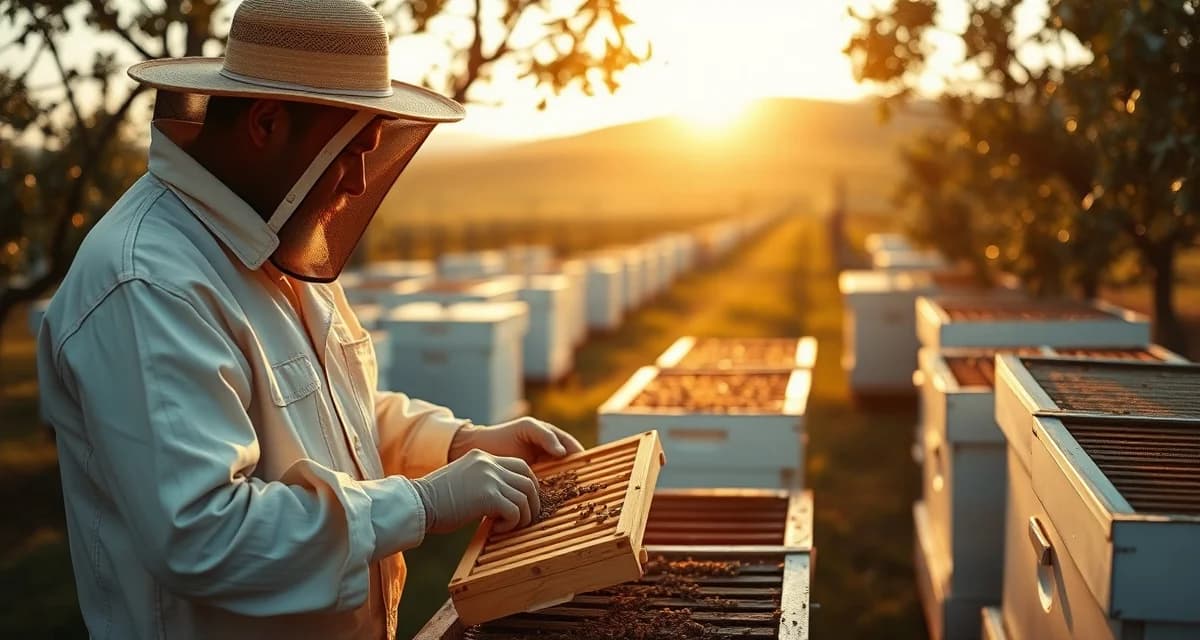
The Pacific Coast Beekeeping Circuit: California to the Pacific Northwest
The Pacific Coast circuit is the most lucrative migratory circuit in US commercial beekeeping. Starting with California almonds in February and running through Pacific Northwest cherries, Washington apples, and Oregon blueberries through July, a well-designed circuit can generate $400,000-$600,000 in pollination revenue for a 1,000-hive operation.
The circuit: California almonds → Pacific Northwest cherries → Washington apples → Oregon berries. The route follows the coast north as bloom progresses from the Central Valley to the Willamette Valley.
TL;DR
- Most states require a Certificate of Health or Certificate of Veterinary Inspection issued by the origin state before out-of-state colonies can enter.
- A California-to-Florida-to-Pacific-Northwest-to-Northern-Plains circuit is the most common full-year migratory route for large commercial operations.
- Interstate permit coordination requires lead time; certificates typically need to be obtained 7-30 days before entry depending on the destination state.
- Moving 1,000 hives requires 2-3 truck loads per move, with fuel, driver wages, and DOT compliance as the primary variable costs.
- Operations that plan their annual circuit 6-8 months in advance can sequence pollination contracts and honey production to maximize annual revenue per hive.
Why the Pacific Coast Circuit Leads All Others
Rate premiums: California almonds pay the highest pollination rates in the US ($185-$225/hive). Pacific Northwest cherry rates ($90-$130/hive) and Washington apple rates ($85-$120/hive) are both strong by national standards.
Sequential bloom: The Pacific Coast bloom sequence is tighter and better-defined than eastern circuits. California almonds finish before Pacific Northwest cherry starts; cherry transitions to apple; apple to Oregon berry. There's minimal overlap and minimal dead time if the circuit is designed well.
Market depth: The Pacific Coast states produce over $2 billion in crops dependent on commercial pollination annually. The grower market is sophisticated, well-funded, and willing to pay professional rates for professional service.
Geographic efficiency: The full circuit runs from Central California to southern Oregon, approximately 650 miles. That's significantly shorter than the distance many eastern circuit operators travel for comparable revenue.
The Circuit in Detail
February (California Almonds):
California's San Joaquin Valley is the financial foundation. Almonds at $185-$225/hive for 3-4 weeks at 500-1,000 hives generates $92,500-$225,000 depending on operation size and rates.
The key: lock in almond contracts by October for the following February. Late-committing operators get spot market rates that are $20-30 below pre-committed rates.
Late April-May (Washington Cherry):
After almonds wrap up in early March, colonies spend March recovering, building up, and moving north. Pacific Northwest cherry bloom starts in late April in Yakima; peak is typically late April through May 10.
Cherry is the most time-sensitive crop on the circuit. A 7-14 day bloom window with a narrow optimal placement timing means late delivery costs growers yield and costs you relationships. Bloom timing alerts calibrated to the Yakima Valley are essential for hitting the window.
May-June (Washington Apple):
Apple bloom follows cherry in May, running from early to late May at different altitudes and varieties. Washington apple contracts pay $85-120/hive for a slightly longer placement than cherry.
June-July (Oregon Blueberry):
Oregon's Willamette Valley highbush blueberry bloom runs from late May through July. For operations wrapping Washington apple in late May, Oregon blueberry provides a final circuit leg that adds 4-5 weeks of additional contract revenue.
Revenue Model for 1,000 Hives
| Crop | Rate | Hives | Revenue |
|------|------|-------|---------|
| California almonds | $200/hive | 1,000 | $200,000 |
| Washington cherry | $110/hive | 1,000 | $110,000 |
| Washington apple | $100/hive | 800 | $80,000 |
| Oregon blueberry | $90/hive | 600 | $54,000 |
| Total | | | $444,000 |
Note: Colony counts decrease on later circuit legs as some colonies are pulled for rest or maintenance.
This represents a strong pollination season without any honey production revenue. Adding honey production from colonies positioned in Pacific Northwest forage areas during gaps adds additional revenue.
Logistics and Challenges
The almond-to-PNW move: After almonds wrap in early March, colonies move to staging yards in the Sacramento Valley or Willamette Valley for recovery and build-up before cherry. This is a 400-600 mile move.
Colony condition after almonds: Colonies placed in almonds in February come out of the orchards in March with variable condition. Some are stronger than they went in; some are weaker, depending on forage availability and disease exposure during placement. A thorough post-almond assessment before cherry commitment is non-negotiable.
Pacific Northwest permits: Washington requires a certificate of health and county registration. Oregon requires a certificate of health and state registration. Plan permits in November for the following year.
For Pacific Coast circuit migratory planning and multi-state contract management, PollenOps handles permits, route planning, and contract timelines across the full circuit.
Frequently Asked Questions
How do you design a Pacific Coast pollination circuit?
Start with California almonds as the financial anchor and work the circuit north following the bloom sequence. Lock in almond contracts in September-October, then build your Pacific Northwest contracts (cherry, apple, blueberry) in the same fall planning window. The geographic sequence is straightforward: Central Valley almonds in February, staging and recovery in March, Yakima cherry in late April-May, Washington apple in May, Oregon blueberry in June-July. Plan your truck movement windows between each leg in advance and set bloom timing alerts in PollenOps for each crop and region. The almond-to-PNW move is the longest leg; plan for it in the staging period after almonds wrap.
What crops make up the Pacific Coast beekeeping circuit?
The Pacific Coast circuit is built on four primary crops: California almonds (the February foundation, highest per-hive revenue), Pacific Northwest sweet cherries in Washington's Yakima Valley (late April-May), Washington apples in the Wenatchee and Yakima corridors (May), and Oregon highbush blueberries in the Willamette Valley (June-July). The full circuit runs approximately February through July, covering 5 months of active pollination contracts. Some operators add California stone fruit (early cherries in the San Joaquin foothills) between almonds and Yakima cherry, and some add Pacific Northwest berry crops after Oregon blueberry to extend the season into August.
What is the total income potential of a Pacific Coast circuit?
A 1,000-hive Pacific Coast circuit at mid-market rates can generate $420,000-$480,000 in pollination revenue across the full California-to-Oregon sequence. Top-performing operations at premium rates with strong grower relationships at 1,000 hives have reached $500,000 or above in pollination-only revenue. The circuit is the most financially productive per-hive circuit in US commercial beekeeping, primarily because the combination of California almond rates with strong Pacific Northwest fruit crop rates maintains high per-hive revenue across the full season. Adding honey production from colonies positioned in Pacific Northwest forage areas further increases total season revenue.
What is the most common full-year circuit for US migratory beekeepers?
The classic commercial circuit runs: winter buildup in Florida or southern Texas, California almonds in February, Pacific Northwest tree fruit (cherry, apple, pear) in April-May, Pacific Northwest or northern Midwest berry and clover crops in June-July, summer honey production in North Dakota, Montana, or Minnesota in July-August, and fall honey extraction and requeening before the cycle restarts. The exact circuit depends on contracted commitments, hive capacity, and the operator's regional relationships.
How do you coordinate state entry permits for a multi-state circuit?
State entry permits and health certificates require lead time: most states want certificates issued 7-30 days before entry. For a circuit that crosses 5-6 states, this means overlapping certificate applications where a certificate for the next state must be initiated before the current state's placement ends. Some operators use a permit tracking calendar that accounts for the lead time required for each destination state. PollenOps includes a permit tracking feature that alerts operators when certificates need to be initiated based on planned move dates.
What are the most common mistakes new migratory operators make?
The most common errors are underestimating transport costs, failing to secure contracts before building hive capacity, not accounting for state entry permit lead times, and neglecting varroa management during the compressed pre-almond preparation period. New operators often also underestimate the administrative load of managing 10-20 contracts across multiple states -- tracking payment status, compliance documentation, and crew scheduling simultaneously requires systems, not just a spreadsheet.
Try These Free Tools
Sources
- USDA Agricultural Research Service
- Bee Informed Partnership
- American Beekeeping Federation (ABF)
- American Honey Producers Association
- USDA Animal and Plant Health Inspection Service (APHIS)
Get Started with PollenOps
Migratory operations face the most complex coordination challenges in commercial beekeeping: permits across multiple states, staggered delivery windows, and fleet logistics that have to work precisely across hundreds of miles. PollenOps was built to handle multi-state, multi-grower, multi-crop operations at this level of complexity.