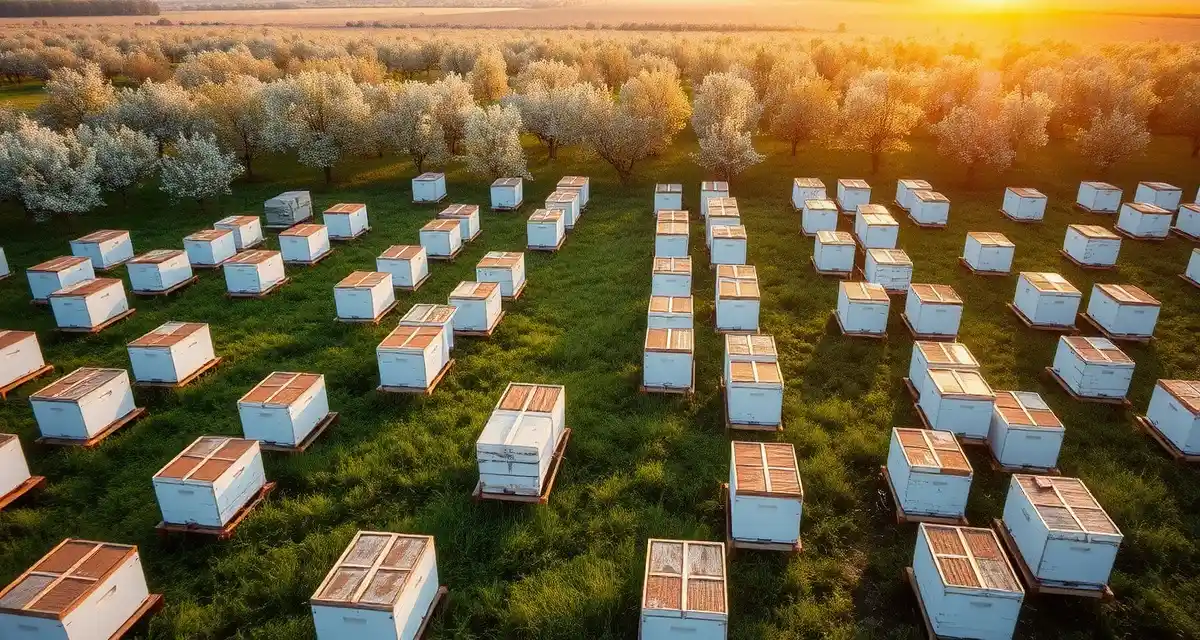
The Midwest Beekeeping Circuit: Ohio to Wisconsin
The Midwest circuit can generate $120-$160 per hive without the California almond dependency. For operators based in the Great Lakes region who want to build a regional circuit rather than migrating to California, the Ohio-to-Wisconsin route offers a viable combination of pollination and honey production revenue.
The circuit: Ohio apple → Michigan blueberry → Wisconsin cranberry → Minnesota clover honey. Each leg follows the Great Lakes bloom sequence from south to north, with honey production filling the late-season window.
TL;DR
- Commercial beekeeping operations face two primary management challenges: operational logistics (hive health, transport, placement) and administrative coordination (contracts, payments, documentation).
- Most disputes and revenue losses in commercial beekeeping are preventable with better documentation and clearer contract terms.
- The operations that run most profitably are those with disciplined systems for tracking hive health, contract status, and fleet logistics in one place.
- PollenOps is built specifically for the operational complexity of commercial-scale pollination services, not adapted from a hobbyist tool.
- The most important management decisions (treatment timing, contract renewal, hive allocation) require accurate current data to make well.
The Midwest Circuit Bloom Sequence
May (Ohio Apple):
Ohio's apple production is concentrated in Wayne, Licking, and Medina counties, with additional orchards in the Lake Erie counties. Ohio apple bloom runs mid-to-late May.
Apple pollination in Ohio pays $80-110/hive. Ohio has fewer resident pollination operators than Michigan or Washington, making new grower relationships more accessible.
June (Michigan Blueberry):
Michigan is the top commercial blueberry state in the eastern US, with the vast majority of production in Van Buren, Allegan, and Berrien counties on the west side of the lower peninsula.
Michigan highbush blueberry bloom runs early to mid-June. Per-hive rates are typically $85-115, reflecting Michigan's large professional blueberry industry.
Michigan is also a significant market for early cherries (late May) and apples (May-June) if you want to add additional legs in the west Michigan fruit belt before blueberry.
Late June-July (Wisconsin Cranberry):
Wisconsin is the top cranberry-producing state in the US. Production is concentrated in the central and north-central counties: Wood, Juneau, Monroe, and Jackson.
Wisconsin cranberry bloom runs late June through mid-July. Contracts pay $75-100/hive for the 3-4 week bloom period.
July-August (Minnesota Honey Production):
After Wisconsin cranberry, colonies positioned in southern or central Minnesota can produce basswood and clover honey during August. Minnesota produces 8-12 million pounds of honey in top years.
Minnesota basswood honey is a premium varietal in the specialty market. Operations that maintain a consumer direct or specialty retail channel can sell Minnesota basswood at $10-18/lb, far above bulk honey rates.
Revenue Model for 500 Hives
| Crop | Rate | Revenue |
|------|------|---------|
| Ohio apple (500 hives) | $95/hive | $47,500 |
| Michigan blueberry (500 hives) | $100/hive | $50,000 |
| Wisconsin cranberry (500 hives) | $87/hive | $43,500 |
| Minnesota honey (500 hives, 50 lb/hive at $2.20/lb) | | $55,000 |
| Total | | $196,000 |
At $275-$320 per hive across four income streams, the Midwest circuit is less lucrative than the Pacific Coast but requires a fraction of the travel distance and avoids California almond competition.
Why the Midwest Circuit Works for Regional Operators
Short movement distances: Ohio to Minnesota covers approximately 700 miles. Most Great Lakes region operators can manage this circuit without the long-haul truck travel of California or Pacific Northwest circuits.
Year-round access: Unlike some southern circuits, the Midwest circuit can be managed from a Midwest home base without needing a winter staging location.
Honey production integration: The Minnesota honey production leg adds significant revenue without additional contract negotiation. You're harvesting honey from colonies that are resting between their last pollination contracts and winter prep.
Less competition: The Midwest pollination markets are served primarily by regional operators. You're not competing with large California-based operations the way you are in some eastern markets.
State Permit Requirements
Ohio: Annual apiary registration with the Ohio Department of Agriculture; certificate of health for colonies from out of state.
Michigan: Certificate of health required; Michigan requires permits for out-of-state entry and has active inspection at some entry points.
Wisconsin: Certificate of health required; Wisconsin registration for out-of-state operators.
Minnesota: Certificate of health required; registration with the Minnesota Department of Agriculture.
For migratory route planning tools that handle the Midwest circuit's multi-state permit and contract coordination, PollenOps manages all four states in one platform.
Extending the Circuit
Operators who want to extend the Midwest circuit can add:
South: Orchards in the Ohio Valley and Kentucky for early apple in late April before moving to Michigan.
North: North Dakota or Manitoba border areas for sunflower and clover honey production in August after Minnesota basswood.
East: West Michigan cherry orchards (late May) before moving to blueberry, capturing additional per-hive revenue before the main blueberry season.
Frequently Asked Questions
How do you design a Midwest pollination and honey circuit?
Map the Great Lakes bloom sequence from south to north: Ohio apple in May, Michigan blueberry in June, Wisconsin cranberry in late June-July, Minnesota honey production in July-August. The route moves northeast from Ohio through Michigan, then northwest into Wisconsin and Minnesota. Build contracts with growers in each state in September-October. Set bloom timing alerts in PollenOps for each crop and region. Plan your truck movement timing based on the expected end of bloom in each state. Minnesota honey production doesn't require a contract in the same way; focus on identifying yard access and landowner agreements for the honey production leg.
What crops are included in a Midwest beekeeping circuit?
The core Midwest circuit covers Ohio apple (May), Michigan highbush blueberry (June), Wisconsin cranberry (late June-July), and Minnesota honey production (July-August). Some operators add Michigan sweet cherries (late May) before blueberry and West Michigan apple orchards (May-June) for additional contract revenue. The Midwest circuit can also incorporate Ohio and Indiana honey production from the abundant wildflower and clover forage in the region during gaps between pollination contracts. The total circuit runs May through August, providing 4 months of active revenue without California dependency.
What permits are required for a Midwest hive movement circuit?
Each state in the Midwest circuit requires a certificate of health from your home state apiarist and state-specific registration or entry permits. Ohio requires annual apiary registration and accepts standard health certificates. Michigan requires a permit for out-of-state entry and may inspect colonies at entry; contact the Michigan Department of Agriculture for current processing requirements. Wisconsin requires a certificate of health and operator registration. Minnesota requires registration with the Minnesota Department of Agriculture. Plan your permit calendar in September for the following spring circuit; Michigan in particular can have processing times that require advance application.
What is the difference between commercial and hobby beekeeping?
Commercial beekeeping is distinguished by scale (typically 100+ hives, often 500-5,000+), revenue source (pollination contracts and bulk honey sales rather than local honey retail), and management approach (systematic protocols applied across yards rather than individual colony attention). Commercial operators manage bees as an agricultural enterprise, with the administrative, regulatory, and logistical complexity that entails. Most commercial operators derive the majority of their income from pollination services; honey production is a supplementary revenue stream.
How many hives are needed to make commercial beekeeping a full-time income?
Most beekeeping economists put the full-time commercial threshold at 500-800 hives, assuming efficient operations management and a combination of pollination and honey revenue. At 500 hives and $200/hive for almond pollination, almond season alone generates $100,000 in gross revenue before expenses. Net margins depend on operational efficiency, but well-run operations can achieve 30-50% net margins on pollination revenue. Additional crops and honey production improve per-hive economics but require additional management capacity.
What is the annual revenue potential for a 1,000-hive commercial operation?
A 1,000-hive operation running an almond season ($200/hive) plus blueberry or apple contracts ($80-100/hive) plus summer honey production ($25-40/hive after extraction costs) can generate $300,000-360,000 in annual gross revenue. Net margins after transport, crew, equipment, and hive replacement costs typically run 25-40% for well-managed operations, putting net income at $75,000-145,000 annually. The specific number depends heavily on circuit efficiency, loss rates, and contract quality.
Try These Free Tools
Sources
- USDA Agricultural Research Service
- Bee Informed Partnership
- American Beekeeping Federation (ABF)
- American Honey Producers Association
- Project Apis m.
Get Started with PollenOps
Managing a commercial beekeeping operation involves more data, more deadlines, and more moving parts than any general-purpose tool was designed to handle. PollenOps brings contracts, yard records, health documentation, and fleet logistics together in one platform built for the realities of commercial-scale beekeeping.