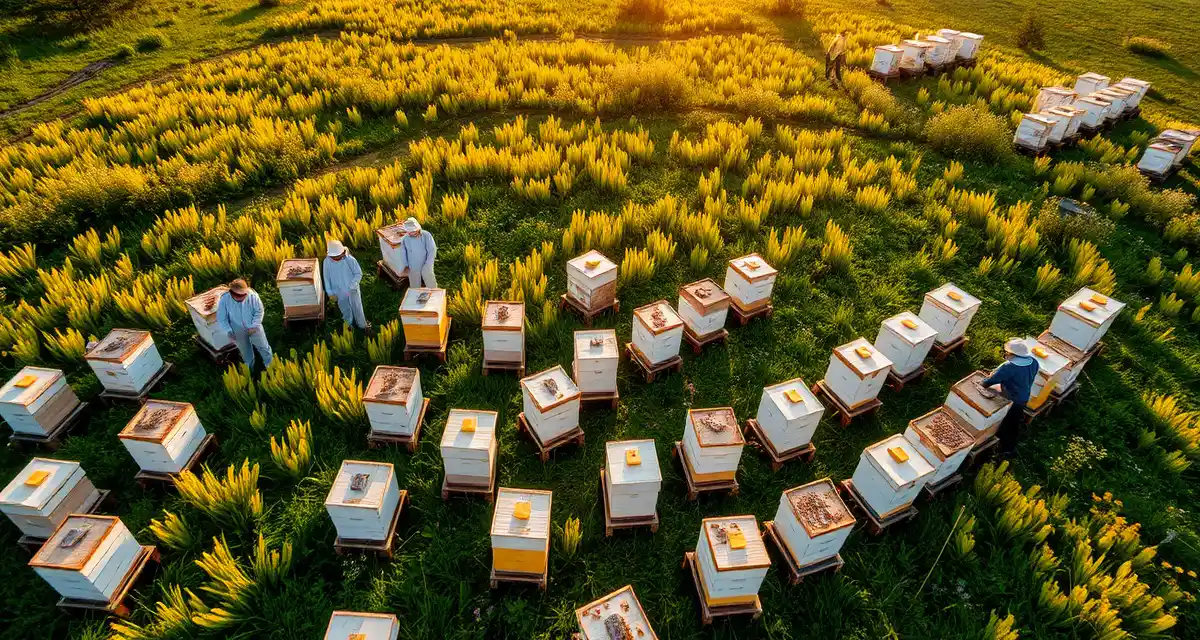
The New England Beekeeping Circuit: Spring to Fall Operations
A well-designed New England circuit generates $180-$220 per hive without traveling to California. For operators who want to avoid the cost and complexity of the California almond migration, or who want to diversify their circuit with a complementary eastern leg, New England offers a viable multi-state, multi-crop calendar.
The classic New England circuit runs: Georgia blueberry → North Carolina blueberry → Massachusetts cranberry → Maine blueberry. That's a South-to-North spring migration that mirrors the east coast bloom sequence.
TL;DR
- Commercial beekeeping operations face two primary management challenges: operational logistics (hive health, transport, placement) and administrative coordination (contracts, payments, documentation).
- Most disputes and revenue losses in commercial beekeeping are preventable with better documentation and clearer contract terms.
- The operations that run most profitably are those with disciplined systems for tracking hive health, contract status, and fleet logistics in one place.
- PollenOps is built specifically for the operational complexity of commercial-scale pollination services, not adapted from a hobbyist tool.
- The most important management decisions (treatment timing, contract renewal, hive allocation) require accurate current data to make well.
The New England Circuit Sequence
March-April: Georgia (Southern Highbush and Rabbiteye Blueberry)
The circuit traditionally starts in Georgia, where southern highbush and rabbiteye blueberries bloom 3-4 weeks ahead of New England varieties. Georgia rabbiteye rates run $75-100/hive.
If you're staying east and starting in Georgia, you're competing in the most affordable (and therefore least crowded) blueberry market in the US.
April-May: North Carolina Blueberry
North Carolina's coastal plain blueberry corridor runs roughly 2 weeks behind Georgia. Rabbiteye varieties in eastern NC peak in late March through April. Rates are comparable to Georgia at $75-110/hive.
June: Massachusetts Cranberry
Massachusetts is the second-largest cranberry-producing state in the US after Wisconsin. The Plymouth County and Bristol County cranberry bogs require bee placement during bloom, which typically runs from late May through mid-June.
Cranberry contracts in Massachusetts pay $75-100/hive. The placement period is 3-4 weeks.
Late June-July: Maine Wild Blueberry
Maine's wild blueberry barrens in Hancock and Washington counties are a unique commercial pollination market. Wild blueberries aren't planted; they're managed native stands that require consistent bee density during bloom.
Maine wild blueberry runs late June through late July. Rates are $80-120/hive. The Maine market has fewer total operators than the managed blueberry states, which means less competition for established contractors.
August: Vermont and New England Honey Production
After the blueberry circuit, colonies positioned in Vermont, Maine, or New Hampshire for August can produce goldenrod and fall wildflower honey before winter hive preparation.
Per-Hive Economics of the New England Circuit
A 500-hive operation running a Georgia → NC → Massachusetts → Maine circuit at mid-market rates:
- Georgia blueberry (March-April): $87/hive × 500 = $43,500
- North Carolina blueberry (April-May): $92/hive × 500 = $46,000
- Massachusetts cranberry (June): $87/hive × 500 = $43,500
- Maine wild blueberry (July): $100/hive × 500 = $50,000
Total circuit pollination revenue: ~$183,000
At $366 per hive across 4 contracts, this circuit competes with California almond economics without the 3,000-mile truck movement.
Circuit Logistics
The New England circuit runs approximately 1,500 miles from Georgia to Maine along the I-95 corridor. Movement costs are lower than a California migration, and most of the circuit stays within the same interstate highway network.
Key logistics considerations:
State permits: Every state in the circuit requires permits and health certificates. Georgia, North Carolina, Massachusetts, and Maine all have different entry requirements. Build your permit calendar in October for the following season.
Timing gaps: There are natural gaps between the end of one crop and the start of the next. Use these gaps for colony management: assessments, treatments, feeding, and equipment maintenance. Don't rush between contracts at the expense of colony health.
Massachusetts cranberry timing: Massachusetts cranberry bloom timing is weather-dependent and can vary by 1-2 weeks. Good grower communication and bloom timing alerts calibrated for the Plymouth County cranberry area help you hit the window without early arrival costs.
For managing the logistics of a multi-state circuit with simultaneous contracts in different states, PollenOps circuit management tools handle permit tracking, contract timelines, and route planning in a single platform.
Why the New England Circuit Works
Lower competition than California: The Pacific Coast circuit is the most competitive beekeeping market in the country. The New England circuit serves markets that are important but less overcrowded.
Loyal grower relationships: Maine wild blueberry growers in particular tend to maintain long-term relationships with reliable contractors. Building a reputation over 3-5 seasons in Maine creates pricing leverage that new operators can't compete with.
Honey production integration: New England produces premium wildflower, basswood, and apple blossom honey that commands $12-20/lb in direct-to-consumer markets. An operation that keeps hives in the region for spring honey production on top of pollination contracts captures additional revenue from the same geography.
No AHB risk: New England has no africanized honeybee pressure, which simplifies management and colony genetics for eastern circuit operators.
Frequently Asked Questions
How do you design a Northeast spring pollination circuit?
Start by mapping the bloom sequence from south to north along the east coast, then identify your entry and exit points for each crop. The classic Northeast circuit begins in Georgia with southern highbush and rabbiteye blueberry (March-April), moves to North Carolina rabbiteye blueberry (April), then to Massachusetts cranberry (June), then to Maine wild blueberry (late June-July). Each leg overlaps or follows directly from the previous without major timing gaps. Align your permit calendar 4-6 months before your first delivery, build contracts in PollenOps with location-specific bloom alerts for each crop, and plan your truck movement windows between each leg.
What states are included in a New England beekeeping circuit?
The core New England beekeeping circuit includes Georgia (starting point for southern blueberry), North Carolina (rabbiteye blueberry), Massachusetts (cranberry), and Maine (wild blueberry). Some operations add New Jersey and New England states with managed highbush blueberry between the NC and Massachusetts legs. Vermont, New Hampshire, and Maine also offer fall honey production potential after the blueberry season concludes. The circuit is designed around the north-to-south bloom sequence along the east coast, where crops bloom progressively later as latitude increases, allowing sequential placements from late winter through summer.
What permits are required for a New England hive movement circuit?
Each state in the circuit requires different documentation. You need an annual health certificate from your home state apiarist for interstate movement and state-specific entry permits or registration for each state you operate in. Georgia, North Carolina, Massachusetts, and Maine all have annual apiary registration requirements for out-of-state operators and certificate of health requirements for incoming colonies. Maine is particularly specific about its certificate requirements and may require inspection documentation from originating states. Plan your permit timeline by September for the following spring circuit, and confirm current requirements directly with each state's department of agriculture, as requirements change.
What is the difference between commercial and hobby beekeeping?
Commercial beekeeping is distinguished by scale (typically 100+ hives, often 500-5,000+), revenue source (pollination contracts and bulk honey sales rather than local honey retail), and management approach (systematic protocols applied across yards rather than individual colony attention). Commercial operators manage bees as an agricultural enterprise, with the administrative, regulatory, and logistical complexity that entails. Most commercial operators derive the majority of their income from pollination services; honey production is a supplementary revenue stream.
How many hives are needed to make commercial beekeeping a full-time income?
Most beekeeping economists put the full-time commercial threshold at 500-800 hives, assuming efficient operations management and a combination of pollination and honey revenue. At 500 hives and $200/hive for almond pollination, almond season alone generates $100,000 in gross revenue before expenses. Net margins depend on operational efficiency, but well-run operations can achieve 30-50% net margins on pollination revenue. Additional crops and honey production improve per-hive economics but require additional management capacity.
What is the annual revenue potential for a 1,000-hive commercial operation?
A 1,000-hive operation running an almond season ($200/hive) plus blueberry or apple contracts ($80-100/hive) plus summer honey production ($25-40/hive after extraction costs) can generate $300,000-360,000 in annual gross revenue. Net margins after transport, crew, equipment, and hive replacement costs typically run 25-40% for well-managed operations, putting net income at $75,000-145,000 annually. The specific number depends heavily on circuit efficiency, loss rates, and contract quality.
Try These Free Tools
Sources
- USDA Agricultural Research Service
- Bee Informed Partnership
- American Beekeeping Federation (ABF)
- American Honey Producers Association
- Project Apis m.
Get Started with PollenOps
Managing a commercial beekeeping operation involves more data, more deadlines, and more moving parts than any general-purpose tool was designed to handle. PollenOps brings contracts, yard records, health documentation, and fleet logistics together in one platform built for the realities of commercial-scale beekeeping.