Commercial Beekeeping in Washington State: Apple, Cherry, and Regulations
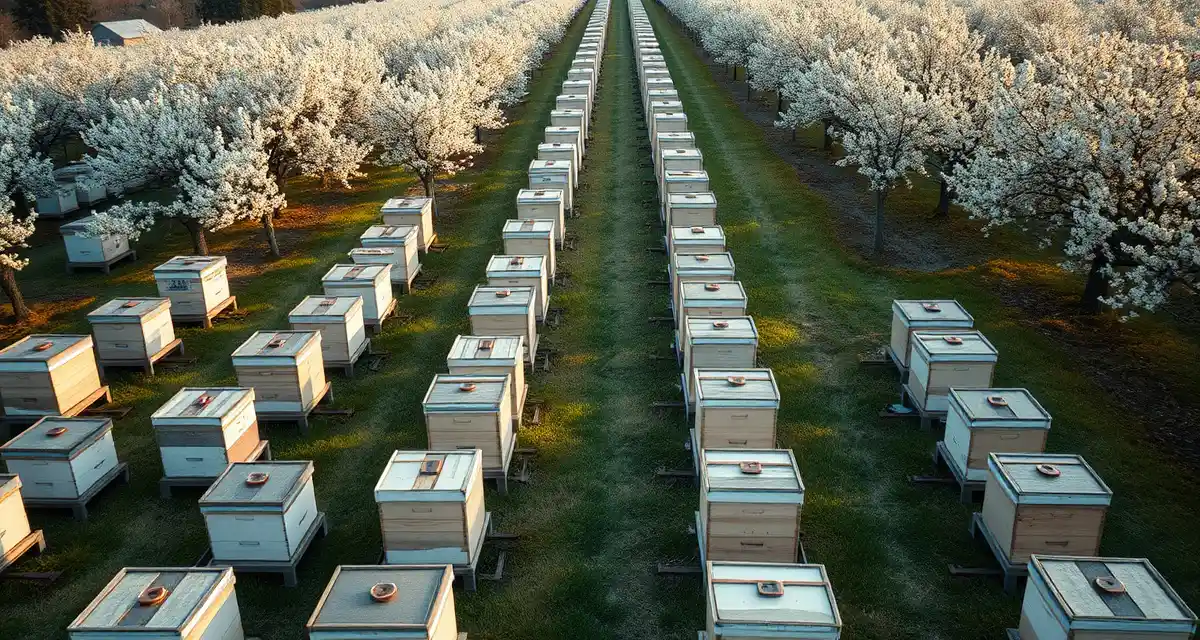
Washington produces 60%+ of US sweet cherries and is a top apple state. That's a major spring hive demand concentrated in a relatively small geographic area. The Yakima Valley, Wenatchee, Chelan, and Okanogan regions produce the bulk of the state's tree fruit, and commercial pollination demand peaks in April-May when most tree fruits bloom simultaneously.
Washington requires a certificate of health for colonies entering from out of state. Add state apiary registration, county-level compliance in some areas, and the region-specific logistics of working in a mountainous state with weather variability, and a Washington spring contract requires solid preparation.
TL;DR
- Washington's primary commercial beekeeping role is shaped by its crop mix, climate, and position on the national pollination circuit.
- Pollination rates in Washington range $110-145/hive depending on crop and colony strength requirements.
- Out-of-state operators entering Washington for pollination contracts must register with the state agricultural authority and obtain a Certificate of Health.
- Washington functions as either a primary pollination destination, a seasonal honey production location, or a transitional stop depending on the circuit.
- Tracking permit status, registration documents, and yard records for Washington operations requires organized record-keeping before the season opens.
The Washington Tree Fruit Pollination Circuit
Washington's commercial tree fruit is concentrated in the Columbia Plateau and the eastern slopes of the Cascades, terrain defined by steep river valleys, irrigated desert benches, and dramatic elevation changes. This geography creates variable bloom timing within relatively short distances.
Cherry pollination: Yakima Valley, Chelan, Okanogan, and Grant counties are the primary cherry production areas. Sweet cherries are the commercial focus. Bloom timing: late March to late April, with lower-elevation Yakima Valley orchards blooming 2-3 weeks before higher-elevation Okanogan sites. Contract rates: $110-145/hive for documented 6-frame minimum colonies. Washington cherry is among the better-paying tree fruit contracts in the Pacific Northwest.
Apple pollination: Washington produces roughly 70% of US apples. Orchards span Chelan, Okanogan, Yakima, Kittitas, Grant, Douglas, and Adams counties. Bloom timing: April through early May, varying by variety (Gala and Fuji earlier; Granny Smith and Braeburn later). Contract rates: $75-110/hive. The volume of apple pollination demand in Washington is massive. The state has roughly 150,000 acres of commercial apples.
Pear, peach, and specialty fruits: The Columbia Basin also has significant pear production (Wenatchee/Chelan area) and smaller volumes of peach, plum, and specialty tree fruits. Contract rates are generally similar to apple.
The challenge: Cherry, apple, and pear bloom overlaps in much of the state, creating simultaneous demand across species. An operation positioned for cherry in the Yakima Valley in early April can move to apple in Okanogan County in mid-April. Sequencing these moves requires contract dates and locations to be coordinated with bloom timing data.
What Operators Need for a Washington Season
WSDA registration: The Washington State Department of Agriculture (WSDA) manages apiary registration. Out-of-state operators keeping colonies in Washington for 30 or more days must register as non-resident beekeepers. Registration is annual and includes a modest fee. Apply online through the WSDA portal.
Certificate of Health (CVI): Colonies entering Washington from out of state require a health certificate issued by a licensed veterinarian in your home state within 30 days of movement. WSDA border inspections may occur on major routes into the state.
WSDA varroa inspection authority: WSDA apiary inspectors can require varroa treatment if colonies test above state threshold levels. This isn't punitive. Inspectors in high-traffic areas enforce colony health standards that protect the broader regional apiary population. If your colonies are at 2+ mites per 100 bees at the border or during a state inspection, expect to be required to treat before placement.
County requirements: Some counties in Eastern Washington have specific permit requirements or restrictions for commercial apiary placements. Check with the county agricultural extension before placing in a new county.
Logistics of Working in Eastern Washington
Eastern Washington's tree fruit region is a logistics challenge. The terrain (steep river valleys and canyon walls, narrow access roads to bench orchards) creates truck access limitations that don't exist in California's flat Central Valley.
Many orchards are accessible only by smaller vehicles for the last half-mile. Some operations use relay trucks: a larger truck delivers to a staging point, and a smaller vehicle (pickup with hive bodies or smaller flatbed) makes the final orchard approach. Know the access situation for each orchard before you arrive with a 48-foot flatbed.
Night moves are standard in Washington as they are in California. Loading at dusk, driving through the Cascades overnight, arriving for dawn placement in Eastern Washington orchards. The Snoqualmie and Stevens passes on I-90 and US-2 are the main routes. Weather on these passes in March-April can include snow and ice. Check pass conditions before your move date and have an alternative routing plan.
The Columbia River border crossings between Washington and Oregon (Vantage, Plymouth, Umatilla) create entry points for operations coming from Southern Oregon or California. Border inspection protocols apply at these crossing points for commercial bee trucks.
Washington Honey Production
Western Washington has limited commercial honey production opportunity due to weather and intensive development. Eastern Washington, however, has meaningful honey production potential:
Bitterbrush and sagebrush: Native plants in the arid Columbia Basin provide spring honey flows. Colonies on early apple and cherry contracts forage on these native sources in the gaps between orchard blooms.
Alfalfa and mixed legume: Irrigated alfalfa in the Columbia Basin produces summer honey flows in July-August. Some operations position colonies in Eastern Washington after tree fruit pollination for the summer alfalfa flow before moving to North Dakota or Oregon.
Washington State honey market: Pacific Northwest honey has strong regional demand. Seattle's food culture supports premium local honey pricing. Washington wildflower, huckleberry, and honey marketed with Pacific Northwest provenance sells at $3-5/lb bulk and $10-20/lb retail in the premium market.
Seed Crop Pollination in Eastern Washington
Eastern Washington has significant alfalfa seed, onion seed, and specialty crop seed production that provides additional pollination income. The seed crops bloom in summer (July-August) after tree fruit contracts end, creating potential for extended stays in the state.
Alfalfa seed pollination: $50-75/hive. Onion seed: $75-100/hive. These are typically smaller-volume placements than tree fruit contracts, but they provide income for colonies staying in Eastern Washington after the spring tree fruit circuit.
Blueberry Pollination in Western Washington
Western Washington (primarily the Puget Sound lowlands in Whatcom, Skagit, and King counties) has significant commercial blueberry production. Contract rates run $75-100/hive. Timing: late April to mid-May. Weather in the Puget Sound lowlands in late April is often cool and rainy, which can reduce bee activity and pollination effectiveness. Growers in this area often want higher hive counts per acre to compensate.
Operations that run Eastern Washington tree fruit in April often have the opportunity to move a portion of their fleet to the west side for late April-May blueberry placements before moving north or east for summer.
FAQ
What pollination opportunities exist in Washington state?
Washington is a top-tier tree fruit pollination market. Cherry (Yakima Valley, Chelan, Okanogan, late March to April, $110-145/hive), apple (statewide in Eastern Washington, April-May, $75-110/hive), and pear are the primary pollination crops. Blueberry in Western Washington provides additional opportunity in late April-May ($75-100/hive). Alfalfa seed and onion seed in Eastern Washington's Columbia Basin provide summer follow-on pollination income after tree fruit season.
When is apple and cherry pollination season in Washington?
Cherry bloom begins in mid-to-late March in the lower-elevation Yakima Valley and extends through late April at higher-elevation Okanogan County sites. Apple bloom follows, running April through early May depending on variety and location. The practical delivery window for cherry contracts is late March in Yakima and extending north through April. Apple delivery ranges from late March (early varieties in lower elevations) to early May (late varieties in higher elevations). Operators managing multiple contracts sequence deliveries from south to north and low to high elevation as bloom progresses.
What permits are required to bring hives into Washington?
Colonies entering Washington require a Certificate of Health (equivalent to a CVI) issued by a licensed veterinarian in your home state, valid within 30 days of movement. Out-of-state operators keeping colonies in Washington for 30+ days must register with the WSDA as non-resident beekeepers. WSDA inspectors may check health certificates at major interstate entry points and can require varroa treatment if inspected colonies exceed state mite-level thresholds. Register early. WSDA non-resident registration can take 1-2 weeks to process.
What is the process for registering an out-of-state apiary in a new state?
Most states require out-of-state operators to register with the state department of agriculture apiary program before placing colonies. The process typically involves submitting a registration application (online or paper), paying a fee (usually $10-50 per location), and providing contact information for the operation. Some states also require the registration to be renewed annually. Contact the destination state's department of agriculture apiary program at least 60 days before your planned arrival to confirm current requirements.
What documentation do state apiary inspectors typically review?
State apiary inspectors review health certificates for out-of-state colonies, registration documentation, and colony inspection records during apiary visits. Inspectors check for signs of American foulbrood, European foulbrood, and other regulated pests and diseases. Operations with organized digital records that include treatment history and mite counts typically have faster, less complicated inspections than operations without documentation. Some state inspectors also verify that varroa mite loads are below state entry thresholds.
What triggers a state apiary inspection?
State apiary inspections can be triggered by routine inspection schedules (most states inspect a percentage of registered apiaries annually), neighbor or landowner complaints, disease reports from nearby operations, or inspection requirements tied to state entry permits. California, in particular, has the right to inspect incoming loads at port of entry for commercial beekeeping operations. Maintaining current registration and organized records makes required inspections faster and less disruptive.
Try These Free Tools
Sources
- USDA Agricultural Research Service
- Bee Informed Partnership
- American Beekeeping Federation (ABF)
- Washington Department of Agriculture
- Project Apis m.
Get Started with PollenOps
Commercial operations working in Washington face the same registration, permit, and documentation requirements as any state on the national circuit -- plus Washington's specific regulatory requirements. PollenOps tracks your Washington yard records, contract assignments, and permit documentation alongside your full operation, so entering a new state doesn't add a separate administrative burden. See how the platform fits operations working across multiple states.