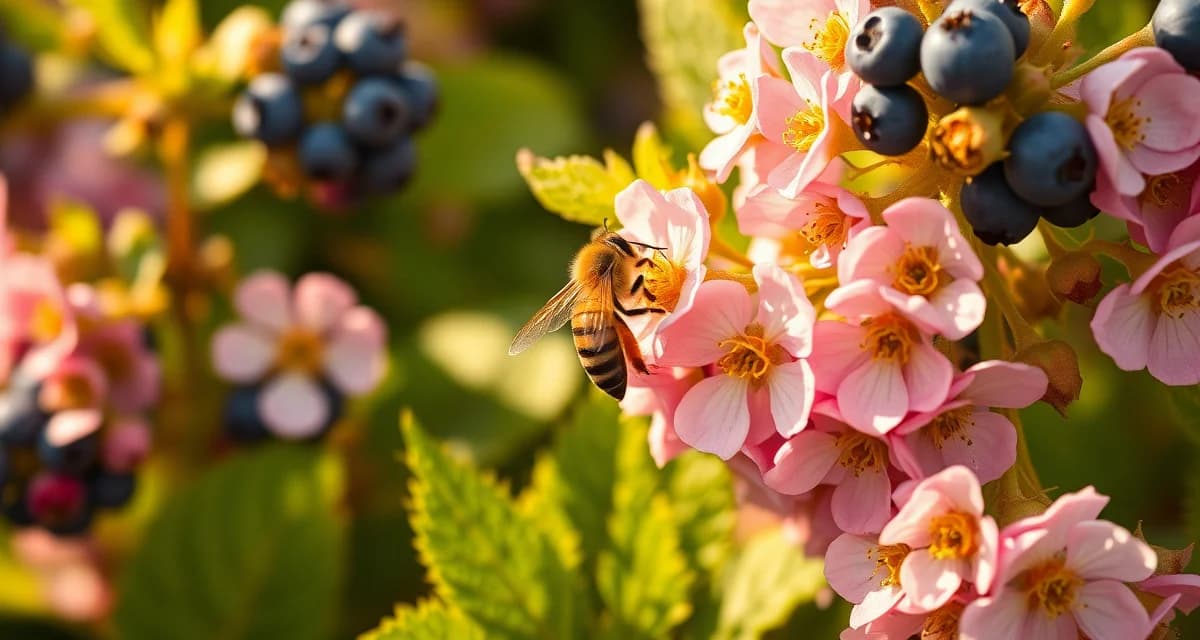
Berry Crop Pollination in Washington State: Blueberry Strawberry and Raspberry
Washington produces commercial quantities of blueberries, raspberries, and strawberries in the western lowland counties, with the Whatcom County area being the primary commercial berry production region. Washington berry pollination runs April through June, offering income between California almond season and Washington cherry and apple work.
For operators already positioned in the Pacific Northwest for spring work, Washington berries create an additional revenue layer that doesn't require major repositioning. Whatcom County's berry acreage is accessible from the same general area as Washington cherry orchards and near the Canadian border.
TL;DR
- Washington's primary commercial beekeeping role is shaped by its crop mix, climate, and position on the national pollination circuit.
- Pollination rates in Washington range $65-220/hive depending on crop depending on crop and colony strength requirements.
- Out-of-state operators entering Washington for pollination contracts must register with the state agricultural authority and obtain a Certificate of Health.
- Washington functions as either a primary pollination destination, a seasonal honey production location, or a transitional stop depending on the circuit.
- Tracking permit status, registration documents, and yard records for Washington operations requires organized record-keeping before the season opens.
Washington Berry Crops
Blueberries: Whatcom County in northwest Washington is one of the country's significant blueberry production regions. Highbush blueberry bloom runs late April through mid-May. The county's berry acreage also extends into Skagit Valley for some operations.
Raspberries: Washington's raspberry production, also concentrated in Whatcom County, blooms in May and June. Raspberries require pollination for seed set even in self-pollinating varieties, and commercial hive placements improve set and uniformity.
Strawberries: Washington strawberry production is less concentrated than blueberry and raspberry, but commercial farms in the western lowlands do use pollination services.
The blueberry pollination Pacific Northwest guide covers both Oregon and Washington blueberry markets in the broader regional context.
Timing and Circuit Positioning
Washington berry crops bloom in April and May, before Washington cherry season starts in late May and apple bloom in April and early May. The timing relationship between berry and tree fruit work in Washington creates a sequencing challenge for operators who want to work both.
Blueberry bloom in Whatcom County in late April overlaps with apple bloom in eastern Washington's Yakima Valley. Operators who can split their fleet geographically can cover both. Operators with a single fleet typically have to choose which western Washington berry contracts to prioritize relative to eastern Washington apple contracts.
For Washington state commercial beekeeping compliance, operators placing hives in western Washington for berries face the same registration and health certificate requirements as eastern Washington apple operators.
Contracts and Relationships
Washington berry growers in Whatcom County are part of an agricultural community with strong cooperative marketing relationships. Reaching this community involves outreach through the Whatcom County Farm Bureau, Washington State University Extension in Bellingham, and direct contact with berry farms and packing houses.
The proximity to the BC border and the presence of Canadian berry operations creates a different dynamic in this market than in purely domestic berry production regions. All commercial pollination must be provided by US-registered operations.
Rates and Contract Structure
Washington blueberry pollination rates have typically run $75 to $95 per hive. Raspberry pollination rates are somewhat variable by grower and location. Contracts specify delivery timing, colony strength, number of hives, and pickup timing after bloom.
For operators working both berries and tree fruit in Washington, understanding how to sequence pickup and delivery timing to avoid conflicts is a genuine logistics puzzle worth solving carefully before the season.
Frequently Asked Questions
How do you get berry crop contracts in Washington state?
Contact blueberry and raspberry growers in Whatcom County and the Skagit Valley in fall for the following spring season. Washington State University Extension in Whatcom County serves the berry industry and can provide introductions. The Whatcom County Farm Bureau and the Washington Red Raspberry Commission are additional networking resources. Operators positioned in the Pacific Northwest for other spring contracts have the geographic advantage of being nearby. Come with your colony count, strength standards, and any Pacific Northwest references.
When is berry pollination season in Washington?
Washington highbush blueberry bloom in Whatcom County runs late April through mid-May. Raspberry bloom follows in May and June. Strawberry timing varies by operation and variety. The full berry season runs from approximately April 20 through late June. This timing overlaps significantly with Washington apple bloom in eastern Washington (late April through May), creating a fleet management challenge for operators who want to work both regions.
What colony strength do Washington berry growers require?
Washington blueberry growers typically require colonies at 5 to 6 frames of bees at time of placement. Raspberry and strawberry growers may specify 4 to 6 frames depending on the operation. Colony strength at late April reflects winter survival quality and spring management through March and April. Operators moving from California almonds to Washington berries need 6 to 8 weeks of post-almond recovery and buildup before berry placements to arrive with adequate colony populations.
What is the process for registering an out-of-state apiary in a new state?
Most states require out-of-state operators to register with the state department of agriculture apiary program before placing colonies. The process typically involves submitting a registration application (online or paper), paying a fee (usually $10-50 per location), and providing contact information for the operation. Some states also require the registration to be renewed annually. Contact the destination state's department of agriculture apiary program at least 60 days before your planned arrival to confirm current requirements.
What documentation do state apiary inspectors typically review?
State apiary inspectors review health certificates for out-of-state colonies, registration documentation, and colony inspection records during apiary visits. Inspectors check for signs of American foulbrood, European foulbrood, and other regulated pests and diseases. Operations with organized digital records that include treatment history and mite counts typically have faster, less complicated inspections than operations without documentation. Some state inspectors also verify that varroa mite loads are below state entry thresholds.
What triggers a state apiary inspection?
State apiary inspections can be triggered by routine inspection schedules (most states inspect a percentage of registered apiaries annually), neighbor or landowner complaints, disease reports from nearby operations, or inspection requirements tied to state entry permits. California, in particular, has the right to inspect incoming loads at port of entry for commercial beekeeping operations. Maintaining current registration and organized records makes required inspections faster and less disruptive.
Try These Free Tools
Sources
- USDA Agricultural Research Service
- Bee Informed Partnership
- American Beekeeping Federation (ABF)
- Washington Department of Agriculture
- Project Apis m.
Get Started with PollenOps
Commercial operations working in Washington face the same registration, permit, and documentation requirements as any state on the national circuit -- plus Washington's specific regulatory requirements. PollenOps tracks your Washington yard records, contract assignments, and permit documentation alongside your full operation, so entering a new state doesn't add a separate administrative burden. See how the platform fits operations working across multiple states.