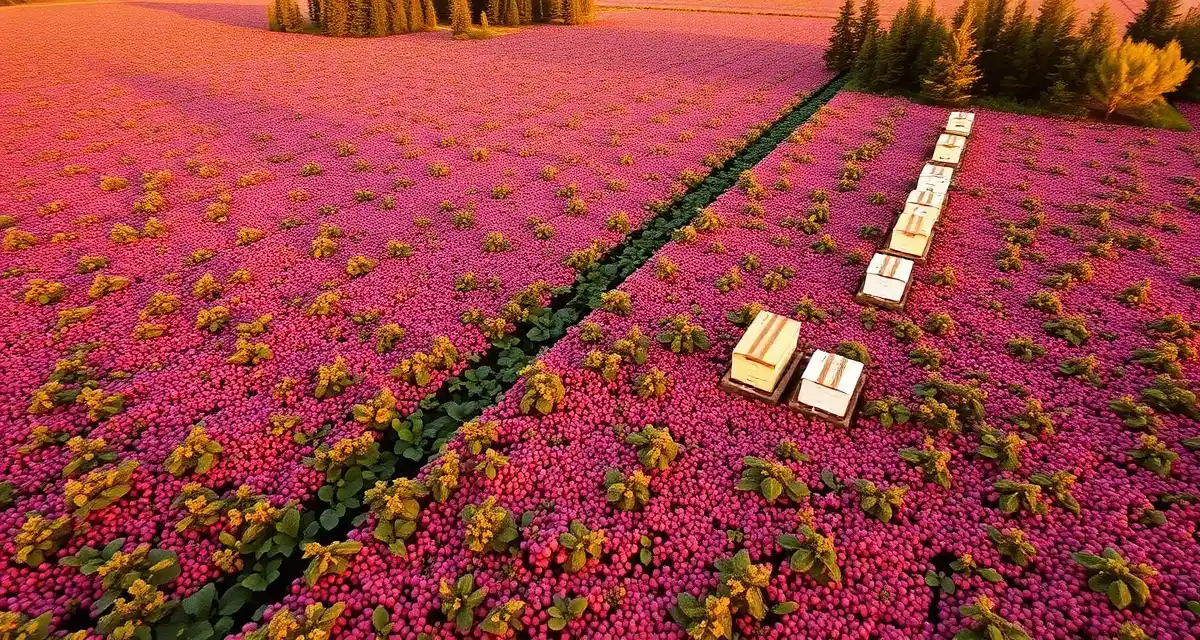
Cranberry Pollination in Washington State: Pacific Coast Opportunities
Washington produces significant US cranberry acreage in Pacific and Grays Harbor counties along the state's southwest coast. The production area is geographically concentrated in a relatively small coastal zone, making it accessible for operators already working Pacific Northwest cherry, blueberry, or other summer contracts. Washington cranberry bloom runs June through July, overlapping with cherry and berry seasons in a way that requires careful hive allocation planning.
For Pacific Northwest circuit operators, Washington cranberry is often a secondary contract layered onto a primary circuit built around cherry, blueberry, or summer honey production. The coastal location near Long Beach Peninsula and the Grays Harbor area creates some logistical separation from inland valley operations, but the distance from Yakima or the Willamette Valley is manageable for a day-trip placement.
TL;DR
- Washington's primary commercial beekeeping role is shaped by its crop mix, climate, and position on the national pollination circuit.
- Pollination rates in Washington range $65-220/hive depending on crop depending on crop and colony strength requirements.
- Out-of-state operators entering Washington for pollination contracts must register with the state agricultural authority and obtain a Certificate of Health.
- Washington functions as either a primary pollination destination, a seasonal honey production location, or a transitional stop depending on the circuit.
- Tracking permit status, registration documents, and yard records for Washington operations requires organized record-keeping before the season opens.
Washington Cranberry Geography
Washington's cranberry production is centered in two main areas: the Long Beach Peninsula in Pacific County, which is one of the largest cranberry growing regions in the western US, and the Grays Harbor County area. These coastal bog environments are ideal for cranberry production due to the region's consistent moisture, fog climate, and acidic soil conditions.
The Long Beach Peninsula market is the most accessible entry point, with a relatively concentrated producer community that is organized enough to approach systematically. Pacific County Farm Bureau and the Washington State Cranberry Growers Association are your primary contacts here.
Cranberry Pollination Biology and Requirements
Cranberry requires cross-pollination for optimal fruit set, though the plant is self-compatible to a degree. Cross-pollination between plants significantly improves berry size and the percentage of open-pollinated blossoms that develop into harvestable fruit. Commercial growers who have managed bee density carefully report meaningful yield improvements over unmanaged or inadequately managed pollination.
The cranberry flower has an unusual morphology, with anthers that release pollen through small pores when vibrated by bees. Bumble bees are particularly effective at cranberry pollination due to their sonication (buzz pollination) behavior, which shakes pollen loose from the anthers. Honey bees can learn to work cranberry flowers effectively, but they're less efficient per individual visit than bumble bees.
This doesn't mean honey bees aren't valuable for cranberry. At commercial scale and typical honey bee density rates of 2 to 4 hives per acre, honey bee colonies provide substantial cumulative pollination even if each individual worker is less efficient than a bumble bee. Many Washington cranberry growers supplement honey bee placement with native bumble bee habitat management for optimal results.
Getting Washington Cranberry Contracts
The Washington State Cranberry Growers Association and Pacific County Farm Bureau are your best first contacts. The Long Beach Peninsula cranberry community is tight-knit, and getting introduced through the association or through a fellow beekeeper with existing relationships is more effective than cold outreach.
Contacting cranberry growers in March or April for June placements gives adequate lead time. Washington cranberry operations tend to be family-owned, multi-generational businesses with established supplier relationships. New beekeeper relationships usually start with a single grower introduction that leads to others through referrals.
Your strength documentation and professional contract proposal set you apart from informal arrangements. Use PollenOps cranberry contract management to generate a proposal that specifies strength requirements, placement timing tied to bloom stage, and your delivery documentation process. Reference your Washington commercial beekeeping compliance records and current state registration.
Timing Within the PNW Circuit
Washington cranberry bloom in June and July overlaps with cherry season in the Yakima Valley and northwest Washington berry production. If you're running cherry contracts in Yakima in April and May, transitioning some hives to coastal cranberry in June is feasible if your fleet is large enough to split between markets.
For operators whose primary June and July commitment is blueberry in the Puyallup Valley or coastal berry operations, cranberry can be combined in the same geographic positioning. The coastal southwest Washington location puts cranberry growers within range of several other Pacific Northwest operations without requiring major repositioning.
Colony Strength and Coastal Climate
Washington's coast is cool and foggy, particularly in June and early July before the summer high pressure typically establishes in late July. Bee foraging is temperature and light-dependent, and the coastal fog climate reduces flight hours compared to inland valley locations. Strong colonies with high worker populations tolerate the reduced foraging days better than weaker colonies.
Cranberry growers typically require 2 to 4 hives per acre and 6 to 8 frames of bees at delivery. The higher hive density requirement compared to some other crops reflects the flower morphology considerations and the coastal climate conditions that reduce per-colony daily efficiency.
Rates and Contract Terms
Washington cranberry pollination rates run $80 to $120 per hive. Sign contracts in March or April for June placements, with a 25 percent deposit at signing and balance due net-30 after bloom. Include a weather clause acknowledging the coastal fog climate's effect on foraging days and framing your commitment in terms of colony presence and documented strength rather than specific pollination outcome measurements.
Frequently Asked Questions
How do you get cranberry pollination contracts in Washington?
Contact the Washington State Cranberry Growers Association and Pacific County Farm Bureau for grower introductions. The Long Beach Peninsula and Grays Harbor County cranberry communities are tight-knit and referral-driven. Make initial contact in March or April for June placements. Lead with your strength documentation and a professional contract proposal that addresses the coastal climate considerations in your delivery terms. First relationships usually come through association connections or fellow beekeeper referrals rather than cold outreach.
When is cranberry bloom in Washington?
Washington cranberry bloom runs June through July, with peak bloom typically in late June and early July in Pacific and Grays Harbor counties. The timing overlaps with cherry season in Yakima and berry season in other Pacific Northwest areas. Coastal weather patterns, including June fog and marine layer conditions, can affect foraging activity during the bloom period, so placement timing should account for bloom stage monitoring rather than relying solely on calendar dates.
What colony strength do Washington cranberry growers require?
Most Washington cranberry growers require 2 to 4 hives per acre with 6 to 8 frames of bees at delivery. The higher per-acre density reflects both cranberry's cross-pollination requirements and the coastal climate conditions that reduce daily foraging hours compared to inland locations. Strong colonies with high worker populations provide better coverage during the limited foraging windows created by coastal fog conditions. Inspect colonies before every delivery and document strength at placement.
What is the process for registering an out-of-state apiary in a new state?
Most states require out-of-state operators to register with the state department of agriculture apiary program before placing colonies. The process typically involves submitting a registration application (online or paper), paying a fee (usually $10-50 per location), and providing contact information for the operation. Some states also require the registration to be renewed annually. Contact the destination state's department of agriculture apiary program at least 60 days before your planned arrival to confirm current requirements.
What documentation do state apiary inspectors typically review?
State apiary inspectors review health certificates for out-of-state colonies, registration documentation, and colony inspection records during apiary visits. Inspectors check for signs of American foulbrood, European foulbrood, and other regulated pests and diseases. Operations with organized digital records that include treatment history and mite counts typically have faster, less complicated inspections than operations without documentation. Some state inspectors also verify that varroa mite loads are below state entry thresholds.
What triggers a state apiary inspection?
State apiary inspections can be triggered by routine inspection schedules (most states inspect a percentage of registered apiaries annually), neighbor or landowner complaints, disease reports from nearby operations, or inspection requirements tied to state entry permits. California, in particular, has the right to inspect incoming loads at port of entry for commercial beekeeping operations. Maintaining current registration and organized records makes required inspections faster and less disruptive.
Try These Free Tools
Sources
- USDA Agricultural Research Service
- Bee Informed Partnership
- American Beekeeping Federation (ABF)
- Washington Department of Agriculture
- Project Apis m.
Get Started with PollenOps
Commercial operations working in Washington face the same registration, permit, and documentation requirements as any state on the national circuit -- plus Washington's specific regulatory requirements. PollenOps tracks your Washington yard records, contract assignments, and permit documentation alongside your full operation, so entering a new state doesn't add a separate administrative burden. See how the platform fits operations working across multiple states.