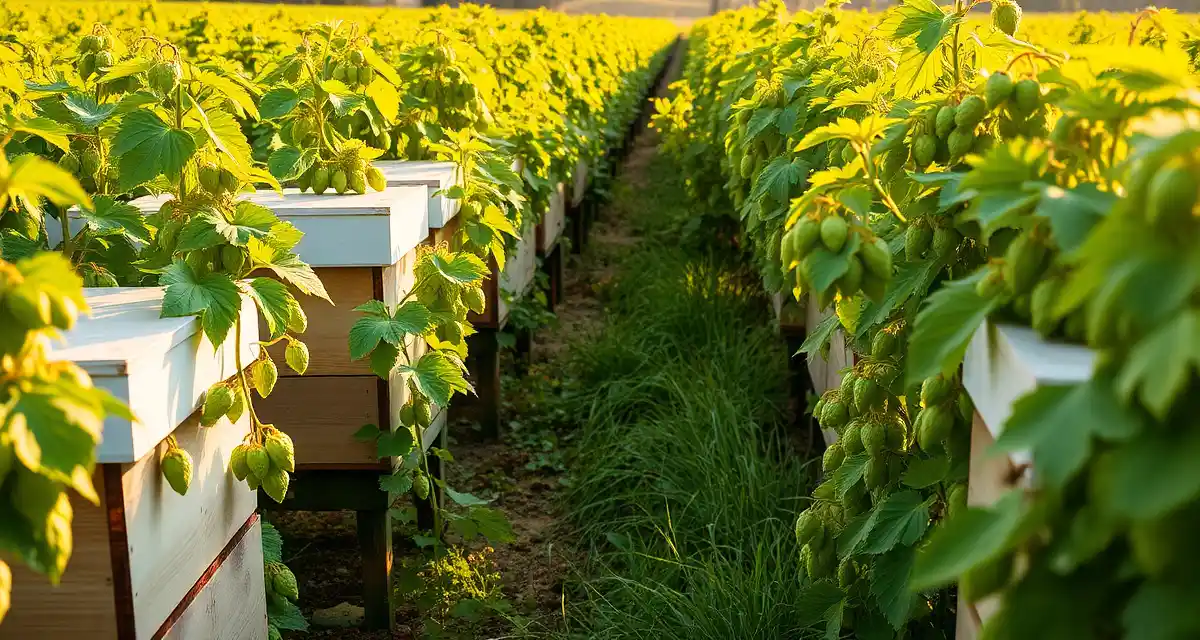
Hop Yard Pollination in Washington and Oregon: Opportunities for Beekeepers
Hops are technically wind-pollinated, but the commercial reality is more nuanced than that. The craft beer boom has expanded hop acreage across Washington and Oregon, and a growing number of hop growers are experimenting with managed bee placements to improve cone quality and yield consistency. If you're already running a Pacific Northwest pollination circuit, hop yards are worth understanding.
This isn't a high-volume market like cherries or apples. But it's a real opportunity for beekeepers positioned in the right geography at the right time.
TL;DR
- Washington's primary commercial beekeeping role is shaped by its crop mix, climate, and position on the national pollination circuit.
- Pollination rates in Washington range $65-220/hive depending on crop depending on crop and colony strength requirements.
- Out-of-state operators entering Washington for pollination contracts must register with the state agricultural authority and obtain a Certificate of Health.
- Washington functions as either a primary pollination destination, a seasonal honey production location, or a transitional stop depending on the circuit.
- Tracking permit status, registration documents, and yard records for Washington operations requires organized record-keeping before the season opens.
Do Hops Need Bees to Pollinate?
The short answer is no - hops (Humulus lupulus) are dioecious and wind-pollinated. Female plants produce the cones used in brewing. Male plants are typically kept out of commercial yards because seeded hops are considered lower quality for most brewing applications.
Here's where it gets interesting. Some hop growers, particularly those growing for aroma and specialty varieties, have found that limited pollination from nearby male plants can improve cone density and oil content. Others use bees primarily for pollinating cover crops within hop yards rather than the hops themselves.
There's also an emerging niche: small craft and heritage hop operations that deliberately allow some pollination for seed production or for specific flavor profiles sought by certain craft brewers.
So the question isn't really "do hops need bees" but "which hop operations will pay for hive placements and why."
The Actual Market for Hop Yard Hive Placements
The honest assessment is that hop yard pollination is a small, specialty segment. Here's what drives demand:
Cover crop pollination: Many hop yards use clover, vetch, or other legumes as ground cover for nitrogen fixation and weed suppression. Those cover crops flower and benefit from pollination. Some growers will pay for hive placements with the cover crop as the primary use case.
Dual-purpose placements: A grower who needs pollination for adjacent apple orchards or berry fields may include their hop acreage as part of a broader placement arrangement.
Specialty seed production: A small number of operations grow hops specifically for breeding programs or heritage seed production. These growers need controlled pollination and may pay per-hive rates comparable to other specialty crops.
Honey production benefit: Some beekeepers position hives in or near hop yards primarily for their own benefit - the forage during hop bloom can produce distinctive honey that commands premium retail pricing. The grower gets incidental pollination benefit, the beekeeper gets the honey yield.
Per-hive rates for dedicated hop pollination, where it exists, tend to run in the $40-$70 range. That's below cherry and apple rates but reasonable for a July placement that fills a gap in your calendar.
Timing for Hop Bloom in Washington and Oregon
Washington's hop production is concentrated in the Yakima Valley. Oregon's hops are primarily grown in the Willamette Valley, with some production in the Rogue Valley.
Yakima Valley (Washington): Hop plants grow through spring and early summer, with burrs (the early cone structures) forming in late June. Full bloom typically occurs in July, with harvest running August through early September depending on variety.
Willamette Valley (Oregon): Timing is similar, with full bloom in July. Willamette Valley hops, particularly the classic Willamette and Cascade varieties, are harvested in late August through September.
If you're in the Yakima Valley for cherry and apple work in April through June, you're already positioned for July hop bloom timing. The question is whether there's enough paid placement opportunity to keep hives in the valley through July rather than moving them to Northern Plains honey production.
How to Find Hop Yard Placement Opportunities
The hop industry has a different network than orchard fruits. The main avenues:
Direct outreach to hop growers: The Yakima Valley has a concentrated hop farming community. Washington Hop Commission and Oregon Hop Commission maintain grower directories. Unlike almond or cherry, there's no established brokerage system for hop pollination.
Craft brewery relationships: Some craft brewers with dedicated hop yards are more receptive to pollination experiments because they're interested in terroir and process differentiation. Approaching hop growers who sell directly to craft brewers can open doors.
Agricultural extension contacts: Washington State University and Oregon State University both have hop research programs. Extension contacts know which growers are experimenting with bee placements.
Your existing grower network: If you already have cherry or apple grower relationships in the Yakima or Willamette Valley, ask whether they or their neighbors have hop acreage that might benefit from your presence in July.
What Colony Strength Is Needed for Hop Placements?
If you're placing hives for cover crop pollination within hop yards, standard commercial strength (5+ frames of bees) is adequate. The foraging task isn't demanding compared to almond or blueberry work.
If a grower is paying specifically for hop pollination enhancement in a seeded hop or heritage variety operation, they may have specific requirements. Clarify the purpose of the placement and what outcome the grower is expecting before agreeing to a contract.
Colonies coming off cherry and apple work in June should be at or near peak summer strength for July hop placements - timing works well in that regard.
Integrating Hop Yards into Your Pacific Northwest Route
The geographic fit for hop yard placements depends on your existing circuit:
Yakima Valley stay: If you're already in Yakima for cherry and apple (April-June), staying through July for hop placements avoids a move. You'd need paying placement or strong honey production from the hops or nearby forage to justify holding position rather than moving to Northern Plains.
Combined with other July contracts: Yakima hop placements can be combined with July seed crop work in the Columbia Basin (clover, alfalfa) that's accessible from the same base. A mixed July week that includes hop yards, a clover seed field, and honey production from summer forage is more financially attractive than any single element alone.
Oregon routing: Willamette Valley hops fit naturally into a route that includes Oregon berry work in May-June followed by Willamette Valley hop and clover placements in July before heading east or south.
PollenOps tracks your Pacific Northwest contract calendar alongside any emerging hop placement opportunities, so you can see where July openings exist in your fleet schedule and whether adding a hop yard placement makes financial sense given your existing commitments.
Negotiating Hop Yard Contracts
Because there's no established rate structure for hop pollination the way there is for almonds or blueberries, your negotiation starts from scratch with each grower. Some guidance:
Define the service clearly: Is this cover crop pollination? Hop quality enhancement? Honey production with incidental benefit to the grower? The answer affects what you should charge and what outcome the grower can reasonably expect.
Price based on your costs: Fuel, driver time, hive depreciation, and your opportunity cost (what else could these hives be doing) define your floor. Add margin above that.
Don't oversell: Don't promise yield improvement if you can't demonstrate the causal mechanism. Manage expectations honestly and let results speak over multiple seasons.
Get it in writing: Even informal hop placements benefit from a simple written agreement covering hive count, placement dates, access arrangements, and payment terms. Use your standard contract template and adjust as needed.
Frequently Asked Questions
Do hop growers pay for pollination services?
Some do, primarily for cover crop pollination within hop yards or for specialty seeded hop and heritage variety production. Rates run roughly $40-$70 per hive where they exist. Most commercial hop production is wind-pollinated and doesn't require paid bee placements, but the craft beer industry's interest in distinctive flavor profiles has created a small and growing market for intentional bee involvement in certain operations.
How is hop pollination different from orchard pollination?
Orchard pollination is a well-established commercial market with set per-acre hive density standards, established rate ranges, and formal contract structures. Hop yard placements are more informal, more variable in purpose (cover crop vs. hop quality vs. honey production), and negotiated directly between beekeeper and grower without industry-standard benchmarks. The scale is also much smaller - a hop yard placement might involve 10-30 hives rather than hundreds.
What is the potential income from hop yard hive placements?
At $40-$70 per hive for a 4-6 week July placement, a 30-hive hop yard placement generates $1,200-$2,100. That's modest in absolute terms, but if the placement is geographically convenient (you're already in the Yakima Valley) and the hives are also producing summer honey from nearby forage, the combined economics improve. The bigger opportunity may be the premium honey market - Pacific Northwest hop-adjacent honey with craft beer marketing angles can command $8-$12/lb retail compared to $3-$5/lb for commodity wildflower.
What is the process for registering an out-of-state apiary in a new state?
Most states require out-of-state operators to register with the state department of agriculture apiary program before placing colonies. The process typically involves submitting a registration application (online or paper), paying a fee (usually $10-50 per location), and providing contact information for the operation. Some states also require the registration to be renewed annually. Contact the destination state's department of agriculture apiary program at least 60 days before your planned arrival to confirm current requirements.
What documentation do state apiary inspectors typically review?
State apiary inspectors review health certificates for out-of-state colonies, registration documentation, and colony inspection records during apiary visits. Inspectors check for signs of American foulbrood, European foulbrood, and other regulated pests and diseases. Operations with organized digital records that include treatment history and mite counts typically have faster, less complicated inspections than operations without documentation. Some state inspectors also verify that varroa mite loads are below state entry thresholds.
What triggers a state apiary inspection?
State apiary inspections can be triggered by routine inspection schedules (most states inspect a percentage of registered apiaries annually), neighbor or landowner complaints, disease reports from nearby operations, or inspection requirements tied to state entry permits. California, in particular, has the right to inspect incoming loads at port of entry for commercial beekeeping operations. Maintaining current registration and organized records makes required inspections faster and less disruptive.
Try These Free Tools
Sources
- USDA Agricultural Research Service
- Bee Informed Partnership
- American Beekeeping Federation (ABF)
- Washington Department of Agriculture
- Project Apis m.
Get Started with PollenOps
Commercial operations working in Washington face the same registration, permit, and documentation requirements as any state on the national circuit -- plus Washington's specific regulatory requirements. PollenOps tracks your Washington yard records, contract assignments, and permit documentation alongside your full operation, so entering a new state doesn't add a separate administrative burden. See how the platform fits operations working across multiple states.