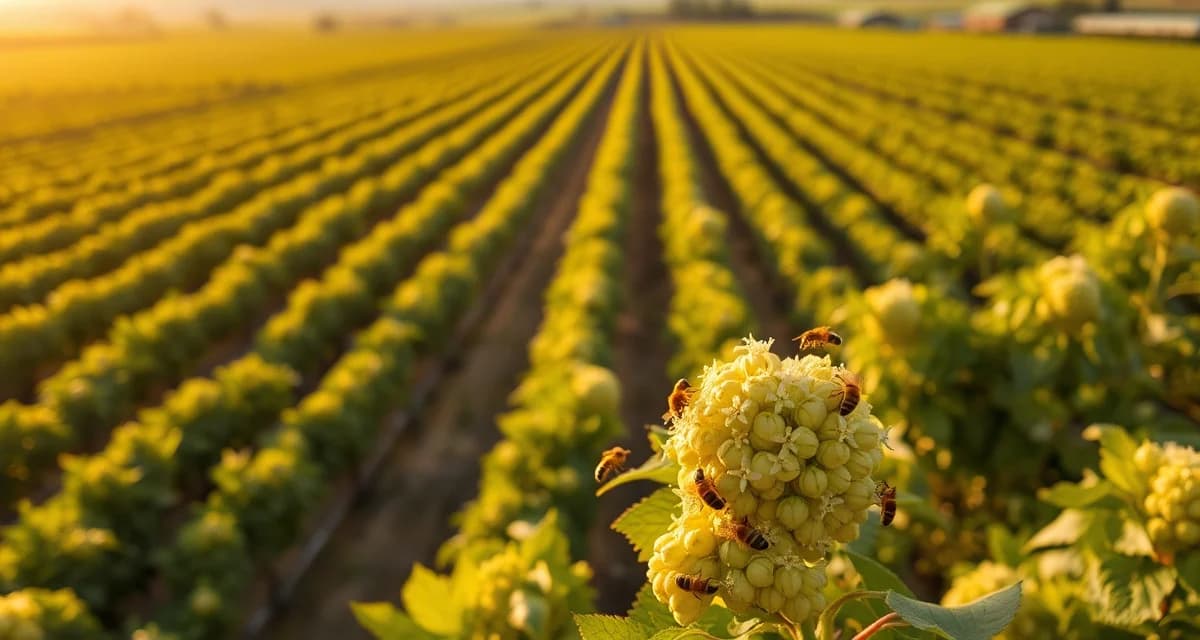
Pacific Northwest Hop Acreage Data: Emerging Pollination Opportunity
Washington state produces over 75 percent of US hops, with acreage that has grown more than 300 percent since 2010 as craft beer demand reshaped the domestic hop market. That growth curve has been steep enough to create genuine commercial pollination opportunity where little existed a decade ago. The question for beekeepers isn't whether hop yards need bees; hops benefit meaningfully from pollination for seed set in some contexts. The question is whether the pay structure works for your operation and how to get into this market.
Hop yard placement rates run $50 to $80 per hive, lower than almond or tree fruit rates but reflecting both the crop's different economics and the shorter distance requirements relative to migratory pollination. Many hop yards are within practical daily driving range of existing summer honey yard locations in eastern Washington and the Willamette Valley of Oregon, meaning hops can supplement your summer income without significant route disruption.
TL;DR
- Washington's primary commercial beekeeping role is shaped by its crop mix, climate, and position on the national pollination circuit.
- Pollination rates in Washington range $65-220/hive depending on crop depending on crop and colony strength requirements.
- Out-of-state operators entering Washington for pollination contracts must register with the state agricultural authority and obtain a Certificate of Health.
- Washington functions as either a primary pollination destination, a seasonal honey production location, or a transitional stop depending on the circuit.
- Tracking permit status, registration documents, and yard records for Washington operations requires organized record-keeping before the season opens.
The Washington Hop Market in Numbers
Washington's hop acreage is concentrated in the Yakima Valley, which produces the vast majority of the state's output and is one of the most productive hop growing regions in the world. The region's dry summers, warm days, and cool nights create ideal conditions for hop cone development. The Yakima Valley alone accounts for roughly 75 percent of all US hop production.
The post-2010 craft beer boom drove hop acreage from around 25,000 to over 60,000 acres in Washington as breweries sought specific variety flavors that only fresh domestic hops could supply reliably. Oregon's Willamette Valley adds another meaningful concentration of acreage, particularly for traditional varieties like Willamette and Cascade. Combined Pacific Northwest hop acreage makes this one of the largest concentrated specialty crop markets in the western US.
The growth trajectory has leveled somewhat as the craft brewing market matured, but acreage remains high and new variety planting continues as brewers chase flavor trends. Pollination demand is real even if the hop industry hasn't historically organized it the way almond or blueberry growers have.
How Hop Pollination Works
Hops are wind-pollinated in their traditional brewing role, but seed set from bee pollination affects cone quality in ways that matter to some growers. Hop seed content is a point of debate in the brewing industry, with some varieties preferred seedless and others benefiting from seed development for certain style applications.
The more direct commercial pollination play is with hops grown for seed production rather than brewing, a smaller but real market. Hops grown for proprietary variety seed stock require controlled pollination, and some seed-production yards pay for hive placement explicitly for this purpose. This niche is smaller than general hop yard placement but may pay higher rates.
For general placement in commercial brewing hop yards, the grower's primary interest is supporting pollinator populations that may improve overall cone health and yield consistency, not maximizing seed set. This means your hive strength requirements are typically less rigidly specified than in almond contracts, and the compliance documentation expectations are lighter. That's both an advantage for ease of operation and a challenge because it means the market is less formalized and harder to work with using standardized contract terms.
Getting Into the Hop Yard Market
The Hop Growers of America association and the Yakima Valley-based hop industry organizations are your best first contacts. The industry is dominated by a relatively small number of large growers who control most of the acreage under contract with major breweries. These large operators tend to be business-oriented and responsive to formal proposals if your hive strength documentation is professional.
Smaller craft and specialty hop yards, which have grown substantially with the direct-to-brewery movement, are often more accessible for new relationships. Many small hop yard operators haven't established beekeeper relationships at all and will respond positively to a professional outreach with clear terms. These smaller yards pay lower total revenue per placement given their acreage, but they're a way to build relationships in the market.
Use the Pacific Northwest commercial beekeeping in Washington regional context to understand how hop yards fit into your seasonal circuit alongside honey production and other pollination contracts. The US pollination market size data provides useful background for positioning hop yard income as a growing market sector.
Seasonal Timing and Circuit Integration
Hop bloom runs July through August in the Pacific Northwest, coinciding with the region's prime honey production season. The integration challenge is that your best summer honey yards and your hop yard placements may compete for the same hive inventory if you're not carefully planning capacity.
The lower per-hive rate for hops means you should treat hop placements as a complement to summer honey production rather than a replacement. If you have yards positioned for fireweed, clover, or wildflower honey in July and August, adding hop yards nearby that don't require significant additional travel can generate incremental revenue without major route changes.
For operators who run their summer colonies in eastern Washington for honey production, hop yards in the same Yakima Valley geography offer convenient add-on income. The key is not over-committing hives to hop placement at the expense of positioning for your honey flows.
Contract Terms for Hop Yard Placement
Hop yard agreements tend to be less formal than tree fruit pollination contracts, which creates risk. Put your terms in writing even if the grower isn't accustomed to formal agreements. Your contract should specify hive count, strength at delivery, placement location, timing of delivery and pickup, and payment schedule.
Payment net-30 after placement is common for hop yard arrangements. Unlike almond contracts where the grower's financial exposure from inadequate pollination is enormous, hop growers have lower urgency around payment disputes. Still, document your delivery with GPS and a strength assessment at placement so you have records if any question arises.
Frequently Asked Questions
What is the market size for hop pollination in the Pacific Northwest?
Washington's hop acreage has grown over 300 percent since 2010, reaching more than 60,000 acres in Washington state alone, with significant additional Oregon acreage in the Willamette Valley. Total Pacific Northwest commercial hop acreage represents a meaningful pollination market, though the per-hive rate of $50 to $80 is lower than major tree fruit crops. The market is less formalized than almond or blueberry pollination, meaning there's real opportunity for beekeepers who bring professional contract documentation into an industry accustomed to informal arrangements.
How do you approach hop growers for pollination contracts?
Start with the Hop Growers of America and regional Yakima Valley hop industry organizations, which connect large commercial growers with service providers. Smaller craft and specialty hop yards are accessible through direct outreach and often haven't established beekeeper relationships at all. Lead with professional documentation including your hive strength certification and a clear written contract proposal. Smaller yards are easier to approach but generate lower total revenue; large commercial yards take more time to break into but represent significant per-season income at scale.
What colony strength do hop growers prefer?
Hop growers are generally less prescriptive about hive strength than almond or blueberry growers, reflecting hops' lower per-acre pollination cost and the less formalized nature of hop pollination contracts. Most growers prefer 6 or more frames of bees at placement, with an active queen. For specialized seed production hop yards, strength requirements may be more specific and better documented. Bring your standard pre-move inspection record regardless, since it establishes your professionalism and creates a paper trail even when the grower doesn't formally require it.
What is the process for registering an out-of-state apiary in a new state?
Most states require out-of-state operators to register with the state department of agriculture apiary program before placing colonies. The process typically involves submitting a registration application (online or paper), paying a fee (usually $10-50 per location), and providing contact information for the operation. Some states also require the registration to be renewed annually. Contact the destination state's department of agriculture apiary program at least 60 days before your planned arrival to confirm current requirements.
What documentation do state apiary inspectors typically review?
State apiary inspectors review health certificates for out-of-state colonies, registration documentation, and colony inspection records during apiary visits. Inspectors check for signs of American foulbrood, European foulbrood, and other regulated pests and diseases. Operations with organized digital records that include treatment history and mite counts typically have faster, less complicated inspections than operations without documentation. Some state inspectors also verify that varroa mite loads are below state entry thresholds.
What triggers a state apiary inspection?
State apiary inspections can be triggered by routine inspection schedules (most states inspect a percentage of registered apiaries annually), neighbor or landowner complaints, disease reports from nearby operations, or inspection requirements tied to state entry permits. California, in particular, has the right to inspect incoming loads at port of entry for commercial beekeeping operations. Maintaining current registration and organized records makes required inspections faster and less disruptive.
Try These Free Tools
Sources
- USDA Agricultural Research Service
- Bee Informed Partnership
- American Beekeeping Federation (ABF)
- Washington Department of Agriculture
- Project Apis m.
Get Started with PollenOps
Commercial operations working in Washington face the same registration, permit, and documentation requirements as any state on the national circuit -- plus Washington's specific regulatory requirements. PollenOps tracks your Washington yard records, contract assignments, and permit documentation alongside your full operation, so entering a new state doesn't add a separate administrative burden. See how the platform fits operations working across multiple states.