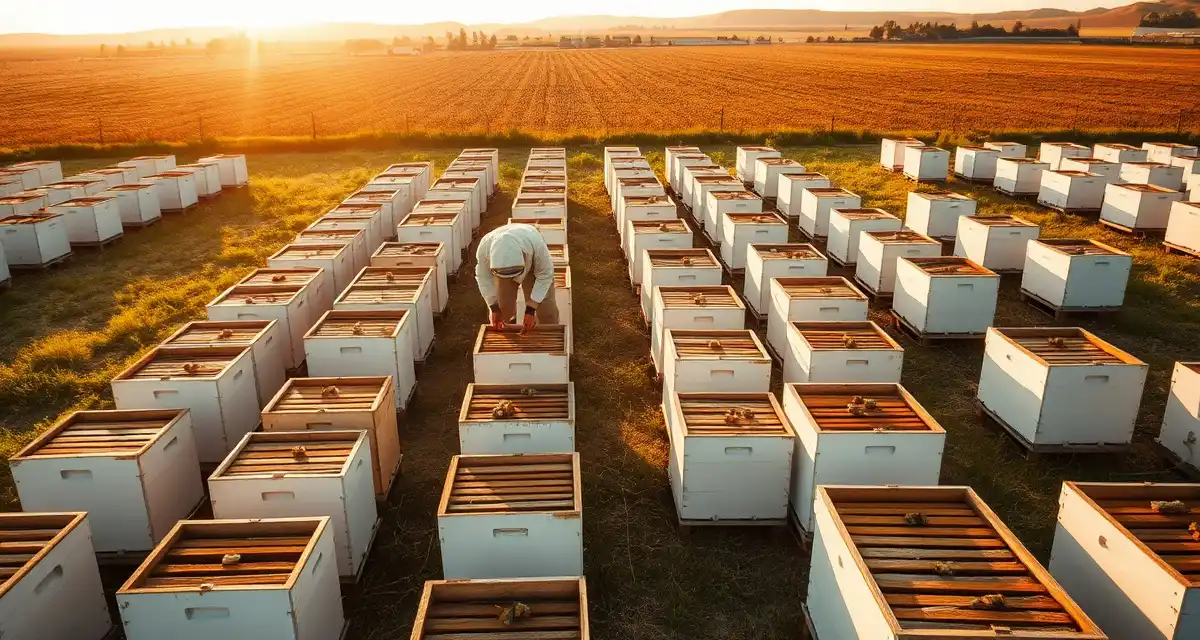
Commercial Beekeeping Startup Costs: What It Takes to Reach 500 Hives
Reaching 500 hives isn't a slow build. It's a capital event. The honest answer to "what does it cost to start a commercial beekeeping operation?" is that 500 hives requires $250,000 to $400,000 in equipment and working capital before you see a dollar of revenue from your first season. That's not a warning to scare you off. It's the number you need to plan around.
Most people starting out underestimate by half. They calculate hive costs, forget trucks, and completely ignore the working capital you need to survive the gap between your first pollination contracts and first payment.
TL;DR
- Commercial beekeeping operations face two primary management challenges: operational logistics (hive health, transport, placement) and administrative coordination (contracts, payments, documentation).
- Most disputes and revenue losses in commercial beekeeping are preventable with better documentation and clearer contract terms.
- The operations that run most profitably are those with disciplined systems for tracking hive health, contract status, and fleet logistics in one place.
- PollenOps is built specifically for the operational complexity of commercial-scale pollination services, not adapted from a hobbyist tool.
- The most important management decisions (treatment timing, contract renewal, hive allocation) require accurate current data to make well.
Why Starting Commercial Beekeeping Costs More Than You Think
The problem with most startup cost estimates is that they account for gear, not operations. You can buy 50 hives for $15,000 to $20,000 and feel like you're in business. But at 50 hives, you're not a commercial operation. You're a hobbyist with ambitions.
The jump from 50 to 500 hives isn't linear. You need vehicles before you can move bees. You need somewhere to store equipment. You need working capital to feed colonies through a bad nectar flow. And you need time. Most beekeepers take 3 to 5 years to scale from a few dozen hives to commercial numbers.
The cost curve accelerates as you grow. And the capital requirements hit hardest right when your revenue is most uncertain.
Equipment Costs for 500 Hives
Equipment costs for 500 hives run approximately $150,000 to $200,000 before truck and yard costs. That figure surprises most people. Here's how it breaks down.
Hive Equipment
A single Langstroth hive setup (bottom board, two deep brood boxes, frames with foundation, inner cover, outer cover) costs $150 to $250 new. For 500 hives, that's $75,000 to $125,000 in hive bodies alone before you add supers.
Most commercial operators buy used equipment where they can. Used hive bodies in good condition might run $80 to $120 per complete setup. But you need to be careful. Equipment from unknown sources carries disease risk, and treating or replacing contaminated gear is an unexpected cost that can run $10,000 to $30,000 if you're unlucky.
Protective Equipment and Tools
This category gets overlooked. Suits, gloves, smokers, hive tools, feeders, and queen-rearing supplies for yourself and any employees add up. Budget $5,000 to $10,000 for tools and protection across a 500-hive operation.
Extraction and Honey Equipment
If you're running honey production alongside pollination, extraction equipment is a major line item. A commercial extractor capable of handling 500-hive volume costs $8,000 to $25,000. Add uncapping equipment, pumps, tanks, filters, and bottling gear and you're looking at $20,000 to $50,000 for a basic extraction setup.
You can rent extraction time from co-ops early on, but at 500 hives you'll want your own.
Medication, Supplements, and Treatments
First-year input costs for varroa treatments, antibiotics, and feed supplements run $15,000 to $25,000 for 500 hives. Oxalic acid, formic acid, or Apivar strips cost $2 to $5 per hive per treatment cycle. You'll treat multiple times per year.
Truck and Transport Costs
This is where many business plans fall apart. You can't run a commercial beekeeping operation without trucks, and trucks are expensive.
A flatbed capable of moving 100 hives at a time costs $30,000 to $80,000 used. Most 500-hive operations run two to three trucks. Add a forklift or pallet mover (required for loading and unloading at scale) and you're adding another $15,000 to $40,000.
Total transport budget for a 500-hive migratory operation: $80,000 to $200,000.
That's before maintenance, insurance, fuel, and registration. A truck running 20,000 miles per year in hive transport will cost $8,000 to $15,000 per year in operating costs.
Yard Costs and Permits
Commercial beekeepers rarely own the land where their hives sit. You'll pay landowners for yard access, either cash or honey. Cash rates range from $0 to $500 per yard per season depending on location. In California, competition for good winter yard locations has driven prices up substantially.
Permit costs vary by state. Most states charge $10 to $50 per year for apiary registration. Migratory operators need permits for every state they move through. Budget $500 to $2,000 per year in permits and registration fees for a multi-state operation.
Working Capital Requirements
Here's the number that separates successful commercial startups from those that struggle: working capital.
You need enough cash to operate the business from the time you commit capital until the time you collect your first contracts. For a 500-hive operation targeting almond pollination, you're looking at:
- Feed and treatment costs for fall and winter buildup
- Fuel and labor to move hives to California
- Living expenses and payroll while you wait for the pollination check
Almond pollination checks typically arrive 30 to 60 days after placement. But you've spent months feeding colonies and building strength before you ever set a hive in an orchard. Working capital needs run $30,000 to $75,000 on top of your equipment costs.
Total Startup Cost Summary
| Category | Low Estimate | High Estimate |
|---|---|---|
| Hive equipment (500 hives) | $75,000 | $150,000 |
| Tools and protective gear | $5,000 | $10,000 |
| Extraction equipment | $20,000 | $50,000 |
| Medications and supplements | $15,000 | $25,000 |
| Trucks and transport | $80,000 | $200,000 |
| Yard and permit costs | $2,000 | $5,000 |
| Working capital | $30,000 | $75,000 |
| Total | $227,000 | $515,000 |
The wide range reflects how much of this depends on whether you buy new or used, whether you run honey extraction or focus purely on pollination, and how aggressively you scale.
Most operators building toward 500 hives don't do it in one capital raise. They scale incrementally, adding 50 to 100 hives per year as cash flow allows. That approach takes longer but spreads the capital risk.
How Operators Finance the Gap
Most commercial beekeeping startups are self-funded or funded through USDA programs. Equipment financing for commercial beekeeping options include USDA Farm Service Agency Operating Loans, which specifically cover agricultural businesses and can be used for hive equipment and operating costs.
SBA loans are an option but require demonstrated revenue history, which is harder to show in early years. Some operators use equipment financing through ag lenders who understand the seasonal cash flow pattern of pollination businesses.
The key is building your commercial beekeeping business plan with realistic capital assumptions before you approach any lender.
FAQ
What does it cost to start a 500-hive beekeeping operation?
Total costs typically run $250,000 to $400,000 when you include equipment, trucks, working capital, and first-year operating costs. The range is wide because used equipment, scale of honey production, and regional yard costs all vary. Budget toward the higher end if you're buying new equipment and planning a migratory operation.
How much do commercial beehives cost?
A complete hive setup (bottom board, two deep boxes, frames, covers) costs $150 to $250 new or $80 to $120 used. For 500 hives, that's $75,000 to $125,000 in hive bodies before supers, tools, and any honey extraction equipment. Supers add another $20 to $40 per hive.
What equipment is needed for a commercial migratory operation?
At minimum: hive equipment for your full colony count, at least two flatbed trucks capable of carrying 80 to 100 hives each, a forklift or pallet mover, protective gear for staff, varroa treatment supplies, and a dedicated storage facility for equipment between seasons. For honey production, add extraction equipment. Budget total equipment costs of $200,000 to $350,000 for a 500-hive migratory setup.
What is the difference between commercial and hobby beekeeping?
Commercial beekeeping is distinguished by scale (typically 100+ hives, often 500-5,000+), revenue source (pollination contracts and bulk honey sales rather than local honey retail), and management approach (systematic protocols applied across yards rather than individual colony attention). Commercial operators manage bees as an agricultural enterprise, with the administrative, regulatory, and logistical complexity that entails. Most commercial operators derive the majority of their income from pollination services; honey production is a supplementary revenue stream.
How many hives are needed to make commercial beekeeping a full-time income?
Most beekeeping economists put the full-time commercial threshold at 500-800 hives, assuming efficient operations management and a combination of pollination and honey revenue. At 500 hives and $200/hive for almond pollination, almond season alone generates $100,000 in gross revenue before expenses. Net margins depend on operational efficiency, but well-run operations can achieve 30-50% net margins on pollination revenue. Additional crops and honey production improve per-hive economics but require additional management capacity.
What is the annual revenue potential for a 1,000-hive commercial operation?
A 1,000-hive operation running an almond season ($200/hive) plus blueberry or apple contracts ($80-100/hive) plus summer honey production ($25-40/hive after extraction costs) can generate $300,000-360,000 in annual gross revenue. Net margins after transport, crew, equipment, and hive replacement costs typically run 25-40% for well-managed operations, putting net income at $75,000-145,000 annually. The specific number depends heavily on circuit efficiency, loss rates, and contract quality.
Try These Free Tools
Sources
- USDA Agricultural Research Service
- Bee Informed Partnership
- American Beekeeping Federation (ABF)
- American Honey Producers Association
- Project Apis m.
The Bottom Line
Starting commercial beekeeping is a real capital commitment. There's no way to soft-pedal it. But the economics work at scale. A well-run 500-hive operation targeting almond pollination can generate $100,000 to $125,000 in pollination revenue alone in a single season, before honey income.
The operators who make it work are the ones who plan the capital requirements honestly, build the operation incrementally, and treat it as the agricultural business it is from day one.
Get Started with PollenOps
Managing a commercial beekeeping operation involves more data, more deadlines, and more moving parts than any general-purpose tool was designed to handle. PollenOps brings contracts, yard records, health documentation, and fleet logistics together in one platform built for the realities of commercial-scale beekeeping.