Cranberry Pollination Management Software
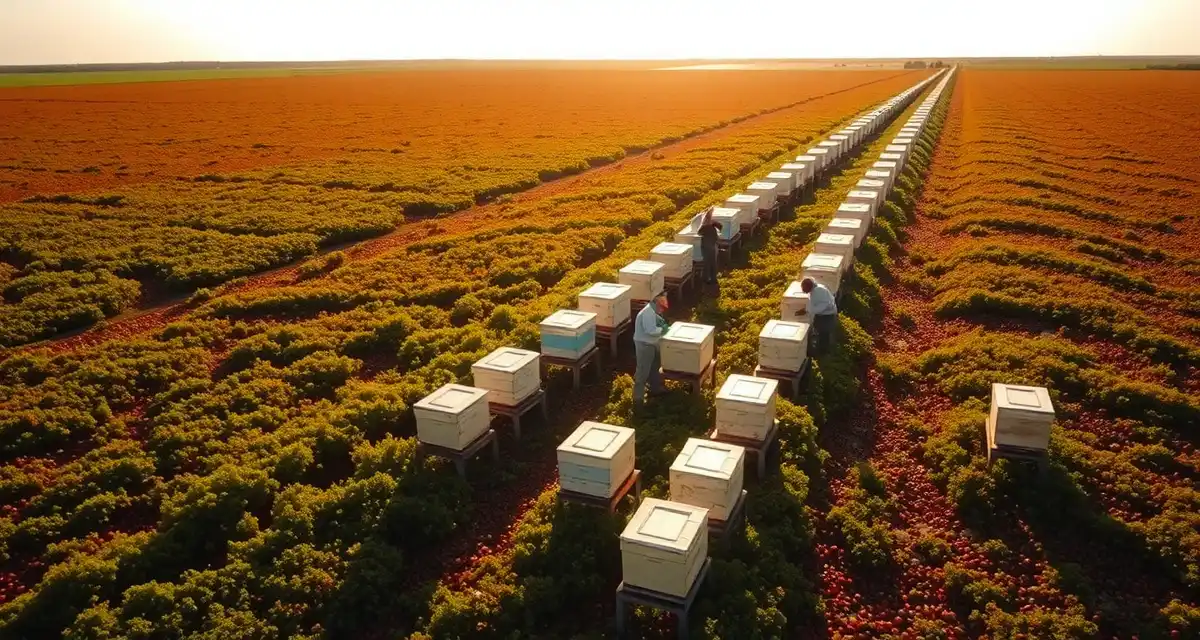
Cranberry pollination is different from almost anything else in commercial beekeeping, and if you haven't worked cranberry bogs before, the differences are significant enough that you need to understand them before signing your first contract.
Wisconsin and Massachusetts account for 90% of US cranberry production, and between them they require a large number of commercial hive placements every season. New Jersey and Oregon also have substantial cranberry industries. Each of these regions has its own timing, access logistics, and grower expectations.
The challenge isn't just bloom timing. It's getting your hives to and from sites that are specifically designed to be surrounded by water.
TL;DR
- Commercial cranberry production is concentrated in Massachusetts, Wisconsin, New Jersey, Oregon, and Washington.
- Cranberry bloom runs June through early July depending on location, placing it after most tree fruit season but before summer honey flows.
- Cranberry growers typically require 2-3 hives per acre, with hive strength minimums of 5-6 frames.
- Water management on cranberry bogs creates specific considerations for hive placement and access.
- Cranberry pollination can be combined with blueberry or apple contracts to build a Northeast or Pacific Northwest circuit.
What Makes Cranberry Pollination Different
Cranberry bogs are built to flood. That's intentional: growers flood the bogs for harvest and for winter protection. But it also means that accessing a cranberry bog site requires coordination around water management schedules, dry levee conditions, and specific equipment approaches that don't apply to orchard work.
When you're placing hives at a cranberry bog, you're typically:
- Driving on narrow levees between bog sections
- Working in wet, potentially soft conditions underfoot
- Coordinating your arrival with the grower's water pump schedule
- Placing hives close to water sources that bees will naturally use for drinking
Bog access alerts in PollenOps notify you of optimal placement windows when bog levees are dry enough for your equipment. This isn't just an alert about bloom timing; it's an alert about when you can physically get your truck in safely.
When Should Hives Be Placed in Cranberry Bogs?
Cranberry bloom timing varies by region:
- Massachusetts (Cape Cod, Plymouth County): typically mid-June to early July
- Wisconsin (central bog country): typically late June to early July
- New Jersey (Burlington, Ocean counties): typically mid-June to early July
- Oregon (southern coast): typically July, somewhat later than East Coast operations
Cranberry bloom is brief. The window when flowers are open and receptive typically spans 2-4 weeks, and the most critical period for pollination is often just 7-10 days.
Growers generally want hives in place before any significant bloom begins, which means targeting placement 3-5 days before the first open flowers appear. Early placement allows bees to orient to the bog environment before they need to be working it.
How Many Hives Per Acre Do Cranberry Growers Need?
The standard range for commercial cranberry pollination is 2-3 hives per acre, though this varies by:
- Bog density (how many plants per acre)
- Native pollinator population (bumblebees are highly effective cranberry pollinators but aren't always abundant)
- Grower's yield history (bogs with a history of poor set may request higher density)
- Hive strength (strong colonies can cover more bog area per hive)
Some cranberry growers place bumblebee colonies alongside honeybee hives, particularly in Massachusetts and Wisconsin where commercial bumblebee suppliers serve the market. In these cases, honeybee density requirements may be slightly lower because the bumblebees are handling a portion of the work.
Cranberry flowers are bell-shaped and best pollinated through sonication ("buzz pollination"), which honeybees can't do. Bumblebees are more effective per visit for this crop. However, honeybees compensate through sheer forager volume, and the commercial cranberry industry relies heavily on honeybee placements because of availability and price.
Managing Hive Access at Cranberry Bog Sites
This is the logistics challenge that catches new cranberry beekeepers off guard.
Bogs are typically dry from late spring through harvest, which is when you're working them. But dry bog means the levees have dried out after spring flooding, and the timing of when they're solid enough for truck access depends on local drainage and weather conditions.
Early in the season, levees may still be soft from snowmelt or spring rain. If you try to drive a loaded bee truck on a soft levee, you're looking at a vehicle recovery operation. Talk to your grower about when they expect levees to be solid enough for your equipment, and confirm that directly rather than assuming.
Some bogs require specific truck sizes or configurations to navigate the levee network. A standard flatbed may not fit on narrow levees that are sized for bog equipment. Know your clearances before you load.
Water hazards are real. Bogs are surrounded by water. During loading and unloading, especially in the dark, the risk of stepping backward off a levee is present. Brief your crew before any bog placement on the site layout and water proximity.
Wisconsin Cranberry Logistics
Wisconsin produces over 60% of all US cranberries, making it the dominant market in the country. The central Wisconsin bog country around Marshfield, Wisconsin Rapids, and Tomah is heavily concentrated, meaning there are multiple growers in a relatively compact geographic area.
This concentration is both an opportunity and a scheduling challenge. A well-organized operation can service multiple cranberry contracts in a single day's drive if the yards are placed efficiently. But if multiple operations are all trying to get into the same bog district at the same time, levee traffic becomes an issue.
Wisconsin bog access varies by the drainage management schedule each grower uses. Connecting your placement schedule to each specific grower's water management calendar, rather than a generic date, is how you avoid arriving when the levees are still wet.
Massachusetts and New England Cranberry Pollination
Cape Cod cranberry operations tend to be smaller than Wisconsin operations, with more family-owned bogs in the 10-50 acre range. This means you're often dealing with individual landowners who manage their own water systems rather than large corporate operations.
Massachusetts bloom timing on the Cape is generally mid-June, with later dates possible in cooler years or at higher-elevation inland bogs. The berry pollination contract management tools in PollenOps track Massachusetts cranberry bloom separately from Wisconsin because the timing and conditions differ enough to warrant separate monitoring.
Frequently Asked Questions
When should hives be placed in cranberry bogs?
Hives should be in place 3-5 days before the first open flowers appear, which in most growing regions means placing in mid-to-late June. Massachusetts Cape Cod bloom typically starts mid-June. Wisconsin central bog bloom starts in late June to early July. Oregon coastal cranberry bloom runs into July. All dates shift based on spring temperature accumulation. PollenOps cranberry bloom alerts are calibrated to each producing region.
How many hives per acre do cranberry growers need?
The standard range is 2-3 hives per acre for commercial cranberry production. Bogs with limited native pollinator populations or a history of poor fruit set may request higher density. Growers who also use commercial bumblebee colonies may require slightly fewer honeybee hives per acre since bumblebees are more effective per visit for cranberry flowers.
How do I manage hive access at cranberry bog sites?
Confirm levee conditions with your grower before arrival, not on arrival. Ask specifically when they expect levees to be solid enough for your truck configuration. Know your vehicle dimensions relative to the bog's levee widths. Brief your crew on water hazards before any bog placement. Plan for early-morning placements when possible, since levees are often firmer before afternoon heat softens wet soil.
What is the difference between commercial and hobby beekeeping?
Commercial beekeeping is distinguished by scale (typically 100+ hives, often 500-5,000+), revenue source (pollination contracts and bulk honey sales rather than local honey retail), and management approach (systematic protocols applied across yards rather than individual colony attention). Commercial operators manage bees as an agricultural enterprise, with the administrative, regulatory, and logistical complexity that entails. Most commercial operators derive the majority of their income from pollination services; honey production is a supplementary revenue stream.
How many hives are needed to make commercial beekeeping a full-time income?
Most beekeeping economists put the full-time commercial threshold at 500-800 hives, assuming efficient operations management and a combination of pollination and honey revenue. At 500 hives and $200/hive for almond pollination, almond season alone generates $100,000 in gross revenue before expenses. Net margins depend on operational efficiency, but well-run operations can achieve 30-50% net margins on pollination revenue. Additional crops and honey production improve per-hive economics but require additional management capacity.
What is the annual revenue potential for a 1,000-hive commercial operation?
A 1,000-hive operation running an almond season ($200/hive) plus blueberry or apple contracts ($80-100/hive) plus summer honey production ($25-40/hive after extraction costs) can generate $300,000-360,000 in annual gross revenue. Net margins after transport, crew, equipment, and hive replacement costs typically run 25-40% for well-managed operations, putting net income at $75,000-145,000 annually. The specific number depends heavily on circuit efficiency, loss rates, and contract quality.
Try These Free Tools
Sources
- USDA Agricultural Research Service
- Bee Informed Partnership
- American Beekeeping Federation (ABF)
- Cranberry Institute
- University of Wisconsin Extension
Get Started with PollenOps
Cranberry pollination contracts require the same documentation and scheduling discipline as any other crop, combined with unique access and timing requirements. PollenOps manages cranberry contracts alongside your other seasonal commitments so no detail falls through the cracks during a busy spring and summer.