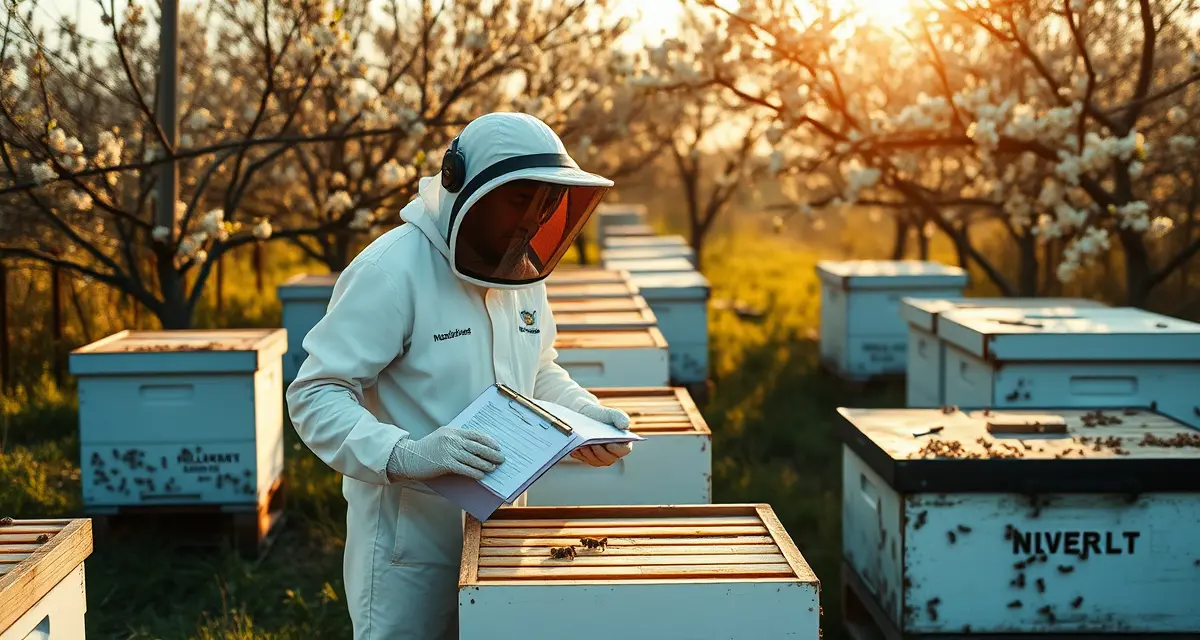
Managing Part-Time Pollination Income with PollenOps
Part-time pollination operations account for 30% of US commercial beekeepers by operation count. These are beekeepers who have a primary income from honey production, agriculture, or another career, and who add pollination contracts to supplement that income without running a full-time migratory operation.
The part-time pollination model is economically appealing: 2-5 grower contracts with 50-150 hives can generate $10,000-$30,000 in supplemental income during your local bloom season, without the travel demands of a full migratory operation. But it still requires the same professional documentation and contract management that full-time operators use, because your growers have the same expectations regardless of whether this is your full-time job.
TL;DR
- Commercial beekeeping operations face two primary management challenges: operational logistics (hive health, transport, placement) and administrative coordination (contracts, payments, documentation).
- Most disputes and revenue losses in commercial beekeeping are preventable with better documentation and clearer contract terms.
- The operations that run most profitably are those with disciplined systems for tracking hive health, contract status, and fleet logistics in one place.
- PollenOps is built specifically for the operational complexity of commercial-scale pollination services, not adapted from a hobbyist tool.
- The most important management decisions (treatment timing, contract renewal, hive allocation) require accurate current data to make well.
The Part-Time Pollination Reality
Most part-time pollination beekeepers work with local or regional growers in nearby markets: a berry grower within 50 miles, an apple orchard in the next county, a local almond operation if you're in California.
The advantages: shorter drives, simpler logistics, grower relationships built on geographic proximity. The challenges: you're competing for contracts with full-time operators who may have stronger documentation, more professional-looking delivery reports, and better bloom timing awareness than a part-time operator using spreadsheets.
This is where professional software levels the playing field. A grower comparing two beekeepers, one who emails a Word document invoice and one who sends a GPS-verified delivery report with hive count and strength scores, will notice the difference. That difference affects who gets the contract next year.
Can I Use PollenOps If I Only Do Pollination as a Side Business?
Yes. The $49 per month plan was designed for operations up to 50 hives, which covers most part-time pollination operations.
The full feature set is available from the first month: contract management, GPS yard tracking, bloom timing alerts, automated invoicing, strength assessment checklists, and grower-facing delivery reports. You're not getting a stripped-down version because your operation is smaller.
The $49 per month plan pays for itself with a single avoided invoice dispute per year. If you have 3 grower contracts generating $15,000 in combined revenue and one dispute arises, the time and stress of resolving it without documentation is worth far more than $588 annually.
How Many Contracts Can a Part-Time Beekeeper Manage With Software?
There's no practical upper limit on how many contracts PollenOps can manage, but the more relevant question is how many contracts you can physically service with your hive count and truck access.
A part-time operation with 80-150 hives might work 2-6 contracts per season depending on:
- Whether your contracts overlap in timing or cascade sequentially
- How far your yard locations are from the contract sites
- How much time you can commit to truck runs during your busy period
For sequential contracts (blueberry in May, then apple in May-June, for example), the same hive fleet might serve 4-5 contracts across a 6-week window. For simultaneous contracts, you're limited by how many hives you can deploy at once.
Software helps you track the capacity commitment across all contracts so you're not accidentally overcommitting. At 80 hives and 4 contracts, the math is simple but still easy to get wrong without a live inventory.
What Is the Minimum Operation Size Where Pollination Management Software Makes Financial Sense?
The break-even analysis:
$49/month = $588/year in software cost
Benefit scenarios:
- 1 avoided invoice dispute: typically saves $2,000-$15,000 in lost revenue and legal costs
- 1 prevented missed bloom window: saves 5-20% of the affected contract value
- Time saved on invoicing: varies, but typically 2-4 hours per contract per season
- Improved grower relationships from professional documentation: difficult to quantify but real at renewal time
Even with 2 contracts generating a combined $8,000 in annual revenue, the break-even is very low. One dispute avoided, one bloom window caught early, or one contract renewal secured because your documentation impressed a grower all more than cover the annual cost.
The minimum operation size where software makes sense isn't determined by hive count. It's determined by whether you have any revenue at risk that exceeds the subscription cost. For pollination contracts, even a single $3,000 contract creates that exposure.
Bloom Timing for Part-Time Operators
One of the biggest advantages of software for part-time operators is bloom timing alerts. Part-time beekeepers who are managing another career alongside their beekeeping don't have time to monitor regional bloom conditions daily or stay close to the informal information networks that full-time operators use.
When you're at your desk at 8 AM and a bloom alert fires for your blueberry grower's county, you have the information you need to make a logistics decision that day, before it becomes urgent. Without the alert, you're relying on a call from the grower ("bloom is starting, when are the bees coming?") that may come too late for comfortable logistics.
PollenOps bloom timing alerts work the same for a 2-contract part-time operation as they do for a 50-contract full-time operation. The alerts are connected to your specific yard locations and contracts, so every alert is relevant to something you're actually managing.
Frequently Asked Questions
Can I use PollenOps if I only do pollination as a side business?
Yes. The $49 per month plan includes the full PollenOps feature set for operations up to 50 hives. There's no restriction on part-time or side-business operators, and the features you need for professional contract management, GPS delivery verification, bloom timing alerts, and automated invoicing are all available from the first month. The platform doesn't care whether beekeeping is your primary income or a supplement.
How many contracts can a part-time beekeeper manage with software?
Software removes the organizational limit on how many contracts you can track, but your practical capacity is determined by your hive count, truck access, and time availability. A part-time operation with 80-150 hives typically manages 2-6 contracts per season, either simultaneously or sequentially. PollenOps tracks your capacity commitment across all contracts so you don't accidentally overcommit your hive inventory.
What is the minimum operation size where pollination management software makes financial sense?
The break-even is very low. At $49 per month ($588 per year), any operation with pollination contracts generating more than about $1,000 annually has enough revenue at risk to justify the subscription. A single avoided dispute, prevented bloom-timing miss, or improved grower relationship from professional documentation typically returns the annual cost many times over, even on a 2-contract, 50-hive operation.
What is the difference between commercial and hobby beekeeping?
Commercial beekeeping is distinguished by scale (typically 100+ hives, often 500-5,000+), revenue source (pollination contracts and bulk honey sales rather than local honey retail), and management approach (systematic protocols applied across yards rather than individual colony attention). Commercial operators manage bees as an agricultural enterprise, with the administrative, regulatory, and logistical complexity that entails. Most commercial operators derive the majority of their income from pollination services; honey production is a supplementary revenue stream.
How many hives are needed to make commercial beekeeping a full-time income?
Most beekeeping economists put the full-time commercial threshold at 500-800 hives, assuming efficient operations management and a combination of pollination and honey revenue. At 500 hives and $200/hive for almond pollination, almond season alone generates $100,000 in gross revenue before expenses. Net margins depend on operational efficiency, but well-run operations can achieve 30-50% net margins on pollination revenue. Additional crops and honey production improve per-hive economics but require additional management capacity.
What is the annual revenue potential for a 1,000-hive commercial operation?
A 1,000-hive operation running an almond season ($200/hive) plus blueberry or apple contracts ($80-100/hive) plus summer honey production ($25-40/hive after extraction costs) can generate $300,000-360,000 in annual gross revenue. Net margins after transport, crew, equipment, and hive replacement costs typically run 25-40% for well-managed operations, putting net income at $75,000-145,000 annually. The specific number depends heavily on circuit efficiency, loss rates, and contract quality.
Try These Free Tools
Sources
- USDA Agricultural Research Service
- Bee Informed Partnership
- American Beekeeping Federation (ABF)
- American Honey Producers Association
- Project Apis m.
Get Started with PollenOps
Managing a commercial beekeeping operation involves more data, more deadlines, and more moving parts than any general-purpose tool was designed to handle. PollenOps brings contracts, yard records, health documentation, and fleet logistics together in one platform built for the realities of commercial-scale beekeeping.