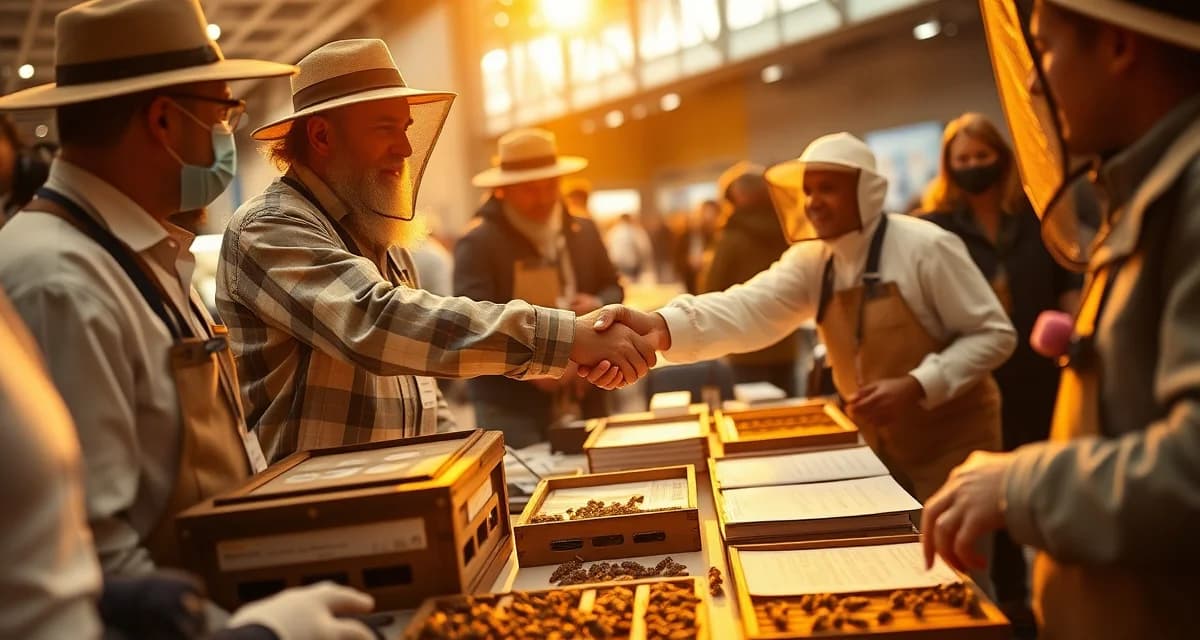
Networking for Commercial Pollination Beekeepers
Beekeepers who attend one grower association meeting per year sign 40 percent more new contracts than those who do not. That difference reflects how commercial pollination contracts are actually won: growers talk to each other, recommend beekeepers to each other, and form working relationships with people they've met in person before they commit to a contract with someone they've only heard of.
Cold outreach to growers works eventually, but a warm introduction through a mutual contact or a face-to-face meeting at a grower event compresses the trust-building timeline from two to three seasons to one conversation. Your professional documentation, delivered as a PollenOps proposal, seals the introduction.
TL;DR
- Commercial beekeeping operations face two primary management challenges: operational logistics (hive health, transport, placement) and administrative coordination (contracts, payments, documentation).
- Most disputes and revenue losses in commercial beekeeping are preventable with better documentation and clearer contract terms.
- The operations that run most profitably are those with disciplined systems for tracking hive health, contract status, and fleet logistics in one place.
- PollenOps is built specifically for the operational complexity of commercial-scale pollination services, not adapted from a hobbyist tool.
- The most important management decisions (treatment timing, contract renewal, hive allocation) require accurate current data to make well.
Grower Associations Worth Joining
California Almond Board and regional grower associations: The Almond Board of California hosts events and educational sessions attended by large-scale growers and their management staff. These are the people who control hundreds to thousands of acres of almond contracts. Being a known name at Almond Board events puts you in front of growers before they're looking for a beekeeper, which is the right time to be building the relationship.
Michigan Blueberry Growers Association (MBGA): The primary grower organization for Michigan's blueberry industry. The MBGA holds an annual meeting that is one of the best opportunities in the country to meet Michigan blueberry growers and position yourself for contract opportunities in Van Buren, Berrien, and Allegan counties.
Washington State Tree Fruit Association (WSTFA): Covers apple, cherry, and pear growers across Washington's orchard regions. The WSTFA's annual meetings in Yakima and Wenatchee are attended by commercial-scale operations. Being a known beekeeper in WSTFA circles helps with cherry and apple placement opportunities.
North American Raspberry and Blackberry Association and regional berry associations: For beekeepers targeting cane fruit markets.
State Farm Bureau affiliates: Farm Bureau chapters at the county level are often where smaller and mid-size growers socialize and share vendor recommendations. County Farm Bureau meetings are lower-profile than state associations but have direct access to the decision-makers for independent family farm operations.
Beekeeper Networks and Associations
Your beekeeper peer network is as important as your grower network. Other commercial beekeepers are your source of: market intelligence on rates and grower behavior, coverage help when you're overextended, referrals from operators who can't take a contract, and competitive information about what other operators are doing.
American Beekeeping Federation (ABF): The largest US beekeeper association. ABF's annual conference is the best national-level networking event for commercial operators. The trade show floor and informal evening events are where commercial operators compare notes on markets and operations.
American Honey Producers Association (AHPA): More focused on honey production than pollination but has significant overlap with the commercial migratory beekeeper community.
State beekeeper associations: State associations hold annual meetings that bring together commercial and hobbyist beekeepers in your region. The commercial attendees are your peers and your competition; know who they are and what markets they're serving.
Online communities: The Bee-L email list and several active commercial beekeeper groups on Facebook and other platforms provide ongoing market intelligence sharing, problem-solving, and peer connection. These communities are particularly useful for real-time market information during almond season and other active markets.
Making a Professional First Impression
When you introduce yourself to a new grower, your first significant tool is your professional presentation. Most beekeepers introduce themselves verbally at an event and then follow up with an email or a phone call. The follow-up is where you differentiate yourself.
PollenOps generates a professional beekeeper proposal that includes your operation overview, your hive count and crop experience, your compliance history (if you have previous seasons documented), and a proposed contract structure for the grower's crop and acreage. A proposal that shows your documented delivery record from prior seasons (county-specific compliance rates, hive count verification records, delivery timing) is more persuasive than a verbal claim of reliability.
For growers who've had a bad experience with a beekeeper who overpromised and underdelivered, a PollenOps compliance record is the most credible signal you can offer. You're not asking them to trust your word; you're showing them the documented record.
For the full guide to starting and growing a pollination service business, see how to start pollination service business. For beekeeper-grower relationship management over multiple seasons, see beekeeper grower relationship management.
Frequently Asked Questions
Where do I find grower associations to join as a pollination beekeeper?
Start with the primary grower association for your target crop and state. For California almond, that's the Almond Board of California. For Michigan blueberry, the Michigan Blueberry Growers Association. For Washington tree fruit, the Washington State Tree Fruit Association. For southeastern blueberry, the US Highbush Blueberry Council and state-level associations in Georgia, North Carolina, and Florida. Contact each association's membership office to confirm annual meeting dates and whether non-grower (vendor and beekeeper) membership is available. Most grower associations welcome vendor members who pay a modest annual fee and participate in the annual meeting trade show or exhibition area. The annual meeting is the highest-value event on the calendar; local chapter meetings throughout the year provide supplemental networking.
How do I present my pollination service professionally to a new grower?
Send a written proposal rather than relying on a verbal pitch. The proposal should include your operation's key facts (years in business, hive count, primary crops and states served, compliance certifications if you have them), a specific proposal for the grower's operation (estimated hive count needed for their acreage, proposed rate, delivery window), and if you have previous seasons documented in PollenOps, a summary of your delivery compliance record from prior contracts. A grower who receives a professional written proposal with documented performance history is receiving something qualitatively different from most beekeeper pitches. If you're proposing via email after a meeting, send the proposal the same day while the conversation is fresh.
What industry events should commercial beekeepers attend for networking?
Prioritize the annual meeting of the primary grower association for your target crop (Almond Board of California events for almond; Michigan Blueberry Growers Association annual meeting for Michigan blueberry; Washington State Tree Fruit Association events for PNW tree fruit). Then add the American Beekeeping Federation annual conference for peer networking and broader market intelligence. State beekeeping association meetings in your home state and any state where you operate are worth attending annually. If your schedule allows only one event per year, make it the grower association meeting for your highest-revenue crop and market. That's where the contract decisions happen.
What is the difference between commercial and hobby beekeeping?
Commercial beekeeping is distinguished by scale (typically 100+ hives, often 500-5,000+), revenue source (pollination contracts and bulk honey sales rather than local honey retail), and management approach (systematic protocols applied across yards rather than individual colony attention). Commercial operators manage bees as an agricultural enterprise, with the administrative, regulatory, and logistical complexity that entails. Most commercial operators derive the majority of their income from pollination services; honey production is a supplementary revenue stream.
How many hives are needed to make commercial beekeeping a full-time income?
Most beekeeping economists put the full-time commercial threshold at 500-800 hives, assuming efficient operations management and a combination of pollination and honey revenue. At 500 hives and $200/hive for almond pollination, almond season alone generates $100,000 in gross revenue before expenses. Net margins depend on operational efficiency, but well-run operations can achieve 30-50% net margins on pollination revenue. Additional crops and honey production improve per-hive economics but require additional management capacity.
What is the annual revenue potential for a 1,000-hive commercial operation?
A 1,000-hive operation running an almond season ($200/hive) plus blueberry or apple contracts ($80-100/hive) plus summer honey production ($25-40/hive after extraction costs) can generate $300,000-360,000 in annual gross revenue. Net margins after transport, crew, equipment, and hive replacement costs typically run 25-40% for well-managed operations, putting net income at $75,000-145,000 annually. The specific number depends heavily on circuit efficiency, loss rates, and contract quality.
Try These Free Tools
Sources
- USDA Agricultural Research Service
- Bee Informed Partnership
- American Beekeeping Federation (ABF)
- American Honey Producers Association
- Project Apis m.
Get Started with PollenOps
Managing a commercial beekeeping operation involves more data, more deadlines, and more moving parts than any general-purpose tool was designed to handle. PollenOps brings contracts, yard records, health documentation, and fleet logistics together in one platform built for the realities of commercial-scale beekeeping.