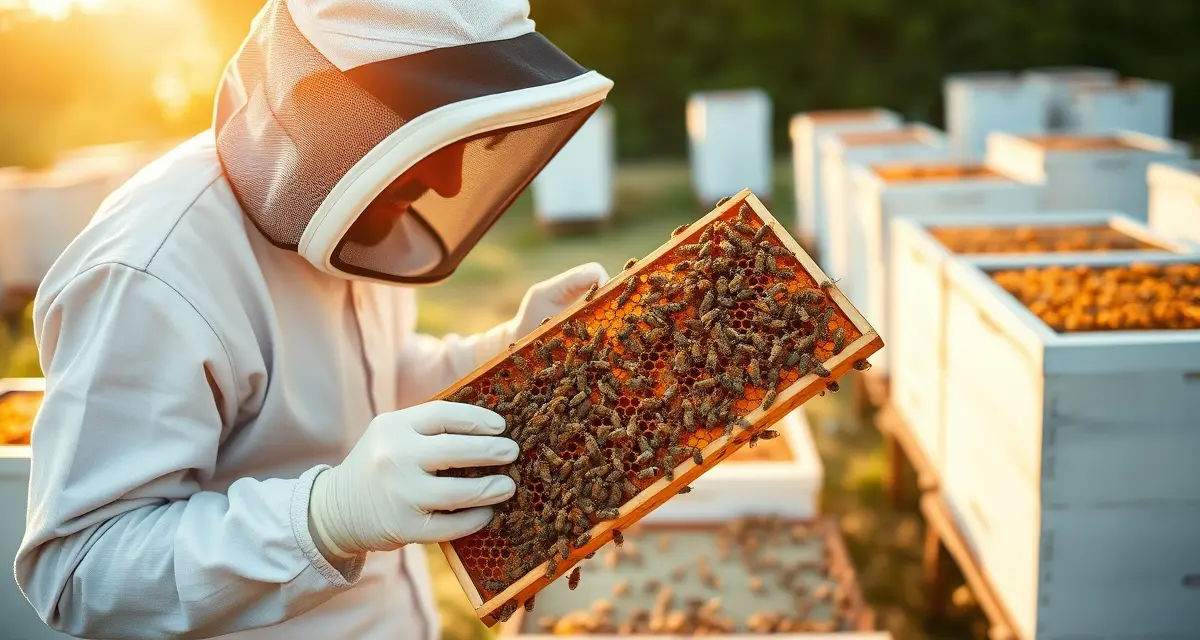
How to Start a Pollination Service Business
Commercial pollination beekeepers earn an average of $180-$230 per hive per season across all crops. For a beekeeper who already has 50 strong hives and is selling honey, adding pollination contracts to your business model can generate $9,000-$11,500 in additional annual income from your existing fleet. That's a meaningful revenue stream without adding hives or equipment.
Starting a pollination service business requires more than just having bees and showing up to a grower's orchard. It requires the contracts, documentation, and systems that protect your revenue and build the grower relationships that lead to multi-year contracts.
TL;DR
- Commercial beekeeping operations face two primary management challenges: operational logistics (hive health, transport, placement) and administrative coordination (contracts, payments, documentation).
- Most disputes and revenue losses in commercial beekeeping are preventable with better documentation and clearer contract terms.
- The operations that run most profitably are those with disciplined systems for tracking hive health, contract status, and fleet logistics in one place.
- PollenOps is built specifically for the operational complexity of commercial-scale pollination services, not adapted from a hobbyist tool.
- The most important management decisions (treatment timing, contract renewal, hive allocation) require accurate current data to make well.
What Do I Need to Start Offering Pollination Services?
The starting requirements:
Enough hives in adequate condition: Most commercial pollination contracts require a minimum of 50-100 hives for the smallest placements. Some growers will work with smaller counts, but your value as a pollination provider increases substantially as your available hive count grows. The minimum viable size for a serious pollination business is around 50 strong hives.
Strong colonies: Colonies need to meet the contracted minimum strength specification, typically 5-7 frames of bees for most crops. Colonies that are in buildup or recovering from health issues aren't deployable for contracts. Know what you can actually put on a truck before you sign contracts.
Basic equipment: Truck and trailer capable of moving hives, or access to someone who can haul for you. Pallets or other hive transport configurations appropriate to your scale. Smoker, suit, and basic assessment equipment.
Grower relationships or a way to find them: The hardest part of starting is the first grower. After that, referrals and reputation carry you forward. We'll cover sourcing strategies below.
Business registration and insurance: Operating as a commercial pollination provider means you're a business. Register your business entity, obtain commercial general liability insurance (coverage for pollination operations specifically), and confirm your existing truck insurance covers commercial agricultural hauling.
Contracts: You need written contracts with every grower, every time. A verbal agreement isn't protection. PollenOps pollination contract template gives you a starting point with all the standard commercial terms pre-populated.
How Many Hives Do I Need to Start a Pollination Service Business?
The honest answer: you can start with as few as 50-80 hives if you're targeting small to mid-size growers. But your options expand significantly at higher hive counts:
- 50-100 hives: Small berry and fruit growers, local apple and cherry operations, direct landowner relationships in your region
- 100-300 hives: Medium berry and fruit operations, some small almond contracts on the California periphery, regional relationships
- 300-500 hives: More competitive for California almond contracts, Pacific Northwest cherry, and Midwest blueberry
- 500+ hives: Access to large commercial growers in all major markets, the ability to anchor multi-year contracts with volume buyers
Most beekeepers start small, work local markets for 1-3 seasons to build their operational systems and grower reputation, then scale intentionally as their contracts and capital allow.
How Do I Find My First Grower Clients?
Finding the first grower is genuinely the hardest part of starting. Several approaches work:
Local agricultural extension: Your county agricultural extension agent knows which growers in your area use commercial pollination and may be willing to facilitate introductions. Extension offices often have grower-beekeeper matching programs.
State beekeeping associations: Many state associations maintain informal connections to grower communities. Being an active member of your state association puts you in the room with beekeepers who may know growers looking for an additional supplier.
Grower associations and farm bureaus: Apple growers associations, berry grower cooperatives, and farm bureau chapters often know which members are seeking pollination services. Showing up to a grower association meeting as a local pollination provider introduces you to multiple potential clients at once.
Direct approach: Drive through your region during late winter or early spring and identify the orchards and berry fields that will need pollination services. Find the landowner or grower through county property records or local farming networks and make a direct introduction.
Word of mouth from other beekeepers: Other commercial beekeepers in your area may have more contracts than they can fill and are willing to refer overflow work to a trustworthy new operator. Building relationships with other beekeepers, rather than treating them as competition, often generates your first contracts.
Pricing Your First Contracts
When starting out, you may need to price slightly below the market rate to secure your first relationships, because you don't yet have the performance history that justifies a premium. That's a reasonable trade-off for your first 1-2 seasons.
A starting pricing strategy:
- Research the market rate for your target crops in your region
- Price at or slightly below market (5-10% below) for your first contracts
- Document your colony strength and delivery performance meticulously
- Use that documentation to support market-rate or premium pricing in subsequent seasons
PollenOps per-hive rate calculation provides regional rate benchmarks and a rate calculator that adjusts based on your colony strength scores. Even in your first season, knowing what the market is paying lets you price with confidence rather than guessing.
Setting Up Your Operational Systems From the Start
The beekeepers who scale most successfully are the ones who build professional systems from their first contract, not after they've grown large enough to need them.
The core systems to establish before your first delivery:
contract management: Use a written contract for every grower engagement. Don't skip this even for neighbors or longtime acquaintances.
GPS delivery documentation: Log every delivery with GPS confirmation. Your first season's records become your proof of performance for renewal conversations.
Strength assessment documentation: Assess and document colony strength before every contract delivery. This is both a performance record and protection against grower claims of understrength delivery.
Professional invoicing: Invoice from your delivery records, not from memory. Consistent invoicing processes prevent the invoice disputes that damage new grower relationships.
Bloom timing tracking: Register your target crop locations in PollenOps and set bloom timing alerts before your first season starts.
The PollenOps new account setup wizard walks first-time pollination beekeepers through their first contract in under 20 minutes. You don't need to figure out the system under pressure of an approaching bloom window.
Building Your Reputation Season Over Season
The pollination service business is primarily a reputation business. Your first season's performance determines whether your growers renew. Your first season's documentation determines whether you win disputes cleanly if they arise.
Beekeepers who build excellent reputations do so through:
- Consistent, on-time delivery
- Hive counts and strength that meet or exceed contract specifications
- Professional communication (prompt responses, grower arrival reports, clear invoicing)
- Clean dispute resolution when issues arise
The data and documentation you build in PollenOps is the foundation of that reputation. When a grower can see 3 years of on-time GPS-verified deliveries at documented strength levels, your renewal conversation is easy.
Frequently Asked Questions
What do I need to start offering pollination services as a beekeeper?
You need enough strong hives to meet contract minimums (typically 50+ hives for smallest contracts), transport equipment, commercial liability insurance, business registration, and written contract templates. Starting with PollenOps from your first contract builds the documentation and operational systems that support growth and protect your revenue from the first season.
How many hives do I need to start a pollination service business?
You can start with 50-80 hives targeting small local growers. Your market access expands meaningfully at 100-300 hives (mid-size regional growers), 300-500 hives (competitive in major markets), and 500+ hives (access to large commercial almond, berry, and fruit contracts). Most beekeepers start small, build their reputation and systems over 2-3 seasons, and then scale intentionally.
How do I find my first grower clients for a new pollination service?
The most effective approaches are county agricultural extension referrals, state beekeeping association connections, direct outreach to grower associations in your target crop area, and building relationships with other commercial beekeepers who may have overflow work. Your first few grower relationships often come through personal introductions rather than cold outreach, so investing in local agricultural community involvement pays off.
What is the difference between commercial and hobby beekeeping?
Commercial beekeeping is distinguished by scale (typically 100+ hives, often 500-5,000+), revenue source (pollination contracts and bulk honey sales rather than local honey retail), and management approach (systematic protocols applied across yards rather than individual colony attention). Commercial operators manage bees as an agricultural enterprise, with the administrative, regulatory, and logistical complexity that entails. Most commercial operators derive the majority of their income from pollination services; honey production is a supplementary revenue stream.
How many hives are needed to make commercial beekeeping a full-time income?
Most beekeeping economists put the full-time commercial threshold at 500-800 hives, assuming efficient operations management and a combination of pollination and honey revenue. At 500 hives and $200/hive for almond pollination, almond season alone generates $100,000 in gross revenue before expenses. Net margins depend on operational efficiency, but well-run operations can achieve 30-50% net margins on pollination revenue. Additional crops and honey production improve per-hive economics but require additional management capacity.
What is the annual revenue potential for a 1,000-hive commercial operation?
A 1,000-hive operation running an almond season ($200/hive) plus blueberry or apple contracts ($80-100/hive) plus summer honey production ($25-40/hive after extraction costs) can generate $300,000-360,000 in annual gross revenue. Net margins after transport, crew, equipment, and hive replacement costs typically run 25-40% for well-managed operations, putting net income at $75,000-145,000 annually. The specific number depends heavily on circuit efficiency, loss rates, and contract quality.
Try These Free Tools
Sources
- USDA Agricultural Research Service
- Bee Informed Partnership
- American Beekeeping Federation (ABF)
- American Honey Producers Association
- Project Apis m.
Get Started with PollenOps
Managing a commercial beekeeping operation involves more data, more deadlines, and more moving parts than any general-purpose tool was designed to handle. PollenOps brings contracts, yard records, health documentation, and fleet logistics together in one platform built for the realities of commercial-scale beekeeping.