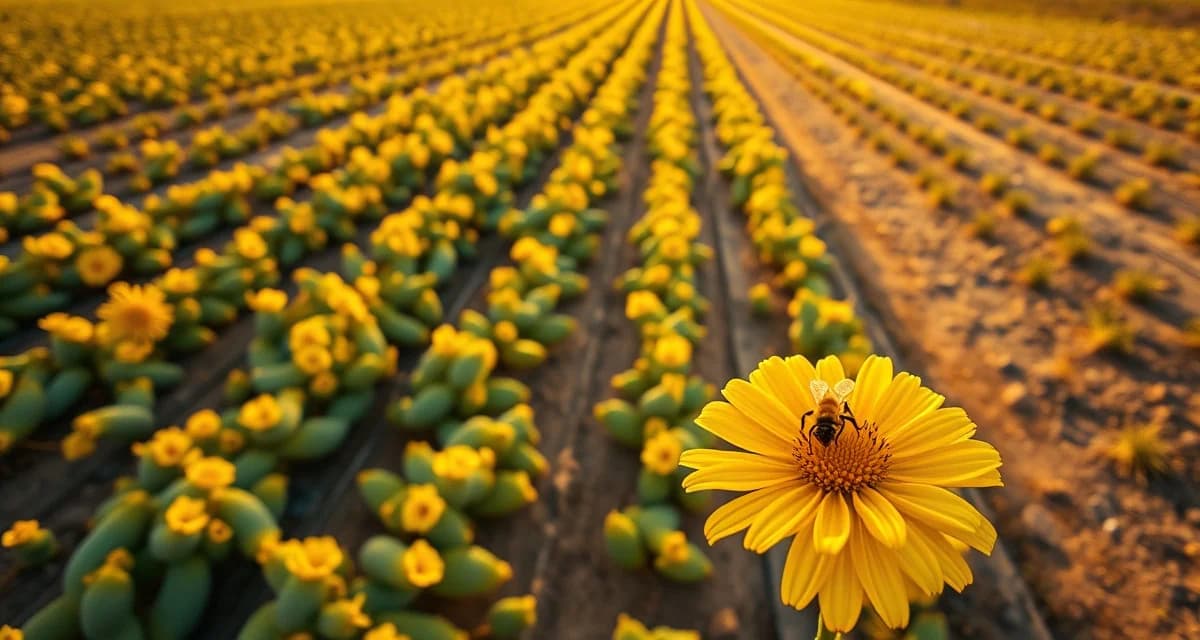
Pollination Service Management Software in Arizona
Arizona is a major source of winter melon and vegetable seed pollination contracts. The state's desert climate creates a growing calendar unlike anywhere else in the US: warm winters that push bloom timing weeks ahead of mainland schedules, followed by scorching summers that require entirely different management approaches.
Commercial beekeepers who work Arizona are dealing with a heat-driven growing system. Bloom timing isn't primarily determined by spring temperatures the way it is in the Midwest or Pacific Northwest. It's driven by heat unit accumulation in the desert Southwest growing season, and the windows are narrow.
TL;DR
- Commercial beekeeping operations face two primary management challenges: operational logistics (hive health, transport, placement) and administrative coordination (contracts, payments, documentation).
- Most disputes and revenue losses in commercial beekeeping are preventable with better documentation and clearer contract terms.
- The operations that run most profitably are those with disciplined systems for tracking hive health, contract status, and fleet logistics in one place.
- PollenOps is built specifically for the operational complexity of commercial-scale pollination services, not adapted from a hobbyist tool.
- The most important management decisions (treatment timing, contract renewal, hive allocation) require accurate current data to make well.
The Arizona Pollination Calendar
Arizona's agricultural production splits across two distinct seasons.
Winter/Spring (November-April):
- Melon crops in the Yuma and Wellton areas: December through March
- Citrus in the Salt River Valley: December through March
- Vegetable seed crops in Maricopa County: January through April
- Cotton in Central Arizona: April through June
Summer (May-September):
- Desert wildflower honey production (limited commercial application)
- Some cucurbit crops if water is available
The winter growing season is Arizona's most valuable period for commercial pollinators. Melon growers in the Yuma area are among the earliest commercial pollination clients in the continental US, with some crops needing hives in place as early as December.
Managing Desert Growing Conditions
Arizona presents unique management challenges that don't appear in other states.
Heat and water stress: During late spring and early summer, temperatures in Arizona's agricultural valleys regularly exceed 110°F. Colonies need water access within a short flight distance. Dehydrated colonies rapidly lose population, and water-stressed hives will abscond in extreme conditions.
Early bloom compression: Desert heat can compress bloom windows to as few as 7-10 days in warm years. Missing the window by even a few days reduces the pollination benefit significantly.
Timing precision: PollenOps bloom alerts for Arizona account for heat unit accumulation specific to the Sonoran Desert growing season. The alerts fire based on the same temperature-driven models growers use, which means you're calibrated to the same forecast your growers are watching.
Melon Pollination in the Yuma Area
Yuma County, Arizona, and the adjacent Imperial Valley in California together produce a majority of the US's winter vegetable crop. Winter melon pollination in this corridor is a significant commercial opportunity for operations that can get colonies into position for December-January bloom.
Melon crops require reliable pollinator density during their flowering period. Honeybees are the primary managed pollinator for commercial cucurbit production. Typical placement is 1-2 hives per acre for melons, similar to other cucurbit crops.
What makes Yuma attractive for commercial pollination operators:
- Long-established agricultural infrastructure
- Multiple consecutive crop cycles within a single winter season
- Strong grower networks through the Arizona Farm Bureau
- Proximity to California enables combined circuits
For pollination contract management software that covers both Yuma winter melons and California almonds in a February circuit, PollenOps handles both contract types within the same platform.
Cotton Pollination in Central Arizona
Arizona's Pinal and Maricopa counties produce significant upland cotton. While cotton is partially self-fertile, commercial bee placement increases yield by 10-20% in properly managed cotton operations.
Cotton pollination contracts in Arizona are negotiated for April-June placement. This timing creates an interesting opportunity for operations moving through California almonds in February and early March: Arizona cotton can serve as a late-spring contract before moving to Idaho or Pacific Northwest circuits.
The heat window for cotton is intense. Colonies placed for cotton need exceptional water access, and delivery should be timed to match pre-bloom to minimize heat exposure before the crop needs active foragers.
Vegetable Seed Crops
Arizona's Salt River Valley and surrounding areas support a significant vegetable seed production industry. Seed crops including carrot, onion, and brassica all require pollination for seed set.
Seed crop contracts often pay above melon rates on a per-hive basis because the grower's crop value is high and their dependency on bees is absolute. A failed seed crop from inadequate pollination doesn't just reduce yield; it can eliminate the entire harvest.
Vegetable seed growers in Arizona typically require strong colonies and have specific timing requirements based on their crop's flowering stage. PollenOps bloom timing alerts for Arizona seed crops help you align delivery with the grower's window.
Interstate Movement Requirements
Moving hives into Arizona requires:
- Current certificate of health from your home state's apiarist
- Arizona Department of Agriculture entry permit (obtained before entry)
- Compliance with Arizona's africanized honeybee (AHB) regulations
Arizona has significant AHB populations, particularly in the southern part of the state. European bee operations working in AHB territory need to be aware of the impact on colony genetics over time.
Frequently Asked Questions
When does melon pollination season start in Arizona?
Winter melon pollination in Arizona's Yuma and Wellton corridors typically begins in December, with peak pollination need from late December through February depending on planting dates and growing conditions. Some early-planted crops need hives in December; later plantings extend the need into March. The desert growing calendar runs 6-8 weeks ahead of Central California for the same crop types. Arizona's winter melon season is one of the earliest commercial pollination opportunities in the continental US, making it an attractive option for operations that need early-season revenue before California almonds begin.
What crops need pollination services in Arizona?
Arizona's major commercial pollination crops include winter melons (cantaloupe, honeydew) in the Yuma and Wellton areas, citrus in the Salt River Valley and Maricopa County, vegetable seed crops (carrot, onion, brassica) in the Salt River Valley, and upland cotton in Pinal and Maricopa counties. Each crop has a distinct timing window. Winter melons run December-March, citrus runs December-March, vegetable seeds run January-April, and cotton runs April-June. An operation that manages contracts across all of these windows can run nearly continuous Arizona placements from December through June.
How do I manage contracts for Arizona growers during the winter growing season?
Managing winter Arizona contracts requires precise timing and good grower communication because the bloom windows are narrow and heat-driven. PollenOps bloom alerts calibrated for the Sonoran Desert growing season notify you when your contract crops are approaching bloom based on heat unit accumulation models, not just calendar dates. Set up contracts for each grower in PollenOps with their specific crop, yard location, and delivery timing, then activate bloom alerts for each region. For multi-crop winter circuits in Arizona, the contract module shows all active and upcoming contracts in one view so you can plan sequential deliveries across the season.
What is the difference between commercial and hobby beekeeping?
Commercial beekeeping is distinguished by scale (typically 100+ hives, often 500-5,000+), revenue source (pollination contracts and bulk honey sales rather than local honey retail), and management approach (systematic protocols applied across yards rather than individual colony attention). Commercial operators manage bees as an agricultural enterprise, with the administrative, regulatory, and logistical complexity that entails. Most commercial operators derive the majority of their income from pollination services; honey production is a supplementary revenue stream.
How many hives are needed to make commercial beekeeping a full-time income?
Most beekeeping economists put the full-time commercial threshold at 500-800 hives, assuming efficient operations management and a combination of pollination and honey revenue. At 500 hives and $200/hive for almond pollination, almond season alone generates $100,000 in gross revenue before expenses. Net margins depend on operational efficiency, but well-run operations can achieve 30-50% net margins on pollination revenue. Additional crops and honey production improve per-hive economics but require additional management capacity.
What is the annual revenue potential for a 1,000-hive commercial operation?
A 1,000-hive operation running an almond season ($200/hive) plus blueberry or apple contracts ($80-100/hive) plus summer honey production ($25-40/hive after extraction costs) can generate $300,000-360,000 in annual gross revenue. Net margins after transport, crew, equipment, and hive replacement costs typically run 25-40% for well-managed operations, putting net income at $75,000-145,000 annually. The specific number depends heavily on circuit efficiency, loss rates, and contract quality.
Try These Free Tools
Sources
- USDA Agricultural Research Service
- Bee Informed Partnership
- American Beekeeping Federation (ABF)
- American Honey Producers Association
- Project Apis m.
Get Started with PollenOps
Managing a commercial beekeeping operation involves more data, more deadlines, and more moving parts than any general-purpose tool was designed to handle. PollenOps brings contracts, yard records, health documentation, and fleet logistics together in one platform built for the realities of commercial-scale beekeeping.