Wax Moth Prevention for Stored Beekeeping Equipment
Wax moth destroys unprotected empty equipment in 2 to 4 weeks in warm climates. Para-Dichlorobenzene (PDB) crystals remain the standard commercial treatment for stored equipment. These two facts frame everything about equipment storage management for commercial beekeeping operations.
No competitor integrates equipment storage status alongside fleet and yard management. That means most commercial operators are tracking stored equipment in a separate system, or not tracking it at all, creating the kind of inventory drift that costs operations 5 to 10% of equipment value annually.
TL;DR
- Commercial beekeeping operations face two primary management challenges: operational logistics (hive health, transport, placement) and administrative coordination (contracts, payments, documentation).
- Most disputes and revenue losses in commercial beekeeping are preventable with better documentation and clearer contract terms.
- The operations that run most profitably are those with disciplined systems for tracking hive health, contract status, and fleet logistics in one place.
- PollenOps is built specifically for the operational complexity of commercial-scale pollination services, not adapted from a hobbyist tool.
- The most important management decisions (treatment timing, contract renewal, hive allocation) require accurate current data to make well.
Understanding Wax Moth Damage
Two species cause commercial damage in stored beekeeping equipment: the greater wax moth (Galleria mellonella) and the lesser wax moth (Achroia grisella). The greater wax moth is the more destructive and the one most commercial operators are fighting.
Wax moth larvae tunnel through drawn comb, consuming the wax, brood remnants, and debris. They leave behind silk webbing and frass that render comb unusable. Heavily infested comb can be completely destroyed, reduced to tunneled webbing and debris in 2 to 4 weeks under warm conditions.
The damage extends beyond comb. Larvae also tunnel through wooden equipment (the plastic foundation ends of frames, wooden frame components, and even the inside surfaces of hive bodies). A box of frames with extensive wax moth damage may need complete reframing.
Why Commercial Operations Are Particularly Vulnerable
Commercial beekeeping operations accumulate large quantities of stored equipment. At 1,000 hives, you might have 500 to 1,000 honey supers stored during winter, plus spare hive bodies, frames, and other equipment not currently in use.
That stored equipment is exactly what wax moths target. Equipment in active hives is protected by the colony; bees control wax moth populations effectively in strong colonies. Stored equipment with no bee population has no protection.
Para-Dichlorobenzene (PDB): The Commercial Standard
PDB crystals (sold as Paramoth, Bee-Care, or similar trade names) are the registered fumigant for wax moth control in beekeeping equipment. Crystals are placed on top of stacked equipment. They sublimate (turn to gas) at room temperature, and the gas is heavier than air, so it settles down through the stack.
PDB Application Protocol
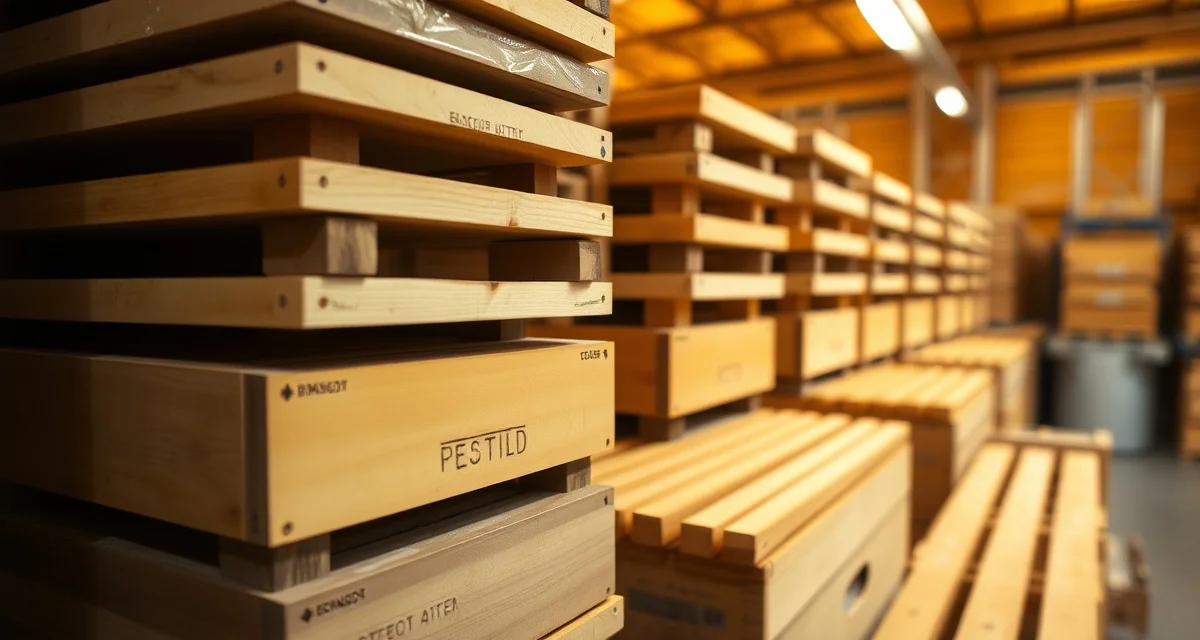
Stacking: Stack equipment (supers, hive bodies, frames) in columns 5 to 8 boxes high. Seal the bottom with a solid bottom board or newspaper. Use a solid inner cover or board on top.
Dose: Apply 1 to 1.5 ounces of PDB crystals per stack of 5 to 6 supers. Place crystals on a paper or cardboard on top of the topmost box, then cover the top.
Frequency: Reapply as crystals are consumed. Check stacks every 2 to 4 weeks and replenish when crystals are notably reduced.
Storage conditions: PDB works best in warmer temperatures and sealed conditions. In cold climates, below 50°F, wax moth activity is much reduced and PDB becomes less necessary during cold periods.
Before use: Stored equipment treated with PDB must be aired out before returning to colonies. Place treated equipment in open air for 24 to 48 hours minimum to allow PDB gas to dissipate before bees contact it. PDB is toxic to bees at exposure levels.
PDB Safety Considerations
PDB is classified as a possible carcinogen by some regulatory authorities. Use with appropriate personal protective equipment (gloves, mask in enclosed storage areas), and don't handle recently treated equipment without ventilation. Follow label directions.
PDB is specifically labeled for beekeeping equipment. Don't confuse it with the moth balls used for clothing storage, which may contain naphthalene instead of PDB and are NOT safe for beekeeping equipment.
Alternative Wax Moth Prevention Methods
PDB is the most reliable commercial solution, but other options exist and can be combined with PDB for full protection.
Freezing
Extended freezing kills all life stages of wax moth. A 24 to 48-hour freeze at 20°F or below kills eggs, larvae, pupae, and adults. This is impractical for large volumes of equipment but works well for small quantities of valuable drawn comb you want to protect without chemical treatment.
Cold Storage
Wax moth populations crash in cold temperatures. Equipment stored in unheated buildings in northern climates effectively overwinters without wax moth damage. Cold temperatures below 40°F stop wax moth reproduction and eventually kill active larvae.
For operations in the South or in climate-controlled storage, cold storage isn't practical.
Reducing Wax Residue Before Storage
Equipment that goes into storage with less wax and brood residue is less attractive to wax moths. Removing sticky cappings residue, cleaning equipment between seasons, and harvesting all accessible honey before storage all reduce the wax moth attraction.
This doesn't eliminate the need for fumigation in warm climates, but it reduces the rate of infestation.
How Do You Scale Wax Moth Prevention Across a 1,000-Hive Operation's Equipment?
At 1,000 hives, you might have 2,000 to 4,000 supers stored at any given time, plus spare hive equipment. Monitoring and treating each stack individually is a real labor investment.
Storage Location Strategy
Where you store equipment matters as much as how you treat it.
Centralized storage: Storing all equipment at a single facility simplifies monitoring and treatment. You can check all stacks on a single visit and reapply PDB systematically.
Cold climate advantage: If your primary storage facility is in a northern state with cold winters, you naturally get 3 to 5 months of cold-controlled storage that doesn't require chemical treatment. Save your PDB budget for the warm-weather storage periods.
Sealed storage buildings: A tight storage building concentrates PDB gas better than a drafty shed. The investment in sealing your storage building pays off in treatment effectiveness.
Systematic Inspection Protocol
At commercial scale, designate someone responsible for storage management. Establish a fixed inspection schedule (every 2 to 3 weeks for stacks in warm storage, monthly for cold-climate storage).
At each inspection:
- Note crystal consumption level
- Check for any moth webbing or larvae on the exterior of stacks (indication of infestation)
- Replenish crystals as needed
- Document inspection dates and crystal application
Integrating Storage with Equipment Inventory
Stored equipment should be included in your equipment inventory tracking. Knowing how many supers are in storage at which location (and when they were last inspected) is part of the overall equipment management picture.
When you need to pull stored equipment for a new placement or a split program, knowing its condition and when it was last treated prevents the unpleasant discovery of moth-damaged frames at the moment you need to deploy them.
Common Mistakes in Wax Moth Prevention
Storing drawn comb without treatment in warm climates. Two weeks without PDB in a Florida storage building can destroy comb that took years to draw. Treat before storing, not after you notice damage.
Confusing PDB with naphthalene mothballs. Naphthalene is toxic to bees and is not registered for use in beekeeping equipment. Always verify you're using para-dichlorobenzene, not naphthalene.
Inadequate airing before returning equipment to colonies. PDB gas in equipment placed on active hives harms the bee colony. Air treated equipment outside for 48 hours minimum.
Forgetting to inspect and replenish. PDB crystals are consumed over 3 to 6 weeks depending on temperature. Stacks not inspected and replenished lose protection as crystals deplete.
Mixing new and infested equipment in storage. If you discover moth damage in one part of your storage, isolate and treat the damaged equipment before it spreads to adjacent stacks.
FAQ
How do you protect stored beekeeping equipment from wax moth?
The commercial standard is Para-Dichlorobenzene (PDB) crystals, applied at 1 to 1.5 ounces per stack of 5 to 6 boxes. Stack equipment in sealed columns, apply crystals on top, and check every 2 to 3 weeks in warm climates to replenish as crystals are consumed. Cold climate storage naturally reduces wax moth pressure below 40°F. Equipment stored in cold northern facilities during winter may need minimal chemical treatment; the same equipment stored in warm southern facilities needs active treatment year-round.
What treatments prevent wax moth damage in empty supers?
PDB crystals are the primary registered treatment. Extended freezing (24 to 48 hours at 20°F) kills all life stages and works for small quantities of valuable comb. Cold storage below 40°F effectively prevents infestation without chemical treatment. Reducing wax residue before storage makes equipment less attractive to moths. In warm climates, PDB fumigation is effectively required: no other practical treatment provides comparable protection at commercial scale.
How do you scale wax moth prevention across a 1,000-hive operation's equipment?
Centralize storage where possible to simplify monitoring and treatment. Assign specific responsibility for storage management to one employee. Establish a fixed inspection schedule (every 2 to 3 weeks in warm weather) with documented inspection records. Take advantage of cold climate storage for northern facilities. Track stored equipment as part of your overall equipment inventory so you know what's in storage, where it is, and when it was last inspected. Discovering moth damage when you need to pull equipment for deployment is both a financial problem and a logistics disruption. Systematic prevention is far cheaper than reactive replacement.
What is the difference between commercial and hobby beekeeping?
Commercial beekeeping is distinguished by scale (typically 100+ hives, often 500-5,000+), revenue source (pollination contracts and bulk honey sales rather than local honey retail), and management approach (systematic protocols applied across yards rather than individual colony attention). Commercial operators manage bees as an agricultural enterprise, with the administrative, regulatory, and logistical complexity that entails. Most commercial operators derive the majority of their income from pollination services; honey production is a supplementary revenue stream.
How many hives are needed to make commercial beekeeping a full-time income?
Most beekeeping economists put the full-time commercial threshold at 500-800 hives, assuming efficient operations management and a combination of pollination and honey revenue. At 500 hives and $200/hive for almond pollination, almond season alone generates $100,000 in gross revenue before expenses. Net margins depend on operational efficiency, but well-run operations can achieve 30-50% net margins on pollination revenue. Additional crops and honey production improve per-hive economics but require additional management capacity.
What is the annual revenue potential for a 1,000-hive commercial operation?
A 1,000-hive operation running an almond season ($200/hive) plus blueberry or apple contracts ($80-100/hive) plus summer honey production ($25-40/hive after extraction costs) can generate $300,000-360,000 in annual gross revenue. Net margins after transport, crew, equipment, and hive replacement costs typically run 25-40% for well-managed operations, putting net income at $75,000-145,000 annually. The specific number depends heavily on circuit efficiency, loss rates, and contract quality.
Try These Free Tools
Sources
- USDA Agricultural Research Service
- Bee Informed Partnership
- American Beekeeping Federation (ABF)
- American Honey Producers Association
- Project Apis m.
Get Started with PollenOps
Managing a commercial beekeeping operation involves more data, more deadlines, and more moving parts than any general-purpose tool was designed to handle. PollenOps brings contracts, yard records, health documentation, and fleet logistics together in one platform built for the realities of commercial-scale beekeeping.