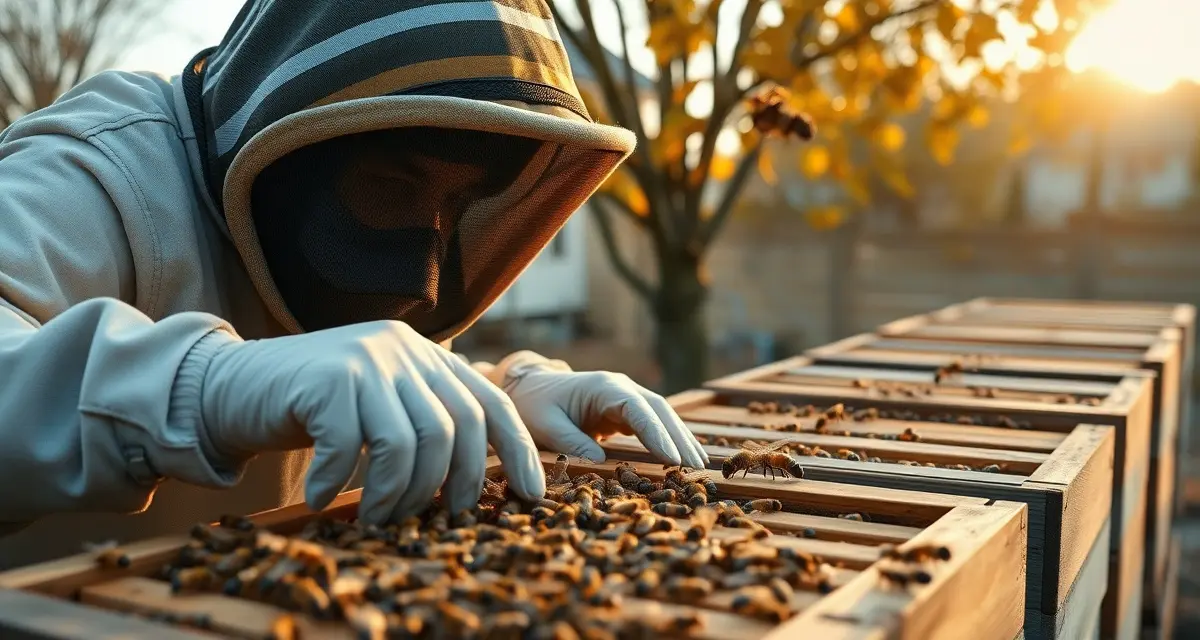
Winter Preparation for Migratory Beekeeping Operations
For a migratory beekeeper, winter isn't downtime. It's the most operationally intense part of the year. What you do between October and January determines whether your colonies hit the strength requirements for February almond contracts and whether your business meets its commitments.
California winter yards allow colonies to build rapidly for February almond contracts, which is why most large migratory operations push west before the cold hits the Midwest and Plains states. Understanding winter preparation for migratory beekeeping means understanding that geography is a management tool.
This guide covers how experienced commercial operators prepare and relocate 1,000+ hives for winter and set up colonies for spring buildup.
TL;DR
- Most states require a Certificate of Health or Certificate of Veterinary Inspection issued by the origin state before out-of-state colonies can enter.
- A California-to-Florida-to-Pacific-Northwest-to-Northern-Plains circuit is the most common full-year migratory route for large commercial operations.
- Interstate permit coordination requires lead time; certificates typically need to be obtained 7-30 days before entry depending on the destination state.
- Moving 1,000 hives requires 2-3 truck loads per move, with fuel, driver wages, and DOT compliance as the primary variable costs.
- Operations that plan their annual circuit 6-8 months in advance can sequence pollination contracts and honey production to maximize annual revenue per hive.
Step 1: Assess Colony Strength Before the Move
Before anything else, you need to know what you're working with. Don't move weak colonies hoping they'll improve. They won't. Assess every colony in late September and early October while there's still time to intervene.
What to Measure
For each colony, document:
- Frame coverage of bees (frames of bees, not frames of brood)
- Brood pattern quality and quantity
- Queen status (confirmed laying)
- Varroa mite load via alcohol wash or sticky board
- Food stores (honey and pollen)
Colonies heading into a California winter yard should have 6+ frames of bees, a confirmed laying queen, at minimum 8 frames of honey equivalent in food stores, and a mite load under 2% if you're trying to avoid treatments during buildup.
Flag weak colonies for treatment, requeen, or combination before the move. Combining weak colonies is far more cost-effective than carrying them through winter and watching them dwindle.
Step 2: Complete Varroa Treatments Before Moving
This is non-negotiable. varroa management before the winter move protects your investment through what is often the longest period without intervention of the entire year.
Timing Your Treatment
The goal is to knock down mite loads before winter bees are raised. Winter bees (the long-lived bees that carry the colony through to spring) need to be raised in a low-mite environment to be healthy. If mites are high when winter bees are being reared, those bees emerge compromised and your colony won't build properly in spring.
Treat in late summer or early fall, ideally when broodless or during a natural brood break. Oxalic acid vaporization is highly effective during broodless periods. If you have brood present, formic acid or Apivar (amitraz strips) are better options for reaching mites in capped cells.
Record every treatment on every colony. If you're using fleet logistics management software, that data should tie directly to colony health records.
Step 3: Feed Colonies to Target Weight
Colonies moving to warm winter yards need adequate stores. The trap operators fall into is moving underfed colonies to California, where forage is limited in December and January, and then finding themselves in a supplemental feeding emergency at exactly the wrong time.
Feeding Protocols
Feed 2:1 sugar syrup (by weight) in the fall before temperatures drop below 50°F. At colder temperatures, bees won't take syrup effectively. Switch to dry sugar, fondant, or pollen patties once temps drop.
Target winter cluster weight varies by region and your target spring colony size. A general commercial target is a cluster capable of expanding rapidly: 8 to 10 frames of bees with 40+ pounds of honey equivalent. Weigh a representative sample of colonies before the move.
Pollen supplement patties placed in October and November accelerate spring buildup, especially in California yards where natural pollen may be available in January but colony population needs a head start.
Step 4: Select and Secure Winter Yard Locations
Where you winter your hives is as important as what condition they're in when you get there.
California, Florida, and Texas Yards
The three major winter yard regions each have different advantages:
California is the dominant choice for operators targeting almond pollination. Colonies wintered in California's Central Valley or surrounding foothills are positioned for short-haul moves to almond orchards in February. Access to early pollen sources (wild mustard, eucalyptus, citrus) accelerates spring buildup. Competition for yard locations is intense. Good yard relationships often take years to develop.
Florida works well for operators targeting southeastern spring markets: citrus pollination, blueberry in Florida, or spring splits for package production. The climate is mild and forage is available, but disease pressure is higher in Florida's warm, humid conditions.
Texas is overlooked by many operators but offers solid winter yard options in south Texas, where winter is mild and early spring colony buildup is strong.
Lock down your winter yard agreements before October. Good yard operators get calls from competing beekeepers every fall.
Step 5: Coordinate the Move
Moving 1,000 hives is a logistics operation. It takes multiple trucks, multiple loading nights, and precise coordination across drivers, yard operators, and potentially custom haulers.
Loading Protocol
Bees should be moved at night when all foragers are in the hive. Staple or strap hives securely. A pallet of hives shifting on a truck at highway speeds is a serious accident risk. Use screened bottom boards for ventilation during transport.
Plan your route for each truck. Multiple loads may need to depart over several days depending on your truck capacity. Most 1,000-hive operations run two to four trucks making multiple trips over a two-week window.
Coordinate with landowners at both the departure yards and the destination yards. They need to know your arrival window and access needs.
Step 6: Monitor and Manage Through Winter
A colony in a California winter yard isn't maintenance-free. Plan for at least two to three yard visits between November and January.
At each visit:
- Check food stores and feed as needed
- Look for queenless or dead colonies
- Assess mite loads in suspect colonies
- Document any losses for insurance purposes
Where do migratory beekeepers winter their hives? Primarily in California (Central Valley and surrounding regions), Florida (central and south Florida), and south Texas. Roughly 80% of commercial migratory operators targeting almond pollination winter in California.
Step 7: Plan Spring Buildup Timeline
Winter prep and spring buildup are one continuous management sequence. Your job in the winter yard is to get colonies expanding before they're needed in almonds.
Almond Season Timeline
Almond bloom in the San Joaquin Valley typically begins mid-February and peaks around February 20th to March 5th, depending on the year and location. Hive delivery to orchards typically targets 2 to 7 days before bloom opens.
Work backward: if you need 1,000 colonies at 8+ frames of bees on February 10th, when do you start feeding pollen stimulants? When do you requeen weak colonies? When do you inspect for winter losses and combine or split?
Most operators on a California winter yard timeline start pollen supplement feeding in late December or early January, with the goal of stimulating the queen to increase laying rate before natural pollen becomes available.
Common Mistakes in Winter Preparation
Moving colonies that aren't ready. Underweight, undermite-treated, or queenless colonies don't recover in a winter yard. They die.
Neglecting yard coordination until too late. Good winter yards fill up. Don't find yourself scrambling for yard locations in November.
Failing to document losses. Winter loss documentation matters for insurance claims and for understanding your operation's performance patterns. If you don't record it, you can't learn from it.
Underfeeding pollen supplements. Natural pollen availability in California winter yards varies year to year. Operations that rely entirely on natural forage for spring buildup sometimes come up short in dry years.
FAQ
Where do migratory beekeepers winter their hives?
The majority of commercial migratory beekeepers targeting California almond pollination winter their hives in California's Central Valley, San Joaquin Valley foothills, or surrounding agricultural regions. Some operators use Florida or south Texas for winter yards, particularly those focused on southeastern spring pollination circuits. The key criteria are mild winters with some natural forage, low disease pressure, and proximity to spring contract locations.
How do you prepare 1000 hives for winter movement?
The process starts in early fall with colony assessments. You assess every colony's strength, mite load, and food stores, complete varroa treatments before winter bees are raised, feed colonies to target weight, combine or requeen underperformers, and secure yard locations before loading nights begin. The physical move happens over multiple nights across several weeks, coordinating multiple trucks and drivers. Total active management time for a 1,000-hive winter prep runs four to eight weeks from first assessments to last load arriving at the winter yard.
What is the ideal winter yard location for almond pollination preparation?
For California almond pollination, the best winter yard locations combine mild temperatures that prevent cluster contraction, early pollen sources that stimulate spring buildup, and proximity to almond-growing counties that minimizes haul distance in February. Many operators target the Sierra Nevada foothills east of Fresno and Bakersfield, or agricultural areas south of Sacramento. Access to reliable natural forage (even just wild mustard and eucalyptus) makes a real difference in how quickly colonies expand after winter.
What is the most common full-year circuit for US migratory beekeepers?
The classic commercial circuit runs: winter buildup in Florida or southern Texas, California almonds in February, Pacific Northwest tree fruit (cherry, apple, pear) in April-May, Pacific Northwest or northern Midwest berry and clover crops in June-July, summer honey production in North Dakota, Montana, or Minnesota in July-August, and fall honey extraction and requeening before the cycle restarts. The exact circuit depends on contracted commitments, hive capacity, and the operator's regional relationships.
How do you coordinate state entry permits for a multi-state circuit?
State entry permits and health certificates require lead time: most states want certificates issued 7-30 days before entry. For a circuit that crosses 5-6 states, this means overlapping certificate applications where a certificate for the next state must be initiated before the current state's placement ends. Some operators use a permit tracking calendar that accounts for the lead time required for each destination state. PollenOps includes a permit tracking feature that alerts operators when certificates need to be initiated based on planned move dates.
What are the most common mistakes new migratory operators make?
The most common errors are underestimating transport costs, failing to secure contracts before building hive capacity, not accounting for state entry permit lead times, and neglecting varroa management during the compressed pre-almond preparation period. New operators often also underestimate the administrative load of managing 10-20 contracts across multiple states -- tracking payment status, compliance documentation, and crew scheduling simultaneously requires systems, not just a spreadsheet.
Try These Free Tools
Sources
- USDA Agricultural Research Service
- Bee Informed Partnership
- American Beekeeping Federation (ABF)
- American Honey Producers Association
- USDA Animal and Plant Health Inspection Service (APHIS)
Get Started with PollenOps
Migratory operations face the most complex coordination challenges in commercial beekeeping: permits across multiple states, staggered delivery windows, and fleet logistics that have to work precisely across hundreds of miles. PollenOps was built to handle multi-state, multi-grower, multi-crop operations at this level of complexity.