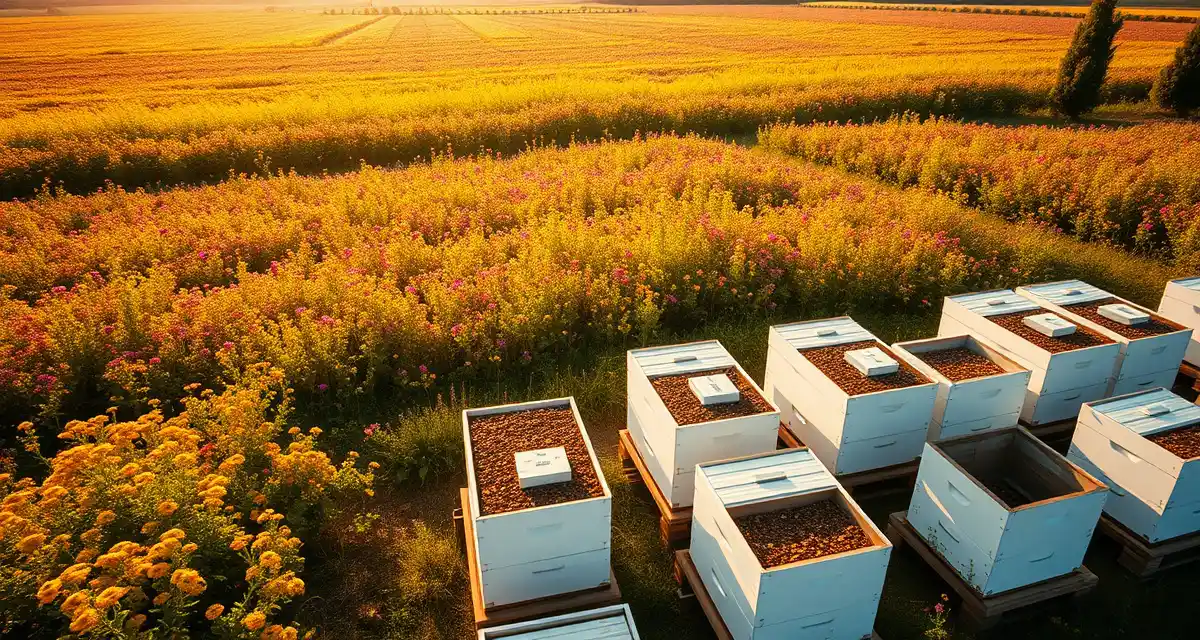
Bloom Alert System by Crop for Pollination Beekeepers
Missing a bloom window for even one major crop can cost a beekeeper $20,000 or more per season. For an operation working five or six different crops across multiple regions, the coordination challenge is real: you need timely, crop-specific alerts, not a generic "spring is coming" notification.
PollenOps monitors over 20 major pollination crops by region and sends you alerts days before peak receptivity, tied directly to the specific contracts and yards where timing matters.
TL;DR
- Commercial beekeeping operations face two primary management challenges: operational logistics (hive health, transport, placement) and administrative coordination (contracts, payments, documentation).
- Most disputes and revenue losses in commercial beekeeping are preventable with better documentation and clearer contract terms.
- The operations that run most profitably are those with disciplined systems for tracking hive health, contract status, and fleet logistics in one place.
- PollenOps is built specifically for the operational complexity of commercial-scale pollination services, not adapted from a hobbyist tool.
- The most important management decisions (treatment timing, contract renewal, hive allocation) require accurate current data to make well.
Why Crop-Specific Alerts Matter
Each crop has a different bloom timing model, a different window width, and different consequences for missing it. A single "bloom timing" alert system that treats all crops the same isn't useful for an operation working almonds in February, cherries in April, apples in May, and blueberries through June.
Here's what makes each major crop different:
Almonds
The largest single pollination event in US agriculture. Almond bloom timing is driven by accumulated chilling hours and growing degree days. The window at any given orchard is 3-5 days of peak receptivity. Bloom varies by 2-3 weeks across the California Central Valley from south to north. Alerts fire 5-7 days before projected 10% bloom.
Cherries
Sweet cherry bloom windows are typically 5-10 days, among the tightest in commercial pollination. Bloom timing is elevation-dependent in ways that create cascading opportunities. Cherry bloom tracking uses elevation-adjusted models to give you separate estimates for different orchard elevation zones within the same growing region.
Apples
Apple bloom unfolds across distinct stages from green tip through petal fall, and different varieties bloom at different times. The standard placement target is pink to 5% bloom. Alerts are calibrated by variety and region, from early Washington Gala to late Michigan Honeycrisp.
Blueberries
Blueberry pollination scheduling requires separate tracking for highbush and wild (lowbush) varieties, which don't bloom at the same time even within the same state. Michigan highbush main season runs mid-to-late May. Maine wild blueberry bloom may not start until June or later in cooler years.
Avocados
Avocado pollination timing is complicated by the A/B flower synchrony system, where Type A and Type B variety blocks need to be monitored separately and the cross-pollination opportunity depends on both types being in bloom simultaneously. Extended bloom windows (4-8 weeks) mean alerts need to identify the peak cross-pollination period rather than just "any bloom."
Cranberries
Cranberry bloom management alerts account for both bloom timing and bog access conditions, since physically getting hives onto cranberry bog levees requires specific site conditions. Separate alert models exist for Massachusetts, Wisconsin, New Jersey, and Oregon growing regions.
Citrus
Florida early-season citrus bloom typically fires in March-April. Alert timing accounts for Florida's subtropical conditions and the earlier-than-mainland harvest calendar that makes Florida a primary source of early-season hives for the Southeast.
Sunflowers
North Dakota and Kansas sunflower seed pollination runs July through August, offering income after spring pollination season. Separate alerts for oilseed sunflower and confection sunflower varieties cover different timing windows.
Alfalfa Seed
Idaho and California alfalfa seed crops bloom July-August. hive placement timing for alfalfa seed is critical because alfalfa flowers require tripping, which honeybees do somewhat reluctantly. Alert timing is calibrated to get hives in place before the first flowers open.
Clover Seed
Pacific Northwest clover seed contracts, primarily red and crimson clover, bloom June-July. Alerts are calibrated for Oregon and Washington production regions.
Pears
Northwest pear orchards in Oregon and Washington bloom close to cherry timing but typically a few days earlier, requiring careful schedule management for operations working both crops. Alerts cover Bosc, Bartlett, and Anjou variety timing separately.
Canola/Rapeseed
Canola seed production in the Northern Plains and Pacific Northwest creates pollination opportunities in early summer. Bloom timing varies significantly by variety and spring temperature accumulation.
Cucurbits (Squash, Melon, Cucumber)
Cucurbit pollination contracts run through summer in multiple regions. Bloom timing for these crops is determined by planting date rather than chilling hours, so alerts are calibrated to planting records and growing degree day accumulation.
Macadamia
Limited US production in Hawaii, where hive movement is heavily restricted. Not available for alert monitoring under standard PollenOps configuration.
Single Dashboard for All Active Crops
The seasonal pollination contract calendar shows all your active bloom alerts across all contracted crops and regions in a single view. You're not checking a separate system for each crop. When you open your dashboard in the morning, you see what's coming, what's active, and what needs action across your entire operation.
For an operation working 6 crops across 3 states, this single view replaces a collection of phone calls, grower texts, and regional farm newsletter subscriptions.
How Does PollenOps Know When Bloom Is Starting in My Area?
PollenOps uses a combination of:
Weather station network data: Temperature, precipitation, and humidity from local stations near your registered yard locations. This provides the raw data for chilling hour and growing degree day calculations.
Accumulated chilling hours: Tracked from the start of winter dormancy for crops that require chilling (most tree fruits). Sufficient chilling hours are a prerequisite for bloom.
Growing degree day accumulation: Tracked from the end of dormancy through the pre-bloom period. When accumulated growing degree days reach the crop-specific bloom threshold, bloom is projected to begin within the alert window.
Regional calibration: Each crop's model is calibrated for the specific growing regions where it's monitored. Almond models are calibrated for California's Central Valley microclimate zones. Cherry models are calibrated for elevation and valley configuration in the Pacific Northwest.
Can I Get Bloom Alerts for Multiple Crops Simultaneously?
Yes. There's no limit to the number of active crop alert subscriptions in your account. If you have almond contracts finishing up while cherry contracts are starting and blueberry contracts are on the horizon, all three sets of alerts are active simultaneously.
The alerts are tied to your specific yard locations and contract records, so each alert you receive is relevant to something you're actually managing, not a generic regional notification.
Setting Custom Alert Thresholds
Default alerts fire at 5-7 days before projected 10% bloom (or equivalent threshold for non-tree-fruit crops). You can customize this for any yard or contract where your logistics require more or less lead time.
If your blueberry operation requires 10 days of lead time because of the distance between your winter yard and the berry fields, you can set a 10-day alert threshold for those specific contracts. If you have a cherry contract next to your current yard and you only need 3 days, you can set that threshold instead.
Frequently Asked Questions
What crops does PollenOps send bloom timing alerts for?
PollenOps monitors over 20 major pollination crops including almonds, cherries, apples, blueberries (highbush and wild), avocados, cranberries, citrus, sunflowers, alfalfa seed, clover seed, pears, canola, and cucurbits. Each crop is monitored by region with models calibrated for local growing conditions.
Can I get bloom alerts for multiple crops simultaneously?
Yes. Your PollenOps account tracks bloom alerts for every crop and region where you have active yards or contracts. All active alerts appear in your contract calendar dashboard simultaneously so you can see what's approaching across your full operation in one view.
How does PollenOps know when bloom is starting in my area?
PollenOps uses local weather station data to track accumulated chilling hours and growing degree days for your registered yard locations. When accumulated inputs reach the crop-specific bloom threshold, the system projects bloom timing and sends your alert 5-7 days before the projected window. Alert timing adjusts automatically when weather data indicates accelerated or delayed bloom conditions.
What is the difference between commercial and hobby beekeeping?
Commercial beekeeping is distinguished by scale (typically 100+ hives, often 500-5,000+), revenue source (pollination contracts and bulk honey sales rather than local honey retail), and management approach (systematic protocols applied across yards rather than individual colony attention). Commercial operators manage bees as an agricultural enterprise, with the administrative, regulatory, and logistical complexity that entails. Most commercial operators derive the majority of their income from pollination services; honey production is a supplementary revenue stream.
How many hives are needed to make commercial beekeeping a full-time income?
Most beekeeping economists put the full-time commercial threshold at 500-800 hives, assuming efficient operations management and a combination of pollination and honey revenue. At 500 hives and $200/hive for almond pollination, almond season alone generates $100,000 in gross revenue before expenses. Net margins depend on operational efficiency, but well-run operations can achieve 30-50% net margins on pollination revenue. Additional crops and honey production improve per-hive economics but require additional management capacity.
What is the annual revenue potential for a 1,000-hive commercial operation?
A 1,000-hive operation running an almond season ($200/hive) plus blueberry or apple contracts ($80-100/hive) plus summer honey production ($25-40/hive after extraction costs) can generate $300,000-360,000 in annual gross revenue. Net margins after transport, crew, equipment, and hive replacement costs typically run 25-40% for well-managed operations, putting net income at $75,000-145,000 annually. The specific number depends heavily on circuit efficiency, loss rates, and contract quality.
Try These Free Tools
Sources
- USDA Agricultural Research Service
- Bee Informed Partnership
- American Beekeeping Federation (ABF)
- American Honey Producers Association
- Project Apis m.
Get Started with PollenOps
Managing a commercial beekeeping operation involves more data, more deadlines, and more moving parts than any general-purpose tool was designed to handle. PollenOps brings contracts, yard records, health documentation, and fleet logistics together in one platform built for the realities of commercial-scale beekeeping.