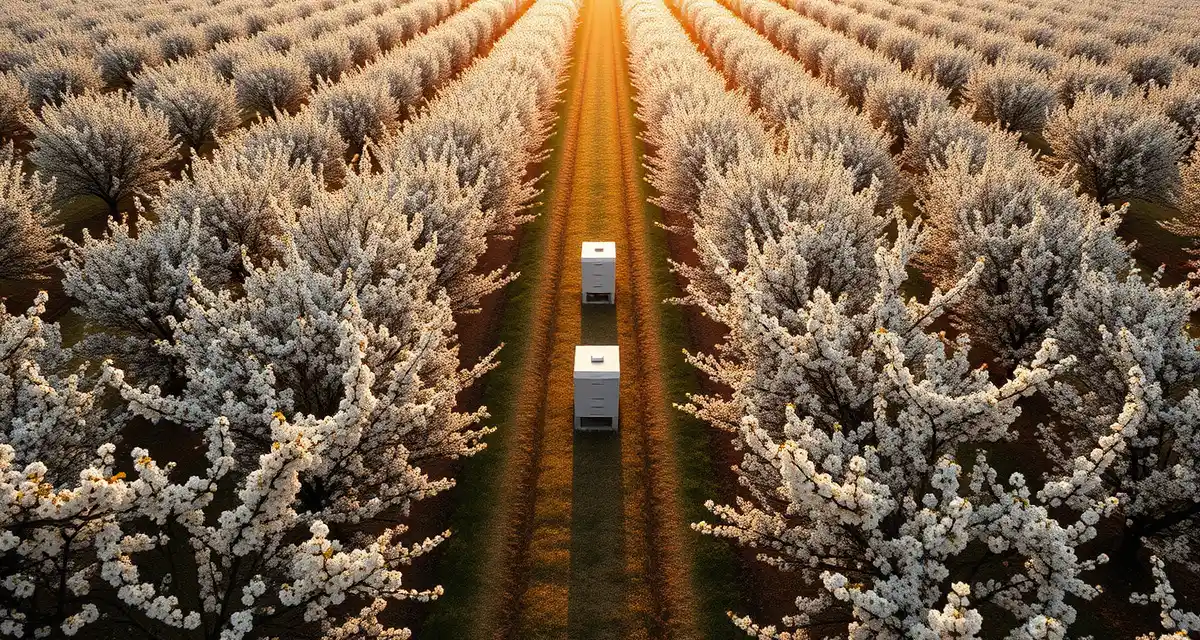
Cherry Pollination in California: Central Valley Opportunities
California cherries bloom late March to April, bridging almond exit and Washington cherry season in a way that creates a natural sequencing opportunity for Pacific Coast circuit operators. San Joaquin Valley cherries, concentrated around Lodi, Stockton, and the Sacramento-San Joaquin Delta region, represent a meaningful commercial pollination market that many almond operators overlook in their rush to reposition for Pacific Northwest tree fruit.
San Joaquin Valley cherries can be combined with Washington cherry contracts in a single circuit, allowing you to stay in cherry pollination from late March through late June by moving north as California season ends and Washington season begins. The revenue continuity is significant, and cherry pollination rates of $150 to $200 per hive represent strong income between the almond peak and the summer honey or berry season.
TL;DR
- California's primary commercial beekeeping role is shaped by its crop mix, climate, and position on the national pollination circuit.
- Pollination rates in California range $65-220/hive depending on crop depending on crop and colony strength requirements.
- Out-of-state operators entering California for pollination contracts must register with the state agricultural authority and obtain a Certificate of Health.
- California functions as either a primary pollination destination, a seasonal honey production location, or a transitional stop depending on the circuit.
- Tracking permit status, registration documents, and yard records for California operations requires organized record-keeping before the season opens.
California Cherry Geography
The primary California cherry production region is the Sacramento-San Joaquin Delta area, including San Joaquin, Contra Costa, and Sacramento counties. Lodi is the most recognized production center, known for Bing, Rainier, and Brooks varieties. Additional cherry production occurs in the Brentwood area of Contra Costa County and in some Fresno County foothill locations, though the Delta region dominates.
The Delta's unique climate, moderated by marine air from San Francisco Bay, creates a microclimate that suits cherry production. bloom timing in this region runs from late March for early varieties like Brooks to mid-April for late Bing blocks. The bloom window is narrow, typically 10 to 14 days per variety, so precise placement timing matters.
If you're also running Washington cherry contracts, the California-to-Washington transition works well logistically. California Bing finishes in late April to early May just as Yakima Valley and Wenatchee Valley cherry bloom is approaching its peak. The route north is direct.
Getting California Cherry Contracts
The California Cherry Advisory Board and the San Joaquin County Farm Bureau are good first contacts for commercial grower relationships. Many California cherry growers are family operations with established beekeeper relationships, so the market is somewhat relationship-dependent. New contracts typically come through referrals from other growers or from demonstrating reliable delivery on a smaller contract before scaling up.
Direct outreach to cherry orchards in the Lodi and Brentwood areas is feasible if you're already in the Central Valley for almonds. Timing your outreach for November or December gives growers time to evaluate new suppliers before they're locked into their existing arrangements. Many almond-focused growers who also grow cherries appreciate a beekeeper who can handle both crops without needing two separate service providers.
For operators running California almond pollination, the pitch for adding cherry contracts is straightforward: you're already in the Central Valley, your hives are at peak strength coming off almond season, and your documentation system through PollenOps cherry contract management handles the transition without additional administrative burden.
Colony Strength Requirements
California cherry growers typically require 8 frames of bees at delivery with a strong brood pattern and an active laying queen. Cherry is more selective than peach or pear about colony quality because the bloom window is so brief that weak colonies foraging less effectively can meaningfully affect fruit set in the short time available.
Coming off almond season in late February and early March, your colonies should be at or near peak population by the time California cherry bloom starts in late March. The timing works well physiologically: colonies that built through almond season have strong worker populations and are typically in good condition for cherry placement.
The challenge is maintaining colony condition through the two to three weeks between almond exit and cherry bloom. Some operators run their hives on forage or feed them in a holding yard near the Central Valley to preserve condition. Others position them on early spring wildflower forage in the Sierra foothills for the interim period.
Rates and Contract Terms
California cherry rates run $150 to $200 per hive for commercial placements in the Lodi and Delta regions. Rates reflect both the crop's value and the tight bloom window that makes reliable delivery critical. Sign contracts in November or December for late March placements, and include a delivery timing clause that specifies your placement will occur based on bloom stage rather than a fixed calendar date.
Payment terms should include a deposit at signing with the balance due within 30 days of bloom completion. A weather clause protecting both parties in the event of frost during bloom is worth including, since late frost events in the Delta can affect both your colonies' foraging and the grower's crop outcome in ways that aren't your fault.
Frequently Asked Questions
How do you get cherry pollination contracts in California's Central Valley?
Contact the California Cherry Advisory Board and San Joaquin County Farm Bureau for grower connections. Many California cherry growers have established beekeeper relationships, so new contracts often come through referrals. If you're already running almond contracts in the Central Valley, approach your existing grower contacts about cherry placements before almond season ends. Direct outreach to orchards in the Lodi and Brentwood areas in November or December gives growers time to consider new arrangements before committing to their existing suppliers for the upcoming season.
When does cherry bloom in the San Joaquin Valley?
California cherry bloom in the San Joaquin Valley runs late March through mid-April, with variation by variety and year. Early varieties like Brooks typically open in late March, while Bing can run into mid-April depending on the season. The bloom window per variety is narrow, usually 10 to 14 days, so precise placement timing is important. The Delta region's microclimate, moderated by San Francisco Bay marine air, creates a consistent bloom timing that you can track from year to year once you've worked the region.
What colony strength do California cherry growers require?
Most California cherry growers require 8 frames of bees at delivery with a strong brood pattern and an active laying queen. Cherry's brief bloom window makes colony quality critical; weak colonies that forage less effectively during the narrow opportunity can meaningfully reduce fruit set. Coming off almond season, your colonies should be near peak population by late March, but run a pre-move inspection to document condition at delivery rather than assuming strength from your almond placement records. Keep your hive count buffer in mind and don't over-commit your weakest colonies to cherry placements.
What is the process for registering an out-of-state apiary in a new state?
Most states require out-of-state operators to register with the state department of agriculture apiary program before placing colonies. The process typically involves submitting a registration application (online or paper), paying a fee (usually $10-50 per location), and providing contact information for the operation. Some states also require the registration to be renewed annually. Contact the destination state's department of agriculture apiary program at least 60 days before your planned arrival to confirm current requirements.
What documentation do state apiary inspectors typically review?
State apiary inspectors review health certificates for out-of-state colonies, registration documentation, and colony inspection records during apiary visits. Inspectors check for signs of American foulbrood, European foulbrood, and other regulated pests and diseases. Operations with organized digital records that include treatment history and mite counts typically have faster, less complicated inspections than operations without documentation. Some state inspectors also verify that varroa mite loads are below state entry thresholds.
What triggers a state apiary inspection?
State apiary inspections can be triggered by routine inspection schedules (most states inspect a percentage of registered apiaries annually), neighbor or landowner complaints, disease reports from nearby operations, or inspection requirements tied to state entry permits. California, in particular, has the right to inspect incoming loads at port of entry for commercial beekeeping operations. Maintaining current registration and organized records makes required inspections faster and less disruptive.
Try These Free Tools
Sources
- USDA Agricultural Research Service
- Bee Informed Partnership
- American Beekeeping Federation (ABF)
- California Department of Agriculture
- Project Apis m.
Get Started with PollenOps
Commercial operations working in California face the same registration, permit, and documentation requirements as any state on the national circuit -- plus California's specific regulatory requirements. PollenOps tracks your California yard records, contract assignments, and permit documentation alongside your full operation, so entering a new state doesn't add a separate administrative burden. See how the platform fits operations working across multiple states.