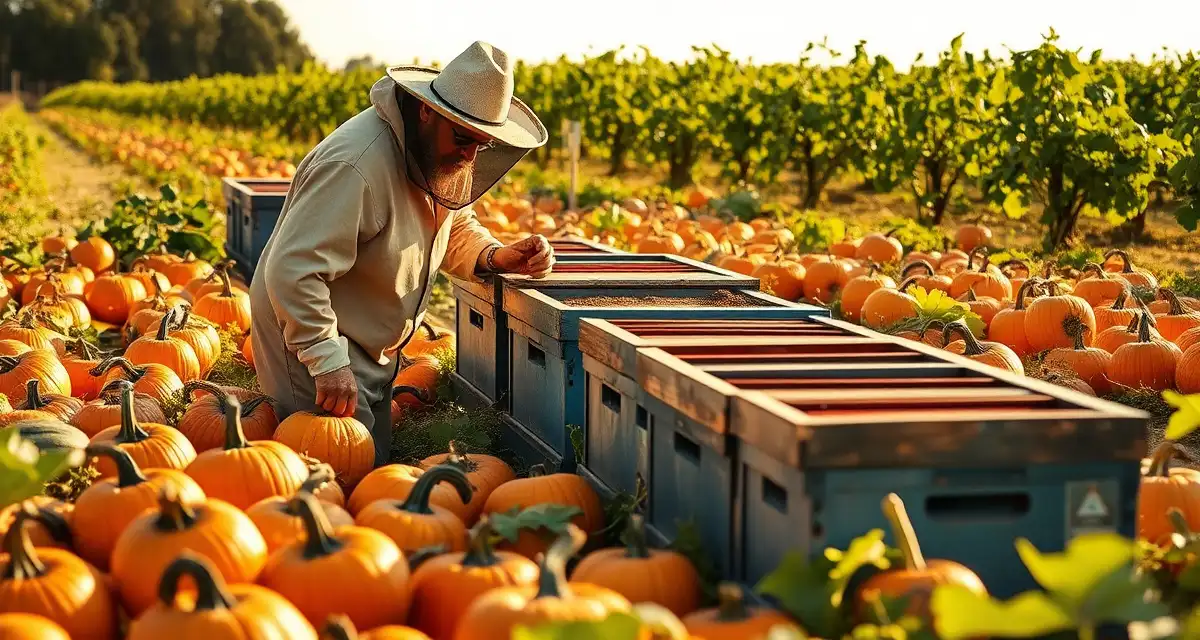
Pumpkin and Squash Pollination in California: Fall Income Opportunities
California's pumpkin and squash acreage provides August through October income for operators after summer honey extraction and before almond season preparation begins in earnest. Fall vegetable pollination bridges the summer honey season to California almond preparation, filling a period that many operators leave unproductive. California's pumpkin and squash production is distributed across multiple counties, with commercial acreage in the Sacramento Valley, San Joaquin Valley, and Central Coast regions.
The timing works well in the California annual circuit. If you're running summer honey yards in the Sierra Nevada foothills or northern California through July, transitioning hives to fall pumpkin and squash contracts in August and September captures income during what might otherwise be a holding period. Your colonies should be in good condition coming off summer flows, and fall pumpkin placement keeps them in nutritionally rich pollen-producing environments before they start their pre-almond winter positioning.
TL;DR
- California's primary commercial beekeeping role is shaped by its crop mix, climate, and position on the national pollination circuit.
- Pollination rates in California range $65-220/hive depending on crop depending on crop and colony strength requirements.
- Out-of-state operators entering California for pollination contracts must register with the state agricultural authority and obtain a Certificate of Health.
- California functions as either a primary pollination destination, a seasonal honey production location, or a transitional stop depending on the circuit.
- Tracking permit status, registration documents, and yard records for California operations requires organized record-keeping before the season opens.
Pumpkin and Squash Pollination Biology
Pumpkin, winter squash (butternut, acorn, Hubbard, etc.), and summer squash all require bee pollination for fruit set. Like cucumbers and melons, squash species produce separate male and female flowers on the same plant. Bees must visit male flowers to collect pollen and carry it to female flowers for pollination. Without adequate bee foraging, squash plants produce either no fruit or small, underdeveloped fruits that don't reach marketable size.
Pumpkin in particular has a brief female flower receptivity window of only one day per flower, making daily bee foraging activity critical during the bloom period. Fields with strong colony densities set fruit consistently through the bloom period; fields with inadequate coverage see spotty set with empty stems where bee visits were insufficient.
Hive density for commercial pumpkin and squash is typically 1 hive per acre, with some operations requesting 1.5 hives per acre for intensive production or high-value specialty squash.
California Fall Vegetable Geography
Sacramento Valley pumpkin production is concentrated in Yolo, Sacramento, and San Joaquin counties, with some acreage extending into Stanislaus and Merced. The Sacramento area is also known for specialty squash production tied to the farm-to-table restaurant market in the Bay Area.
The San Joaquin Valley has commercial pumpkin and squash acreage in Fresno and Kings counties, often rotation-planted in fields that grew melons or other vegetables earlier in the season. Central Coast production in Monterey and Santa Cruz counties includes specialty winter squash for high-value fresh markets.
Getting Fall Vegetable Contracts
Fall vegetable pollination contracts are typically arranged in May through July for August placements. Many California vegetable growers finalize their production plans for the fall planting season during this period, and outreach during June or July catches them when they're planning hive needs.
The California Farm Bureau's county chapters in Sacramento, Yolo, and San Joaquin counties are your best contacts for the Sacramento Valley market. For San Joaquin Valley fall vegetable, your existing almond and melon grower relationships are a natural starting point. Operators who perform well on summer contracts are typically the first call a grower makes when they need bees for a fall crop.
Use PollenOps cucumber and squash contract management for professional proposals. Your existing California almond pollination track record establishes credibility with growers who may already know you from earlier in the season.
Pre-Almond Preparation Considerations
One of the practical tensions in running fall vegetable contracts is timing them appropriately with your pre-almond preparation schedule. If you need your colonies at winter holding yards by October or November for preparation work, your fall vegetable contracts need to wrap up before that transition.
Communicate your contract end dates clearly to pumpkin and squash growers at the time of signing. Most fall vegetable operations understand that a commercial almond pollinator has downstream scheduling commitments, and building a clear end date into your contract avoids awkward mid-season withdrawal requests.
Colonies that finish fall vegetable contracts in September or early October should have adequate time for varroa treatment and winter feeding before your November or December almond preparation activities. Don't skip varroa treatment because the season is busy; mite loads that go unmanaged through fall create the compliance failures that cost you in February.
Colony Strength for Fall Placements
Fall colony condition can vary significantly depending on how your summer honey season went. Colonies that produced heavily through July may need supplemental feeding in August before fall vegetable placement to maintain adequate brood rearing activity. Don't assume a strong honey crop translates to strong colonies at placement time.
California squash and pumpkin growers typically require 6 to 8 frames of bees at delivery. Late summer heat in the San Joaquin Valley can persist through September, so water access at yard sites remains a practical requirement for August and September placements.
Rates and Contract Terms
California fall pumpkin and squash rates run $70 to $100 per hive, reflecting the crop's moderate value position below tree fruit but above lower-value vegetable crops. Sign contracts in May or June for August placements, with net-30 payment after placement and a 25 percent deposit at signing.
Frequently Asked Questions
How do you get pumpkin pollination contracts in California?
Contact California Farm Bureau county chapters in Sacramento, Yolo, San Joaquin, and Fresno counties, which are the main fall vegetable production areas. Your existing almond and summer melon grower relationships are often the best path to fall vegetable contracts, since growers who know your operation from earlier in the season are the most receptive to adding fall placements. Reach out in May through July for August placements when growers are finalizing their fall planting plans. Lead with your track record from earlier in the season rather than a generic proposal.
When is pumpkin pollination season in California?
California pumpkin and squash pollination runs August through October, with peak demand in August and September for fall harvest timing. Sacramento Valley production typically runs August into September, while San Joaquin Valley fall vegetable placements may extend through October for later plantings. The August through October window bridges summer honey extraction and pre-almond winter hive preparation, making it a useful income period for California-based operators who would otherwise have reduced activity during this transition.
What colony strength do California pumpkin growers require?
Most California pumpkin and squash growers require 6 to 8 frames of bees at delivery with an active laying queen. Late summer heat in the San Joaquin Valley means colony condition can vary after a hot summer, so conduct pre-move inspections 3 to 5 days before delivery and confirm colony strength rather than estimating from earlier season assessments. Ensure yard sites have water access for August and September placements when temperatures remain high.
What is the process for registering an out-of-state apiary in a new state?
Most states require out-of-state operators to register with the state department of agriculture apiary program before placing colonies. The process typically involves submitting a registration application (online or paper), paying a fee (usually $10-50 per location), and providing contact information for the operation. Some states also require the registration to be renewed annually. Contact the destination state's department of agriculture apiary program at least 60 days before your planned arrival to confirm current requirements.
What documentation do state apiary inspectors typically review?
State apiary inspectors review health certificates for out-of-state colonies, registration documentation, and colony inspection records during apiary visits. Inspectors check for signs of American foulbrood, European foulbrood, and other regulated pests and diseases. Operations with organized digital records that include treatment history and mite counts typically have faster, less complicated inspections than operations without documentation. Some state inspectors also verify that varroa mite loads are below state entry thresholds.
What triggers a state apiary inspection?
State apiary inspections can be triggered by routine inspection schedules (most states inspect a percentage of registered apiaries annually), neighbor or landowner complaints, disease reports from nearby operations, or inspection requirements tied to state entry permits. California, in particular, has the right to inspect incoming loads at port of entry for commercial beekeeping operations. Maintaining current registration and organized records makes required inspections faster and less disruptive.
Try These Free Tools
Sources
- USDA Agricultural Research Service
- Bee Informed Partnership
- American Beekeeping Federation (ABF)
- California Department of Agriculture
- Project Apis m.
Get Started with PollenOps
Commercial operations working in California face the same registration, permit, and documentation requirements as any state on the national circuit -- plus California's specific regulatory requirements. PollenOps tracks your California yard records, contract assignments, and permit documentation alongside your full operation, so entering a new state doesn't add a separate administrative burden. See how the platform fits operations working across multiple states.