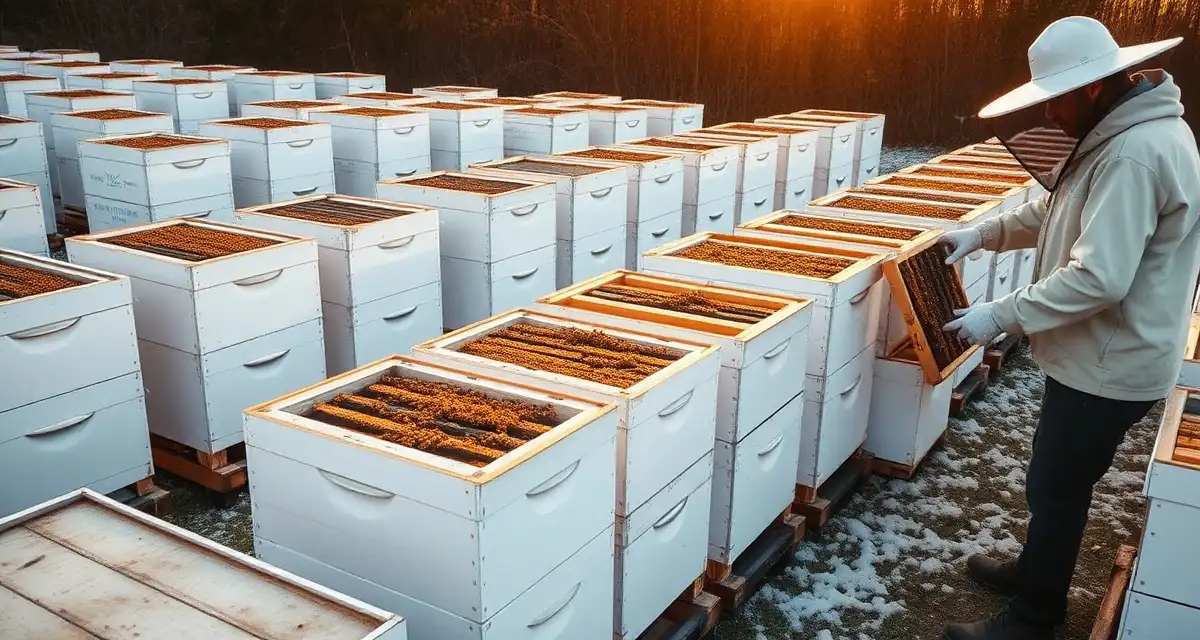
Winter Hive Preparation for Almond Season
Hives that enter winter with 8 or more frames of bees have a 78 percent higher chance of meeting almond contract strength minimums. That's not a marginal improvement. It's the difference between an operation that reliably delivers on contracts and one that scrambles to source replacement hives in January. Everything you do in October, November, and December is either building toward that 8-frame threshold or eroding your chances of reaching it.
PollenOps winter development tracking shows colony trajectory so you can forecast strength at February bloom based on current population and development patterns rather than guessing based on how they looked last fall. This forecasting capability is what separates reactive winter management from the kind of planned intervention that prevents contract compliance failures.
TL;DR
- California almond pollination consumes roughly 80% of the US commercial hive population every February, making it the most supply-constrained pollination market in the country.
- Per-hive rates have held between $185 and $220 for 6-8 frame colonies over recent seasons.
- Contracts are typically signed October through November for the following February season; operators without agreements by December are working from a weak position.
- Hive strength minimums range from 6 to 8 frames of bees depending on the grower, with premium-strength colonies commanding $200-215/hive.
- varroa management, documentation, and logistics coordination in the 6-8 weeks before delivery determine whether almond season is profitable or a breakeven event.
The Winter Timeline for Almond Preparation
October: Baseline Assessment and Treatment
October is your last realistic window for effective fall varroa treatment before the winter bees that will carry your colonies to February are fully committed. The winter bees raised from September through October are the bees that will still be alive and foraging in February. They live 5 to 6 months rather than the summer bee's 4 to 6 weeks. Mite damage to those winter bees reduces their effective lifespan and compromises the colony's February workforce.
An oxalic acid treatment in late September or early October, timed during the broodless or low-brood period in cooler climates, dramatically reduces the mite load that winter bees experience during their development. For California-based operations where colonies continue brood rearing year-round, the timing calculus is different. Discuss your specific wintering climate with your varroa management protocol.
Run a formal baseline strength assessment in October and enter the results in PollenOps. Your October colony count and frame assessment becomes the baseline against which you track winter development. Colonies that are at 6 to 7 frames in October need aggressive feeding and treatment to have a realistic chance of reaching 8 frames by February. Colonies at 4 to 5 frames in October rarely recover to almond contract strength without major intervention, and you need to know that in October rather than January.
November: Feeding, Food Store Assessment, and Supplemental Protein
November is the critical feeding month for most overwintering operations. Colonies heading into a cold winter need 60 to 80 pounds of stored food. Colonies that run short on stores in January or February cluster tightly and reduce brood rearing to conserve resources, which directly reduces your February colony strength.
Supplemental protein in November supports queen rearing activity and brood nutrition that helps colonies maintain winter bee production. Pollen or pollen substitute patties fed in November give colonies the nutritional foundation for rearing the winter bees that will still be alive at February almond bloom.
For southern-wintering operations in Florida, California, or Arizona, November feeding decisions are different because winter temperatures allow continued foraging and brood rearing. Supplemental feeding in warm climates should be calibrated to what natural forage provides and what your colony development trajectory suggests rather than a blanket protocol.
December: Mid-Winter Assessment
A brief mid-winter assessment in December or early January, checking cluster size, food stores, and queen status without fully breaking the cluster in cold climates, gives you early warning of colonies that are declining faster than expected. In PollenOps, you can log this mid-winter check as a simple inspection record noting frame count and food store status.
Colonies that have dropped significantly from their October assessment by December may have queen problems, high mite loads that weren't fully addressed by fall treatment, or inadequate food stores. Catching these problems in December rather than January gives you more time to intervene.
For warm-climate wintering operations, December is still active management time. Queen replacement for colonies with failing queens needs to happen by December to give new queens time to establish and build their brood nest before February.
January: Pre-Almond Assessment and Intervention
The almond season prep guide covers the full January preparation sequence. The key winter preparation connection is that your January assessment should reflect decisions made in October through December, not be the first time you're looking at colony condition since fall.
Colonies flagged below the 8-frame threshold in January need triage decisions: emergency stimulative feeding, sourcing replacement colonies from your reserve hive pool, or removing the colony from the contracted delivery batch and notifying the grower if you can't bring enough hives to strength.
Winter Development Tracking in PollenOps
PollenOps winter development tracking works through the inspection record system. Each winter visit (October baseline, November feeding confirmation, December mid-winter check, January pre-move assessment) creates a data point in the colony's history. The system shows the trajectory across these points, which allows the PollenOps forecasting tool to project the colony's expected strength at the contracted delivery date.
A colony at 7 frames in October, 6.5 frames in December, and 6 frames at the January check is trending the wrong direction. The forecast flags it for intervention before the trajectory produces a contract compliance failure. A colony at 6 frames in October that climbs to 7 frames in December and 8 frames in January is on track.
Without this trajectory data, January assessments are snapshots without context. A 7-frame colony in January might be a declining colony that was at 9 frames in October, or a recovering colony that was at 5 frames in October. The trajectory tells you which situation you're in and how urgent the intervention need is.
Intervention Options for Understrength Colonies
Stimulative feeding: For colonies with adequate populations but low brood rearing activity, supplemental syrup and protein in January can stimulate queen activity and increase the population trajectory before February delivery. This works best for colonies that are at 6 to 7 frames and trending flat rather than declining.
Combining: Two weak colonies combined in January sometimes produce a single above-threshold colony by February. This works if the weakness is population rather than disease, and if both colonies have functional queens.
Reserve hive swaps: Maintaining a reserve pool of stronger-than-average colonies that can replace flagged units in contracted batches is the most reliable intervention. Build your reserve pool through the fall by feeding your strongest colonies more aggressively and maintaining them in better-than-average condition specifically for this purpose.
Early requeening: Colonies with aged or failing queens can be requeened in December or January in warm wintering climates. A new queen installed in December has 4 to 6 weeks to establish and begin building her brood nest before February delivery.
Target Strengths by Contract Type
Not all almond contracts have the same strength requirements. Confirm your specific contracted threshold in PollenOps for each contract rather than applying a single standard. Typical thresholds:
- Standard California almond: 6 to 8 frames of bees
- Premium California almond (Kern County, high-value operations): 8 frames minimum
- Certified strength (some premium contracts): 8 frames with a signed veterinary inspection or apiary inspector assessment
The PollenOps pre-move strength checklist is tied to each contract's specific threshold so that your pass/fail assessment is calibrated to the right standard rather than an industry average.
Frequently Asked Questions
What should I do in October and November to prepare hives for almond season?
In October, run a formal strength assessment and enter results in PollenOps as your winter baseline. Treat for varroa in late September or early October before the critical winter bee raising period. In November, assess food stores and supplement colonies that are short of the 60 to 80 pound winter store target. Feed supplemental protein to support brood nutrition and queen activity through November. Flag any colonies with queen concerns for immediate attention. These two months create the foundation for February colony condition more than any other period in the year.
How do I track winter colony development in PollenOps?
Enter inspection records for each major winter visit: October baseline assessment, November feeding confirmation, December mid-winter check, and January pre-move assessment. PollenOps shows the trajectory across these data points and projects expected strength at your contracted delivery date based on the development trend. Colonies trending below threshold get flagged automatically so you can see your potential contract compliance risk at a glance rather than discovering problems at the final pre-move assessment.
What is the target hive strength for February almond season readiness?
The typical almond contract requires 6 to 8 frames of bees at delivery, with premium contracts in Kern County and high-value operations specifying 8-frame minimums. Research shows that colonies entering winter at 8 or more frames have a 78 percent higher success rate meeting almond contract minimums than weaker colonies. Build your winter preparation program around reaching 8 frames at the February delivery date, which usually requires starting at 7 to 8 frames in October and maintaining that strength through the winter management program.
How early should almond pollination contracts be negotiated?
Large almond growers and broker networks begin securing hive commitments in July and August for the following February season. Written contracts are typically signed October through November. Operators who do not have signed agreements by December are working from a weak position since most quality hive inventory is already committed. Start grower outreach in mid-summer and target signed agreements before Thanksgiving.
What documentation is required for hive delivery to California almonds?
California requires a Certificate of Health for out-of-state colonies, issued by the origin state's apiary inspection program within 30 days of entry. The certificate must certify freedom from American foulbrood, European foulbrood, and Varroa destructor below treatment threshold. Some states require small hive beetle freedom for California entry. In addition, many growers now expect documentation of pre-delivery mite counts confirming colonies are below threshold.
What happens to hives after almond season ends in late March?
Post-almond options include moving north for Pacific Northwest cherry or apple pollination in April-May, routing to Michigan or Maine blueberries in May-July, transitioning to summer honey yards in North Dakota or Montana, or staying in California for splits and rebuilding. The right choice depends on hive strength coming out of almonds and downstream contract commitments. Operators who plan their full-year circuit in advance can optimize both pollination revenue and honey production.
Try These Free Tools
Sources
- USDA Agricultural Research Service
- Bee Informed Partnership
- American Beekeeping Federation (ABF)
- Almond Board of California
- University of California Cooperative Extension
Get Started with PollenOps
Almond season is the revenue event that defines the commercial beekeeping year, and the details -- contract terms, delivery timing, hive strength documentation, and invoicing -- determine whether the season is profitable. PollenOps manages the full almond contract lifecycle from quote to final payment, with yard tracking, crew scheduling, and grower communication built in. See how it works for operations from 200 to 5,000 hives.