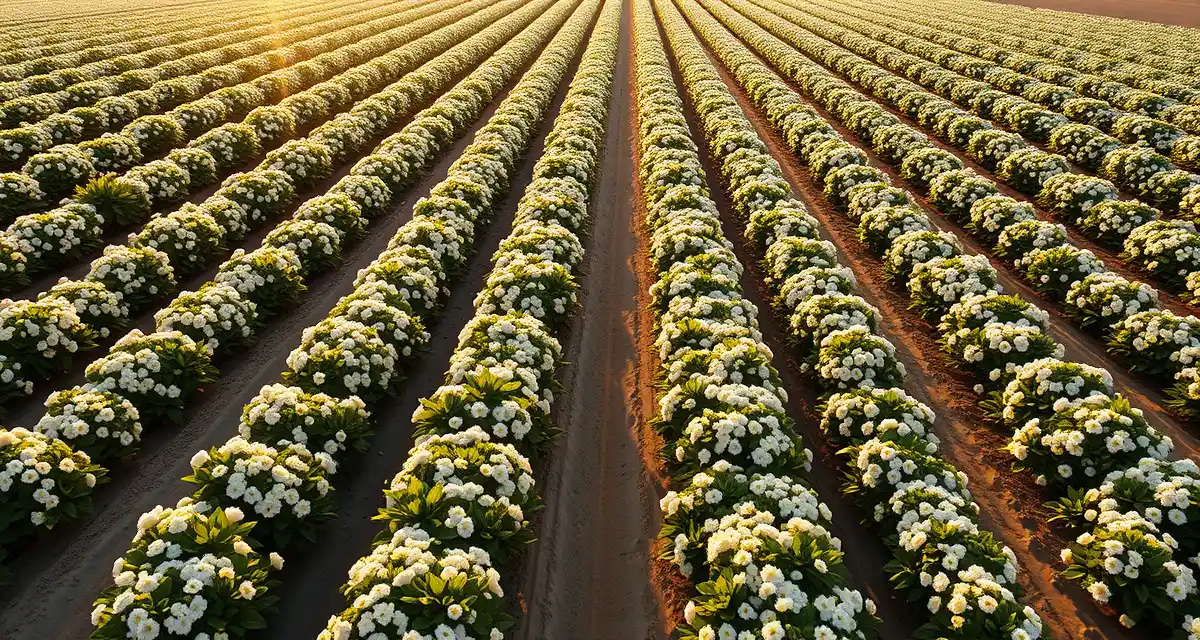
Strawberry Pollination in California: Ventura Watsonville and the Coast
California produces over 90% of US strawberries, with major production acreage in Ventura County along the Southern California coast and in the Watsonville/Santa Cruz area of Northern California. California strawberry pollination runs year-round in some production areas, making it a valuable circuit supplement for operators who want to stay in California beyond almond season or find winter income on the West Coast.
California strawberry pollination runs year-round in some areas. The Ventura County coast has essentially year-round strawberry production due to its mild Mediterranean climate. The Watsonville and Salinas areas run a more seasonal schedule but still extend well beyond the typical spring-only season of most crops.
TL;DR
- California's primary commercial beekeeping role is shaped by its crop mix, climate, and position on the national pollination circuit.
- Pollination rates in California range $65-220/hive depending on crop depending on crop and colony strength requirements.
- Out-of-state operators entering California for pollination contracts must register with the state agricultural authority and obtain a Certificate of Health.
- California functions as either a primary pollination destination, a seasonal honey production location, or a transitional stop depending on the circuit.
- Tracking permit status, registration documents, and yard records for California operations requires organized record-keeping before the season opens.
California Strawberry Production Regions
Ventura County / Oxnard Plain: The single largest strawberry production area in California. The Oxnard Plain's cool maritime climate, moderated by the Pacific Ocean, allows production from January through June with some operations extending further. This is the winter and spring strawberry capital of the US.
Santa Cruz / Watsonville area: The second major production region, with production running primarily March through August. Watsonville's cooler summer temperatures compared to the Central Valley allow extended seasonal production.
Salinas Valley: Additional strawberry acreage extends into the Salinas Valley, running spring through early fall.
Circuit Timing Opportunities
For operators with California infrastructure, strawberry pollination creates income opportunities outside the February almond window. Specifically:
January-February (Ventura County): Winter strawberry placements in Ventura County can precede almond season, providing early-year income before the February almond push. Some operators place a portion of their fleet on Ventura strawberries in January and then pull hives to almond yards in early February.
March-June (Ventura and Santa Cruz): After almond season ends in late February, colonies recovering from almonds can be placed in strawberry operations during the spring buildup period. This provides income during what would otherwise be a recovery-only window.
For California almond pollination circuit planning, strawberry contracts can complement almond income without conflicting with it if managed carefully.
Colony Requirements
California strawberry growers typically require colonies at 4 to 6 frames of bees. Strawberry's pollination needs are less intensive than almonds, and growers don't always specify the highest strength standards. However, stronger colonies do produce better results, and premium growers who have tested colony strength effects on yield often specify 6+ frames.
The year-round placement nature of Ventura County strawberry means colonies placed in January are experiencing cooler, wetter conditions than colonies placed in April. colony health management needs to account for the season of placement.
Contract Structure
Strawberry pollination contracts in California are often for extended periods rather than 2 to 3 week windows. A grower may want hives present for 6 to 8 weeks covering a rolling harvest system. Pricing may be per hive per week rather than per placement as in tree fruit contracts.
For melon and berry pollination contract structures, strawberry contracts often follow a different model than orchard crop contracts.
Regulatory Requirements
California apiary registration requirements apply to strawberry operations the same as to almond operations. Out-of-state operators need current California registration and health certificates. AHB zone considerations apply in Ventura County, which is in the Southern California AHB monitoring zone.
Frequently Asked Questions
How do you get strawberry pollination contracts in California?
Focus outreach on Ventura County for winter and spring contracts and the Santa Cruz/Watsonville area for spring through summer contracts. Strawberry growers in these regions range from large corporate operations to family farms. California Strawberry Commission events and agricultural extension contacts in Ventura and Santa Cruz counties are useful networking resources. Operators already working California almonds in the San Joaquin Valley are geographically positioned to add Ventura County strawberry as a pre-almond or post-almond stop. Build grower relationships in fall for the following year's contracts.
When is strawberry pollination season in Ventura County?
Ventura County strawberry production runs essentially year-round due to the area's mild maritime climate, but the primary commercial pollination demand runs from January through June. The peak production months in Ventura County are March, April, and May. Winter months (December through February) have active production but at somewhat lower volumes. Operators looking for pre-almond income can target January and early February placements. Post-almond spring placements run March through May, overlapping with the main spring season.
What colony strength do California strawberry growers require?
Most California strawberry growers specify 4 to 6 frames of bees at placement. The specification varies by grower and production system. Some large commercial strawberry operations that have studied the relationship between colony strength and pollination efficiency specify higher minimums. On average, strawberry contracts have less stringent strength requirements than almond or cherry contracts, making them accessible for colonies that are in early buildup rather than peak strength. Operators with colonies coming out of California almonds who aren't at full strength for almond-standard contracts may find strawberry placements more accessible as a transitional stop.
What is the process for registering an out-of-state apiary in a new state?
Most states require out-of-state operators to register with the state department of agriculture apiary program before placing colonies. The process typically involves submitting a registration application (online or paper), paying a fee (usually $10-50 per location), and providing contact information for the operation. Some states also require the registration to be renewed annually. Contact the destination state's department of agriculture apiary program at least 60 days before your planned arrival to confirm current requirements.
What documentation do state apiary inspectors typically review?
State apiary inspectors review health certificates for out-of-state colonies, registration documentation, and colony inspection records during apiary visits. Inspectors check for signs of American foulbrood, European foulbrood, and other regulated pests and diseases. Operations with organized digital records that include treatment history and mite counts typically have faster, less complicated inspections than operations without documentation. Some state inspectors also verify that varroa mite loads are below state entry thresholds.
What triggers a state apiary inspection?
State apiary inspections can be triggered by routine inspection schedules (most states inspect a percentage of registered apiaries annually), neighbor or landowner complaints, disease reports from nearby operations, or inspection requirements tied to state entry permits. California, in particular, has the right to inspect incoming loads at port of entry for commercial beekeeping operations. Maintaining current registration and organized records makes required inspections faster and less disruptive.
Try These Free Tools
Sources
- USDA Agricultural Research Service
- Bee Informed Partnership
- American Beekeeping Federation (ABF)
- California Department of Agriculture
- Project Apis m.
Get Started with PollenOps
Commercial operations working in California face the same registration, permit, and documentation requirements as any state on the national circuit -- plus California's specific regulatory requirements. PollenOps tracks your California yard records, contract assignments, and permit documentation alongside your full operation, so entering a new state doesn't add a separate administrative burden. See how the platform fits operations working across multiple states.