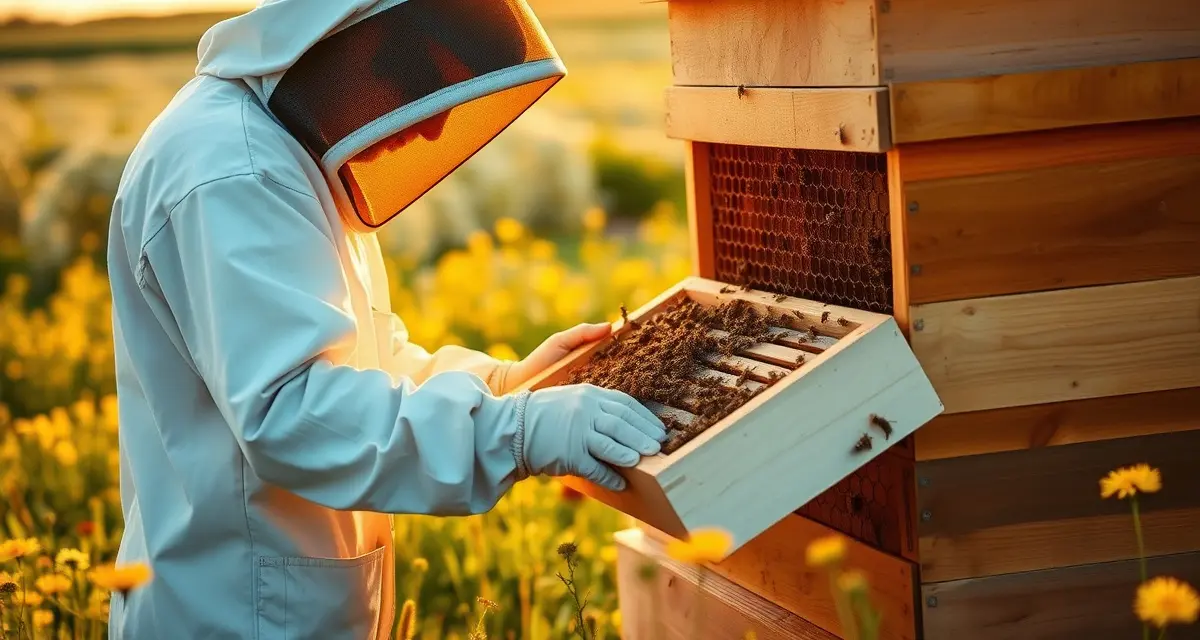
South Dakota Honey Production: Complete Commercial Beekeeping Guide
South Dakota ranks in the top 3 US states for honey production, generating 15 to 25 million pounds annually from the state's vast clover, wildflower, and alfalfa forage resources across the Northern Plains. The state's production is more geographically diverse than North Dakota's, spanning from the Black Hills in the west through the Missouri River breaks to the corn-belt influenced east. This diversity creates both more production options and more complex route planning than a single-region operation.
South Dakota honey operations benefit from vast clover and wildflower forage on the Northern Plains, and many operators achieve production levels comparable to North Dakota without the intense competition for yard locations that the top honey state sometimes experiences. For operators building a Great Plains summer circuit, South Dakota offers meaningful production upside that complements or replaces North Dakota positioning depending on forage conditions in any given year.
TL;DR
- South Dakota's primary commercial beekeeping role is shaped by its crop mix, climate, and position on the national pollination circuit.
- Pollination rates in South Dakota range $65-220/hive depending on crop depending on crop and colony strength requirements.
- Out-of-state operators entering South Dakota for pollination contracts must register with the state agricultural authority and obtain a Certificate of Health.
- South Dakota functions as either a primary pollination destination, a seasonal honey production location, or a transitional stop depending on the circuit.
- Tracking permit status, registration documents, and yard records for South Dakota operations requires organized record-keeping before the season opens.
South Dakota's Honey Production Regions
The Black Hills and West River Country
The Black Hills and surrounding west river counties produce exceptional wildflower honey from a diverse high-altitude prairie and ponderosa pine forest ecosystem. Custer, Fall River, Lawrence, and Meade counties offer some of the state's most distinctive varietal honey from native wildflowers, black locust in lower elevation areas, and mixed prairie species.
West river South Dakota has lower agricultural intensity than the eastern two-thirds of the state, which means lower pesticide exposure risk and more diverse forage. The trade-off is distance from the state's main transportation corridors and lower sweet clover acreage compared to the agricultural plains. West river operations typically have stronger varietal honey identity but lower per-hive yields than east river clover-heavy yards.
Central and East River Plains
The central and eastern South Dakota plains from the Missouri River east to the Minnesota border hold the state's highest honey production density. Beadle, Kingsbury, Miner, Sanborn, and neighboring counties in east-central South Dakota have extensive sweet clover in fallow rotations, roadside, and conservation reserve program lands. July sweet clover flows in this region can be as strong as southern North Dakota's equivalent zone.
Huron, Mitchell, and Brookings areas are anchor points for east-central operations, with yard locations accessible from the Interstate 90 corridor. The proximity to Minnesota adds routing flexibility for operators who run part of the season in Minnesota or Wisconsin.
Missouri River Breaks
The Missouri River corridor, particularly in the Oahe and Francis Case reservoir areas, creates riparian habitat with excellent wildflower and clover production. Sully, Hughes, Buffalo, and Lyman counties along the river have underutilized honey production potential that some operators have exploited by positioning in the breaks rather than the open plains.
Building Your South Dakota Operation
Arriving with Strong Colonies
The same principles that govern North Dakota colony preparation apply to South Dakota. Colonies arriving in the state at 10 or more frames of bees with young queens are capable of producing 120 to 200 pounds per hive in good years. Weaker colonies produce proportionally less, and the investment in getting to South Dakota with a strong fleet is the highest-return activity you can undertake in the winter and spring.
For operators running California almond season before South Dakota, the transition timing works well. Almond wraps up in mid-March, spring honey flows in California or the Midwest carry colonies through May, and positioning for South Dakota in June gives colonies time to acclimate before the July sweet clover flow.
Operators whose primary operation is pollination-focused should carefully evaluate whether South Dakota honey production fits their fleet management capacity. Taking colonies off pollination routes to position for honey production means those hives aren't generating pollination contract revenue. The math typically favors honey production at scale in South Dakota, but it depends on your pollination contract rates and fleet size.
Securing Yard Locations
South Dakota yard access is competitive but not as constrained as North Dakota in the highest-demand counties. The state has significant land in private agricultural ownership, conservation reserve programs, and state-managed grasslands where negotiated access is possible.
Landowner permission is required for all commercial bee yard locations on private land. Many South Dakota farmers are receptive to hosting bee yards in exchange for a nominal annual lease fee ($50 to $200 per yard location) and the pollination benefit from colonies working their forage crops. Building 3 to 5 year relationships with landowners rather than negotiating annually reduces your administrative burden and secures yard access in competitive forage years.
State trust lands and some USDA Farm Service Agency CRP lands may allow commercial bee yard placement with appropriate permits. Contact the South Dakota Game Fish and Parks department and the state agricultural department for current access policies on public lands.
Forage Calendar
Early June: Arrival, establishment, early summer wildflowers, dandelion late in season, sweet clover beginning in southern counties.
Late June through July: Sweet clover peak in central and east river counties. Strong alfalfa flows beginning in the Watertown and Aberdeen areas. Native wildflower peak in Black Hills and west river counties.
August: Sweet clover winding down, alfalfa continuing, goldenrod beginning in some areas. Sunflower in rotation fields, though South Dakota sunflower acreage is less concentrated than North Dakota's.
September: Forage declining. Colony preparation and fall treatment for operators who overwinter or transition south.
Varroa Management in South Dakota Summer
Managing varroa through a South Dakota summer requires a different approach than northern operators who rely on the natural brood break of cold winters. Colonies running continuously productive in South Dakota from June through September build mite loads at rates that can be surprising if you're monitoring monthly rather than weekly.
The industry standard recommendation is a mite wash monitoring or sugar roll in late June or early July to assess your baseline mite load on arrival in the state. A second monitoring event in late July or early August helps you determine whether treatment is needed before the fall transition.
Varroa treatment options during summer honey production require attention to honey safety. Oxalic acid dribble and sublimation are effective during broodless or low-brood periods but less effective during peak brood-rearing July. Formic acid treatments are effective during brood-rearing conditions but require temperature management in South Dakota summer heat. Know your treatment options and their temperature limitations before you need them.
Colony Equipment for South Dakota Production
Running South Dakota honey production at scale requires adequate super inventory. Three to four deep or medium supers per colony is a starting point; operations in good forage zones during good years will use more than that per colony during peak July flow.
Frame quality matters more than new equipment: old frames with crystallized honey from prior seasons are harder to extract and can contaminate current honey crop in blended-honey operations. Rotate old frames out of circulation and replace with new foundation regularly to maintain honey crop purity and extraction efficiency.
Marketing South Dakota Honey
South Dakota honey markets broadly mirror North Dakota's: wholesale commodity packers for bulk volume, specialty retail and farmers markets for premium pricing, and direct-to-consumer channels for margin-maximizing sales.
The Black Hills and Badlands regional identity is a genuine marketing asset for west river South Dakota honey. "South Dakota wildflower honey from the Black Hills" has specific regional appeal that resonates with consumers interested in origin-identified products. If you operate in the Black Hills zone, developing a brand around the regional identity has real value.
Regional wholesale buyers in the Sioux Falls and Rapid City areas can absorb significant volume at prices above national commodity rates. Building direct relationships with regional buyers reduces your dependence on national commodity packing market pricing.
Access commercial honey market trends and honey packing and distribution resources to build your market strategy before arriving in South Dakota for the first time. Knowing your buyers before the honey is extracted is significantly less stressful than trying to find buyers while managing active extraction operations.
Multi-State Circuits Including South Dakota
South Dakota fits naturally into Northern Plains circuits that include North Dakota, Minnesota, and potentially Nebraska or Kansas for late-season positioning. Some operators run the following annual circuit:
- California almond (February)
- California or Pacific Northwest spring honey/pollination (March through May)
- South Dakota honey production (June through August)
- North Dakota honey production or sunflower pollination (July through August, running simultaneously in adjacent counties to South Dakota)
- Fall honey in Nebraska or Kansas (September)
- Southern winter positioning (October through January)
This type of circuit maximizes the productive season across multiple high-yield geographies while managing colony health through diverse forage environments. The logistics require detailed planning, and tracking your hive movements, contract obligations, and forage positioning across this itinerary is where PollenOps provides real value.
Regulatory and Compliance Considerations
South Dakota requires apiary registration for all commercial operations. Out-of-state operators must bring current health certificates and follow South Dakota's import requirements. The South Dakota Department of Agriculture's Animal Industry Board manages honey bee import requirements.
State brand licensing for honey sold at retail in South Dakota requires compliance with labeling laws regarding honey composition claims, origin disclosure, and net weight accuracy. Review current requirements with the South Dakota Department of Agriculture before marketing your product.
Financial Planning
A 1,000-hive South Dakota summer operation with owned extraction equipment might carry annual summer operating costs of $80,000 to $120,000 including transportation, labor, yards, treatments, and equipment. Against a good year producing 150 pounds per hive at $2.00 per pound, gross revenue is $300,000. That's workable, but not heavily margined. Two consecutive drought or poor-forage years will test your capital reserves.
Building a multi-state operation that includes South Dakota as one production region among two or three reduces your year-to-year weather exposure. A drought in South Dakota in the same year that Montana or North Dakota produces well smooths your income more effectively than concentration in any single state.
Frequently Asked Questions
How do you maximize honey production in South Dakota?
Arrive with the strongest possible colonies in mid-June, secured through good winter management, spring buildup, and where relevant, the biological stimulus of California almond season. Position yards in east-central South Dakota's sweet clover-rich counties for peak July flows, with additional yards in the Black Hills for wildflower diversity. Manage supers aggressively and extract promptly during peak flow. Maintain varroa mite loads at low levels through proactive monitoring and timely treatment. Market your honey through pre-season contracted buyers where possible to avoid the uncertainty of spot-market pricing.
What is the typical honey yield per hive in South Dakota?
South Dakota yields vary significantly by location, year, and colony strength. Good years with strong July sweet clover flows in east-central counties produce 150 to 200 pounds per hive for well-managed colonies arriving strong in June. Average years produce 80 to 120 pounds per hive, and drought or cold July years can reduce production to 40 to 70 pounds or less. West river and Black Hills yards typically produce lower yields than east river sweet clover zones but with more distinctive varietal honey profiles. Budget your financial projections around a conservative 100 to 120 pounds per hive rather than optimistic projections.
How do you find markets for large-volume South Dakota honey?
Wholesale commodity honey packers are the primary buyers for large volumes. Establish relationships with regional packers in South Dakota and Minnesota before your first production season, since packing contracts signed before extraction are more predictable than spot sales after the honey is extracted. Regional co-ops and natural food chains in the Upper Midwest pay premium prices for origin-identified local honey. For Black Hills production, the regional identity supports above-commodity pricing in regional retail channels. The South Dakota Honey Producers Association provides market connection resources for commercial operators.
What is the process for registering an out-of-state apiary in a new state?
Most states require out-of-state operators to register with the state department of agriculture apiary program before placing colonies. The process typically involves submitting a registration application (online or paper), paying a fee (usually $10-50 per location), and providing contact information for the operation. Some states also require the registration to be renewed annually. Contact the destination state's department of agriculture apiary program at least 60 days before your planned arrival to confirm current requirements.
What documentation do state apiary inspectors typically review?
State apiary inspectors review health certificates for out-of-state colonies, registration documentation, and colony inspection records during apiary visits. Inspectors check for signs of American foulbrood, European foulbrood, and other regulated pests and diseases. Operations with organized digital records that include treatment history and mite counts typically have faster, less complicated inspections than operations without documentation. Some state inspectors also verify that varroa mite loads are below state entry thresholds.
What triggers a state apiary inspection?
State apiary inspections can be triggered by routine inspection schedules (most states inspect a percentage of registered apiaries annually), neighbor or landowner complaints, disease reports from nearby operations, or inspection requirements tied to state entry permits. California, in particular, has the right to inspect incoming loads at port of entry for commercial beekeeping operations. Maintaining current registration and organized records makes required inspections faster and less disruptive.
Try These Free Tools
Sources
- USDA Agricultural Research Service
- Bee Informed Partnership
- American Beekeeping Federation (ABF)
- South Dakota Department of Agriculture
- Project Apis m.
Get Started with PollenOps
Commercial operations working in South Dakota face the same registration, permit, and documentation requirements as any state on the national circuit -- plus South Dakota's specific regulatory requirements. PollenOps tracks your South Dakota yard records, contract assignments, and permit documentation alongside your full operation, so entering a new state doesn't add a separate administrative burden. See how the platform fits operations working across multiple states.