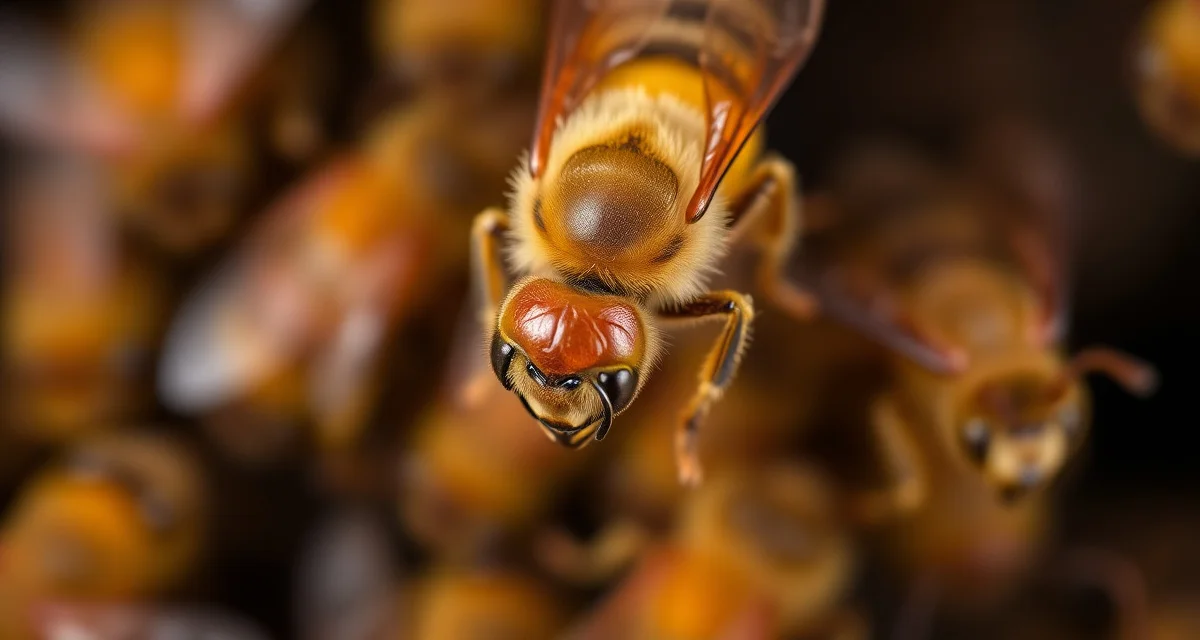
Varroa Resistant Bee Breeding for Commercial Operations
VSH (Varroa Sensitive Hygiene) trait can reduce varroa reproduction by 70%+ in carrier queens, and varroa-resistant colonies can save $30-50 per colony per year in treatment costs at commercial scale. At 1,000 hives, that's $30,000-$50,000 annually in reduced chemical and labor costs, a meaningful improvement to operation profitability if the genetics can be incorporated without sacrificing productivity.
TL;DR
- Varroa and varroa-vectored viruses are the leading cause of commercial colony loss, with the Bee Informed Partnership reporting 30-40% annual winter losses nationally.
- At $200-300 per hive replacement cost, a 30% loss on 1,000 hives costs $60,000-90,000.
- Fall varroa treatment is the highest-stakes window: colonies entering winter with high mite loads have significantly elevated mortality.
- For almond-bound colonies, December treatment followed by a January mite wash monitoring confirming below 1 mite per 100 bees is increasingly standard.
- Rotation between treatment classes (amitraz, oxalic acid, formic acid) prevents resistance development that reduces efficacy over time.
What Varroa-Resistant Genetics Mean for Commercial Operations
Varroa destructor is the primary driver of colony mortality in the US. Treatment-based management (oxalic acid, miticides, formic acid) adds $30-80/colony/year in direct costs plus significant labor time. Resistant genetics offer the possibility of reducing that burden.
The genetics aren't magic. Varroa-resistant traits reduce mite reproduction rates and colony population pressure, but they don't eliminate varroa. Most commercial operations with resistant stock still monitor and treat, but they treat less frequently and with lower mite loads.
The economic case is straightforward: if resistant genetics reduce treatment frequency by 40-50%, save $20-40/colony in chemicals and labor, and don't significantly reduce honey or pollination productivity, they're worth pursuing.
The Main Varroa-Resistant Traits
VSH (Varroa Sensitive Hygiene): VSH is the most researched varroa-resistant trait. VSH bees detect and remove varroa-infested pupae from cells, disrupting the mite's reproductive cycle. Queens with high VSH trait expression can reduce mite population growth by 70%+ compared to non-VSH colonies. USDA's Baton Rouge lab has developed VSH lines, and commercial breeders now offer VSH-influenced queens.
Hygienic behavior: Related to VSH, hygienic bees detect and remove diseased or parasitized brood generally. High-hygiene colonies respond to varroa infestation more efficiently, limiting population buildup. Hygienic behavior is measurable through freeze-killed brood tests.
Mite-biting behavior: Some colony lines show biting or mutilation behavior that damages varroa mites, reducing their ability to reproduce. This trait is present in some survivor stock and certain European breeding lines.
Suppressed mite reproduction (SMR): A precursor characterization to VSH. Colonies with SMR show reduced rates of mite reproductive success. Mites are present but fail to reproduce at normal rates.
USDA Russian bees: USDA's Russian bee program developed colonies with some varroa-resistant characteristics through selection from Primorsky region bees naturally exposed to varroa longer than Western populations.
Incorporating VSH Genetics in a 1,000-Hive Operation
You don't need to replace your entire operation with pure VSH stock in a single season. Practical incorporation works as follows:
Step 1, Source quality VSH or high-hygiene queens: Commercial queen breeders offer VSH-influenced queens. Look for breeders who breed for VSH trait combined with honey production and gentleness. Pure VSH stock with poor production characteristics doesn't work commercially.
Step 2, Trial block: Requeen 100-200 colonies with VSH queens and track mite loads, treatment frequency, and colony productivity against your standard stock for a full season. This gives you real performance data from your specific environment.
Step 3, Evaluate the economics: Compare treatment costs, labor time, colony losses, and honey and pollination performance between VSH and standard stock. If VSH shows clear advantage without production sacrifice, scale the program.
Step 4, Queen rearing integration: Long term, the most cost-effective approach for large operations is raising your own VSH queens from breeder stock. This requires queen rearing infrastructure but reduces per-queen cost significantly at scale.
Step 5, Gradual rollout: Requeen 25-30% of your operation per season rather than all at once. This spreads the queen cost and gives you ongoing comparison data.
The Commercial Reality: Genetics Plus Management
Varroa-resistant genetics work best in combination with active monitoring, not as a replacement for it. Commercial operations that shift to resistant stock and eliminate monitoring often find that mites build in the lower-resistance portion of their fleet.
The effective approach: use resistant genetics to raise your operation's baseline resilience, continue monitoring (even if less frequently), and treat when thresholds are exceeded. The combination of reduced baseline mite reproduction from genetics and active threshold-based treatment produces better outcomes than either approach alone.
Varroa management for large operations covers treatment protocols and monitoring systems that complement a genetics program.
Track queen replacement records, mite monitoring results by queen line, and treatment history in PollenOps to compare VSH stock performance against your standard stock across seasons. The queen rearing for commercial operations guide covers integrating queen production into a large operation.
Frequently Asked Questions
What varroa-resistant bee genetics are available for commercial operations?
The most commercially accessible varroa-resistant genetics are VSH (Varroa Sensitive Hygiene) queens from USDA-affiliated breeders and commercial queen producers who have incorporated VSH trait. High-hygiene queens selected for freeze-brood test performance are widely available from commercial breeders in California, Hawaii, and the Southeast. USDA Russian bee stock offers some varroa tolerance and is available through the Russian Honeybee Breeders Association. For large operations, the most practical approach is VSH-influenced queens from commercial breeders combined with in-house queen rearing from selected VSH breeder queens. This gives you commercially manageable genetics at a cost that works at scale.
How do you incorporate VSH genetics into a 1,000-hive operation?
Start with a trial block of 100-200 VSH-queened colonies tracked through a full season against your standard stock. Measure mite loads monthly, track treatment events and costs, monitor colony strength, and compare honey and pollination performance. Use that data to make a scale decision. If results are favorable, plan a gradual rollout. Requeening 25-30% of your operation per season keeps queen costs manageable and gives you ongoing comparison. Build toward in-house queen rearing from VSH breeder stock for long-term cost control. The genetics program works best as a 3-5 year project, not a single-season change.
What is the cost savings of varroa-resistant genetics at commercial scale?
The savings calculation depends on your current treatment program and the degree of resistance the genetics provide. If you currently spend $40-60/colony/year on varroa treatments (oxalic acid, miticides, application labor), and VSH genetics reduce treatment frequency by 40-50%, you save $16-30/colony/year. At 1,000 hives, that's $16,000-$30,000 annually. Add reduced colony loss rates. If VSH reduces winter losses by 5 percentage points at $200 replacement cost per colony, that's another $10,000 at 1,000 hives. Total savings potential of $25,000-$50,000 annually for a 1,000-hive operation is achievable with well-managed VSH integration.
What mite count threshold triggers treatment in commercial operations?
Most commercial operators use a 2-mite-per-100-bees threshold for treatment decisions during the active season. At 3 or more mites per 100 bees, treat immediately regardless of season. For colonies destined for California almond contracts in February, the target is below 1 mite per 100 bees at December assessment, which is stricter than general treatment thresholds. The December target reflects the need for winter bees to survive at full viability through February.
How do you treat 1,000 hives for varroa efficiently?
For oxalic acid vaporization, a battery-powered vaporizer setup allows a 2-person crew to treat 100-150 colonies per day, requiring 7-10 crew-days for 1,000 hives per treatment cycle. Apivar strip treatments are faster to apply (200-300 colonies per day for a 2-person crew) but require accurate tracking of installation and removal dates. Both methods require documentation of product, date, dosage, and crew member for each yard to meet commercial contract and state inspection requirements.
Can organic-certified colonies be treated for varroa?
Organic honey certification has specific treatment restrictions. Oxalic acid and formic acid (MAQS, Formic Pro) are permitted for use in organic-certified operations. Apivar (amitraz) and Apistan (tau-fluvalinate) are synthetic miticides not compatible with organic certification. For operations pursuing organic honey premiums, building a varroa management protocol around approved products is required. Some organic pollination contracts also specify treatment restrictions; review contract language carefully.
Try These Free Tools
Sources
- USDA Agricultural Research Service
- Bee Informed Partnership
- American Beekeeping Federation (ABF)
- Project Apis m.
- Pennsylvania State University Apiculture Program
Get Started with PollenOps
Varroa management at commercial scale requires documentation that satisfies growers, state inspectors, and your own year-over-year analysis. PollenOps structures mite monitoring records, treatment logs, and yard-level history so the data you need is there when you need it.