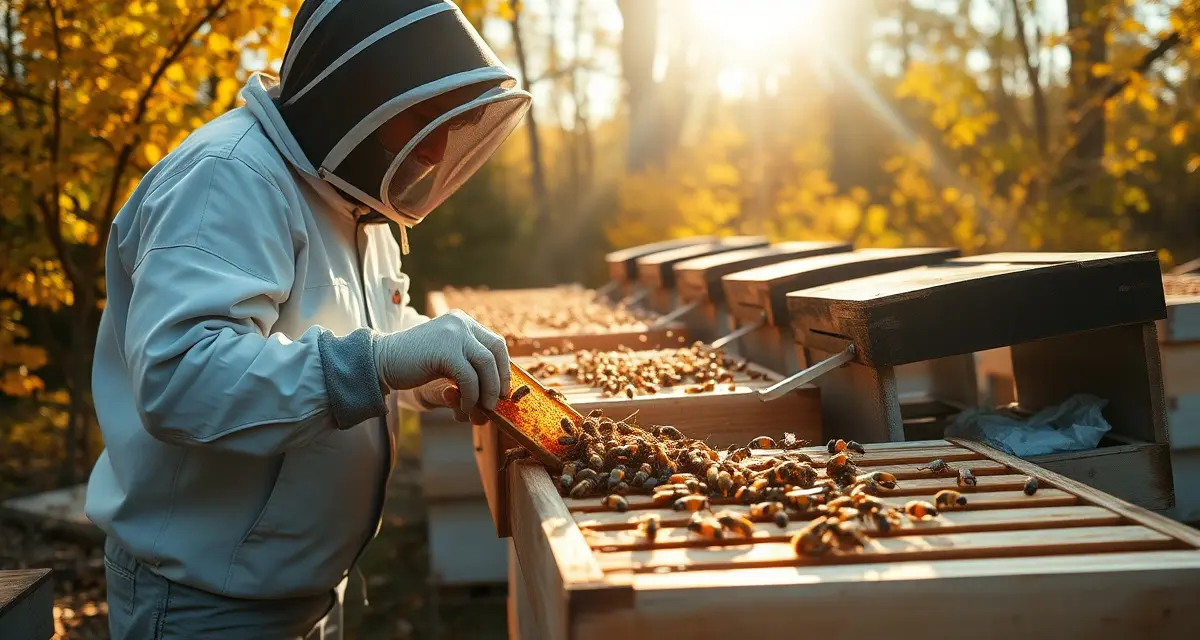
Fall Honey Production Planning After Pollination Season
Pollination-stressed hives produce 30 to 40 percent less honey in fall if not given adequate recovery time. That statistic alone should change how you think about the period between your last summer pollination contracts and your first fall honey yard positioning. The colonies that worked hard through multiple pollination moves, variable forage conditions, and repeated handling stress are not the same colonies you put into almond in February, and treating them that way in September produces disappointing honey crops.
PollenOps hive recovery scoring uses pollination season data (move frequency, stress events, documented health issues) to flag which hives need rest and which are capable of immediate fall honey production. This data-driven approach to fall positioning replaces the guesswork of looking at colonies in August and deciding by feel whether they're ready.
TL;DR
- Wholesale honey prices for commercial producers have ranged from $1.50-2.50 per pound for bulk clover honey in recent seasons.
- Varietal honeys (buckwheat, tupelo, sourwood) command $3.00-5.00 per pound or more at wholesale.
- Summer honey production in North Dakota, Montana, and the Pacific Northwest is the primary source of bulk honey revenue for migratory operations.
- Honey production and pollination revenue streams can be combined on the same annual circuit, with most operations capturing both.
- Packing, storage, and distribution requirements for commercial honey production add cost and logistics complexity beyond the extraction stage.
Reading Your Pollination Season Data
Before planning fall honey production, review what your colonies actually experienced during the pollination season. In PollenOps, your commercial bee yard management records show each yard location's timeline, how many moves each colony batch experienced, what inspection results were documented at each stop, and whether any colonies were flagged for health or strength issues during the season.
Colonies that ran a hard circuit (multiple long-distance moves, back-to-back contract placements without rest periods, documented health issues or understrength flags at one or more stops) are the primary candidates for fall recovery time. These colonies have typically lost more foragers to exhaustion or misdirection, have queens that have been stressed by multiple moves, and may have elevated mite loads from reduced brood-break opportunities during continuous production.
Colonies that ran lighter circuits (fewer moves, longer rest periods between contracts, consistently strong inspection results throughout the season) are better candidates for immediate fall honey positioning without a recovery period.
Identifying Which Yards Get Fall Honey Positioning
Fall honey production requires positioning your strongest colonies in locations with accessible fall forage: goldenrod, aster, fall wildflowers, and buckwheat in the east; rabbitbrush, late wildflowers, and fall-blooming native plants in the west; and late alfalfa or clover cuts in agricultural areas.
The first question isn't which forage location to use. It's which colonies to send there. Your PollenOps hive inventory management data shows which colony batches experienced the most stress events during the pollination season. Prioritize your strongest, lowest-stress colonies for fall honey yards and direct the heavier-stressed colonies to recovery yards with good forage access but lower production pressure.
A recovery yard isn't a holding yard. Colonies in recovery should be on good late-summer forage and receiving whatever supplemental support they need to rebuild population. The goal is to have them at full strength for winter hive preparation and for the following spring's pollination season. Letting them limp through summer and fall without intervention means they arrive at next year's almond season worse than they were.
Fall Honey Flow Timing by Region
Pacific Northwest: Late summer and fall honey in the eastern Washington Columbia Basin comes from sweet clover, native wildflowers, and in some areas, goldenrod. The late July through September window is your fall production period after cherry, apple, and blueberry season. Position your strongest colonies in Columbia Basin sweet clover by mid-July to capture the late flow before fall forage declines.
Northern Plains: North and South Dakota fall honey flows from goldenrod and late wildflowers run August through September. Operators finishing sunflower pollination in August can transition some hives to fall wildflower yards for September production before winterizing.
California: Fall honey opportunities in California are crop-specific: buckwheat in the foothill and mountain areas runs into September, and some Central Valley forage plants bloom into fall. California's fall honey potential is generally lower than the Plains or Pacific Northwest, but operators with well-positioned forage access can capture meaningful fall production.
Midwest and East: Goldenrod and aster are the primary fall honey sources across the Midwest and Northeast. The September goldenrod flow can produce significant honey in good years for colonies positioned in agricultural areas with abundant goldenrod in fencerows and field margins.
Recovery Yard Management
Colonies designated for recovery rather than fall honey production need specific attention:
Varroa treatment: If mite loads were elevated at the end of the pollination season, treat immediately. The fall brood rearing period is when the winter bees that will carry your colony through to next spring are raised, and mite-damaged winter bees die earlier and leave weaker spring colonies.
Supplemental feeding: Colonies short on stores from a difficult summer pollination circuit need supplemental syrup and protein to rebuild population for winter. Don't assume forage at the recovery yard location is adequate without monitoring.
Queen assessment: Queens that have been running hard through a full pollination season may be at the end of their productive life or may have declined in laying quality from stress. Requeen any colony whose queen quality has deteriorated rather than heading into winter with a marginal queen.
Population support: Very weak colonies may benefit from merging with other weak colonies to create a single unit capable of surviving winter. Two weak colonies combined in September produce a stronger unit for spring than either would have as two separate colonies.
Using PollenOps Data for Fall Planning
The PollenOps hive inventory management year-over-year data allows you to compare your colony condition at fall positioning against prior years. If your current fall condition is significantly worse than the prior year despite similar spring conditions, that's a signal your summer program was harder on the colonies than it should have been, information you can use to restructure next year's circuit.
Fall yield data by yard location, captured in PollenOps honey production records, builds a multi-year picture of which yard locations reliably produce and which are marginal. This historical data is more useful than a single season's data for choosing where to position your best fall colonies.
Frequently Asked Questions
How do I transition from pollination contracts to honey production in the same season?
The transition timing depends on your last pollination contract's removal date and the local fall honey flow timing. Ideally, you want at least two to three weeks between a colony's last major pollination move and its first fall honey yard positioning. Colonies that need recovery time get it during that gap; colonies that are in strong condition can go directly into fall honey positions. Review your PollenOps hive history data to sort colonies into "ready" and "recovery" categories before making fall yard assignments.
Which hives should I prioritize for fall honey production after a heavy pollination season?
Prioritize colonies with the lightest pollination season stress: fewest long-distance moves, strongest documented inspection results through the season, no flagged health or strength issues. Colonies from yards that had long rest periods between contracts, or that worked shorter-circuit regional pollination markets with less travel stress, are generally in better condition. PollenOps hive history data provides a basis for sorting your colonies by stress history rather than relying on visual inspection alone.
How does PollenOps help me plan fall yard placement for honey production?
Get Started with PollenOps
Running honey production alongside pollination contracts requires coordinating two revenue streams on a single annual calendar. PollenOps tracks both in one platform so your circuit planning reflects reality rather than optimistic assumptions.
How do commercial beekeepers choose summer honey yard locations?
Summer honey yard selection focuses on forage quality, density, and landscape characteristics. North Dakota and Montana white clover and sweetclover flows typically produce 80-150 pounds per colony in good years. The Pacific Northwest offers diverse flows from clover, fireweed, and wildflowers. Proximity to other apiaries reduces forager competition; bee-friendly state lands or rented agricultural properties with forage diversity are preferred. Water availability within 1-2 miles of each yard is a basic requirement.
What is the difference between selling honey as bulk versus packaged retail?
Bulk honey sales to brokers or packers provide simple logistics (55-gallon drums or totes shipped directly from extraction) but yield lower per-pound prices ($1.50-2.50/pound for clover at wholesale). Packaged retail sales through direct channels (farmers markets, online, specialty retailers) yield $6-12 per pound but require labeling, packaging equipment, food safety compliance, and distribution relationships. Most commercial operations rely primarily on bulk sales and use retail as a supplementary channel for premium varieties.
Can honey production records be tracked alongside pollination contract records?
Yes. PollenOps tracks yard assignments and honey production data alongside pollination contracts so the full economic picture of each yard and each season is visible in one system. This matters for operations that use the same yards for honey production in summer and pollination staging in winter and spring, since the value of a yard location depends on both revenue streams.
Try These Free Tools
Sources
- USDA Agricultural Research Service
- Bee Informed Partnership
- American Beekeeping Federation (ABF)
- American Honey Producers Association
- National Honey Board