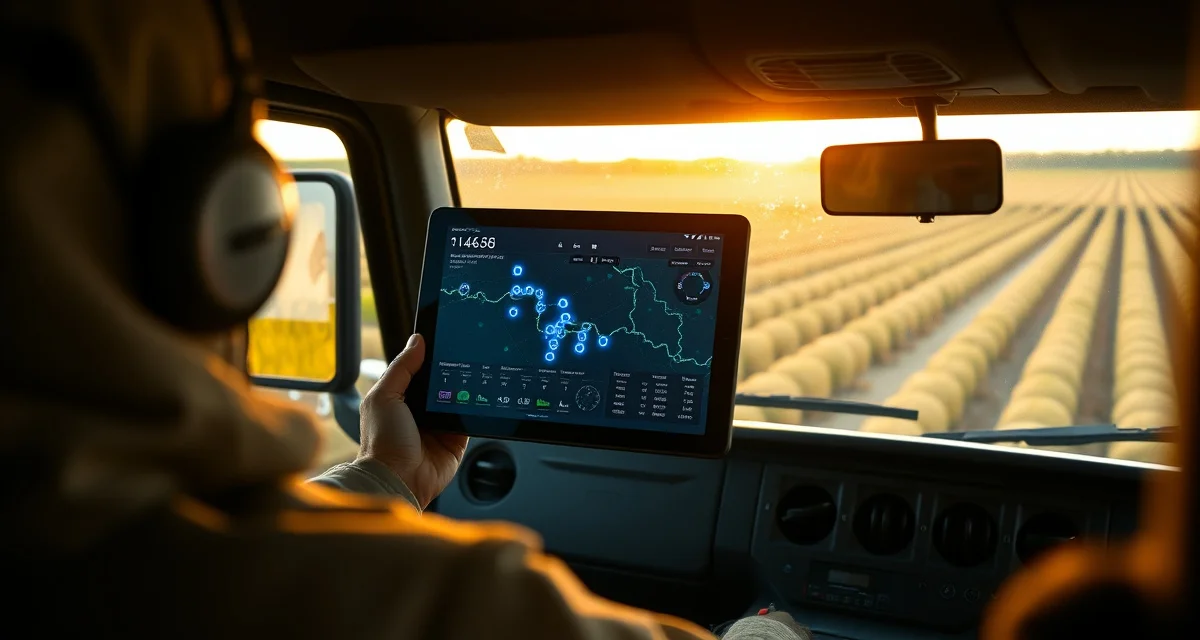
GPS Tracking for Hive Trucks: Fleet Management for Migratory Beekeepers
Late hive delivery can breach a pollination contract and forfeit payment for the full placement. At $200/hive for California almonds, a 400-hive load is $80,000. If the truck is 3 days late because of a routing error, a mechanical failure, or a communication breakdown, the financial exposure is real and the grower relationship may not survive it.
Real-time truck tracking allows growers to be notified of delivery timing automatically. It eliminates the uncertainty that creates problems at both ends of the delivery. The grower can have the forklift operator ready. You know the truck is on schedule. The driver doesn't spend the run fielding calls from an anxious grower.
TL;DR
- Moving 1,000 hives to almonds requires 2-3 truck loads, with fuel costs of $3,500-5,000 per run at current California diesel prices.
- Loading at night when bees are clustered inside reduces escape and minimizes defensive behavior during transport.
- GPS-confirmed yard coordinates, not just addresses, should be in every contract to prevent access failures on delivery night.
- Load planning that sequences multiple drops on a single truck run reduces total miles driven per hive.
- fleet logistics coordination -- vehicle assignments, load manifests, and crew scheduling -- requires a structured system at 500+ hives.
Why GPS Tracking Matters for Bee Trucks
A commercial bee truck isn't the same as a standard freight delivery. The cargo is alive, time-sensitive, and temperature-sensitive. The delivery window is constrained by bloom timing that doesn't wait for late trucks. The grower has orchards ready, forklift operators scheduled, and potentially 10 other beekeepers delivering the same week.
When a loaded truck goes quiet for 8 hours because the driver forgot to charge their phone, or because there's no cell service through a stretch of Nevada highway, the grower doesn't know where his colonies are. They call you. You call the driver. The driver is asleep at a truck stop because of HOS compliance. Everyone is anxious about a $80,000 delivery with no visibility.
GPS tracking solves this. A hardware tracker on the truck transmits location every few minutes regardless of the driver's phone charge level or cell reception gaps. You see the truck on a map. The grower can see the estimated arrival. Everyone has information.
What GPS Fleet Tracking Provides
Real-time location: Know where every truck is at any time. Not the driver's self-reported location, but an automated, accurate position from hardware on the vehicle.
Route compliance: Did the truck take the planned route? A driver who cuts through a higher-elevation pass to save 45 minutes might save time, or might encounter a snowstorm that a lower route would have avoided. GPS history shows the actual route driven.
Speed monitoring: Drivers hauling live colonies should maintain appropriate speeds, not racing through turns at 75 mph with 400 hives. Telematics data showing speed profiles helps identify driving behavior that risks colony mortality or equipment damage.
Arrival confirmation: Timestamped GPS arrival at the delivery address creates a permanent record that the truck arrived on time and at the correct location. For contract documentation purposes, this is valuable evidence if there's ever a dispute about delivery timing.
Hours of service support: For CDL drivers, ELD (Electronic Logging Device) compliance is a federal requirement. GPS systems integrated with ELD logging help drivers track hours and ensure compliance with HOS regulations. A driver who manages their hours correctly on a California almond run doesn't face the situation of being forced to stop 90 miles from delivery because of a log violation.
Fuel efficiency analysis: GPS mileage data combined with fuel purchase records gives you accurate fuel cost per mile by route and by driver. Over a full season of 15-20 long hauls, you can identify route and driver patterns that affect fuel costs. A 5% improvement in fuel efficiency on a 1,500-mile California run saves $60-90 per trip.
Choosing GPS Hardware for Bee Trucks
Several categories of GPS hardware work for commercial truck fleets:
Vehicle-mounted hardwired trackers: Hardwired to the truck's power supply, these units don't rely on a driver's phone and transmit continuously. Examples: Samsara, Verizon Connect, Motive (formerly KeepTruckin). These platforms are designed for commercial fleet management and include ELD compliance features, driver monitoring, and integration with dispatch software.
OBD-II plug-in trackers: Plug into the truck's OBD-II diagnostic port. No installation required, easy to move between vehicles. Less robust than hardwired for vehicles with high vibration (rough farm roads) but practical for smaller fleets or for adding tracking to trucks without permanent installation.
Portable satellite trackers: For trucks in areas with poor cellular coverage (common on routes through rural Nevada, eastern Montana, and high-elevation passes), satellite-based trackers (Garmin inReach, SPOT, or similar) transmit via satellite rather than cellular. Essential backup for any route that takes trucks through cellular dead zones.
Asset trackers for individual pallets: For high-value contract deliveries where you want location tracking on the actual cargo (not just the truck), small asset trackers can be placed on pallets. Useful for complex deliveries involving multiple drops at different orchard locations.
Cost range: $25-75/month per vehicle for basic GPS tracking on standard commercial platforms; $60-150/month for full fleet management platforms with ELD, dispatch, and analytics.
Route Optimization for Multiple Deliveries
A truck that's making deliveries to 4 different grower locations in a California county should be traveling those in an optimized sequence, not in whatever order they appeared on the contract list. Even modest route optimization (finding the sequence that minimizes total miles between stops) saves time and fuel.
For a simple 4-stop delivery run, the difference between the best and worst sequence might be 45-90 miles. At $0.60/mile operating cost, that's $27-54 saved per trip. Across a full almond season with multiple delivery runs, route optimization saves hundreds of dollars in fuel and hours in driver time.
Route optimization tools are built into most commercial fleet platforms. Input your delivery addresses, the tool calculates optimal sequence, driver follows the route. For more complex multi-day delivery schedules across a county with 20+ delivery points, dedicated route optimization tools designed for agricultural delivery patterns are worth evaluating.
Grower Notification Integration
The value of GPS tracking for grower relationships comes from connecting tracking data to delivery communication. When PollenOps integrates your truck GPS data with your fleet logistics module, the system can:
- Calculate ETA based on real-time position and remaining distance
- Send automated grower notifications when the truck is 2 hours out, 30 minutes out, and on arrival
- Record arrival as a timestamped event in the contract record
- Create a delivery confirmation document with GPS location, time, and initial colony count
This eliminates the common scenario where a grower calls asking where the truck is, the driver is unreachable, and you're guessing based on the last text message you got 4 hours ago. The grower sees their delivery status in their portal, the driver follows their route without phone interruptions, and you have a documented delivery record that holds up if there's a dispute.
Building a Fleet Tracking Policy
Once you have GPS tracking in place, a written fleet policy ensures drivers know expectations and creates consistent standards:
Route compliance: Major route deviations (more than X miles off the planned route) must be communicated to dispatch. Some deviations (weather, road closures) are necessary; unauthorized detours that delay delivery aren't.
Speed limits: Policy on maximum speed (both highway and farm road). Bee trucks through orchard access roads have a genuine reason to go slowly. A speed of 10-15 mph reduces colony disturbance and equipment stress.
Rest stop communication: Drivers must log rest stops via the GPS platform or check in by text. A truck parked for 8 hours with no location change and no communication creates unnecessary anxiety.
Arrival documentation: Driver takes GPS-timestamped photos of the truck at the delivery location, records colony count, and enters delivery confirmation in the operations platform before leaving the site.
FAQ
How does GPS tracking reduce costs for hive truck fleets?
GPS tracking reduces costs through route optimization (saving fuel and driver time on multi-stop delivery runs), driver behavior monitoring (reducing aggressive driving that damages equipment and colonies), fuel efficiency analysis (identifying high-cost routes or drivers), and reduced administrative time from automated arrival logging and grower notification. Across a full almond season with 8-12 major hauls, GPS-based route optimization typically saves $300-700 in fuel alone. The avoided liability from documented on-time delivery can save significantly more if a contract dispute ever arises.
Can GPS data trigger automatic grower delivery notifications?
Yes, when GPS tracking is integrated with a fleet management platform that has grower communication features. PollenOps's fleet module connects truck location data to delivery schedules and can trigger automated grower notifications at set distance or time thresholds before arrival. Growers with portal access see real-time delivery status without needing to call you or the driver. This feature alone saves meaningful back-and-forth communication during the high-stress almond delivery window.
How do you calculate optimal routes for multiple yard deliveries?
Route optimization tools take a list of delivery addresses and calculate the sequence that minimizes total distance traveled, accounting for road types and turn times. For straightforward multi-stop runs (4-6 stops in a county), free tools like Google Maps route optimization give reasonable results. For complex multi-day delivery schedules across large geographic areas with 10-20+ stops, commercial fleet routing software gives better optimization and handles constraints like delivery time windows and truck turn restrictions at specific addresses.
What is the standard approach for loading hives for overnight transport?
Load at night when bees are clustered inside, after temperatures have dropped below 60 degrees Fahrenheit. Secure entrances with foam or screened netting to prevent bee escape during transit. Use ventilation boards between layers for stacked hives to prevent heat buildup. Drive overnight to take advantage of cooler temperatures, which reduces stress on colonies during transport. Confirm GPS coordinates and truck access routes for every delivery yard before departure.
How do you track fleet movements and hive assignments across multiple delivery stops?
The practical requirement is a system that connects each truck assignment to specific hive pallets, which connect to specific yard locations, which connect to specific grower contracts. Paper manifests and phone calls work for a single delivery, but a 20-yard almond placement across 10 growers and 3 trucks requires digital coordination. PollenOps fleet module tracks load assignments, delivery sequencing, and yard confirmation in the same system as your contracts and health records.
What DOT requirements apply to commercial beekeeping trucks?
Commercial beekeeping vehicles hauling hives are subject to DOT regulations for commercial motor vehicles, including driver hours of service requirements, commercial driver license requirements for vehicles over 26,001 pounds GVWR, and vehicle inspection requirements. Some states have additional agricultural exception provisions that may apply to beekeeping operations. Consult with a transportation compliance specialist familiar with agricultural operations before your first large-scale move.
Try These Free Tools
Sources
- USDA Agricultural Research Service
- Bee Informed Partnership
- American Beekeeping Federation (ABF)
- USDA Animal and Plant Health Inspection Service (APHIS)
- American Honey Producers Association
Get Started with PollenOps
Moving hundreds of hives across multiple counties or states requires logistics coordination that goes beyond what a spreadsheet can manage reliably. PollenOps handles load planning, route scheduling, and crew assignments alongside your contract and yard records so your fleet operations are organized before the truck rolls.