Pollination Service Management Software in California
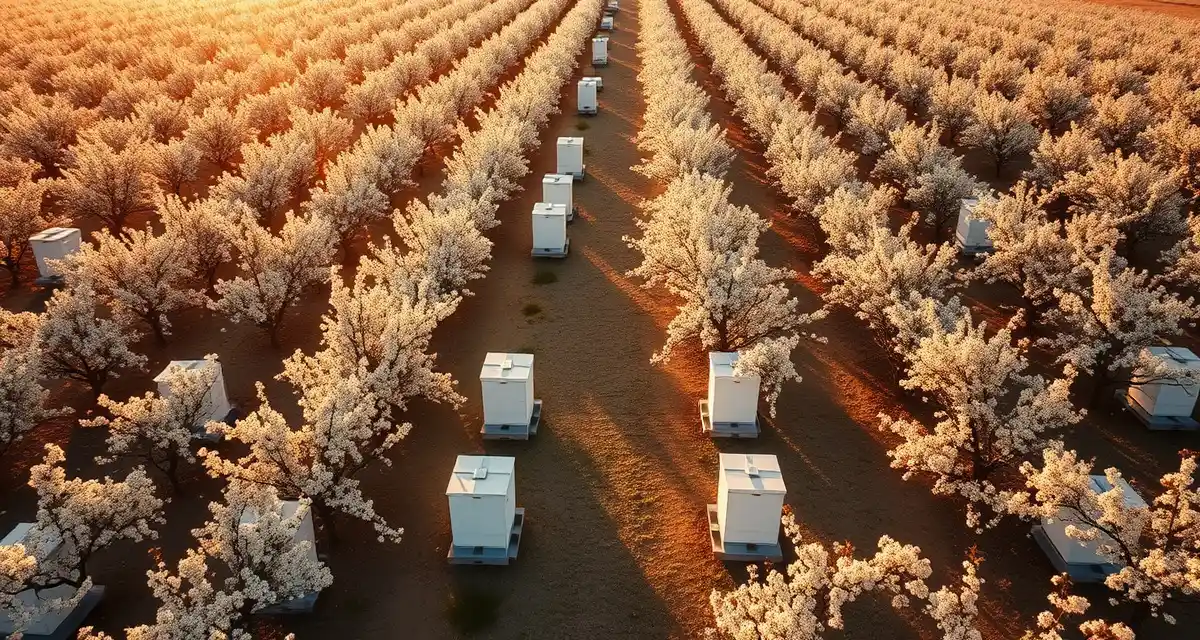
California almond orchards require over 1.5 million hive placements per season, the largest single crop event in US agriculture. Every February, the world's commercial beekeeping fleet converges on the Central Valley, and the organizational complexity of managing that event at the individual operator level is genuinely daunting.
This is the market that PollenOps was built for.
TL;DR
- Commercial beekeeping operations face two primary management challenges: operational logistics (hive health, transport, placement) and administrative coordination (contracts, payments, documentation).
- Most disputes and revenue losses in commercial beekeeping are preventable with better documentation and clearer contract terms.
- The operations that run most profitably are those with disciplined systems for tracking hive health, contract status, and fleet logistics in one place.
- PollenOps is built specifically for the operational complexity of commercial-scale pollination services, not adapted from a hobbyist tool.
- The most important management decisions (treatment timing, contract renewal, hive allocation) require accurate current data to make well.
The Scale of California Pollination
California is not just the largest pollination market in the US, it's the largest pollination market in the world. The numbers define the scope:
- Over 1.5 million hive placements in almond orchards annually
- Over 1.3 million acres of bearing almond orchards in the Central Valley
- Commercial pollination rates typically ranging $180-$230 per hive
- Total almond pollination expenditure estimated at over $300 million annually
For context, this single crop event requires roughly 75% of all managed honeybee colonies in the United States. US migratory beekeepers from every state bring hives to California for almond season.
Beyond almonds, California's commercial pollination market includes:
- Cherries in the Brentwood, Gilroy, and Sacramento Valley areas
- Apples in Sonoma and coastal valleys
- Avocados in Ventura, San Diego, and San Luis Obispo counties
- Citrus in the San Joaquin Valley (where bees improve set and size)
- Almonds in Arizona (smaller market, but neighboring and relevant for migratory planning)
Bloom Timing in the Central Valley
California's Central Valley spans roughly 450 miles from Bakersfield in the south to Red Bluff in the north. Bloom timing across this range varies by 2-4 weeks for the same crop and variety.
Southern San Joaquin Valley (Kern County, Bakersfield area): Earliest bloom in normal years, typically starting February 5-15.
Central San Joaquin Valley (Fresno, Madera, Kings counties): The heart of commercial almond production. Normal bloom range is February 10-20.
Northern San Joaquin Valley and Sacramento Valley: Later bloom, typically February 15-March 5 in normal years.
When bloom is early (warm January), southern Valley orchards can open in late January, compressing the logistics window significantly. When bloom is late (cold February), northern Valley orchards may not open until mid-March.
PollenOps almond bloom alerts are calibrated specifically for Central Valley and Sacramento Valley conditions, with separate monitoring for each major production district. You get district-specific alerts, not a single Valley-wide forecast.
Managing Contracts for California Almond and Cherry Growers
California growers, particularly large commercial almond operations, are among the most contract-savvy agricultural buyers in the US. They've dealt with enough beekeeping disputes over decades to know what documentation they want, and their contract expectations have become more formal over time.
Typical California almond contract requirements include:
- Written contract signed by both parties before hive delivery
- Specific hive count and minimum strength specification (typically 6-8 frames of bees)
- Delivery deadline tied to bloom percentage (usually "by 10% bloom")
- GPS confirmation of delivery location
- Pre-move strength assessment documentation
- Payment terms (typically 50% deposit, 50% post-bloom)
PollenOps pollination contract software manages all of these elements in a single workflow. The almond-specific contract template pre-populates fields that California growers expect to see, reducing the setup time for each new contract.
California Apiary Registration Requirements
California has county-level apiary registration requirements that apply to all commercial beekeeping operations. Every county where you place hives requires a county apiary registration number. For migratory operators, this means registering in each of the counties where you have yard locations each season.
Key California compliance requirements:
- State registration: Required through the California Department of Food and Agriculture
- County registration: Required in each county where hives are placed. Kern, Fresno, Madera, Kings, Merced, Stanislaus, San Joaquin, Glenn, Tehama, and other almond-producing counties all require separate registration.
- Entry health certificate: Required for all hives entering California from other states, issued within 30 days of entry
- Border station declaration: Loads entering California must be declared at agricultural checkpoints
Missing county registration can result in fines and, more practically, creates complications when you try to invoice. Some almond handlers require proof of county registration before releasing payment.
What Software Do California Pollination Beekeepers Use?
The most organized California operations have moved from spreadsheets to dedicated contract management platforms for the same reasons operations everywhere do: the complexity of managing 20-50 simultaneous almond contracts demands more than a spreadsheet can provide reliably.
The specific California requirements that drive software adoption:
- Multi-county compliance document management
- GPS delivery verification for contract dispute protection
- Pre-move strength assessment documentation
- Grower-specific arrival reports that large handlers expect
PollenOps handles all of these within a single platform, including the county-level compliance tracking that California-specific operations require.
When Does Almond Bloom Start in the Central Valley?
The most accurate answer is: it depends on the year and the specific location. Historical averages:
- Southern San Joaquin Valley: February 5-15 (Butte, Padre, and early pollenizer varieties first; Nonpareil 7-10 days later)
- Central San Joaquin Valley (Fresno area): February 10-20 for main commercial varieties
- Sacramento Valley: February 15-March 5 for most locations
Warm years advance all these dates by 7-14 days. Cool years push them back by a similar amount. The only reliable way to know what's happening in a specific year is real-time bloom tracking, not last year's calendar.
Frequently Asked Questions
What software do California pollination beekeepers use?
Organized California commercial pollination operations use platforms that handle contract management, GPS delivery verification, bloom timing alerts, and compliance documentation simultaneously. PollenOps is the only platform purpose-built for US commercial pollination that covers all of these. General business tools like Excel or HoneyBook require significant workarounds for the specific documentation requirements California almond growers and county registration authorities expect.
When does almond bloom start in the Central Valley?
Historical averages put Southern San Joaquin Valley bloom at February 5-15, Central Valley (Fresno area) at February 10-20, and Sacramento Valley at February 15 through early March. Warm years advance bloom by 7-14 days; cool years push it later. PollenOps almond bloom alerts track real-time conditions by district and fire 5-7 days before projected bloom at your specific yard locations, adjusting for unusual weather as conditions develop.
How do I manage contracts for California almond and cherry growers?
Use a contract management platform that includes pollination-specific fields (hive count, strength minimums, delivery dates) and connects those fields to your GPS delivery records, pre-move strength assessments, and invoicing workflow. PollenOps's almond contract template is pre-configured for California grower expectations, including county registration tracking and grower-facing arrival report generation. Cherry contracts use the same platform with cherry-specific bloom timing alerts for the Brentwood and Central Valley growing areas.
What is the difference between commercial and hobby beekeeping?
Commercial beekeeping is distinguished by scale (typically 100+ hives, often 500-5,000+), revenue source (pollination contracts and bulk honey sales rather than local honey retail), and management approach (systematic protocols applied across yards rather than individual colony attention). Commercial operators manage bees as an agricultural enterprise, with the administrative, regulatory, and logistical complexity that entails. Most commercial operators derive the majority of their income from pollination services; honey production is a supplementary revenue stream.
How many hives are needed to make commercial beekeeping a full-time income?
Most beekeeping economists put the full-time commercial threshold at 500-800 hives, assuming efficient operations management and a combination of pollination and honey revenue. At 500 hives and $200/hive for almond pollination, almond season alone generates $100,000 in gross revenue before expenses. Net margins depend on operational efficiency, but well-run operations can achieve 30-50% net margins on pollination revenue. Additional crops and honey production improve per-hive economics but require additional management capacity.
What is the annual revenue potential for a 1,000-hive commercial operation?
A 1,000-hive operation running an almond season ($200/hive) plus blueberry or apple contracts ($80-100/hive) plus summer honey production ($25-40/hive after extraction costs) can generate $300,000-360,000 in annual gross revenue. Net margins after transport, crew, equipment, and hive replacement costs typically run 25-40% for well-managed operations, putting net income at $75,000-145,000 annually. The specific number depends heavily on circuit efficiency, loss rates, and contract quality.
Try These Free Tools
Sources
- USDA Agricultural Research Service
- Bee Informed Partnership
- American Beekeeping Federation (ABF)
- American Honey Producers Association
- Project Apis m.
Get Started with PollenOps
Managing a commercial beekeeping operation involves more data, more deadlines, and more moving parts than any general-purpose tool was designed to handle. PollenOps brings contracts, yard records, health documentation, and fleet logistics together in one platform built for the realities of commercial-scale beekeeping.