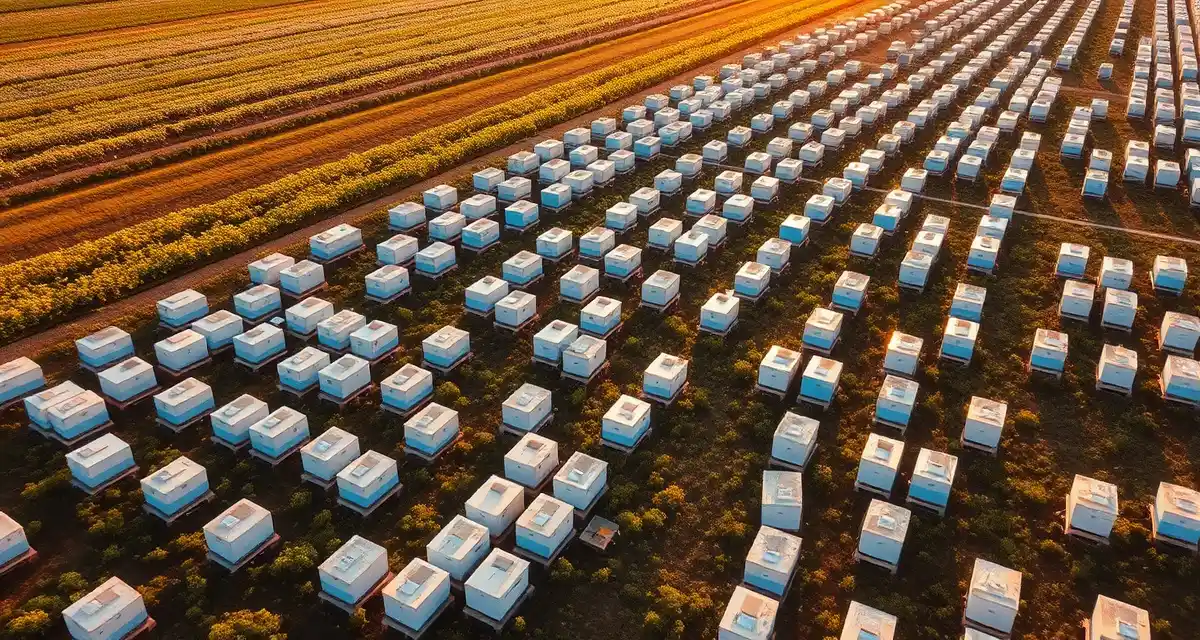
Software for Large-Scale Pollination Operations (2000+ Hives)
Operations above 2,000 hives generate an average of $800,000 to $4 million in annual pollination contracts revenue. At that revenue level, the operational risk of an unmanaged missed bloom window or a poorly documented hive dispute isn't just inconvenient. It's a material financial event that can wipe out a significant portion of your season's margin.
Large-scale operations need software that works at their scale, not a tool built for 50 hives that you've grown past.
TL;DR
- Commercial beekeeping operations face two primary management challenges: operational logistics (hive health, transport, placement) and administrative coordination (contracts, payments, documentation).
- Most disputes and revenue losses in commercial beekeeping are preventable with better documentation and clearer contract terms.
- The operations that run most profitably are those with disciplined systems for tracking hive health, contract status, and fleet logistics in one place.
- PollenOps is built specifically for the operational complexity of commercial-scale pollination services, not adapted from a hobbyist tool.
- The most important management decisions (treatment timing, contract renewal, hive allocation) require accurate current data to make well.
The Complexity of a 2,000+ Hive Operation
Running a 2,000-plus hive pollination operation means simultaneously managing:
- 50-100 grower contracts with different terms, delivery dates, and payment schedules
- 100+ yard locations across potentially multiple states
- A truck fleet of 5-15 vehicles with multiple drivers
- 20-40 full-time and seasonal employees who need assignments, task management, and accountability
- Multiple simultaneous crop contracts with different bloom timing alerts and service periods
- Interstate compliance documentation for every state crossing on your routes
- A live hive inventory that updates as contracts are signed and hives move
No spreadsheet handles this reliably. No combination of disconnected tools keeps the information connected in ways that support real-time operational decisions. The only reliable approach is an integrated platform where data from the field updates contracts, invoices, and inventory automatically.
How Many Contracts Can PollenOps Manage Simultaneously for a 5,000-Hive Operation?
There's no contract limit in PollenOps. A 5,000-hive operation with 100 simultaneous contracts manages all 100 in the same contract calendar, with the same GPS delivery verification, bloom timing alerts, and automated invoicing that a 100-hive operation uses.
The operational advantage at scale is that the platform's coordination functions become more valuable, not less, as you grow. At 10 contracts, you might manage the calendar mentally. At 100 contracts, you absolutely cannot. The platform isn't just a convenience at this scale; it's an operational necessity.
Does PollenOps Support Multiple Users for a Large Team?
Yes. Multiple users can access the same PollenOps account with different permission levels:
- Owner/administrator: Full access to all features, all contracts, all financials
- Contract manager: Access to contracts, invoicing, and delivery records without full admin permissions
- Driver: Access to assigned yard routes and check-in tools; no contract or invoicing access
- Yard inspector: Access to pre-move strength assessment tools and yard check-ins for assigned locations
For a 5,000-hive operation with 8 drivers, 3 inspectors, and an office manager, each team member has access to the specific tools and information their role requires, without visibility into sensitive contract financials or the ability to modify records outside their scope.
This permission structure is important for data security and accountability. When every delivery check-in is tied to a specific team member's login, you have a chain of custody for every operational record.
Team Management at Large Scale
At 2,000+ hives with a full team, the team management challenge goes beyond assigning yards and tracking check-ins. You're managing:
Driver coordination: Multiple trucks running simultaneously in different regions. Coordinating driver schedules around bloom windows, permit requirements at state borders, and delivery deadlines requires a system that shows all drivers' commitments in one view.
Inspector deployment: Pre-move strength assessments for a 500-hive yard take a full day for one inspector. Scheduling inspectors across your yard portfolio before the critical almond delivery window requires careful planning.
Communication protocols: What does a driver do if they arrive at a yard and find a problem? What's the escalation path? Who needs to know about a hive loss during transport? Clear protocols, backed by documented communication in the platform, reduce the judgment calls that lead to errors.
PollenOps employee management handles multi-user team coordination with role-specific access and GPS-stamped field check-ins that feed directly into your yard records and contract documentation.
Multi-State Compliance at Scale
A large migratory operation crossing 5 or 6 states during a full season has dozens of health certificate renewals, state apiary registrations, and compliance document updates to manage annually.
At 10 certificates, you can track this in a spreadsheet. At 40 certificates across 6 states with varying renewal dates and requirements, a compliance tracking system is essential.
PollenOps interstate transport compliance tracks each state's requirements, the compliance documents attached to each planned route, and expiration dates for health certificates and permits. When a certificate is 2 weeks from expiring and you have a move planned that requires it, the system flags the renewal need before you load the truck.
Enterprise Pricing and Custom Features
For operations above a certain scale, custom pricing is available. Enterprise plans typically include:
- Dedicated onboarding and account management support
- Custom reporting tailored to your operation's specific needs
- Integration with external accounting or fleet management systems
- Multi-entity account structures for operations with separate business entities for different regions
Contact PollenOps directly for enterprise pricing discussions. The $89 per month commercial plan handles the vast majority of large-scale operations effectively, but very large migratory operations with complex organizational structures may benefit from enterprise features.
Return on Investment at Scale
The ROI calculation for a large-scale operation is more straightforward than for small operations because the revenue base is larger and the per-incident cost of failures is higher.
For a 5,000-hive operation:
- Average per-hive annual pollination revenue: $180-$230
- Total annual pollination revenue: $900,000-$1,150,000
- Cost of one missed bloom window on a 500-hive almond contract: potentially $50,000-$100,000 in reduced performance claims and renewal risk
- Cost of PollenOps annual subscription: $1,068
The platform pays for itself many times over on a single prevented incident. For operations at this scale, the question isn't whether to use professional contract management software. It's which platform best fits the specific operational needs of your fleet.
Frequently Asked Questions
What software do large-scale commercial beekeepers use to manage operations?
Large-scale operations (2,000+ hives) require integrated platforms that connect hive inventory, GPS yard tracking, contract management, bloom timing alerts, invoicing, team management, and interstate compliance documentation in a single system. PollenOps is the only platform purpose-built for US commercial pollination that covers all of these at unlimited scale. General business tools and disconnected specialized tools create the manual data transfer and synchronization errors that are particularly costly at large scale.
How many contracts can PollenOps manage simultaneously for a 5,000-hive operation?
There's no contract limit in PollenOps. A 5,000-hive operation with 100 simultaneous contracts manages all of them in the same contract calendar with GPS delivery verification, bloom timing alerts, and automated invoicing for each. The platform's coordination functions become more valuable, not less, as contract volume grows.
Does PollenOps support multiple users for a large team?
Yes. PollenOps supports multiple users with role-specific permission levels including owner/administrator, contract manager, driver, and yard inspector roles. Each team member has access to the tools and information their role requires without visibility into areas outside their scope. All field check-ins are tied to specific user logins, creating a chain of custody for every operational record.
What is the difference between commercial and hobby beekeeping?
Commercial beekeeping is distinguished by scale (typically 100+ hives, often 500-5,000+), revenue source (pollination contracts and bulk honey sales rather than local honey retail), and management approach (systematic protocols applied across yards rather than individual colony attention). Commercial operators manage bees as an agricultural enterprise, with the administrative, regulatory, and logistical complexity that entails. Most commercial operators derive the majority of their income from pollination services; honey production is a supplementary revenue stream.
How many hives are needed to make commercial beekeeping a full-time income?
Most beekeeping economists put the full-time commercial threshold at 500-800 hives, assuming efficient operations management and a combination of pollination and honey revenue. At 500 hives and $200/hive for almond pollination, almond season alone generates $100,000 in gross revenue before expenses. Net margins depend on operational efficiency, but well-run operations can achieve 30-50% net margins on pollination revenue. Additional crops and honey production improve per-hive economics but require additional management capacity.
What is the annual revenue potential for a 1,000-hive commercial operation?
A 1,000-hive operation running an almond season ($200/hive) plus blueberry or apple contracts ($80-100/hive) plus summer honey production ($25-40/hive after extraction costs) can generate $300,000-360,000 in annual gross revenue. Net margins after transport, crew, equipment, and hive replacement costs typically run 25-40% for well-managed operations, putting net income at $75,000-145,000 annually. The specific number depends heavily on circuit efficiency, loss rates, and contract quality.
Try These Free Tools
Sources
- USDA Agricultural Research Service
- Bee Informed Partnership
- American Beekeeping Federation (ABF)
- American Honey Producers Association
- Project Apis m.
Get Started with PollenOps
Managing a commercial beekeeping operation involves more data, more deadlines, and more moving parts than any general-purpose tool was designed to handle. PollenOps brings contracts, yard records, health documentation, and fleet logistics together in one platform built for the realities of commercial-scale beekeeping.