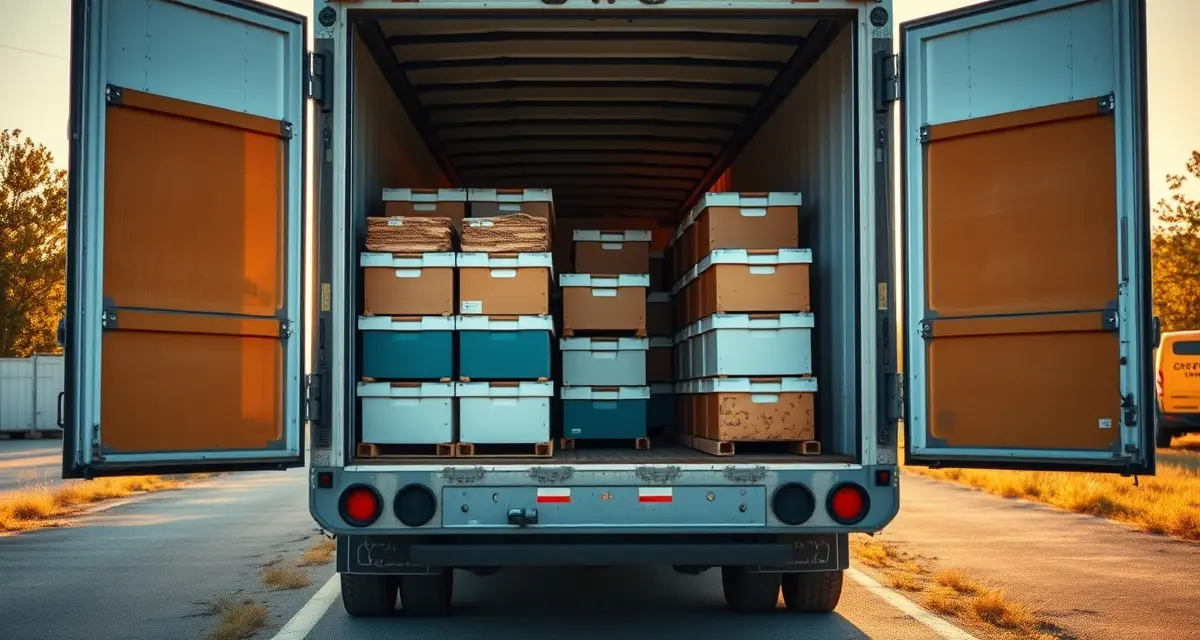
Hive Transport Compliance for Interstate Beekeeper Moves
If you're moving hives across state lines, the paperwork can stop your truck as fast as a closed border station. State after state has its own health certificate requirements, apiary registration rules, and inspection windows. Miss one document and you might be sitting in a inspection line for hours, or worse, turned back at the border with a full load of bees.
This guide covers what you actually need to know about interstate hive transport compliance, and how keeping everything organized in one place saves you time and fines.
TL;DR
- Moving 1,000 hives to almonds requires 2-3 truck loads, with fuel costs of $3,500-5,000 per run at current California diesel prices.
- Loading at night when bees are clustered inside reduces escape and minimizes defensive behavior during transport.
- GPS-confirmed yard coordinates, not just addresses, should be in every contract to prevent access failures on delivery night.
- Load planning that sequences multiple drops on a single truck run reduces total miles driven per hive.
- fleet logistics coordination -- vehicle assignments, load manifests, and crew scheduling -- requires a structured system at 500+ hives.
Why Interstate Compliance Is More Complex Than It Looks
Most beekeepers know they need a health certificate to move hives. What surprises newer operators is how different the requirements are from state to state. California wants a certificate from an accredited state apiarist within 30 days of entry. Idaho may require a different form entirely. Some states require inspection before issuance; others accept a certificate from your home state with no pre-move inspection at all.
Violations of interstate hive transport regulations can result in fines of $500 to $5,000 per incident. That's per incident, not per season. A single uninspected load turned back at a California weigh station or border checkpoint can cost more than the contracts you were moving to fill.
What You Need for Most Interstate Moves
Every state is different, but you'll typically need:
- Certificate of Health issued by a licensed apiary inspector within a set window (usually 30 days)
- Proof of state apiary registration in your home state
- Destination state registration if required (California requires county-level registration on arrival)
- Treatment records showing varroa mite treatment history
- Load manifest listing number of hives and approximate colony strength
Some states also require you to notify the destination state apiarist before the truck crosses the line. California's Border Protection Stations intercept agricultural loads 24 hours a day. If your paperwork isn't ready when the inspector asks for it, the conversation gets expensive fast.
States with the Strictest Entry Requirements
California
California inspects virtually every commercial beekeeping load that enters the state. You need a valid health certificate issued within 30 days of entry, proof of origin state registration, and the load must be declared at a Border Protection Station or agricultural checkpoint. The California Department of Food and Agriculture maintains a list of restricted counties during certain disease events, so checking for current quarantines before you load is not optional.
Florida
Florida requires a health certificate for all colonies entering from out of state and enforces Africanized honey bee (AHB) compliance. Bees from certain geographic areas face additional scrutiny. Florida also requires the incoming beekeeper to have a Florida state apiarist number before loads can be legally placed.
Hawaii
Hawaii bans all movement of bees into the state with almost no exceptions. If you're wondering whether you can ship a package colony to Hawaii, the answer is almost certainly no.
Texas and Other Southern States
Texas requires a health certificate and, depending on county, may require inspection related to AHB zone compliance. Movement into areas designated as AHB establishment zones triggers additional review.
What Permits Do I Need to Move Hives into California?
For California specifically, you need:
- A health certificate issued within 30 days by a licensed apiary inspector in your origin state
- Your home state apiary registration number
- A county apiary registration in the California county where you'll be placing bees
- Compliance with any active pest or disease quarantine orders
The county registration often needs to happen before your bees arrive, so plan ahead. Some California counties issue temporary registration for seasonal pollination operators, but you have to request it.
How to Get a Health Certificate for Interstate Hive Transport
The health certificate process varies by state, but the typical steps are:
- Contact your state apiary inspector (or state department of agriculture) at least 2 weeks before your planned move date
- Schedule an on-site inspection of the hives to be moved
- Receive the signed certificate specifying the number of hives, origin location, and expiration date
- Carry the original (some states require original signatures) in the truck for every load covered
Some states allow a single certificate to cover multiple loads within a defined window. Others require a new certificate per truck. When you're coordinating a fleet of trucks during almond season, tracking certificate validity across every driver's paperwork becomes a real operational headache.
Organizing Compliance Documents at Scale
This is where beekeepers consistently lose time and money. When you're running 10 trucks across 4 states during a 3-week almond rush, keeping health certificates, registration docs, and inspection records in a glove box is a system that fails.
PollenOps transport compliance tools let you attach compliance documents to each planned move, set expiration alerts for certificates, and generate a route-specific checklist of required documentation for every state your load will cross. Before a driver leaves the yard, you can confirm every document is current and loaded.
The load planning tools also flag when a planned route crosses a state that requires advance notification, so you're not scrambling at 11 PM the night before a move.
What States Require Inspection Before Hive Entry?
Several states require an inspection of hives before they're permitted to enter, not just a certificate from your home state. These include:
- California (inspection at Border Protection Station or by state inspector)
- Florida (may require inspection depending on origin state and AHB status)
- Oregon (requires certificate from origin state; spot inspections occur)
- Washington (certificate of health required; random inspections at borders)
The list changes. Disease events and pest introductions can trigger emergency inspection requirements with very short notice. Subscribing to your home state's apiary newsletter and the USDA APHIS pest alerts is the only reliable way to stay current.
Record-Keeping After the Move
Compliance doesn't end when you cross the state line. Many states require you to register your destination apiary location within a set number of days after arrival. California, for example, requires registration in each county where hives are placed. Missing a post-arrival registration can trigger a fine even if your entry was fully documented.
Keep a record of:
- Entry date and Border Protection Station (if applicable)
- Certificate number and issuing inspector
- Destination county and registration confirmation
- Any inspection performed at point of entry
These records become critical if a grower disputes your delivery or if a state inspector conducts a yard audit later in the season.
Frequently Asked Questions
What permits do I need to move hives into California?
You need a health certificate issued within 30 days by a licensed apiary inspector in your home state, your origin state registration documentation, and a county-level apiary registration in the California county where you'll be placing bees. Your load must be declared at an agricultural checkpoint. Check for any active quarantine orders before you depart.
How do I get a health certificate for interstate hive transport?
Contact your state department of agriculture or state apiarist office at least two weeks before your planned move date. Schedule an on-site inspection, and receive a signed health certificate that covers the number of hives in your load. Health certificates typically expire within 30 days, so timing your inspection relative to your move date matters.
What states require inspection before hive entry?
California, Florida, Oregon, and Washington are among the states with the strictest inspection and certification requirements for incoming hive loads. Requirements can change based on active disease or pest events, so confirm current requirements with the destination state's apiary program before loading your truck.
What is the standard approach for loading hives for overnight transport?
Load at night when bees are clustered inside, after temperatures have dropped below 60 degrees Fahrenheit. Secure entrances with foam or screened netting to prevent bee escape during transit. Use ventilation boards between layers for stacked hives to prevent heat buildup. Drive overnight to take advantage of cooler temperatures, which reduces stress on colonies during transport. Confirm GPS coordinates and truck access routes for every delivery yard before departure.
How do you track fleet movements and hive assignments across multiple delivery stops?
The practical requirement is a system that connects each truck assignment to specific hive pallets, which connect to specific yard locations, which connect to specific grower contracts. Paper manifests and phone calls work for a single delivery, but a 20-yard almond placement across 10 growers and 3 trucks requires digital coordination. PollenOps fleet module tracks load assignments, delivery sequencing, and yard confirmation in the same system as your contracts and health records.
What DOT requirements apply to commercial beekeeping trucks?
Commercial beekeeping vehicles hauling hives are subject to DOT regulations for commercial motor vehicles, including driver hours of service requirements, commercial driver license requirements for vehicles over 26,001 pounds GVWR, and vehicle inspection requirements. Some states have additional agricultural exception provisions that may apply to beekeeping operations. Consult with a transportation compliance specialist familiar with agricultural operations before your first large-scale move.
Try These Free Tools
Sources
- USDA Agricultural Research Service
- Bee Informed Partnership
- American Beekeeping Federation (ABF)
- USDA Animal and Plant Health Inspection Service (APHIS)
- American Honey Producers Association
Get Started with PollenOps
Moving hundreds of hives across multiple counties or states requires logistics coordination that goes beyond what a spreadsheet can manage reliably. PollenOps handles load planning, route scheduling, and crew assignments alongside your contract and yard records so your fleet operations are organized before the truck rolls.