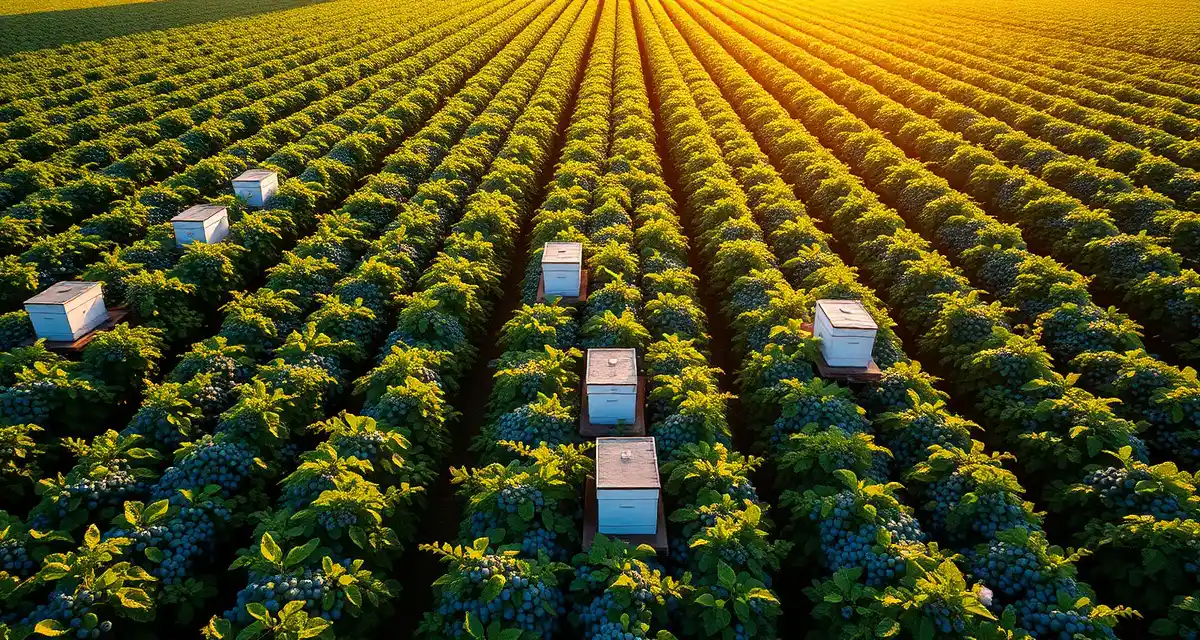
Pacific Northwest Berry Season Guide for Pollination Beekeepers
Pacific Northwest berry and tree fruit pollination generates over $500 million in beekeeper contract revenue per year across the region's cherry, apple, blueberry, and cranberry markets. A well-planned PNW season can run from late March cherry through July blueberry, with contracts stacked sequentially to keep your fleet productive for four months without the long gaps that other regional circuits sometimes create.
The PNW bloom calendar shows a logical month-by-month progression: March pear and early cherry, April cherry peak and late pear, May apple in Wenatchee and Chelan, June blueberry in Washington and Oregon, and July late blueberry and cranberry. Understanding this sequence and building your contracts to follow it is the foundation of a profitable PNW circuit.
TL;DR
- Pacific Northwest berry crops (strawberries, raspberries, blackberries) create a summer pollination opportunity that follows tree fruit season.
- Berry pollination rates typically run $60-100 per hive depending on crop and location.
- Multiple berry crops can be sequenced across a Pacific Northwest summer circuit to maximize placement revenue.
- Hive strength requirements vary by crop: strawberries typically require 5-6 frames, caneberries 6-8 frames.
- Berry season's timing after tree fruit season makes it a natural continuation for migratory operators already positioned in the Pacific Northwest.
The PNW Bloom Sequence in Order
March: Pear and Early Cherry
Washington pear bloom in the Yakima Valley and Columbia Basin starts in mid-March, with Bartlett opening first and Bosc and Anjou following over the next week or two. Elevation variation in the Yakima Valley creates a 7 to 10 day bloom spread between valley floor and benchland orchards.
Washington cherry can start as early as late March in the lowest-elevation Yakima Valley floor orchards, particularly early varieties in the Wapato and Sunnyside areas. Most operators treat late March as cherry warm-up and April as the true cherry season beginning.
If you're coming from California almond, late February exit positions you perfectly for mid-March Yakima pear. The almond-to-pear transition is one of the cleanest circuit connections in the country: almond wraps up in mid-February to early March, and your hives are at peak strength from the almond season buildup just as pear bloom begins.
April: Cherry Peak
April is Washington cherry season. The Yakima Valley, Chelan and Wenatchee areas, Okanogan Valley, and Hood River districts all bloom through April at varying elevations. The cherry pollination Yakima Valley article covers the elevation-specific timing variation that runs from 800 feet in valley floor orchards to 3,200 feet in benchland blocks, creating a 10 to 14 day bloom spread across the region.
Cherry is the premium PNW tree fruit contract, with rates of $150 to $200 per hive for the concentrated April season. For operators building a PNW circuit, cherry contracts are the financial anchor that everything else is planned around.
Oregon cherry in the Dalles area and the southern Willamette Valley is a lesser-known opportunity that runs a few days to a week ahead of Washington's main season due to the warmer conditions south of the Columbia River. Some operators combine Oregon cherry in early April with Washington cherry later in the month.
May: Apple in Wenatchee and Chelan
Washington is the country's largest commercial apple producer, and the Wenatchee and Chelan growing districts are the heart of that production. Apple bloom runs through May, with early varieties like Gala opening in late April and late varieties running into mid-May. Apple rates are $130 to $175 per hive for the region's commercial operations.
The geographic transition from April cherry orchards to May apple orchards in the same Central Washington region is efficient. Your hives that finished cherry contracts in the Yakima or Wenatchee areas can often transition to apple contracts in the same geography without major repositioning.
The berry pollination Pacific Northwest article covers the strategic overview of the full spring circuit. For apple, review the apple pollination Washington State guide for the variety-specific bloom timing variation that makes precise placement scheduling important.
June: Blueberry
Washington and Oregon blueberry bloom runs primarily in June. Washington's main commercial blueberry production is in the Puyallup Valley, the Lynden and Ferndale area in Whatcom County near the Canadian border, and in the Fraser Valley region. Oregon blueberry is concentrated in the Willamette Valley's Marion, Linn, and Polk counties.
Blueberry pollination is high-density: 4 to 6 hives per acre for highbush varieties in Washington and Oregon. This density requirement makes blueberry contracts proportionally more valuable per acre than lower-density crops. A 50-acre blueberry operation requires 200 to 300 hives, generating $20,000 to $37,500 at typical rates.
The berry pollination Pacific Northwest seasonal planning context is essential for blueberry. The peak June window in Washington's Whatcom County and Oregon's Willamette Valley can be tight, and missing the bloom window because your hives were tied up in a late-finishing apple contract creates problems that affect both your grower relationships and your fleet utilization.
July: Late Blueberry and Cranberry
The season extends into July for late blueberry varieties in northern Washington and for cranberry in Pacific and Grays Harbor counties. Some operators extend the PNW season through July with a combination of late blueberry, cranberry, and early positioning for summer honey production in eastern Washington.
The Washington sweet clover honey opportunity in eastern Washington's Columbia Basin runs July through August, providing a transition from spring pollination contracts to summer honey production without requiring a major geographic move for operators positioned in central Washington.
Contract Sequencing Strategy
The most important strategic decision for a PNW circuit is managing the transition from one crop to the next without creating gaps where hives are unproductive or conflicts where they're double-committed.
Plan your cherry contracts with an explicit end date. Cherry growers want bees out after bloom completes, typically by late April or early May. Confirm your removal timeline in every cherry contract and build your apple placement schedule around the cherry removal date, not the calendar.
Same logic applies to apple-to-blueberry transitions. Apple bloom completes in mid-May; blueberry placement in Whatcom County or the Willamette Valley typically starts in late May or early June. If your apple contracts run long due to delayed bloom, you need to communicate proactively with your blueberry growers about timing adjustments rather than silently missing the placement window.
PollenOps bloom timing alerts for all your active contracts fire simultaneously when weather data indicates bloom is approaching, so you're not managing each crop's timing independently. The alert dashboard shows you the current bloom status across your full contract portfolio, flagging when contracts are overlapping or when a transition window is tighter than expected.
Biggest Logistical Challenges
Road Access and Equipment Sizing
Washington's orchard geography is defined by the Cascade Mountain range, which means roads serving cherry and apple orchards in the Yakima and Wenatchee areas run through mountainous terrain with significant grade and switchback sections. Many orchard access roads are unsuitable for full-size semi-trailers. Scout access before every new contract and discuss road capacity with the grower before signing.
The Whatcom County blueberry market in flat coastal terrain is much more forgiving for large equipment, but some older farms have access roads with weight restrictions. Confirm access requirements in your contract and conduct a site visit before delivery season.
Weather Windows
PNW spring weather is notoriously variable. Cold rain, late frost events, and prolonged overcast periods are common in April and May even in the warmer east-of-the-Cascades regions. Cold events during cherry or apple bloom reduce bee flight and pollination effectiveness without necessarily affecting your contract obligations.
Communicate with growers proactively during weather disruptions rather than letting them wonder whether their bees are working. PollenOps automated grower updates during the placement period keep growers informed about bloom status and any weather-related conditions affecting your colonies' foraging activity.
Permit and Compliance Management
Moving hives through Washington, Oregon, and potentially Idaho or California in a single season requires managing health certificates, apiary registrations, and import permits for multiple states. Oregon and Washington both require health certificates for colony movement into the state from out-of-state sources. California's almond-exit health certificate requirements set the standard that other states use when reviewing California-origin colonies.
PollenOps compliance tracking flags your health certificate expiration dates and upcoming renewal requirements across all states in your circuit. This keeps your documentation current without requiring you to manually track each state's timeline.
Frequently Asked Questions
What is the order of bloom crops in the Pacific Northwest?
The PNW bloom sequence runs roughly: mid-March pear in Yakima Valley, late March early cherry (warm valley floor sites), April cherry peak throughout Central Washington, late April early apple in lower elevations, May apple peak in Wenatchee and Chelan districts, June blueberry in Whatcom County and Willamette Valley, and July late blueberry and cranberry on the Pacific coast. This sequence is the foundation of a sequential PNW circuit that keeps your hives productive from mid-March through July.
How do I sequence contracts for cherry, apple, and blueberry in the same season?
Build your sequence backward from the most time-sensitive crop. Blueberry has the tightest placement window because highbush bloom is brief and the crop is high-value. Lock your blueberry dates first. Build apple contracts around cherry removal timing, confirming that your cherry contracts specify removal dates that free your hives before apple needs them. Confirm pear contracts around the almond exit timing if you're coming from California. Use PollenOps bloom timing alerts to monitor each crop's expected bloom stage and flag conflicts before they become emergencies.
What are the biggest logistical challenges of a full PNW pollination season?
Road access in mountainous cherry and apple orchard geography is the primary equipment challenge. Scout access before every new contract and confirm weight limits and road width with growers. Weather variability in April and May creates foraging disruption that requires proactive grower communication. Multi-state compliance management across Washington, Oregon, and potentially California requires organized documentation tracking. And the sequential nature of the bloom calendar means that a delayed bloom on one crop can create a cascade of conflicts for the contracts that follow it.
What is the difference between commercial and hobby beekeeping?
Commercial beekeeping is distinguished by scale (typically 100+ hives, often 500-5,000+), revenue source (pollination contracts and bulk honey sales rather than local honey retail), and management approach (systematic protocols applied across yards rather than individual colony attention). Commercial operators manage bees as an agricultural enterprise, with the administrative, regulatory, and logistical complexity that entails. Most commercial operators derive the majority of their income from pollination services; honey production is a supplementary revenue stream.
How many hives are needed to make commercial beekeeping a full-time income?
Most beekeeping economists put the full-time commercial threshold at 500-800 hives, assuming efficient operations management and a combination of pollination and honey revenue. At 500 hives and $200/hive for almond pollination, almond season alone generates $100,000 in gross revenue before expenses. Net margins depend on operational efficiency, but well-run operations can achieve 30-50% net margins on pollination revenue. Additional crops and honey production improve per-hive economics but require additional management capacity.
What is the annual revenue potential for a 1,000-hive commercial operation?
A 1,000-hive operation running an almond season ($200/hive) plus blueberry or apple contracts ($80-100/hive) plus summer honey production ($25-40/hive after extraction costs) can generate $300,000-360,000 in annual gross revenue. Net margins after transport, crew, equipment, and hive replacement costs typically run 25-40% for well-managed operations, putting net income at $75,000-145,000 annually. The specific number depends heavily on circuit efficiency, loss rates, and contract quality.
Try These Free Tools
Sources
- USDA Agricultural Research Service
- Bee Informed Partnership
- American Beekeeping Federation (ABF)
- Oregon State University Extension
- Washington State University Extension
Get Started with PollenOps
Pacific Northwest berry season is a productive continuation of tree fruit season for operators already positioned in the region. PollenOps coordinates your berry contracts alongside apple and cherry commitments so your circuit runs continuously without administrative gaps.